


A great iced tea recipe starts with quality tea and a surprisingly simple method. At its heart, you just need to steep 8-10 tea bags (or the equivalent in loose-leaf) in hot water, let it cool, and pour over ice. But the secret to a truly exceptional glass of iced tea? That lies in the brewing technique you choose, the quality of your leaves, and the creative twists you add along the way.
The Art of Homemade Iced tea

It's time to forget the bland, sugary bottled stuff you find on supermarket shelves. Crafting your own iced tea at home opens up a whole world of flavour that’s not just more delicious, but also healthier, more affordable, and kinder to the planet. When you brew with high-quality, whole leaf teas like those from Jeeves & Jericho, the experience is elevated from a simple drink to a genuine craft.
There's a reason premium iced tea is having a moment, especially among those looking for refreshing, low-sugar alternatives. It’s all part of a bigger shift towards mindful consumption, where quality ingredients and authentic flavour are everything. Here in the UK, the iced tea market is growing at a steady 4.2% each year, fuelled by our deep-rooted tea culture meeting modern health trends.
What's really telling is that 22% of Gen Z now regularly enjoy iced tea, a huge jump from just 2% of Baby Boomers. It shows a real pivot towards chilled, artisanal drinks. You can find more of these insights over on FactMr.com.
What This Guide Covers
Think of this guide as your complete map to mastering homemade iced tea. We’ll go far beyond the basics to explore the nuances of different brewing methods, giving you the confidence to whip up the perfect pitcher, every single time. We'll be covering:
- Hot-Brewing: The classic, quick-and-dirty method for a bold, robust flavour.
- Cold-Brewing: A slow, patient technique that coaxes out a smoother, naturally sweeter result.
- Sun Tea: A wonderfully nostalgic method that uses natural sunlight for a gentle, mellow infusion.
To give you a head start, here's a quick comparison of the methods we'll be diving into.
Iced Tea Brewing Methods at a Glance
| Brewing Method | Brew Time | Flavor Profile | Best For |
|---|---|---|---|
| Hot-Brew & Chill | 5-10 minutes | Bold, robust, classic 'tea' flavour | Quick results, strong black teas |
| Cold-Brew | 8-12 hours | Smooth, low bitterness, naturally sweet | Delicate green teas, minimal effort |
| Sun/Overnight Tea | 3-5 hours (sun) / 8-12 hours (overnight) | Mellow, smooth, nuanced | A gentle infusion without boiling water |
Each approach highlights different characteristics of the tea, so it’s well worth experimenting to find your favourite.
Of course, taste is only half the story. The way you present your iced tea really adds to the enjoyment. For some fantastic tips on making food look irresistible (which absolutely apply to drinks too), this is a brilliant resource.
Iced tea is more than just a chilled drink; it’s a canvas for creativity. By understanding the core brewing methods and the character of different teas, you can craft a beverage that is perfectly suited to your taste, whether you crave a classic brisk black tea or a delicate, herb-infused green tea.
Our goal is to get you experimenting with top-notch ingredients and finding that one perfect iced tea recipe you'll come back to again and again. Let’s start the journey to brewing your best-ever glass.
The Classic Hot-Brew Method for Bold Flavour
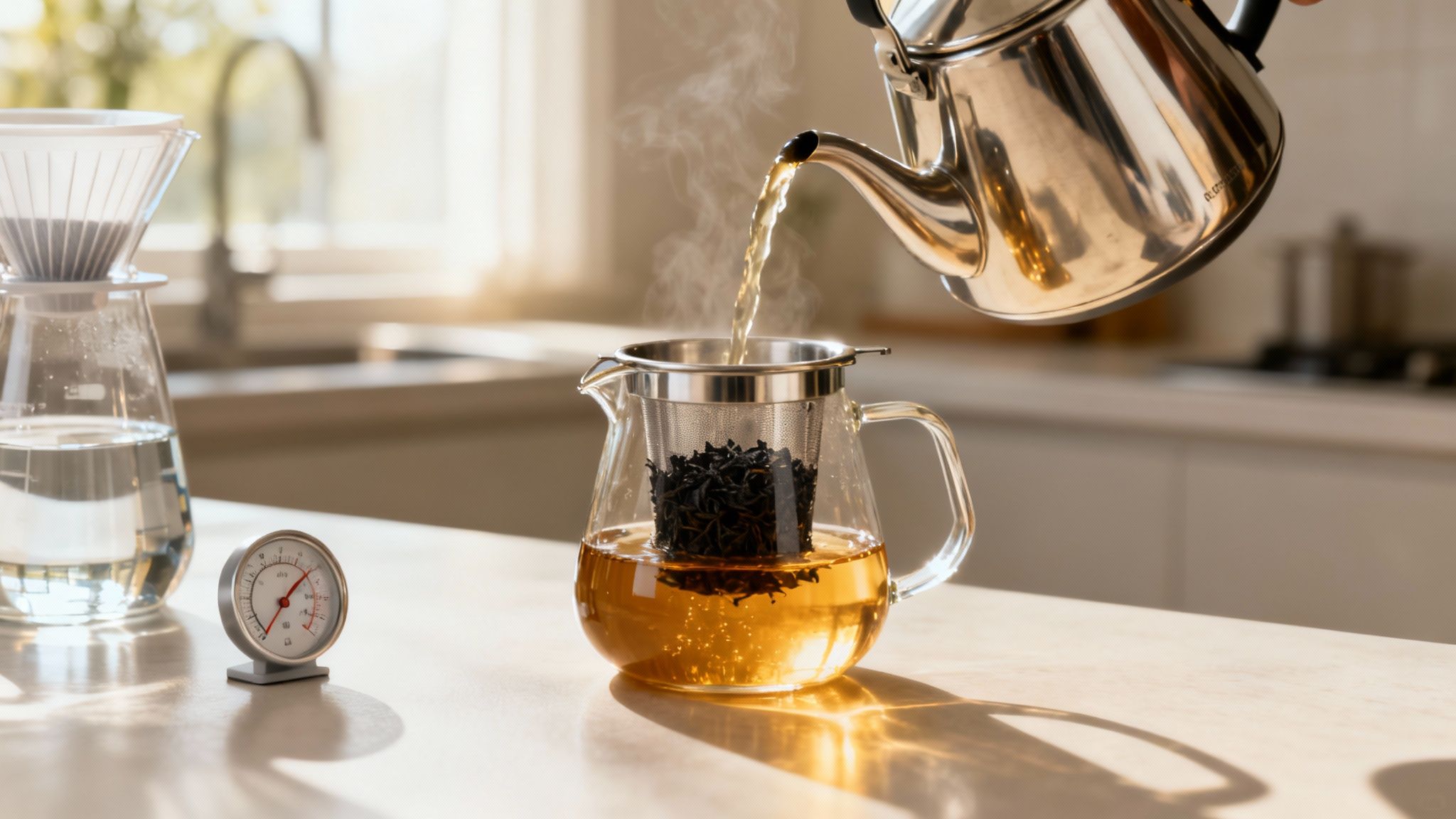
When you’re after that classic, punchy iced tea taste, the hot-brew method is your go-to. It’s quick, simple, and pulls a deep, complex character out of the leaves that really holds its own against ice and any extras you might add.
The idea is simple: brew a strong tea concentrate with hot water, then chill it. This approach gives you that brisk, full-bodied flavour we all associate with a proper iced tea. It’s particularly good for sturdy black teas, whose complex notes won’t get washed out or turn bland once they’re cold. While it seems straightforward, getting the details right is what will set your brew apart from a bitter or cloudy mess.
Nailing the Tea to Water Ratio
Getting the strength right is everything. Since your brew will be poured over ice that’s going to melt, you need to start with a much stronger, more concentrated tea than you’d make for a hot cuppa. A good rule of thumb is to double the strength.
- For a 2-litre pitcher: Use around 8-10 tea bags or about 4-5 tablespoons of whole-leaf tea.
- Water volume: Brew this in roughly 1 litre of hot water. You’ll add the remaining cold water or ice later.
This creates a potent base that ensures your final drink is refreshing but never watery. Think of it as making a tea cordial that you’ll dilute to perfection in the glass. It’s a small tweak that makes a huge difference.
The secret to a non-watery iced tea isn't just more tea; it's a strategically stronger brew from the start. By making a concentrate, you account for the inevitable melting ice, ensuring every sip is as flavourful as the first.
Perfecting Your Steeping Technique
The two classic mistakes with hot-brewing are using water that’s too hot or steeping for too long. Both will draw out too many tannins, leaving you with a bitter, astringent brew. Getting it right comes down to the tea you’re using. You can learn more about finding the best water temperature for tea in our detailed guide.
Here are a few pointers to get you started:
- Black Teas (e.g., English Breakfast, Assam): These are tough enough to handle hotter water. Use water just off the boil (around 95°C) and steep for 3-5 minutes. Any longer and you risk bitterness.
- Green Teas (e.g., Sencha, Gunpowder): Much more delicate. Water that’s too hot will scorch the leaves and create a harsh, grassy taste. Aim for 75-80°C and a short steep of only 2-3 minutes.
- Herbal Infusions (e.g., Peppermint, Camomile): Most herbals are pretty forgiving. They’re caffeine-free and low in tannins, so you can use fully boiling water (100°C) and steep for 5-7 minutes to get all that lovely flavour out.
As soon as the time is up, get those tea bags or leaves out of there. Leaving them in any longer won’t add any good flavour, just bitterness.
Achieving a Crystal-Clear Finish
There’s nothing more frustrating than a cloudy iced tea. This murkiness happens when tannins and caffeine, extracted by the hot water, clump together as the tea cools down too quickly. It won’t harm you, but it doesn’t look great.
Luckily, it’s an easy fix. The trick is to cool the tea concentrate down slowly. Instead of sticking the hot pitcher straight in the fridge or pouring it over ice, just let it sit on the worktop until it reaches room temperature. This gentle cooling prevents those compounds from binding together, giving you a beautifully clear, inviting glass every time.
Mastering Smooth Cold-Brew and Sun Tea
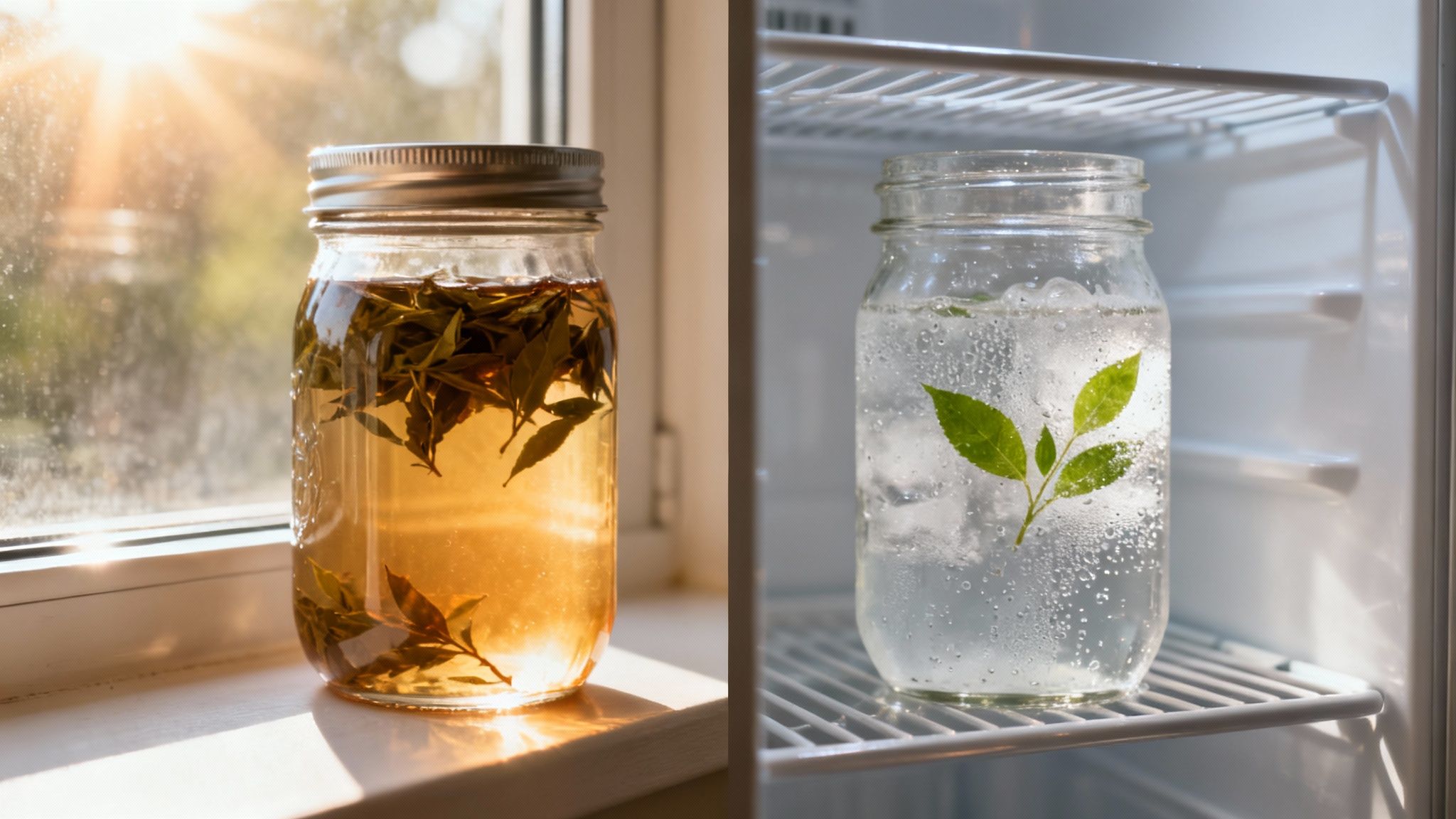
If you find the punchy character of hot-brewed iced tea a little too much, there are gentler ways to coax out a tea's flavour. Cold-brewing and sun tea are all about patience. They swap intense heat for slow, steady time, creating an incredibly smooth, naturally sweet drink that's noticeably less sharp.
These slower techniques completely change the chemistry of your brew. While hot water aggressively rips out everything—including the bitter-tasting tannins and caffeine—cold water is far more selective. It gently coaxes out the tea’s delicate floral and fruity notes over many hours, leaving most of those harsh compounds behind.
The result is a brew that’s exceptionally mellow and often needs little to no sweetener at all. It’s the perfect approach for anyone who finds traditional iced tea a bit harsh or wants to properly appreciate the subtle nuances of a really good quality tea leaf.
The Art of Cold-Brew Iced Tea
Cold-brewing is perhaps the easiest method of them all, delivering a superior result with almost no effort. It’s a true set-it-and-forget-it technique that works its magic in the fridge while you sleep. The trick is simply getting the ratio right and giving it enough time.
For a perfect pitcher, this is the ratio we swear by:
- Tea: Use around 1.5 to 2 tablespoons of loose-leaf tea (or 6-8 tea bags) for every litre of water.
- Water: Just combine the tea with cold, filtered water in a large pitcher or jar.
- Time: Cover it up and let it steep in the fridge for 8 to 12 hours.
Teas that tend to get scorched or turn bitter with hot water really shine here. We've found that Jeeves & Jericho’s whole-leaf green teas and delicate herbal infusions, like peppermint or camomile, become exceptionally vibrant and smooth when cold-brewed. The long, slow steep allows their complex profiles to emerge without a single hint of bitterness. If you want to dive deeper, you can learn more about how to make cold brew tea in our dedicated guide.
Cold-brewing is a testament to the idea that sometimes, less is more. By removing heat from the equation, you unlock a smoother, sweeter dimension of the tea leaf that simply cannot be achieved with faster methods. It’s patience, rewarded in a glass.
Reviving Nostalgic Sun Tea Safely
There's something wonderfully nostalgic about making sun tea, stirring up memories of long summer afternoons. The idea is simple: use the sun's natural warmth to gently brew tea over a few hours. This produces a beautifully mellow flavour, sitting somewhere between a cold brew and a very light hot brew.
To make it, you just combine your tea and water in a clear glass jar and leave it in direct sunlight for 3 to 5 hours. The ambient warmth provides just enough energy for a slow, gentle infusion.
That said, we need to approach this old-school method with a modern dose of caution. Leaving water at a lukewarm temperature for hours can, if you’re not careful, become a perfect breeding ground for bacteria.
To enjoy your sun tea safely, always follow these simple rules:
- Start with a spotless container: Wash your jar thoroughly with hot, soapy water before you start.
- Use fresh, high-quality tea: This isn't the time to use up that old, dusty box at the back of the cupboard.
- Refrigerate immediately: As soon as the tea reaches the strength you like, strain out the leaves and get it straight into the fridge to chill.
- Drink it quickly: For the best and safest results, plan to drink your sun tea within a day or two.
By taking these small precautions, you can safely enjoy this classic summer ritual. It’s a fantastic way to produce a uniquely smooth and flavourful drink that really captures the essence of a sunny day. Both methods prove that great iced tea doesn’t need to be complicated; sometimes, all it really needs is a little time.
Infusing Your Iced Tea with Creative Flavours

A perfectly brewed pitcher of iced tea is a brilliant start, but the real magic happens when you start layering in other flavours. This is your chance to move beyond a simple, sweet drink and craft a signature creation with fresh fruits, herbs, and spices.
The secret is all about balance. You want to complement the delicate notes of the tea, not overwhelm them. Learning to make your own infused syrups and figuring out what pairs best with different teas will help you create an iced tea recipe that’s all your own.
Crafting Simple and Infused Syrups
Anyone who’s tried to stir granulated sugar into a cold drink knows the result: a gritty mess at the bottom of the glass. The answer is a simple syrup. It guarantees smooth, consistent sweetness and is incredibly easy to make a big batch of to keep in the fridge.
Classic Simple Syrup:
Just combine one part sugar and one part water in a saucepan. Warm it gently, stirring until all the sugar has dissolved. You don't even need to boil it. Once the liquid is clear, let it cool completely before storing it in an airtight bottle in the fridge. It’ll keep for up to a month.
Think of this basic recipe as a blank canvas. While the syrup is still warm, you can infuse it with all sorts of herbs and spices to create something much more interesting.
- Mint or Basil Syrup: Pop a generous handful of fresh mint or basil leaves into the warm syrup. Let it steep for at least 30 minutes, then strain out the leaves.
- Ginger Syrup: A few slices of fresh ginger will add a lovely, spicy kick that goes especially well with black or green teas.
- Cinnamon or Cardamom Syrup: For a warming, aromatic flavour perfect for chai, just drop a cinnamon stick or a few crushed cardamom pods into the syrup as it cools.
A Modern Take on Sweetness
Let’s be honest, people are moving away from overly sugary drinks. This isn't just a fleeting trend; it’s a major shift in the beverage world, with health-conscious drinkers in the UK leading the charge. In fact, the reduced or no-sugar segment is expected to grab a huge 52% of the market by 2025.
This wellness wave is a perfect match for the kind of premium, whole-leaf teas we champion at Jeeves & Jericho, which have plenty of flavour all on their own. As the UK's ready-to-drink tea market expands, iced tea is cementing its place as a fantastic low-calorie alternative to fizzy drinks. You can dive deeper into these hot drink trends and their market impact.
The best iced tea recipes respect the tea itself. Instead of masking it with sugar, use a touch of sweetener to elevate its natural character. A well-made tea needs very little help to shine.
For a more natural touch, you could try other liquid sweeteners:
- Honey Syrup: Raw honey is often too thick for cold drinks. Just mix it with a bit of hot water (a 2:1 honey-to-water ratio works a treat) to make it easily pourable.
- Agave Nectar: This plant-based sweetener dissolves effortlessly and has a neutral taste that won't get in the way of your tea’s flavour.
Perfect Pairings for Your Tea
Knowing what flavours work together is half the battle. Different teas have distinct profiles, and they sing when paired with the right fruits and herbs.
Here’s a quick cheat sheet to get you going:
| Tea Type | Pairs Well With | Avoid |
|---|---|---|
| Black Tea (e.g., Assam) | Lemon, Peach, Mint, Ginger, Orange | Delicate florals (they’ll get lost) |
| Green Tea (e.g., Sencha) | Raspberry, Lime, Basil, Cucumber, Honeydew | Strong spices like clove or cinnamon |
| Herbal Tea (e.g., Peppermint) | Strawberry, Lemon, other berries | Anything that clashes with the main herb |
| Spiced Chai (e.g., Spiced Bombay Chai) | Orange, Cinnamon, Cardamom, Vanilla | Tart fruits like grapefruit |
Fancy an incredible spiced iced chai latte? Brew a strong concentrate of Jeeves & Jericho's Spiced Bombay Chai. Once it's cool, mix it with your milk of choice (oat and coconut are brilliant here) and a splash of vanilla-infused syrup. It’s a rich, complex, and unbelievably refreshing twist on a classic.
For a burst of pure fruit flavour, try muddling a few fresh berries or a slice of peach at the bottom of the glass before you add the ice and tea. This releases all their juices and oils, adding a vibrant, fresh note that really elevates your iced tea recipe.
Scaling and Storing Your Iced Tea Creations
So, you've nailed your perfect iced tea recipe. The next challenge is making it in bigger batches and keeping it tasting brilliant. It doesn't matter if you're a café owner hoping to hook customers or just prepping for a weekend garden party; getting the scaling and storing right is what separates a good brew from a great one.
At home, it's usually about longevity. How long will that glorious pitcher of tea really last in the fridge? And what’s the secret to stopping it from going cloudy or losing its delicate flavour? A little bit of know-how here makes all the difference.
Making Iced Tea for a Crowd
When you're brewing for a café or a big event, simply multiplying your recipe won't cut it. You need a rock-solid, repeatable process. In a commercial setting, consistency is king—it’s how you turn a refreshing drink into a reliable menu favourite.
Here’s what to focus on when you’re brewing at scale:
- Get the Right Gear: Don't mess about with kettles and jugs. A proper commercial iced tea brewer is a game-changer. These machines give you precise temperature control and brew straight into serving dispensers, which is cleaner and much more efficient.
- Weigh Everything: Ditch the scoops and get out the digital scales. Weighing your loose-leaf tea is the only way to guarantee every single batch has the same strength and character. A solid starting point for a commercial batch is around 100-120 grams of black tea per 10 litres of water.
- Cool It Down, Fast: Trying to cool a massive vat of hot tea is tricky. If you let it sit, you risk cloudiness and bacterial growth. A 'wort chiller'—a clever bit of kit borrowed from the beer brewing world—can chill your tea in minutes.
This sort of precision is becoming more and more important. The UK's appetite for chilled drinks is booming, with the ready-to-drink tea and coffee market expected to jump from US$580.57 million in 2024 to a staggering US$928.84 million by 2033. For cafés wanting to win over the 16% of Brits who buy tea out-of-home each week, a standout iced tea is a massive opportunity.
How to Store Homemade Iced Tea
Back at home, good storage is the key to making your efforts worthwhile. Homemade iced tea is fresh, and you've got to treat it that way.
The golden rule is simple: keep it cold, keep it covered, and drink it fresh. An airtight container is your best friend here, as it stops your lovely brew from soaking up the smells of last night's takeaway from the fridge.
To keep every glass tasting its best, just follow these pointers:
- Choose Your Vessel Wisely: A glass pitcher or a BPA-free plastic container with a snug lid is what you need. Glass is perfect because it won’t hold onto old flavours or leach anything into your tea.
- Know Its Shelf Life: Plain, unsweetened iced tea will stay delicious for up to 3-4 days in the fridge. If you’ve added sugar or syrup, you’ll want to drink it within 2-3 days.
- Fresh Additions Mean a Shorter Life: Thrown some fresh mint or sliced lemons straight into the pitcher? It’ll taste amazing, but you should aim to drink it all within 24 hours. After that, the fruit starts to break down and can make the tea taste a bit funky.
Stick to these simple rules, and that pitcher in your fridge will be a source of pure refreshment. For an even deeper dive into looking after your leaves, have a look at our full guide on the proper storage for tea.
Your Iced Tea Questions Answered
Even with a solid recipe, a few questions always pop up when you're aiming for the perfect pitcher. Getting it right often comes down to the little details—like figuring out why your beautiful brew has gone cloudy or the best way to sweeten it.
We get asked these questions all the time, so we’ve put together some straight-talking answers. Think of this as your go-to guide for troubleshooting and perfecting your technique.
Why Does My Iced Tea Go Cloudy?
It’s one of the most common frustrations: you brew a stunningly clear tea, pop it in the fridge, and later find a murky, opaque pitcher staring back at you. While it’s completely harmless to drink, it’s not exactly what you were hoping for.
So what's going on? It’s a simple bit of chemistry. Hot water is brilliant at extracting compounds like tannins and caffeine from tea leaves. When the tea is chilled too quickly, these compounds clump together and form tiny particles, which is what makes the liquid look cloudy. If you live in a hard water area, the minerals like calcium and magnesium in your tap water can make this happen even more readily.
Luckily, keeping your tea crystal clear is pretty simple.
- Cool it down slowly: This is the golden rule. Avoid the temptation to shove the hot pitcher straight into the fridge. That thermal shock is the main culprit. Just let it cool down to room temperature on the worktop first. A gradual drop in temperature is your best defence.
- Filter your water: If your kettle is full of limescale, chances are you have hard water. Using filtered or bottled water makes a huge difference, as fewer minerals mean less for the tannins to react with.
- Give cold brewing a go: Because cold brewing uses time instead of heat, it extracts far fewer tannins to begin with. It’s an almost foolproof way to guarantee a brilliantly clear brew.
What if your tea has already gone cloudy? Don’t tip it down the sink! A little splash of boiling water added to the pitcher can often be enough to dissolve those clumps and bring back some clarity. It's a simple trick that's well worth a try.
Can I Use Tea Bags Instead of Loose-Leaf Tea?
Of course. You can absolutely use tea bags for any iced tea recipe, and there’s no denying they’re convenient. But if you're after real depth of flavour, the quality of the bag makes all the difference.
Most standard, flat paper tea bags are filled with 'fannings' or 'dust'—tiny particles of broken tea leaves. These infuse very quickly in hot water, but their large surface area can also release a lot of tannins at once, sometimes resulting in a bitter, astringent brew.
For a much better result, look for pyramid tea bags. They’re designed to give whole leaves or larger leaf pieces the space to properly unfurl and infuse, much like they would in a teapot. This creates a more balanced, nuanced flavour that’s much closer to what you’d get from loose-leaf. As a rough guide, you’ll want around 8 to 10 standard tea bags for a 2-litre pitcher.
While a good pyramid bag is a great shortcut, we’ll always stand by high-quality, whole loose-leaf tea for the ultimate iced tea experience. Its smooth, complex character really shines, especially in delicate methods like cold brewing.
What Is the Best Way to Sweeten Iced Tea?
Trying to stir granulated sugar into cold tea is a losing battle. It just won’t dissolve properly, leaving you with a gritty sludge at the bottom of your glass and a disappointingly unsweetened drink. The secret is to use a liquid sweetener.
By far the best and most versatile option is a simple syrup. It’s incredibly easy to make and guarantees your tea is perfectly and evenly sweetened every time.
How to Make a Classic Simple Syrup
- Combine equal parts granulated sugar and water in a small saucepan (e.g., 200g of sugar and 200ml of water).
- Warm it gently over a medium heat, stirring now and then, until all the sugar has completely dissolved. You don’t even need to bring it to a boil.
- Let the syrup cool completely before pouring it into a clean, airtight bottle. It will keep happily in the fridge for up to a month.
This way, you can sweeten your tea glass by glass, getting the level of sweetness just right for everyone. If you fancy a more natural alternative, agave nectar works well, as does a honey syrup (just thin some honey with a little hot water to make it more pourable).
How Long Does Homemade Iced Tea Last?
For the best, most vibrant flavour, you’ll want to enjoy your homemade iced tea within 3 to 4 days. Think of it as a fresh product—that bright, crisp taste will start to fade after a few days.
Proper storage is key. Always keep your iced tea in a sealed, airtight container in the fridge. A glass pitcher with a good lid is perfect. This doesn’t just keep it fresh; it also stops it from absorbing any other smells from the fridge. Nobody wants an iced tea that tastes faintly of last night's leftovers.
A few timelines to keep in mind:
- Unsweetened Tea: Good for 3-4 days.
- Sweetened Tea: It’s best to drink this within 2-3 days, as the sugar can reduce its shelf life slightly.
- Tea with Fresh Fruit/Herbs: If you’ve added things like lemon slices or mint leaves directly to the pitcher, try to drink it all within 24 hours. The fruit will start to break down and can affect the overall flavour.
Ready to start brewing with the finest leaves? At Jeeves & Jericho, we source exceptional whole-leaf teas from around the world, perfect for creating your own signature iced tea recipe. Explore our collection and discover the difference quality makes. Visit us at https://www.jeevesandjericho.com.