


Making a beautiful matcha latte at home is a simple dance: sift ceremonial-grade matcha, whisk it into a smooth paste with warm (not boiling) water, and then pour in perfectly frothed, steamed milk. That's all it takes to transform vibrant green tea and creamy milk into a balanced, café-quality drink, giving you complete say over the final flavour and texture.
Why Your Homemade Matcha Latte Will Beat the Café
Welcome to the world of homemade matcha, where you are the artisan. Making your own latte is so much more than just following a recipe; it’s about creating a quiet ritual that ends with an exceptional drink, made exactly how you like it.
Let's be honest, we've all had those disappointing, grainy or bitter matcha lattes, sometimes from surprisingly expensive cafés. Our goal here is to achieve that silky-smooth consistency and rich, complex umami flavour that makes a proper matcha latte so special. This guide will walk you through the small details that make all the difference, turning a simple drink into a rewarding daily habit.
The Rise of the Home Barista
If you're bringing this vibrant green ritual into your kitchen, you're in good company. The UK matcha tea market is booming, currently valued at £173 million and expected to more than double by 2035. This huge growth is being driven by health-conscious Brits swapping out sugary coffees for antioxidant-rich alternatives.
With the average café latte now costing nearly £4, it’s no surprise that savvy drinkers are brewing at home for a more wallet-friendly wellness win. For a deeper dive into this trend, check out the UK matcha tea market research.
But this shift isn't just about saving a few quid; it's about quality control. When you learn how to make a matcha latte at home, you unlock the ability to:
- Choose Superior Ingredients: You get to select a high-quality, ceremonial-grade matcha like ours at Jeeves & Jericho, which is the absolute non-negotiable for a superior taste.
- Control the Sweetness: Adjust the sweetness to your exact liking, or leave it out entirely to enjoy the pure, nuanced flavour of the tea.
- Perfect Your Technique: Master the whisking and frothing to create a texture that’s just right for you, every single time.
Ultimately, making your own matcha latte is about more than just a beverage. It's an opportunity to create a mindful, rewarding experience that elevates your day, right from your own kitchen.
Gathering Your Essential Matcha Latte Tools
Before you even think about whisking, let's get you set up for success. I’ve found that crafting a truly flawless matcha latte is as much about the tools as it is the ingredients. Having the right kit turns what can be a bit of a faff into a satisfying daily ritual. It's the secret to getting that perfect, clump-free texture every single time.
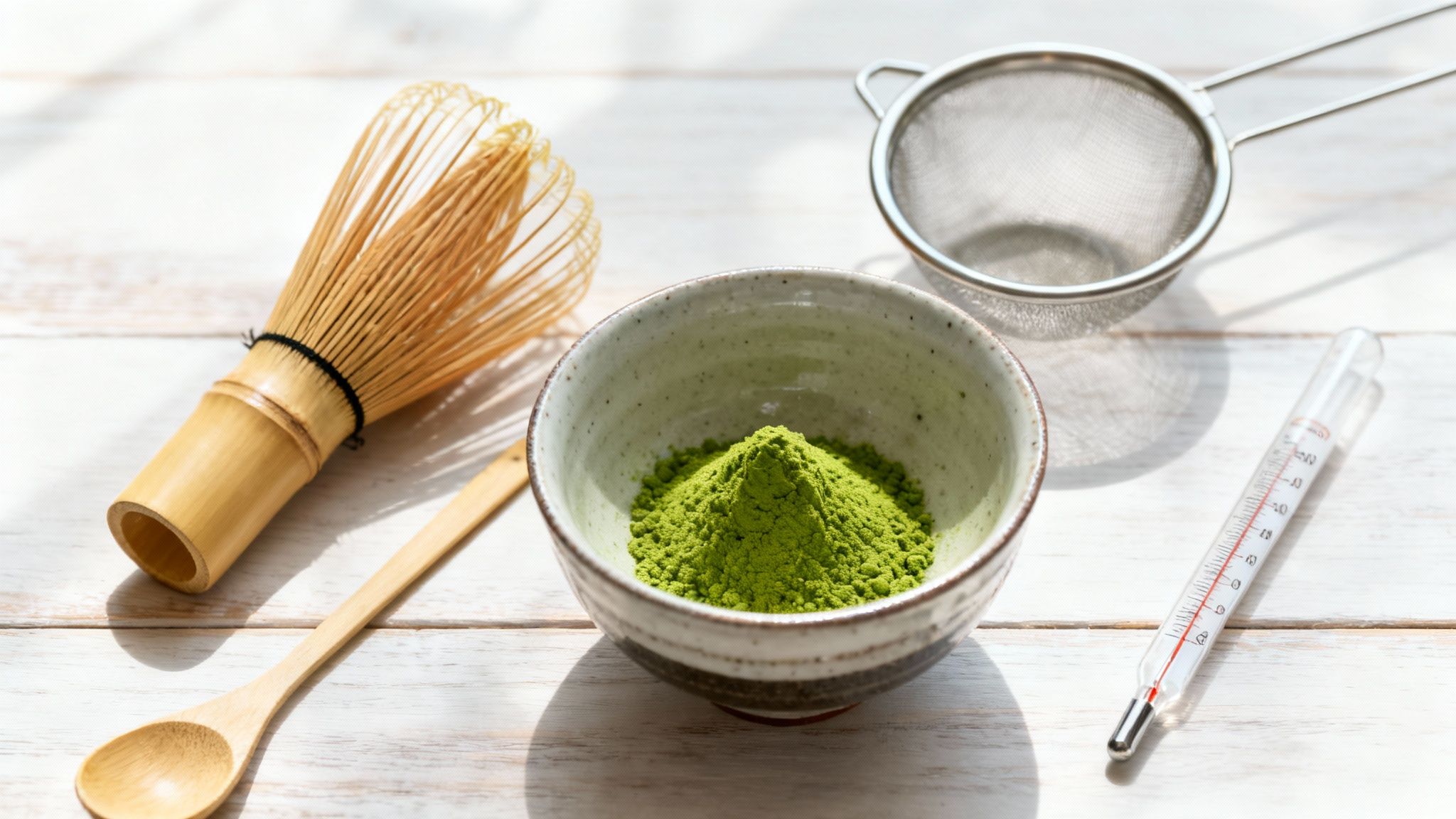
Think of this as your pre-flight checklist. While you can definitely improvise, a few specific items are what I’d consider non-negotiable for achieving that signature velvety feel. They’re the key to avoiding the common pitfalls of bitterness and graininess, giving you the confidence to brew a perfect cup from your very first try.
Your Matcha Latte Toolkit Essentials vs Nice-to-Haves
To help you figure out what you truly need, I've broken down the gear into must-haves and nice-to-haves. This should clear things up, whether you're just starting out or looking to upgrade your setup.
| Tool | Purpose | Essential or Optional? | Pro Tip |
|---|---|---|---|
| Fine-Mesh Sieve | Breaks up clumps in the matcha powder for a silky-smooth paste. | Essential | Don't skip this! Sift directly into your bowl to minimise mess and ensure every particle dissolves beautifully. |
| Matcha Bowl (Chawan) | A wide, flat-bottomed bowl that provides the ideal space for effective whisking without making a splash. | Optional | While not strictly necessary, its design makes creating a fine foam much easier. Any wide soup or cereal bowl can work. |
| Bamboo Whisk (Chasen) | Specifically designed with fine prongs to aerate and suspend the matcha evenly, creating a delicate froth. | Essential | Soak the prongs in warm water for a minute before use. This softens them and prevents breakage. |
| Electric Milk Frother | A modern alternative for mixing matcha and frothing milk. Versatile and quick. | Optional | An excellent stand-in for a chasen and brilliant for creating that café-style microfoam for your milk. |
| Thermometer | Ensures your water is at the optimal 80°C to avoid scorching the tea, which causes bitterness. | Optional | A great "nice-to-have" for consistency. If you don’t have one, just let your boiled kettle sit for a few minutes. |
With the right tools in hand, the entire process becomes a joy rather than a chore. The essentials truly are key, but the optional items can certainly elevate your home-barista game.
The Non-Negotiable Kit
Let’s talk a bit more about the must-haves. You don't need to spend a fortune, but these three items play a massive role in the final taste and texture of your drink.
- Fine-Mesh Sieve: This really is your secret weapon against lumps. Sifting the matcha powder breaks up tiny, static-charged particles. The result is a much smoother paste and, ultimately, a silkier latte.
- Matcha Bowl (Chawan): A wide, flat-bottomed bowl is more than just traditional—its shape is incredibly practical. It gives you the space to whisk properly in that "W" or "M" motion without splashing green tea all over the counter.
- Bamboo Whisk (Chasen): The chasen is a marvel of design. Its 80+ fine prongs are made to suspend the matcha powder evenly in water, aerating the liquid in a way a standard metal whisk just can't replicate. If you want to dive deeper, you can learn all about the bamboo whisk and its importance.
I can't stress this enough: the most common mistake I see beginners make is skipping the sifting. This one tiny step is the difference between a grainy, disappointing drink and a smooth, café-quality matcha latte.
Practical Alternatives And Nice-to-Haves
Not quite ready to invest in a full traditional set? No problem. There are some great modern workarounds that get the job done, often with things you might already have in your kitchen.
A handheld electric milk frother is an excellent substitute for a chasen. You can use it to blend the matcha and water into a paste, and then again to froth your milk—a seriously versatile bit of kit. While a chawan is ideal, any wide-bottomed mug or small bowl can work in a pinch.
Finally, a thermometer is a fantastic tool for consistency. It guarantees your water is at the optimal 80°C, which prevents that awful bitterness you get from scorched tea leaves. It’s not essential, but it takes all the guesswork out of it.
The Art of the Classic Hot Matcha Latte
This is where the magic happens. Transforming a few simple ingredients into a soul-warming, vibrant green latte is a mindful ritual that’s incredibly rewarding. Getting it right isn't just about following steps; it's about understanding the technique behind each movement, from the sifting to the final pour. Let’s walk through it together.
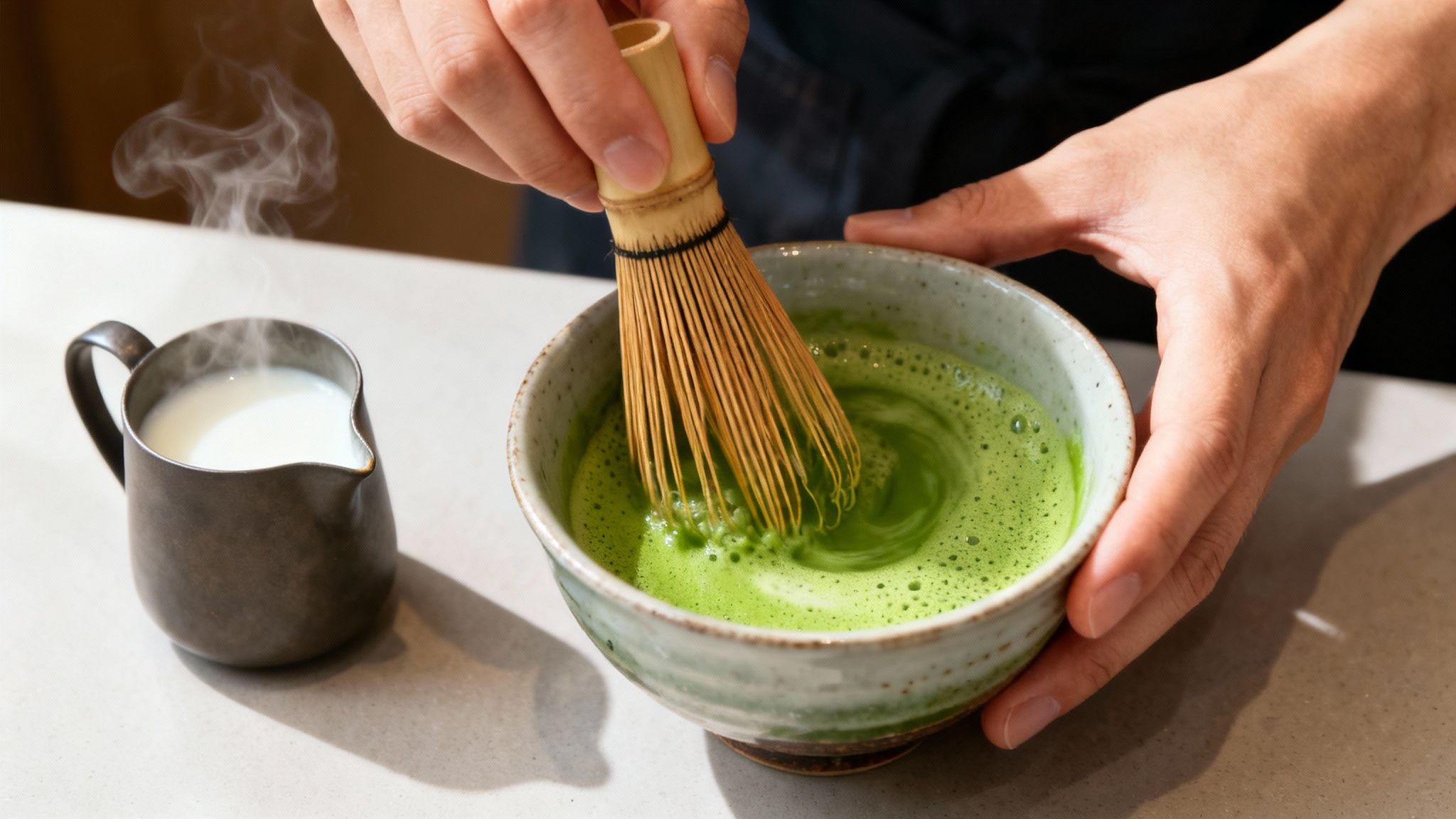
We'll start with the most important part: creating a perfectly smooth matcha base.
Preparing the Perfect Matcha Base
First things first, measure out your matcha. A good starting point for a standard latte is 1-2 teaspoons, which is roughly 2-4 grams. Now for the non-negotiable part: sift it directly into your bowl. Matcha is incredibly fine and prone to clumping due to static and humidity, and skipping this is the quickest route to a lumpy, disappointing drink.
Next, get your water ready. And please, don’t use boiling water! It’s the number one enemy of good matcha, instantly scorching the delicate powder and leaving you with a harsh, bitter flavour.
The sweet spot for water temperature is around 80°C (175°F). If you don't have a variable-temperature kettle, just let a boiled kettle sit with the lid off for about 2-3 minutes. That's usually enough to bring it down to the right temperature.
Pour about 60ml (or 2 ounces) of this warm water over your sifted matcha, and now you’re ready to whisk.
Mastering the Whisking Motion
Grab your bamboo whisk (the chasen) and start whisking vigorously. The key here is not to stir in circles but to trace a rapid 'M' or 'W' shape across the bottom of the bowl. This energetic, back-and-forth motion is what dissolves the powder properly and aerates the mixture, creating that essential layer of delicate foam on top.
Keep going until the liquid transforms into a smooth, vibrant green paste with a uniform, frothy surface. You shouldn't see any lumps or bits of dry powder clinging to the sides of the bowl. If you want to dive deeper into getting your ratios just right, our guide on how much matcha to use per cup has all the details.
Frothing Milk for Velvety Texture
While the matcha settles for a moment, it’s time to get your milk sorted. We’re aiming for a velvety microfoam here—think silky, pourable texture rather than the stiff, bubbly foam you'd get on a cappuccino. This is what will blend seamlessly with the earthy matcha.
Gently heat your milk of choice to about 65-70°C (150-160°F). This is the perfect range to bring out the milk’s natural sweetness without scalding it.
- Dairy Milk: You can’t go wrong with whole milk. Its fat and protein content help create a rich, stable, and creamy foam.
- Oat Milk: A fantastic plant-based option. Look for a barista-grade oat milk, as they're specifically designed to produce a beautiful microfoam that holds up well.
- Almond & Soy Milk: These can also work, but the results can be a bit hit-or-miss depending on the brand. Again, 'barista' editions will give you the best chance of success.
Once it's heated, use a handheld frother or a steam wand to aerate the milk until its volume has increased by about a third. You’re looking for a glossy sheen, almost like wet paint.
Now to bring it all together. Gently pour the frothed milk into your matcha. To get that classic latte art look, you can hold back the thickest foam with a spoon as you pour, then dollop it on top at the very end.
Crafting the Perfect Iced Matcha Latte
When the day calls for a refreshing lift, an iced matcha latte is the perfect answer. This chilled, invigorating drink adapts our classic hot latte technique for a cooler experience, but making a great one comes down to a few key details. The main challenges? Avoiding clumps and preventing a watered-down flavour.
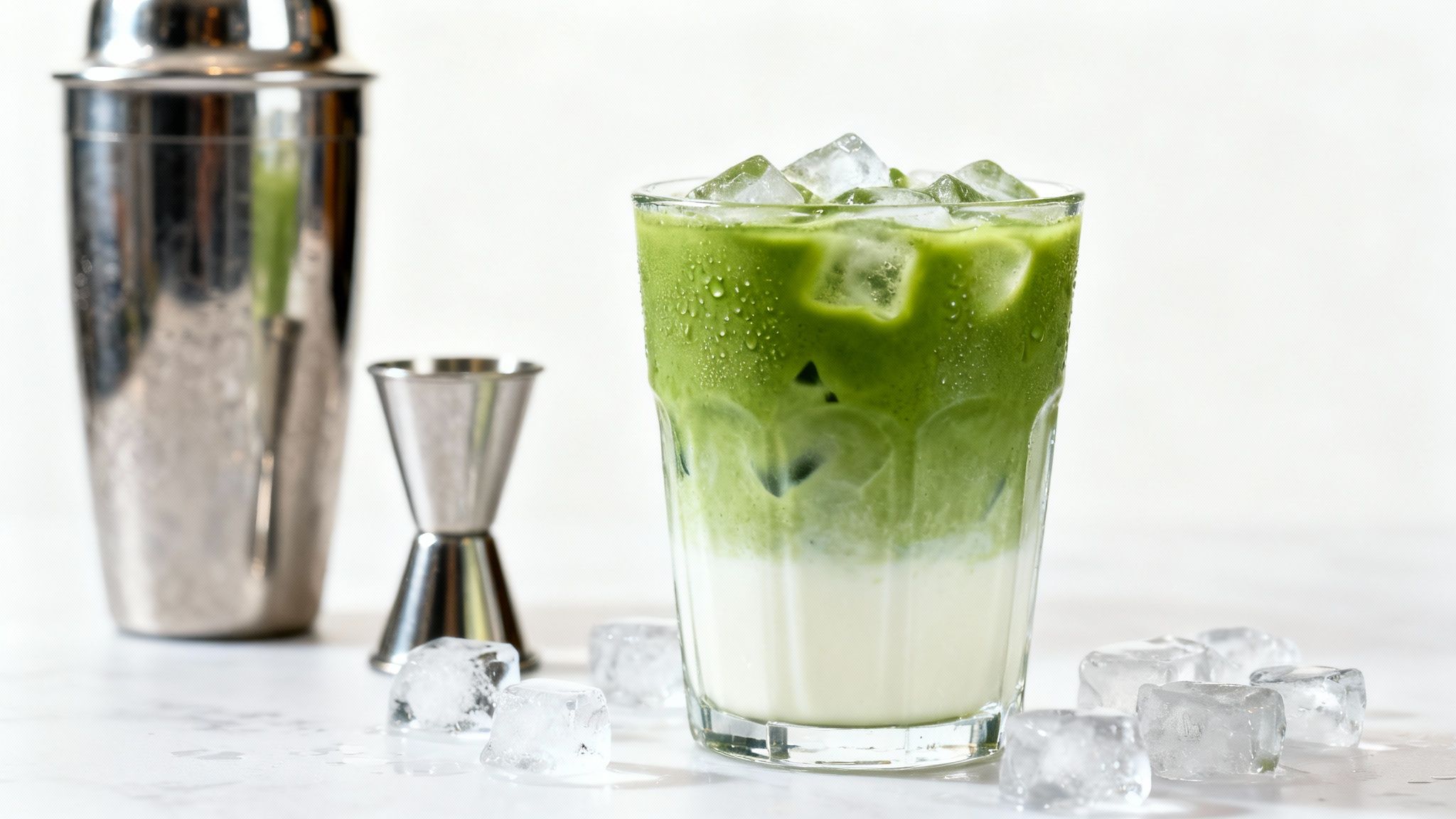
That initial prep work—sifting and whisking your matcha into a smooth paste with just a bit of warm water—is even more crucial here. Matcha powder really struggles to dissolve in cold liquids, so creating that perfect, clump-free base first is non-negotiable for a silky texture. Once you've got that sorted, you have a couple of great ways to finish your drink.
Shaken or Layered: The Choice Is Yours
For a flawlessly blended and frothy latte, the 'shaken' method is my personal favourite. It’s quick, effective, and gives the finished drink a wonderfully light, airy texture.
- Make your matcha paste: Start by whisking 1-2 teaspoons of sifted matcha with 60ml of 80°C water until it's completely smooth.
- Shake it up: Pour the matcha paste, your milk of choice, and any sweetener into a cocktail shaker or even a sealed jam jar filled with ice.
- Get vigorous: Shake it hard for about 15-20 seconds. This doesn’t just chill the drink instantly; it aerates the milk, creating a lovely froth.
- Serve: Pour everything, ice and all, into a tall glass and enjoy straight away.
If you’re after a drink that looks as good as it tastes, the 'layered' method is perfect for creating that stunning gradient effect you see in cafés. Simply fill your glass with ice, pour in your chilled milk, and then gently pour the prepared matcha paste over the top. Just watch it cascade down through the milk.
Whichever way you go, remember that ice is the enemy of flavour over time. I always suggest using larger ice cubes, as they melt much more slowly, keeping your iced matcha latte vibrant and robust from the first sip to the last.
Getting the Ratios Right for a Cold Drink
You’ll need to adjust your ratios slightly for an iced latte. The goal is a slightly stronger matcha base that can stand up to the milk and ice without tasting weak. I find that using a full 2 teaspoons (about 4 grams) of ceremonial-grade matcha strikes the perfect balance.
When it comes to milk, oat and whole dairy milk tend to work best cold, offering a creamy texture that doesn’t separate. For sweeteners, it’s best to stick with liquids that will dissolve easily in the chilled drink.
- Simple Syrup: An easy, neutral choice made with equal parts sugar and water.
- Agave Nectar: Offers a clean sweetness that dissolves instantly.
- Maple Syrup: Adds a lovely, subtle warmth that pairs beautifully with matcha's earthy notes.
I’d start with one or two teaspoons of your chosen sweetener and adjust from there. By focusing on a strong, smooth base and using the right chilling technique, you'll be making iced matcha lattes that are refreshing, flavourful, and utterly satisfying.
Customising Your Latte to Perfection
Once you’ve got the hang of the classic hot and iced versions, the real fun can begin. Mastering the basic matcha latte is a brilliant starting point, but making it yours by tweaking the flavours is where the magic happens. This is your chance to play around and find the combinations you truly love.
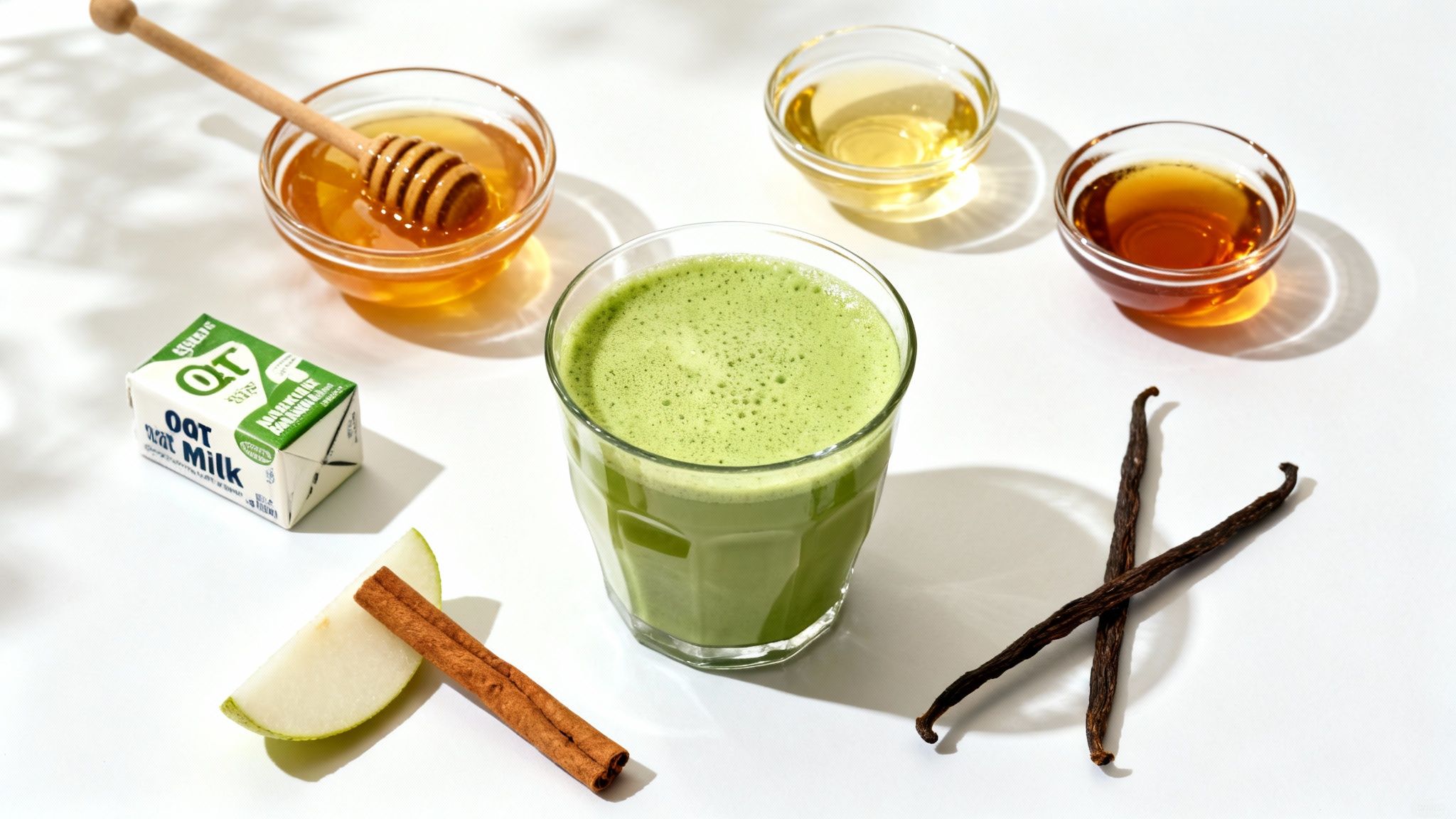
This ability to customise is a huge part of why making matcha at home has taken off. The UK matcha market is currently leading the way in Europe and is set to reach £65 million by 2033. Organic matcha is the real star here, perfect for the kind of clean-label lattes that health-conscious drinkers are after. It's clear people are getting creative, with more than half of UK adults under 35 now whipping up hot matcha drinks at home every month.
Finding Your Perfect Sweetener
While a really good matcha has a natural, subtle sweetness all on its own, sometimes you just fancy a little extra something. The trick is to choose a sweetener that complements matcha's earthy notes rather than fighting with them.
- Maple Syrup: This adds a lovely, understated warmth that gets on beautifully with the grassy flavour. A single teaspoon is usually all you need.
- Honey: Always a popular choice, but I'd suggest a milder variety like acacia or clover. A stronger honey can sometimes overwhelm the delicate matcha.
- Agave Nectar: This one offers a very clean, neutral sweetness and dissolves in an instant, which makes it absolutely perfect for iced lattes.
The World of Milk Alternatives
The milk you pick has a massive say in both the flavour and texture of your final latte. Dairy milk is a reliable choice for frothing, but the world of plant-based milks opens up some really exciting possibilities.
Oat milk, especially the barista-style versions, is a firm favourite for its incredible creaminess and ability to create a beautiful foam. Almond milk is a lighter option but can sometimes separate, whereas soy milk gives you a rich foam and brings its own distinct flavour to the party. If you want to dive deeper, there's a lot to learn about finding the best milk substitute for your latte. It's also worth remembering that different matcha grades pair differently with various milks, something you can explore in our guide to the different types of matcha tea.
My personal tip? If you're just starting out, go for a barista-grade oat milk. It's the most forgiving and consistently gives you that silky, café-quality microfoam we're all aiming for. It strikes a perfect balance, supporting the matcha flavour without overpowering it.
Adventurous Flavour Pairings
Ready to get a bit more creative? A few simple additions can completely elevate your drink into something truly special.
Try adding a tiny splash of vanilla extract for a comforting, aromatic sweetness that just works. A light dusting of cinnamon or nutmeg on top can introduce a warming spice that's especially wonderful on a crisp autumn day.
For a more floral twist, you could even try infusing your milk. Gently warm it with a teaspoon of culinary-grade dried lavender or rose petals, then strain it before frothing. The subtle floral perfume is a stunning partner for matcha's deep, vegetal notes, creating a uniquely sophisticated latte.
Common Matcha Mistakes and How to Fix Them
Even with the best intentions, a homemade matcha latte can sometimes go awry. If you’ve followed all the steps but something still tastes a bit… off, don’t panic. Most issues are incredibly common and usually point to a tiny, fixable misstep in the process.
Finding little green clumps at the bottom of your mug is a classic sign you've skipped a crucial, non-negotiable step: sifting. Matcha is an incredibly fine powder that loves to clump together at the slightest hint of moisture in the air. Pushing it through a fine-mesh sieve is the only way to guarantee that beautifully smooth, silky texture we’re all after.
Why Does My Matcha Taste Bitter?
This is easily the most common complaint we hear. You were promised a smooth, umami-rich drink, but instead, you’ve got a cup full of harsh, vegetal bitterness. In almost every case, the culprit is your water temperature.
Pouring boiling water straight from the kettle is the fastest way to ruin good matcha. Water at 100°C will scorch the delicate tea leaves, instantly releasing tannins and creating that unpleasant, bitter flavour.
The magic number is 80°C (175°F). If you don't have a variable-temperature kettle, just boil it as normal, then leave it to stand with the lid off for a couple of minutes. This simple pause is your best defence against bitterness.
It's also worth checking the quality of your powder. Culinary-grade matcha is fantastic for baking, but it’s ground from more mature leaves and can have a more astringent taste. For drinking, a ceremonial grade will always give you a smoother, sweeter result.
Solving Weak or Non-Existent Foam
Is your frothy top disappearing before you can even take a sip? Or worse, not appearing at all? This usually comes down to either the milk you’re using or your frothing technique.
Here are a few things to check:
- Your Milk of Choice: When it comes to frothing, not all milks are created equal. Barista-edition oat milk and whole dairy milk are champions here – their protein and fat content is perfectly balanced to create a stable, velvety microfoam that holds.
- The Right Temperature: Be careful not to overheat your milk. Once it goes past a certain point, the proteins break down and won't hold air. The sweet spot is around 65-70°C, hot to the touch but not scalded.
- Frothing Finesse: If you're using a handheld frother, technique is everything. Start with the whisk just below the surface to pull air into the milk and create volume. Once it's thickened, plunge the frother deeper to break down larger bubbles into that silky, paint-like texture.
Nailing these small details will make a world of difference. Before you know it, you'll be troubleshooting like a pro and making consistently delicious matcha lattes at home.
A Few Common Matcha Questions
Even once you've got the hang of the technique, a few questions tend to crop up. Let's tackle some of the most common queries we hear from people learning to make matcha lattes at home, so every cup you make is a success.
Why Isn’t My Matcha Bright Green?
A dull, swampy, or yellowish-green colour is the number one sign of a low-quality or old matcha. You just won't get that vibrant flavour or smooth texture.
For that beautiful, emerald green hue and a deep umami taste, you must start with fresh, ceremonial-grade matcha. It's made from the youngest, most tender tea leaves, which are absolutely packed with chlorophyll. This is what gives it that signature colour and rich, complex flavour. Remember, freshness is everything here – matcha loses its vibrancy over time.
Can I Make a Matcha Latte Without a Whisk?
While the traditional bamboo whisk (the chasen) really is the best tool for the job, you can absolutely make a brilliant latte without one.
A handheld electric milk frother is a fantastic alternative. Just add the matcha powder and hot water to your mug and blitz it until it's perfectly smooth and frothy before pouring in your milk. If you're really in a pinch, you can even just shake the matcha and water together vigorously in a tightly sealed jar until every last clump has disappeared.
A typical matcha latte, made with about one teaspoon (or 2 grams) of matcha powder, has around 70mg of caffeine. That's a little less than your average cup of coffee. But unlike coffee, matcha also contains L-theanine, an amino acid that helps create a feeling of calm, sustained energy—no jitters included.
If you fancy trying your hand at some other creations, be sure to check out Rip Van's collection of more delicious recipes.
Ready to take your home brewing to the next level? You can really taste the difference when you use exceptional, ethically sourced ceremonial-grade matcha like ours at Jeeves & Jericho. Head over to https://www.jeevesandjericho.com to explore the collection.