


Making a proper chai latte recipe at home is far simpler than you might imagine. It’s all about gently simmering a quality black tea with whole spices like cinnamon and cardamom in milk and water, then sweetening it just how you like it. This traditional stovetop method completely sidesteps the overly sweet powders and artificial syrups you often find in cafes, rewarding you with an authentic, soul-warming drink.
With just a handful of good ingredients, you can brew something truly special—perfectly balanced and deeply aromatic.
Why a Homemade Chai Latte Recipe Is So Much Better
Forget those weak, sugary imitations from high-street coffee chains. There's a real satisfaction in mastering a rich, aromatic chai latte in your own kitchen; it puts you firmly in control of the flavour. The secret isn't a pre-made mix but starting with an authentic, high-quality spiced tea blend. That’s where the heart and soul of your drink comes from. It builds a foundation of taste that mass-produced options simply can't touch.
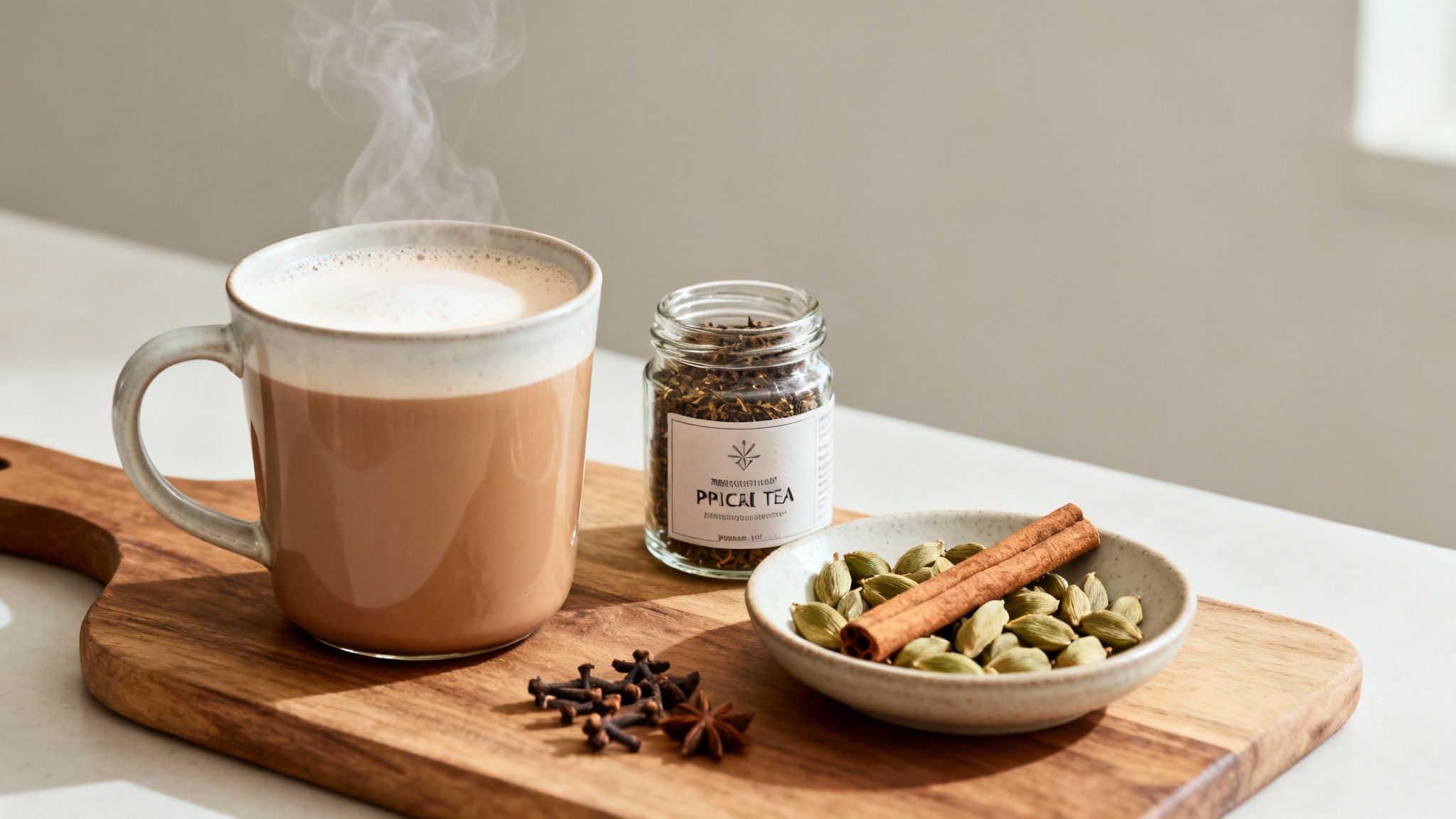
The Power of Quality Ingredients
Using a premium loose-leaf tea, something like Jeeves & Jericho's Spiced Bombay Chai, creates a complex and robust flavour profile that powders just can't replicate. Whole spices and full-leaf tea need time to release their essential oils and deep notes, which is exactly what happens during the simmering process. You get that lovely warmth from ginger and black pepper, the sweetness of cinnamon and cloves, and the floral hint of cardamom in every single sip.
This hands-on approach is more than just making a drink; it connects you to a tradition of mindful brewing, turning a simple beverage into a comforting daily ritual.
It’s no surprise that more of us are making cafe-style drinks at home. In fact, the ready-to-drink tea market in the UK is projected to capture a massive 52.7% share of the combined RTD tea and coffee sector by 2026. This reflects a real desire for convenient yet high-quality drinks. Making your own chai latte fits this trend perfectly, giving you superior taste without ever having to leave the house. You can discover more insights about the UK's ready-to-drink tea market and its incredible growth.
The difference between a chai latte made from loose-leaf tea and one from a powder is like comparing a freshly baked loaf of bread to a pre-packaged slice. One is alive with flavour, aroma, and texture; the other is merely a convenience.
To really get this right, it helps to understand what each part brings to the table.
Key Components for Your Chai Latte
Here's a quick look at the essential ingredients and the role each one plays in building the perfect flavour profile.
| Component | What to Look For | Its Role in the Recipe |
|---|---|---|
| Tea Base | A robust black tea, like Assam. Look for loose-leaf blends with whole spices. | Forms the deep, malty backbone of the chai, providing tannins and complexity. |
| Spices | Whole spices (cinnamon sticks, cardamom pods, cloves) over ground powders. | Deliver authentic, layered aromas and flavours as they infuse slowly. |
| Milk | Whole dairy milk for richness, or a creamy plant-based alternative like oat or soy. | Creates the creamy, velvety texture that defines a latte. |
| Sweetener | Honey, maple syrup, or brown sugar for a warm, complementary sweetness. | Balances the spice and bitterness of the tea, but should be used to taste. |
Getting these four elements right is the key to a truly fantastic cup of chai.
What You Will Learn in This Guide
Think of this guide as your complete roadmap to creating the perfect chai latte. We’ll go beyond basic instructions to help you truly understand the craft behind this beloved drink.
Here’s what we’ll cover:
- The Stovetop Method: A step-by-step walkthrough of the traditional brewing process to get the most flavour out of your ingredients.
- Ingredient Selection: How to choose the best tea, milk (both dairy and plant-based), and sweeteners for your personal taste.
- Creative Variations: Simple twists for an iced chai latte, a punchy dirty chai, and a quick concentrate for busy mornings.
- Essential Tools: The simple kitchen equipment that will elevate your brew to barista-quality.
Mastering the Stovetop Brewing Method
This is where the real magic happens. If you’re ready to leave the world of instant powders and sickly-sweet syrups behind, the traditional stovetop method is a proper sensory experience. It’s how you coax every last bit of nuanced flavour from your tea and spices, and it’s a beautifully simple process that puts you in complete control.
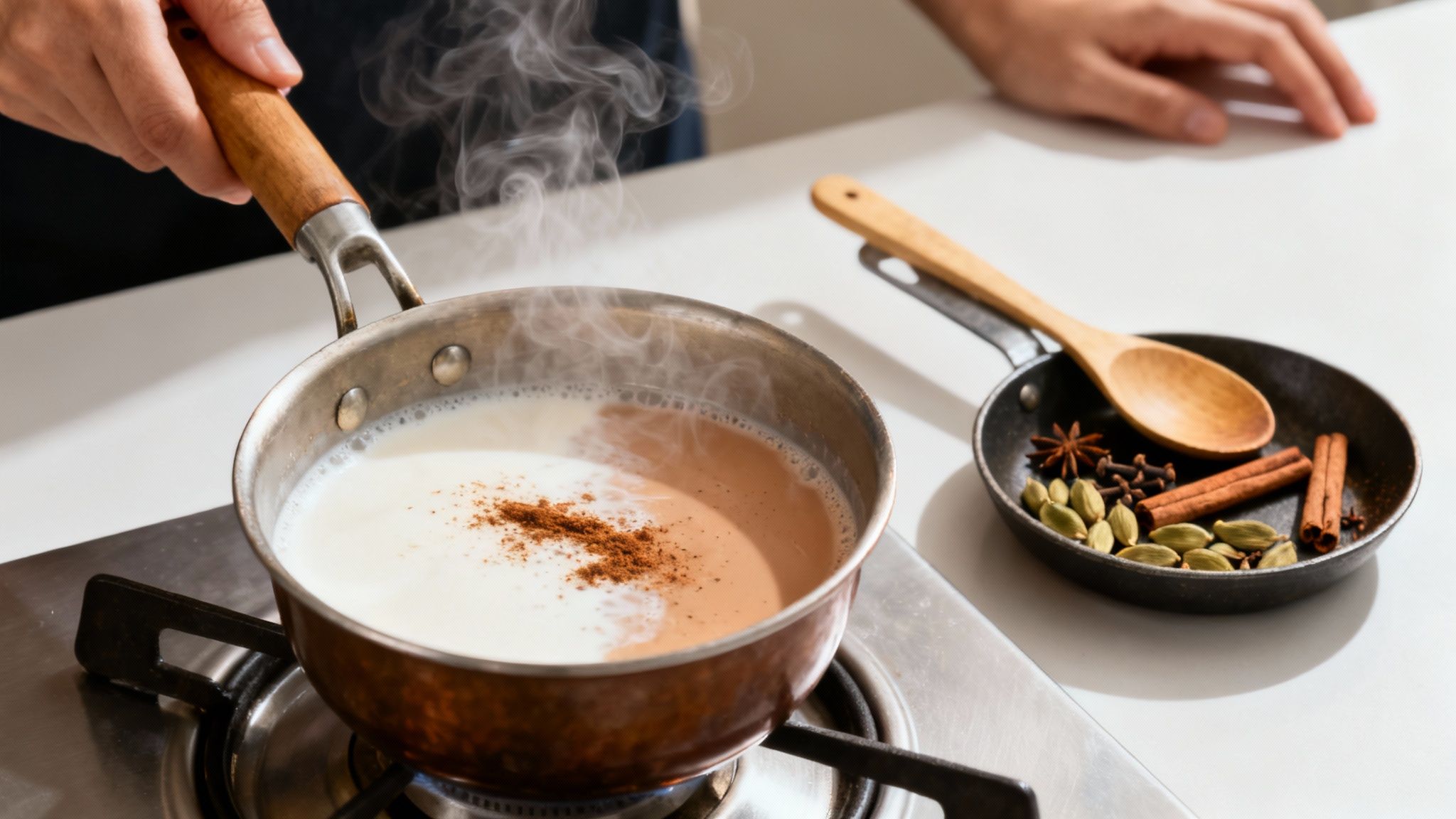
The idea is to gently draw the aromatic oils out of the whole spices, infusing them into the milk and water to create a perfectly balanced, robust brew. Let’s get started.
The Foundation Aromatic Spices and Water
The first step to a truly authentic chai is to wake up the spices. Forget just chucking them into the milk; toasting them first is a total game-changer. This bit of gentle heat releases their volatile oils, filling your kitchen with an incredible aroma and building a deep flavour base for your drink.
Pop your whole spices—cinnamon, cardamom, cloves—into a dry saucepan over a medium-low heat. Keep them moving for just 1-2 minutes until they smell amazing. You'll notice the cinnamon sweetening and the floral notes of cardamom really coming through. That’s your cue to move on.
Once they're fragrant, pour your water into the pan. Bring the mixture to a gentle simmer and let the spices infuse for around 5 minutes. This first infusion in water ensures the spice flavours are bold and well-developed before the tea and milk join the party.
Infusing the Tea and Milk
Now for the heart of your chai: the tea leaves and milk. Pour the milk into the saucepan with the spiced water, then add two heaped teaspoons (or one tablespoon) of Jeeves & Jericho's Spiced Bombay Chai loose-leaf tea.
Give it all a gentle stir. The key here is temperature control. You’re aiming for a gentle simmer, not a frantic, rolling boil. Just look for small bubbles forming around the edge of the pan. If you let the milk boil, it can scald, which creates an unpleasant skin and can change the final flavour and texture.
A gentle simmer is crucial. It lets the black tea release its malty depth without turning bitter, while the milk soaks up all that spicy goodness, creating the signature creamy, luxurious body we're after.
Getting the temperature right is essential for perfect extraction. While many guides focus on coffee, the principles behind the best water temperature for brewing apply here too – it’s all about achieving a balanced, aromatic infusion without any harshness.
Steeping for Perfect Balance
Once your chai has reached that gentle simmer, turn the heat right down and let it steep for 5-7 minutes. This really is the sweet spot. Less than five minutes and you might find the flavour a bit weak; go much beyond seven or eight minutes and you risk over-extracting the tannins from the tea, which can make it bitter.
As it steeps, you’ll see the colour deepen to a lovely, warm caramel hue. The aromas will intensify, blending the malty tea with the warm spices. This isn't just a waiting game; it’s an active infusion that’s building the character of your finished drink.
The Final Steps Sweeten and Strain
After steeping, take the saucepan off the heat. Now's the time to add your sweetener. Whether you’re using honey, maple syrup, or demerara sugar, stirring it in while the chai is hot means it will dissolve completely. We suggest starting with one to two teaspoons and tasting as you go.
The goal is to complement the spices, not mask them.
Finally, hold a fine-mesh strainer over your favourite mug and carefully pour the chai through it. This is a vital step—it catches all the tea leaves and bits of spice, leaving you with a perfectly smooth, silky latte. Don’t forget to press the contents of the strainer with the back of a spoon to squeeze out every last drop of flavour.
If you fancy another take on the classic, you can explore this delicious spiced chai tea recipe for a bit more inspiration. Now, your perfectly crafted, aromatic chai latte is ready to be enjoyed.
Choosing the Best Ingredients for Your Brew
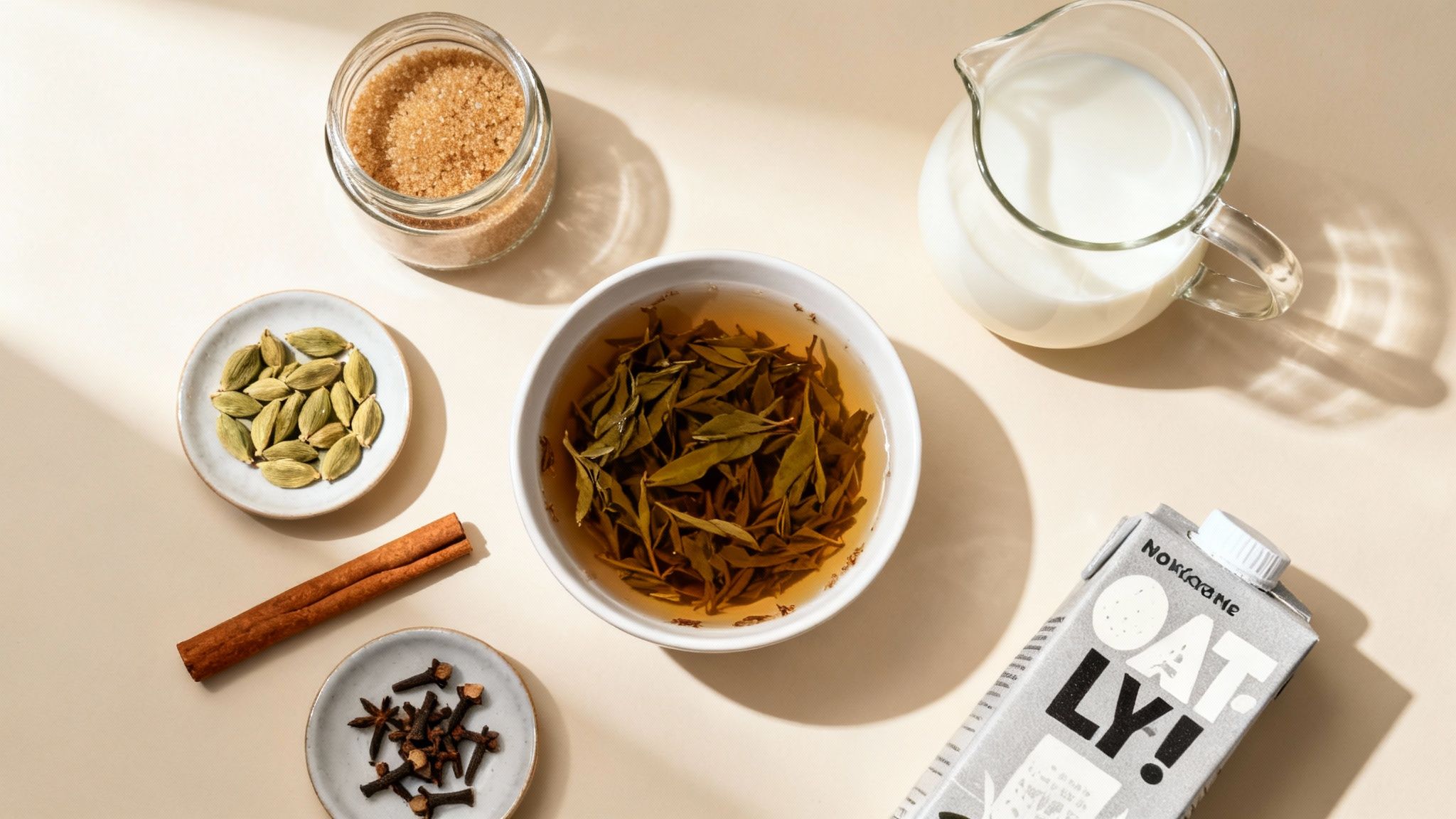
Any truly exceptional chai latte begins with its components. Much like cooking, starting with fresh, vibrant ingredients is the only real way to guarantee a delicious result. This is your chance to elevate your brew from merely good to absolutely unforgettable.
The most important decision you'll make is the tea itself. It’s the very soul of your chai, providing the deep, malty foundation upon which all the other flavours will be built.
Selecting the Right Tea for a Rich Flavour
While it might be tempting to just grab any old black tea bag, the quality and cut of the tea make a world of difference. Many standard tea bags contain "fannings" or "dust"—tiny particles of tea leaf left over from the production of higher-grade teas. They infuse quickly, but the flavour is often one-dimensional and can turn bitter in a heartbeat.
For an authentic chai, you need a tea with enough backbone to stand up to the milk and spices. This is where a proper whole-leaf black tea blend truly excels. A blend like our ethically sourced Spiced Bombay Chai uses full leaves and real, broken pieces of whole spices, allowing for a slower, more balanced infusion that releases complex layers of flavour without any harshness.
Using whole-leaf tea isn't about being fussy; it's about flavour integrity. The larger leaf pieces release their tannins and aromatic compounds more gently, creating a smoother, richer, and more nuanced brew that forms the perfect canvas for your latte.
When you're looking for the right blend, always check the ingredients list for real spices like cinnamon bark, cardamom pods, and whole cloves, not just "flavourings." It's important to understand where to buy chai tea that meets these quality standards.
Choosing Your Milk: Dairy vs Plant-Based
The milk is what gives a latte its signature creamy, luxurious texture. Each type brings its own character to the final drink, so the "best" option really just comes down to what you prefer.
For a classic, rich experience:
- Whole Dairy Milk: The traditional choice for a reason. Its high fat content creates a full-bodied, velvety texture and a natural sweetness that beautifully complements the warm spices. It also froths like a dream.
For delicious plant-based alternatives:
- Oat Milk: In my opinion, barista-style oat milk is the best non-dairy option for a chai latte. It has a naturally creamy consistency and a neutral flavour that really lets the spices shine. Plus, it steams and froths almost identically to dairy milk.
- Soy Milk: Another fantastic choice, soy offers a rich creaminess and a subtle sweetness. It’s a robust option that holds its own against strong tea and spice.
- Almond Milk: While popular, almond milk can be a bit thinner and has a more noticeable nutty flavour. It can sometimes separate when heated, so I’d recommend a high-quality barista blend if you go this route to ensure a smooth finish.
Finding the Perfect Sweetener
The final touch is the sweetener, which should balance the spice and tea, not overpower them. The goal is simply to enhance the existing flavours.
Why not think beyond plain white sugar and consider sweeteners that add their own subtle complexity?
- Demerara or Light Brown Sugar: These add a lovely, mild molasses note that pairs perfectly with cinnamon and ginger.
- Maple Syrup: An excellent natural choice, maple syrup provides a clean sweetness with a hint of woody, caramel flavour.
- Honey: The floral notes in a good quality honey can add another dimension to your chai, but be aware that its flavour can be quite distinct.
My advice? Start with a small amount—perhaps one or two teaspoons per mug—and taste before adding more. It’s always easier to add sweetness than it is to take it away. Getting this final balance right is the secret to perfecting your personal chai latte.
Creative Chai Latte Variations to Try

Once you’ve nailed the classic stovetop method, you’ve got a brilliant foundation to start getting creative. The real beauty of a homemade chai latte is its versatility; think of it as a canvas for all sorts of delicious experiments, perfect for any mood or season.
Your core recipe is just the starting point. From there, a few simple tweaks can completely transform your drink, whether you're craving a refreshing iced version on a warm afternoon or need a quick caffeine hit on a busy morning. This is where you can truly make the recipe your own.
Chai latte consumption in the UK has rocketed alongside the coffee shop boom, sparking a lot of creativity. While many cafes rely on powders, making a high-quality version from a loose-leaf base like Jeeves & Jericho's lets you easily create both traditional and modern twists, like adding chocolate or using popular plant-based milks. You can read more about the rise of chai in the UK to understand its growing appeal.
Crafting the Perfect Iced Chai Latte
An iced chai latte needs to be bold and refreshing, never watery. The most common mistake is simply pouring hot chai over ice, which instantly dilutes all that beautiful flavour you worked so hard to build. The secret? Create a slightly stronger chai concentrate first.
Follow the stovetop recipe as you normally would, but with one small change: use half the amount of water. This creates a much more potent brew that can hold its own against the melting ice.
Here’s how it’s done:
- Brew a Concentrate: Use the same amount of tea and spices, but with only 125ml of water instead of 250ml. Simmer the spices as directed, then add the milk and tea, letting it steep for the full 5-7 minutes.
- Sweeten and Chill: Stir in your sweetener while the concentrate is hot to make sure it dissolves properly. Then, let it cool completely. For the best result, pop it in the fridge for at least an hour.
- Assemble Your Drink: Fill a tall glass with ice. Pour the chilled chai concentrate over the ice, leaving a little room at the top. Finish with a splash of cold milk (dairy or plant-based) for extra creaminess and give it a good stir.
This method guarantees a full-flavoured, perfectly chilled latte, every single time.
The Busy Morning Quick Chai Concentrate
For those days when you just don’t have time for the stovetop ritual, a pre-made concentrate is an absolute lifesaver. You can batch-prepare this on a Sunday and have delicious, instant chai lattes ready to go all week long.
Simply make a bigger batch of your chai concentrate—but this time, leave out the milk. Double or triple the quantities of tea, spices, and water from the original recipe. Let it all simmer and steep, then strain it carefully into a clean, airtight jar or bottle.
This pure chai concentrate will keep happily in the fridge for up to a week. When you’re ready for a quick drink, just gently warm a mug of your favourite milk and add a few tablespoons of the concentrate. Stir, sweeten if you like, and you’re good to go.
Easy and Delicious Flavour Boosts
Sometimes, the smallest addition can make the biggest difference. Customising your chai latte recipe is incredibly easy and lets you tailor each cup to whatever you're craving. It’s a fantastic way to keep your daily ritual feeling fresh and exciting.
Playing with flavours is part of the joy of home brewing. A simple dash of vanilla or an extra pinch of spice can elevate your standard recipe into something that feels uniquely yours.
Here are a few simple ideas to get you started:
- The Dirty Chai: This is a café classic for a reason. Add a shot of freshly brewed espresso to your finished chai latte for a powerful, complex drink that delivers a serious caffeine kick. The bitter notes of the coffee cut through the creamy sweetness beautifully.
- A Touch of Vanilla: Add a quarter teaspoon of vanilla extract along with your sweetener. It brings a subtle, aromatic sweetness that really enhances the warmth of the cinnamon and cardamom.
- Extra Spice: If you love a particularly punchy chai, don't be afraid to experiment. A tiny pinch of ground nutmeg or a sliver of fresh ginger tossed in during the simmering stage can add a whole new layer of warmth and complexity.
Essential Tools and Pro Tips for Barista Quality
You don’t need an all-singing, all-dancing coffee machine to create a truly exceptional chai latte at home. The real secret is in the technique and a few simple, well-chosen tools that can elevate your brew from just good to something unforgettable. It’s these small details that really make the difference.
Getting the right equipment sorted ensures a beautifully smooth texture and balanced flavour, turning your kitchen into your favourite local café. It’s not about complexity, but about having the right bits to hand to master each stage of the process, from that initial infusion to the final, frothy finish.
Core Equipment for a Flawless Brew
Chances are, most of what you need is already tucked away in a kitchen cupboard. A good-quality saucepan is where the magic begins, and a fine-mesh strainer is absolutely non-negotiable. It’s the only way to get that silky-smooth, professional texture by catching all the loose tea and spice fragments.
Beyond these essentials, there are a couple of other items that will really up your game:
- A Milk Frother: This is your ticket to creating that signature, luxurious foam. Handheld, battery-operated frothers are inexpensive and do a brilliant job.
- Airtight Storage Jars: To protect your investment in a quality loose-leaf tea, you have to store it properly. Keep your Jeeves & Jericho Spiced Bombay Chai in an airtight container away from light, heat, and moisture to preserve its vibrant aroma and flavour.
For a consistently perfect froth every time, we really recommend using a purpose-built tool. You can find out more about how a simple chai latte handheld mixer can transform your drink’s texture.
Pro Tips to Avoid Common Mistakes
Over the years, we’ve brewed more chai lattes than we can count, and we’ve learned a few things about what separates an average chai from a brilliant one. Dodging the common pitfalls is just as important as following the recipe.
The most common complaints we hear are about brews tasting either bitter or watery. Bitterness is almost always down to over-steeping the tea leaves or using water that’s too hot, which pulls out too many tannins. A watery chai usually means the ratio of tea to liquid is off, or the spices weren’t given enough time to really bloom and release their flavour.
To fix a weak brew, try the 'double steep' technique. Simmer your spices in water for a full 5 minutes before adding the tea and milk. This ensures the spice flavours are fully extracted, creating a much more robust foundation for your latte.
A Guide to Milk Frothing Methods
Achieving that perfect, pillowy microfoam is such a satisfying final step. The method you choose really depends on the tools you have and the texture you're after.
| Method | Pros | Cons | Ideal For |
|---|---|---|---|
| Handheld Frother | Quick, easy to clean, and creates excellent foam, especially with oat milk. | Less effective on very thin milks; requires batteries. | Everyday use and those wanting a quick, reliable result without much fuss. |
| French Press | Creates dense, rich foam by plunging hot milk up and down. | Requires more effort and cleaning than a handheld frother. | People who already own a French press and enjoy a thick, substantial foam. |
| Shaking in a Jar | No special equipment needed; surprisingly effective. | Can be messy; foam is less consistent and stable. | A quick hack when you have no other tools available. |
Perfecting Your Technique for Consistency
Once you have your tools and understand the basics, it’s all about consistency. Start to pay close attention to the small sensory cues during brewing. Notice the exact moment the spices become fragrant as they toast, or the appearance of tiny bubbles around the edge of the saucepan, which signals the perfect simmer.
Remember that practice is part of the pleasure. Each batch you make is a chance to tweak the steeping time, adjust the sweetness, or try a different milk. Before you know it, crafting your perfect chai latte will become a deeply satisfying and effortless ritual.
Your Chai Latte Questions Answered
Even with the perfect recipe in hand, questions always come up when you're perfecting your brew. We get it. Think of this as your personal chai helpline, where we tackle the most common queries we hear from our customers.
Getting the small details right is what transforms a decent homemade chai into a truly exceptional one. From flavour tweaks to vegan options, we’ve got you covered.
Why Does My Chai Latte Taste Bitter or Weak?
This is easily the most frequent question we get, and the culprit is almost always one of two things: steeping time or ingredient ratios. A bitter chai is a classic sign of over-extraction. This happens when the black tea leaves are simmered for too long, releasing an excess of tannins and creating that harsh, astringent taste.
If your brew is tasting a bit weak or watery, the problem is likely the opposite—you probably haven't used enough tea or spices. For that full-bodied, aromatic flavour we're all after, a good starting point is one heaped tablespoon of our Spiced Bombay Chai for every 250ml of liquid.
The secret to avoiding bitterness? Keep the simmer time to just 5-7 minutes after adding the tea leaves. It’s also a game-changer to simmer the spices in water for a few minutes first. This coaxes out all their aromatic oils before the tea and milk join the party, giving you maximum flavour without over-steeping the tea.
Can I Make This Chai Latte Recipe Vegan?
Absolutely! This recipe is wonderfully forgiving and works a treat with plant-based milks. The trick is to choose one that has enough creaminess to carry the spices and can handle a gentle simmer without splitting.
For the richest, most café-like texture, our top recommendation is always a barista-style oat milk. Here’s why it’s our go-to:
- Creaminess: It has a higher fat content that creates a velvety body, beautifully mimicking whole dairy milk.
- Neutral Flavour: Its subtle, slightly sweet taste lets the complex notes of cardamom, cinnamon, and ginger really shine.
- Frothing Power: Barista blends are designed to create a stable, luscious microfoam, giving you that perfect latte finish.
Soy milk is another fantastic option if you're after richness. Simply swap your dairy milk for a plant-based alternative in a 1:1 ratio. The method stays exactly the same, delivering a knockout vegan chai every single time.
How Should I Store Leftover Chai Latte?
If you've made a full chai latte (milk and all) and have some left, pour it into an airtight jar or container and pop it in the fridge. It'll stay fresh for up to two days. When you're ready for it, just reheat it gently in a pan over a low heat to avoid scalding the milk.
But here’s a pro tip: make a chai concentrate instead. This is just the brewed tea and spice mix, without any milk. Stored in a sealed bottle in the fridge, this concentrate will last for a good week. It's a brilliant shortcut to a quick chai—just mix it with hot frothed milk or pour it over ice with cold milk for an instant iced version.
What Is the Difference Between Chai and a Chai Latte?
It’s a great question, and one that causes a lot of confusion. In India, 'masala chai' (literally 'spiced tea') is a daily ritual. It's typically brewed by simmering black tea, spices, water, and milk all together in one pot. The result is strong, intensely spiced, and often quite sweet.
The 'chai latte' is more of a Western café creation. It’s inspired by traditional masala chai but tweaked for a different palate. The main differences are:
- Milk Ratio: A chai latte has a much higher milk-to-tea ratio, making it creamier and milder.
- Texture: It has that signature foamy, steamed-milk top that defines a latte.
- Sweetness: Coffee shop chai lattes are often far sweeter than traditional preparations.
Our recipe aims for the best of both worlds: an authentically spiced base with the luxurious, creamy finish of a latte. Once you've mastered your home brew, it's interesting to see how the professionals keep customers coming back; understanding things like cafe loyalty applications offers a glimpse into creating that perfect café experience.
Ready to brew the perfect cup? The journey starts with exceptional tea. At Jeeves & Jericho, we ethically source the finest whole-leaf teas and real spices to create our signature Spiced Bombay Chai. Explore our collection and taste the difference that quality makes.