


At its heart, making matcha is simple. You just need to sift the fine powder, whisk it into hot water (around 80°C) until it’s lovely and frothy, then either sip it as is or add steamed milk for a latte. Whether you're a traditionalist with a bamboo whisk or prefer a modern milk frother, the goal is a perfectly smooth, vibrant drink.
This guide will walk you through it all, from the time-honoured rituals of ancient ceremonies to the creative twists you'll find in modern cafés.
Your Introduction to the World of Matcha
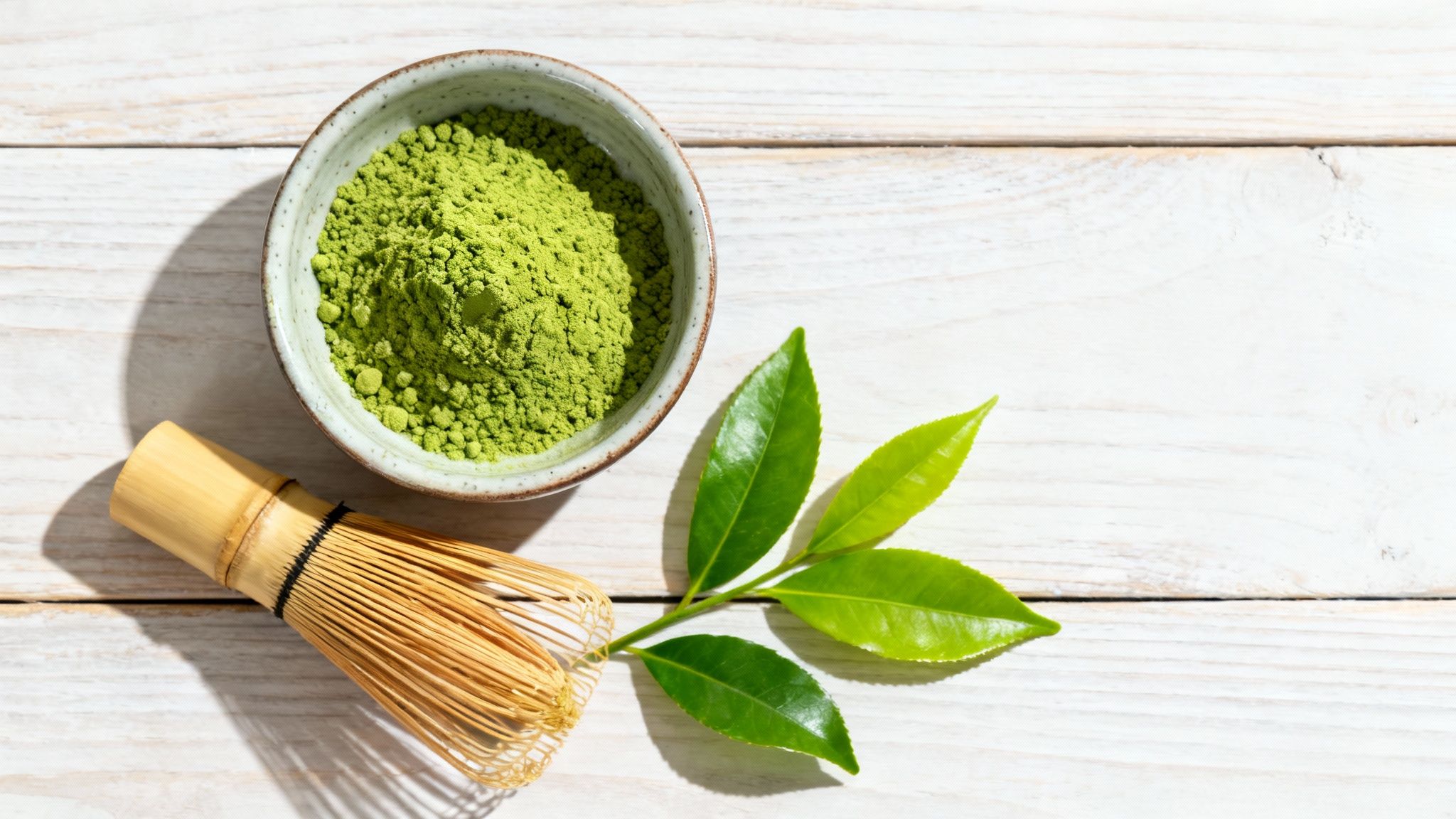
Welcome to the wonderfully green world of matcha, the finely ground Japanese tea powder that’s captured the hearts of wellness seekers and food lovers across the globe. Unlike regular green tea where the leaves are steeped and then removed, with matcha, you’re actually consuming the entire leaf. This is what gives you that much more concentrated dose of nutrients and goodness.
It's also why matcha gives you such a unique lift—a calm, sustained energy boost without the jittery feeling you can get from coffee. It's a drink cherished not just for its rich, umami flavour, but for the mindful ritual of preparing it.
Understanding Matcha Grades
Before you start whisking, it helps to know that not all matcha is the same. The grade you pick will have a big impact on the flavour, colour, and how you should use it.
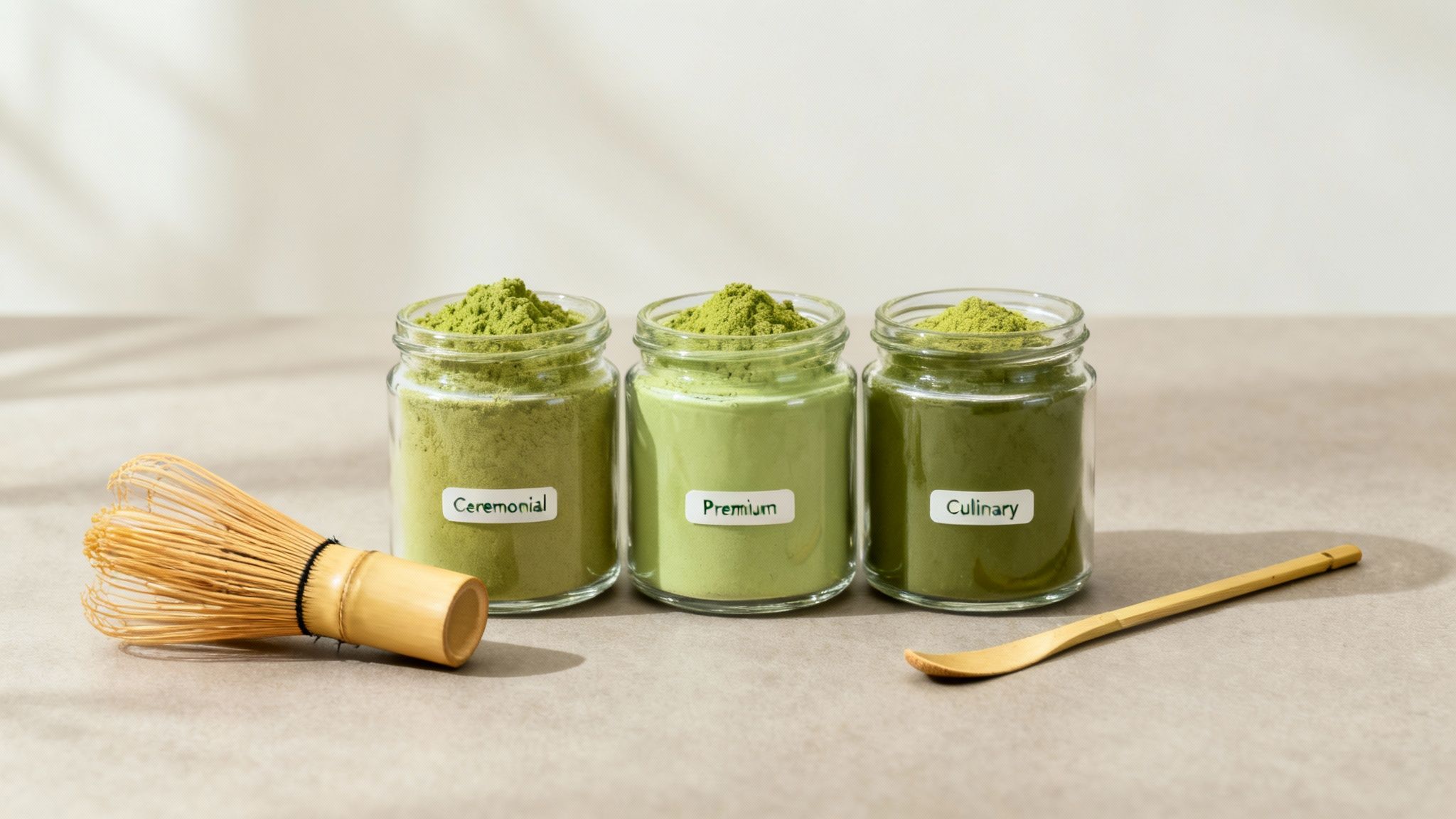
- Ceremonial Grade: This is the highest quality you can get, made from the youngest, most tender tea leaves. It has a stunningly bright green colour and a delicate, almost sweet flavour with very little bitterness. It’s perfect for the traditional tea ceremony, prepared with just hot water.
- Premium Grade: A fantastic all-rounder, premium grade matcha strikes a beautiful balance between quality and value. It’s ideal for your daily cup, especially in lattes or smoothies where its robust flavour can hold its own against milk and other ingredients.
- Culinary Grade: As the name suggests, this grade is meant for cooking and baking. It has a stronger, more assertive flavour profile that can be a bit bitter on its own but works wonders in recipes, adding that distinctive matcha taste and colour to everything from brownies to salad dressings.
It's clear that matcha's rise is more than just a fleeting trend—it has become a mainstream fixture. It’s now a staple in cafés right across the country, a true cultural shift.
And the numbers back this up. Data from Square revealed that between June and July 2025, UK vendors sold a staggering 1.6 million matcha drinks. That generated over £7 million in just one month alone. This explosion in popularity shows just how many people are embracing this versatile green powder. You can read more about what they’re calling Britain's matcha moment on Squareup.com.
Choosing Your Matcha and Essential Tools
Before you can even think about whisking up a vibrant bowl of matcha, the first decision you'll make is the most important: choosing the right powder. The world of matcha is far more nuanced than many people realise, and picking the correct grade is the secret to getting the flavour and experience you're after.
It's a bit like cooking; you wouldn't use a delicate finishing oil for high-heat frying. In the same way, each matcha grade has a distinct personality and purpose. Using a prized Ceremonial Grade in a cake would be a waste of its subtle complexities, just as trying to drink a robust Culinary Grade on its own would likely taste harsh and overly bitter.
Getting this right is the foundation of making great matcha. If you'd like to dive deeper, you can explore the different types of matcha tea in our detailed guide.
Finding the Right Grade for You
Matching the matcha to the moment is what it’s all about. Not all green powders are created equal, so understanding the key differences will set you up for success.
Here's a quick reference guide to help you choose the right grade for whatever you have in mind.
Matcha Grades Explained
| Matcha Grade | Colour & Texture | Flavour Profile | Best For |
|---|---|---|---|
| Ceremonial | Vibrant, electric green. Ultra-fine, silky powder. | Delicate, sweet, smooth with a deep umami finish. No bitterness. | Drinking with hot water, the traditional way (usucha or koicha). |
| Premium | Bright green, but less vivid than ceremonial. | Smooth and well-rounded with a slightly stronger flavour. | Everyday lattes, iced matcha, smoothies, and other drinks. |
| Culinary | More of a muted, yellowish-green. Coarser texture. | Bold, astringent, and slightly bitter. | Baking, cooking, sauces, and anywhere it's a flavouring ingredient. |
As you can see, there’s a perfect matcha for every occasion. This simple choice makes all the difference between a disappointing cup and a truly delightful one.
The quality of your matcha powder is the single most important factor in the final taste. A high-quality powder from a trusted source will always yield a smoother, more flavourful, and less bitter result, regardless of your preparation method.
Your Essential Matcha Toolkit
Once you’ve got your powder, let’s talk tools. The traditional Japanese tea ceremony relies on a few beautifully simple implements, each designed to help you prepare the perfect bowl.
- The Chasen (Bamboo Whisk): This isn’t just for show. The chasen is the iconic tool for a reason—its 100 or so delicate tines are expertly crafted to suspend the fine powder in water, whipping it into a rich, creamy froth.
- The Chashaku (Bamboo Scoop): An elegant, curved scoop made for measuring out just the right amount of matcha powder. Typically, one to two scoops is perfect for a single serving.
- The Chawan (Matcha Bowl): A wide, flat-bottomed bowl is essential. It gives you the space you need to whisk properly and build that signature layer of foam on top.
Modern Alternatives for Making Matcha
Don't have the traditional gear? Don't worry. You can still whip up a fantastic matcha with things you probably already have in your kitchen.
An electric milk frother is a brilliant stand-in for a chasen, creating a smooth, foamy texture in seconds. And if you’re really in a pinch, a simple jar with a tight-fitting lid works wonders. Just add your matcha and water, screw the lid on tight, and shake it like you mean it until it’s frothy and combined.
The goal is always a perfectly smooth, enjoyable drink, and these methods will absolutely get you there.
Mastering Traditional Matcha Preparation at Home
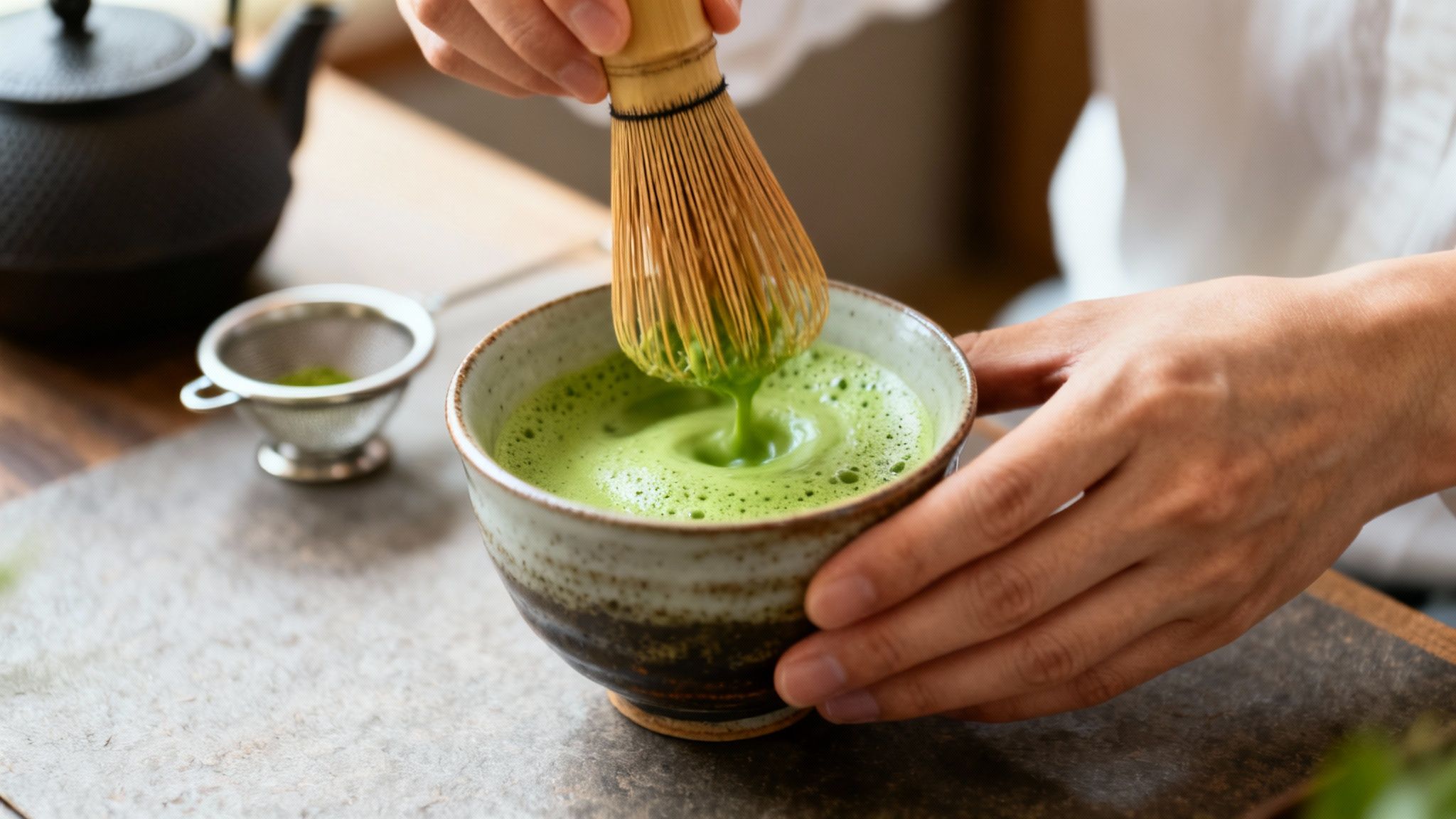 There’s something wonderfully ritualistic about preparing matcha the traditional way. It’s more than just mixing up a drink; it's a mindful practice that turns a simple powder into a beautiful, frothy beverage. This centuries-old ceremony, known as usucha (thin tea), is an art form you can easily bring into your daily routine.
The process itself is a moment of calm. In fact, many find the act of preparing matcha to be a meditative experience. You can deepen this connection by exploring techniques on how to eat mindfully, turning a simple habit into a moment of genuine presence.
The Crucial First Step: Sifting Your Powder
One of the biggest frustrations when you’re starting out is dealing with clumps. Because matcha is so finely ground, it’s prone to static and loves to stick together. If you skip this first step, you’re almost guaranteed a lumpy, uneven drink, no matter how hard you whisk.
To get that silky-smooth texture, always pass your matcha through a small, fine-mesh sieve before adding any water. This simple action aerates the powder, breaks up any stubborn little clumps, and makes all the difference in how well it dissolves. It’s the secret to a perfect bowl every time.
Temperature and Technique: The Keys to Perfection
With your powder perfectly sifted, the next things to master are water temperature and your whisking technique. Getting these two elements right will take your matcha from simply good to truly exceptional.
Water Temperature: Whatever you do, don't use boiling water. Water that's too hot (anything over 80°C) will scorch the delicate tea, leaving you with a bitter, astringent flavour that completely overpowers the matcha’s natural sweetness and umami notes. The sweet spot is around 75-80°C. If you don’t have a temperature-controlled kettle, just let boiled water cool for a couple of minutes before you pour.
Whisking Motion: This is where the magic happens with a traditional bamboo whisk, or chasen. Add a small amount of your hot water to the sifted powder and start whisking rapidly in a 'W' or 'M' pattern. It’s all in the wrist—keep it loose and focus on frothing the entire surface, not just stirring the bottom. You’re aiming for a thick layer of tiny, uniform bubbles, much like the velvety crema on a great espresso. To get the most from your whisk, have a look at our matcha green tea bamboo whisk guide.
A perfectly prepared bowl of usucha should be a vibrant, electric green with a creamy head of foam. The taste is smooth, slightly sweet, and full-bodied with a pleasant umami finish—never harsh or overly bitter.
This interest in home preparation is part of a much bigger trend. The UK matcha tea market was valued at £219.6 million in 2024 and is projected to more than double to an incredible £462.32 million by 2035. This boom is being driven by health-conscious Brits embracing its superfood status, which makes choosing ethically sourced, high-quality options more important than ever.
For the Connoisseurs: Exploring Koicha (Thick Tea)
For the seasoned matcha enthusiast, there’s koicha, or thick tea. This style uses double the matcha and half the water, creating a consistency almost like melted chocolate. Because it’s so intensely concentrated, koicha is made exclusively with the absolute highest quality Ceremonial Grade matcha—anything less would be unpleasantly bitter. It’s a profound and deeply flavourful experience, reserved for the very best.
Creative Ways to Enjoy Matcha Beyond the Tea Bowl
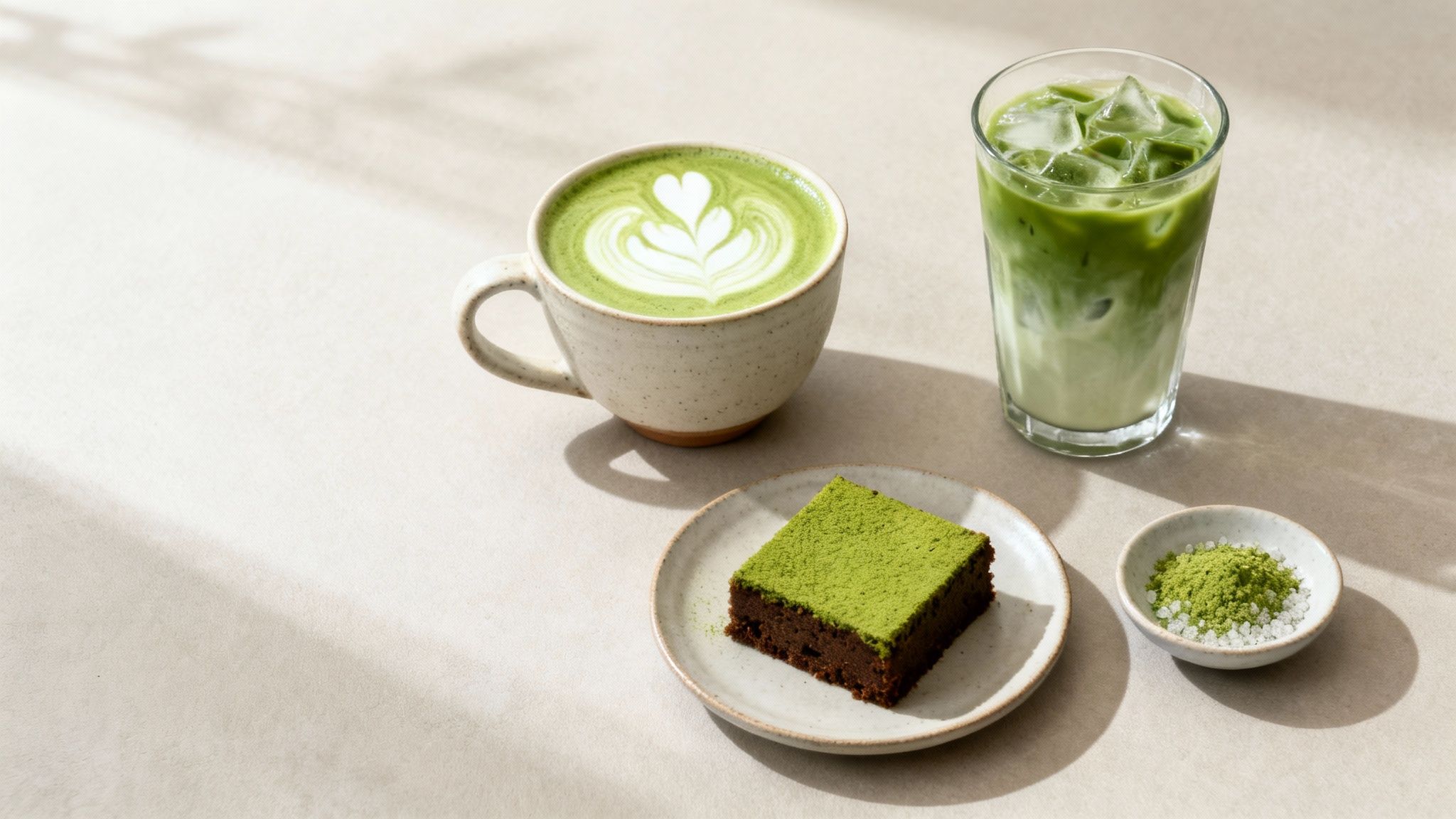
While there’s a special place in our hearts for a traditionally whisked bowl of matcha, the real fun begins when you take it beyond the chawan. Culinary-grade matcha, with its punchier flavour, is your secret weapon for adding a vibrant twist to drinks, bakes, and even savoury dishes.
And this is no fleeting trend. Matcha has firmly planted its roots in British food culture, with the UK market hitting a staggering £37.2 million in 2024. It’s set to climb to £77.5 million by 2033, which just goes to show how many of us are looking for new ways to get our green tea fix.
Crafting the Perfect Matcha Latte
The matcha latte is a café classic for a reason—it’s creamy, comforting, and a brilliant daily ritual. The good news is, making a great one at home is incredibly simple.
For a hot latte, you’ll want to make a smooth matcha paste first. Sift a teaspoon of matcha into your favourite mug, add about 60ml of hot (not boiling!) water, and give it a good whisk until it's frothy. Next, steam around 180-200ml of your milk of choice. Oat and almond milk are fantastic partners, as their creaminess balances matcha's earthy notes perfectly. Pour the steamed milk over your matcha shot, add a touch of honey if you fancy, and you're done.
Fancy an iced one? Just prepare the matcha shot in the same way, but let it cool for a moment. Fill a tall glass with ice, pour in your milk, and then gently add the matcha on top for that beautiful layered look before giving it a stir.
Energising Smoothies and Vibrant Bakes
A spoonful of matcha is a powerhouse addition to your morning smoothie, offering a gentle lift and a healthy dose of antioxidants. Its slightly vegetal taste works wonderfully with sweet fruits like banana and mango, or even greens like spinach.
Just toss one or two teaspoons of culinary-grade matcha into the blender with everything else. If you're looking for inspiration, this energy smoothie recipe is a great place to start.
In baking, matcha powder brings a stunning colour and a complex, earthy flavour that beautifully cuts through sweetness. It’s a game-changer in brownies, shortbread, and cakes. As a rule of thumb, start by swapping one or two tablespoons of flour for matcha in a standard recipe.
Pro Tip: Always sift your culinary matcha with the other dry ingredients like flour and sugar. This simple step ensures it’s evenly distributed, preventing any bitter clumps and giving your bake a consistent colour and flavour.
Perfect Matcha Ratios for Popular Recipes
Getting the right balance of matcha to liquid is key to avoiding a brew that’s either too weak or overwhelmingly bitter. Here’s a quick guide to help you nail the ratios for some of the most popular matcha creations.
| Recipe | Matcha Powder | Liquid/Base | Notes |
|---|---|---|---|
| Traditional Tea | 1 tsp (2g) | 70ml hot water (80°C) | The classic usucha (thin tea) preparation. |
| Hot/Iced Latte | 1 tsp (2g) | 60ml hot water + 180ml milk | Create the matcha shot first, then add the milk. |
| Smoothie | 1-2 tsp (2-4g) | 250-300ml liquid + other ingredients | Adjust to taste. Culinary grade is best here. |
| Baking | 1-2 tbsp (8-16g) | Per 200g of flour | Sift with dry ingredients for even distribution. |
These are just starting points, of course. Feel free to adjust the amount of matcha based on your personal taste and the specific recipe you're working with.
A Savoury Surprise: Matcha Salt
Don't pigeonhole matcha into the sweet category! A sprinkle of matcha salt can add a sophisticated, umami-rich kick to all sorts of savoury dishes. It’s brilliantly simple to make and a truly impressive way to use up your powder.
- To make: In a small bowl, just mix one part culinary-grade matcha with four parts good-quality sea salt.
- To use: Sprinkle it over popcorn, tempura, fried chicken, or even roasted vegetables. It adds a pop of colour and a unique flavour you won't get anywhere else.
Common Matcha Mistakes and How to Fix Them
Even with the best of intentions, your first few attempts at making matcha can sometimes go a bit sideways. We've all been there – a lumpy texture, a surprisingly bitter taste, or a sad, foam-less surface can be really frustrating. It might make you feel like you’re doing something wrong.
The good news is that these hiccups are almost always down to small, easily fixed details in your preparation. Getting the hang of using matcha powder is all about learning the little things that make a huge difference. With a few simple tweaks, you can sort out these common issues and start making a brilliant cup every single time.
Why Is My Matcha Lumpy?
If you're finding little green clumps at the bottom of your bowl, the culprit is almost always skipping the sifting step. Matcha is so incredibly fine that it's prone to static, causing the tiny particles to cling together. When you pour water onto this clumpy powder, the clumps become stubborn and almost impossible to whisk away, leaving you with a gritty texture.
The fix is simple: always sift your matcha powder through a fine-mesh sieve before adding any water. This takes two seconds but it breaks up any clumps and aerates the powder, helping it dissolve smoothly for a silky, lump-free finish. It's a non-negotiable step for a perfect cup.
Solving the Bitter Taste Problem
Does your matcha have a harsh, bitter edge? The cause is nearly always your water temperature. Using boiling water, or anything over 80°C, is like scorching the delicate tea leaves. This burn releases too many tannins, creating an astringent flavour that completely overpowers the matcha's natural sweetness and umami notes.
The key is to watch your temperature. You're aiming for water that is steaming gently, not bubbling—ideally between 75-80°C. If you don’t have a fancy temperature-controlled kettle, no problem. Just boil the water and let it sit for a couple of minutes to cool down before you pour. This tiny bit of patience will make all the difference to the flavour.
Another common reason for bitterness is simply using too much powder for the amount of water. If you're not sure about your ratios, our guide on how much matcha per cup to use can help you find that perfect balance.
Creating That Perfect Froth
Struggling to get that lovely, creamy foam on top? A flat surface is usually a sign that the whisking technique needs a slight adjustment. A slow, circular stirring motion just won't create enough agitation to get the air into the tea.
To build that beautiful, frothy layer, you need a quick, energetic whisking motion. Think fast wrist action in a 'W' or 'M' shape, keeping the tines of your bamboo whisk just off the bottom of the bowl. This vigorous movement whips air into the mixture, creating a gorgeous, creamy layer of tiny bubbles on the surface.
A Few Common Matcha Questions
As you get to grips with using matcha powder, you’re bound to have a few questions. From how to store it properly to how much is too much, getting the little details right can make all the difference. Let's tackle some of the queries we hear most often.
Nailing these basics will help you get the most out of every single scoop, ensuring your matcha stays fresh and you feel confident making it part of your daily routine.
How Should I Store My Matcha Powder to Keep It Fresh?
Think of matcha as a delicate, fresh ingredient. Its biggest enemies are light, heat, and air, all of which will dull its vibrant colour and nuanced flavour. The absolute best way to protect it is to keep it in its original airtight tin and pop it straight into the fridge.
This cool, dark environment is your best bet for slowing down the oxidation process. Once you’ve opened a tin, try to use it within two to three months for the best taste. And always, always make sure the lid is screwed on tight after each use to keep out moisture and any stray fridge smells.
How Much Caffeine Is in a Serving of Matcha?
A typical bowl of matcha, made with about one teaspoon or 2 grams of powder, has around 70 milligrams of caffeine. That’s a bit more than your average steeped green tea but usually a little less than a standard cup of coffee.
But the number doesn't tell the whole story. What makes matcha so unique is the presence of L-theanine, an amino acid that works alongside the caffeine. This partnership creates a sense of calm, focused alertness—none of the jitters or sudden crashes you might get from coffee.
This synergy between L-theanine and caffeine is what people love about matcha. It delivers a state of relaxed focus that can last for hours, making it perfect for a productive morning at work or a pre-workout boost.
Can I Use Matcha Powder Every Day?
Absolutely. A daily bowl of matcha can be a wonderful, healthy ritual. It’s packed with antioxidants, especially EGCG (epigallocatechin gallate), which is known to support both metabolism and brain function. For most people, one or two servings a day—so about 1-2 teaspoons of powder—is a great amount.
Of course, like with any caffeinated drink, it’s always smart to listen to your body and enjoy it in moderation. This is especially true if you know you’re sensitive to caffeine. By choosing a high-quality, ethically sourced matcha, you can be sure you’re drinking a pure, clean product, making your daily ritual as beneficial as it is delicious.
Ready to start your own matcha journey with a powder you can trust? Explore the premium, ethically sourced collection from Jeeves & Jericho and find the perfect grade for your daily ritual. Discover our matcha selection.