


The magic of Sencha green tea really comes down to its incredible concentration of antioxidants, especially powerful compounds called catechins like EGCG. These are the heroes behind its ability to support everything from heart health to brain function. It also offers a unique ‘calm energy’ by combining L-theanine and caffeine, giving you mental clarity without the jitters you might get from coffee.
What Is Sencha and Why Is It a Wellness Staple?
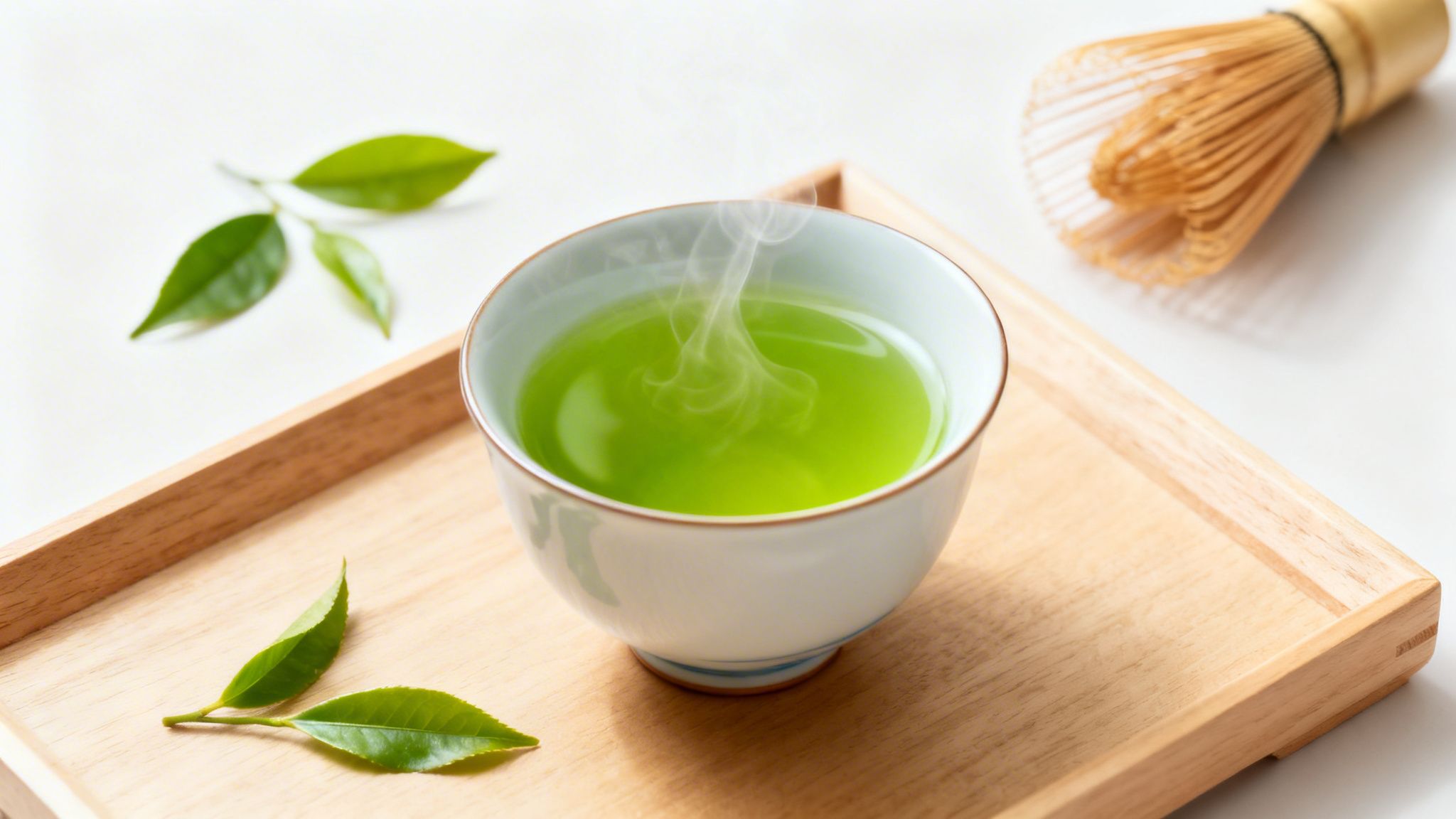
Step into the world of Sencha, Japan’s most beloved green tea. For centuries, it's been far more than just a refreshing drink; it’s a cornerstone of a healthy lifestyle, celebrated for its vibrant, grassy flavour and deep cultural roots. What really sets it apart from other green teas is how it’s made.
Unlike many other teas that are pan-fired to stop them from oxidising, Sencha leaves are briefly steamed right after being picked. This simple but crucial step is what locks in their brilliant green colour and, most importantly, preserves the potent, health-boosting compounds that make Sencha so special.
Think of Sencha as a source of calm, focused energy. It provides a gentle lift that sharpens the mind while soothing the body, making it the perfect companion for a productive afternoon or a quiet moment of reflection.
A Quick Look At Sencha’s Benefits
To give you a snapshot of what makes Sencha a true wellness hero, here’s a quick rundown of the key benefits we’ll be exploring in more detail.
| Sencha Green Tea At A Glance Key Benefits | ||
|---|---|---|
| Benefit Area | Key Compound | Primary Advantage |
| Cellular Health | Catechins (EGCG) | Provides powerful antioxidant protection against cell damage. |
| Heart & Metabolism | Flavonoids & Catechins | Supports cardiovascular health and a balanced metabolism. |
| Cognitive Function | L-theanine & Caffeine | Promotes a state of calm alertness and mental clarity. |
| Weight Management | EGCG & Caffeine | May help boost metabolism and support fat oxidation. |
| Oral Health | Catechins | Fights bacteria that can cause bad breath and plaque. |
Each of these points represents a piece of the puzzle, showing how a simple daily cup of Sencha can contribute to your overall well-being.
A Modern Take on a Traditional Brew
The appeal of Sencha is growing fast, especially among people looking for healthier habits. Here in the UK, sales of green teabags have jumped by a massive 50% in recent years as more of us look for alternatives to traditional black tea. It’s a trend being led by younger generations, with 32% of Gen Z daily tea drinkers now choosing green tea, marking a real shift towards wellness-focused brews. You can read more about the resurgence of tea culture in the UK.
Sencha’s unique steaming process is the secret to its superior health profile. By preventing oxidation, it ensures that the maximum amount of beneficial catechins—the natural compounds behind most of its wellness advantages—are preserved from the garden to your cup.
This makes Sencha more than just another tea; it’s a proactive choice for a healthier lifestyle. It’s also just one of many fascinating varieties out there. If you’re curious to learn more, have a look at our guide to different types of tea from around the world.
Understanding Sencha's Antioxidant Power
To really get to grips with what makes Sencha so special, we need to zoom in and see what's happening at a microscopic level. It turns out that Sencha is brimming with powerful natural compounds called antioxidants, which are a bit like your body's personal clean-up crew.
Think of your body as a busy city. Everyday life, from converting food to energy to simply being out and about, creates unstable molecules known as free radicals. These are the tiny vandals of your system, causing a type of cellular wear and tear called oxidative stress. Over time, this can lead to premature ageing and other health problems.
This is where Sencha’s antioxidants come to the rescue. They get to work neutralising these free radicals, helping to protect your cells and keep your internal city in top working order.
The Power of Catechins and EGCG
The real heroes of Sencha's antioxidant squad are a group of polyphenols called catechins. While there are a few different types, one really stands out from the crowd for its incredible potency: Epigallocatechin gallate, or EGCG for short.
EGCG is the most plentiful and powerful catechin in green tea, and it's credited with many of its most celebrated health benefits. It's a true guardian, working to defend your body from the inside out.
The reason Sencha is so packed with these compounds comes down to how it's made. The fresh tea leaves are steamed very soon after they’re picked. This clever step halts the oxidation process and brilliantly preserves a much higher concentration of these delicate catechins than you'd find in other teas.
That steaming process is the secret behind Sencha’s vibrant green colour and its full antioxidant potential. It means that when you brew a cup, you're getting a rich infusion of these protective compounds, just as nature intended.
This high level of EGCG is directly tied to the tea's ability to support your body's defences and promote a general sense of wellbeing.
From Cellular Defence to Disease Prevention
The protective work of these antioxidants is more than just routine maintenance. A growing body of research shows that the catechins in green tea, especially EGCG, are key players in shielding our bodies from the kind of oxidative stress linked to long-term health issues. By mopping up those harmful free radicals, these compounds help protect vital parts of our cells, like DNA and proteins, from damage. You can dive deeper into the research on how green tea compounds support cellular health.
This has some profound implications. For instance, EGCG has shown anti-inflammatory properties, which can help soothe the kind of low-level, chronic inflammation linked to all sorts of conditions. Its ability to support healthy cell cycles is another area that has scientists very interested.
By helping to maintain cellular integrity and reduce inflammation, the antioxidants in Sencha play a vital part in any proactive approach to wellness.
What This Means for Your Daily Cup
Every cup of Sencha is so much more than a refreshing drink; it’s a delivery of these cell-protecting antioxidants. Making it a part of your daily ritual is a simple, enjoyable way to support your body's natural resilience.
Here’s a quick look at the antioxidant journey, from leaf to cup:
- Fresh Leaves: It all starts with young, tender tea leaves, which are naturally rich in catechins.
- Gentle Steaming: The brief steaming process locks in these precious compounds, stopping them from breaking down.
- Proper Brewing: Using water that’s around 70-80°C—not boiling—ensures you extract the good stuff without damaging it.
- Your Body: Once you take a sip, these antioxidants get straight to work, helping to neutralise free radicals and support your overall health.
Knowing this journey helps you appreciate that a cup of Sencha isn't just a beverage. It's a functional drink that actively contributes to your wellbeing, laying the groundwork for the more specific health benefits we'll look at next.
How Sencha Supports Your Heart and Metabolism
Now that we’ve seen how sencha’s antioxidants protect our cells, we can look at how that translates into real, tangible benefits. Two of the most impressive areas are heart health and metabolic support, where the catechins in sencha play a starring role in keeping your body’s complex systems running like clockwork.
Think of your circulatory system as a huge network of motorways. For traffic to flow smoothly, these roads need to be clear, flexible, and free of obstructions. This is where sencha’s catechins, especially EGCG, come in as a brilliant little maintenance crew.
These potent compounds help look after your cardiovascular system in a few key ways. They contribute to healthy cholesterol levels, particularly by targeting the "bad" LDL cholesterol that can cause build-ups in arteries. They also help maintain healthy blood pressure and improve the function of the endothelium—the delicate lining of your blood vessels.
Keeping Everything Flowing Freely
A healthy endothelium is vital for good circulation because it helps your blood vessels relax and widen, allowing blood to move without restriction. When it’s working well, it takes the strain off your heart and contributes to your overall cardiovascular resilience.
- Cholesterol Balance: Sencha’s catechins can help prevent LDL cholesterol from oxidising, a crucial first step in the formation of arterial plaque.
- Blood Vessel Function: They encourage the production of nitric oxide, a molecule that helps blood vessels relax, improving blood flow.
- Blood Pressure Support: By helping arteries stay flexible and clear, sencha can help keep blood pressure within a healthy range.
A daily cup of sencha is like a gentle, regular tune-up for your circulatory system. It’s not a quick fix, but a consistent habit that helps keep your internal motorways clear for the long journey ahead.
This kind of proactive support is a big deal in the UK, where heart health is a major concern for many. The growing demand for green tea here is partly down to its recognised ability to improve blood flow and reduce clot risks. With Brits drinking over 100 million cups of tea a day, making one of them a sencha is a simple but powerful step towards better heart health. You can read more about the UK's growing appreciation for green tea here.
A Gentle Nudge for Your Metabolism
Beyond the heart, another of sencha’s well-known benefits is its ability to support a healthy metabolism. Your metabolism is essentially the engine that turns food and drink into energy. A more efficient engine burns fuel more effectively, and the compounds in sencha can give it a gentle nudge in the right direction.
The combination of EGCG and the natural caffeine in sencha work together to give your metabolic rate a subtle lift. This process, known as thermogenesis, encourages your body to burn slightly more calories, even when you’re resting.
On top of this, studies suggest these same compounds can also encourage fat oxidation – the process where your body breaks down stored fat to use as energy.
Of course, it’s important to see sencha as a partner in a healthy lifestyle, not a magic bullet for weight loss. But when you combine it with a balanced diet and regular exercise, it can help create a better internal environment for managing your weight.
The Sencha Synergy
The real magic is in how sencha’s active compounds work together. Neither caffeine nor EGCG is as effective on its own as when they’re combined in a natural, whole-leaf tea.
| Compound | Metabolic Role | How It Helps |
|---|---|---|
| EGCG (Catechin) | Fat Oxidation | Encourages the body to tap into stored fat for energy. |
| Caffeine | Thermogenesis | Gives a gentle boost to the body's baseline calorie-burning rate. |
| Combined Effect | Synergistic Boost | The two work together, amplifying each other's effects for greater support. |
This synergy offers a sustainable and gentle approach. Unlike harsh stimulants, sencha delivers its metabolic benefits without the jitters or the crash. It makes for an ideal daily drink for anyone looking to support their body’s natural energy-burning processes.
Sharpen Your Mind and Find Your Focus

While the physical perks of sencha are brilliant, its effects on the mind are where things get really interesting. Sencha has this uncanny ability to sharpen your focus while keeping you calm, making it the perfect partner for anyone needing a clear head without the jittery side-effects of other caffeinated drinks.
The secret to this is a fascinating natural partnership between two compounds in the tea leaves: L-theanine and caffeine. This pair works in harmony to give you a smooth, sustained energy boost—a world away from the jarring spike and subsequent crash so many of us associate with a strong cup of coffee.
Think of L-theanine as a kind of mental traffic controller. It’s an amino acid that encourages alpha waves in the brain, the very same ones that are active when you’re in a state of relaxed focus, like during meditation or when you’re lost in a creative project. It cleverly smooths out the rough edges of caffeine, leaving you with pure, calm focus.
The Magic of Calm Alertness
When you sip a cup of sencha, you get the gentle lift from a modest dose of caffeine, but the L-theanine makes sure that energy is delivered steadily. This creates a unique feeling of 'calm alertness' that's ideal for powering through your work, studying for an exam, or just gracefully navigating a hectic day.
This natural synergy is one of the most celebrated green tea sencha benefits. The combination has been shown to improve mood, reaction times, and even memory. Better still, L-theanine also gives neurotransmitters like dopamine a nudge, which helps to ease anxiety and promote a general sense of wellbeing.
Sencha doesn’t just wake you up; it helps you focus. The L-theanine acts as a counterbalance to the caffeine, smoothing out the energy release for a clean, jitter-free mental lift that can last for hours.
For many, discovering sencha is a key step to improve mental clarity and hit peak productivity without the burnout.
Sencha vs Coffee: A Cognitive Comparison
Ever wondered how your morning brew really stacks up? While both sencha and coffee can kick-start your brain, they go about it in very different ways, leading to a distinct difference in how you feel and perform.
| Feature | Green Tea (Sencha) | Coffee |
|---|---|---|
| Energy Release | Slow, sustained, and smooth | Fast, sharp spike |
| Key Compound | L-theanine + Caffeine synergy | Caffeine |
| Mental State | Calm, relaxed alertness | Heightened, sometimes anxious, energy |
| The "Crash" | Minimal to none | Often leads to a noticeable crash |
| Anxiety/Jitters | Rare, L-theanine mitigates this | Common, especially in higher doses |
In short, if you're looking for clean, sustained focus without the potential for a slump later, sencha is an outstanding choice.
Long-Term Brain Protection
The cognitive boost from sencha isn't just a short-term affair. Those powerful catechins we mentioned earlier, especially EGCG, are also hard at work protecting your brain for the long haul. These antioxidants act like a security detail for your brain cells, shielding them from the oxidative stress that contributes to age-related cognitive decline.
By fighting cellular damage and reducing inflammation, these compounds help to maintain your brain's health and resilience over time. Think of a regular cup of sencha as a simple, proactive step towards supporting your mind for years to come. It’s a similar protective principle found in its powdered cousin, which you can read about in our guide to the health benefits of matcha powder.
Choosing sencha is a conscious decision to nourish both your body and mind. Its immediate gift of focus and long-term brain-boosting effects make it a truly exceptional addition to any daily routine.
How to Brew the Perfect Cup of Sencha
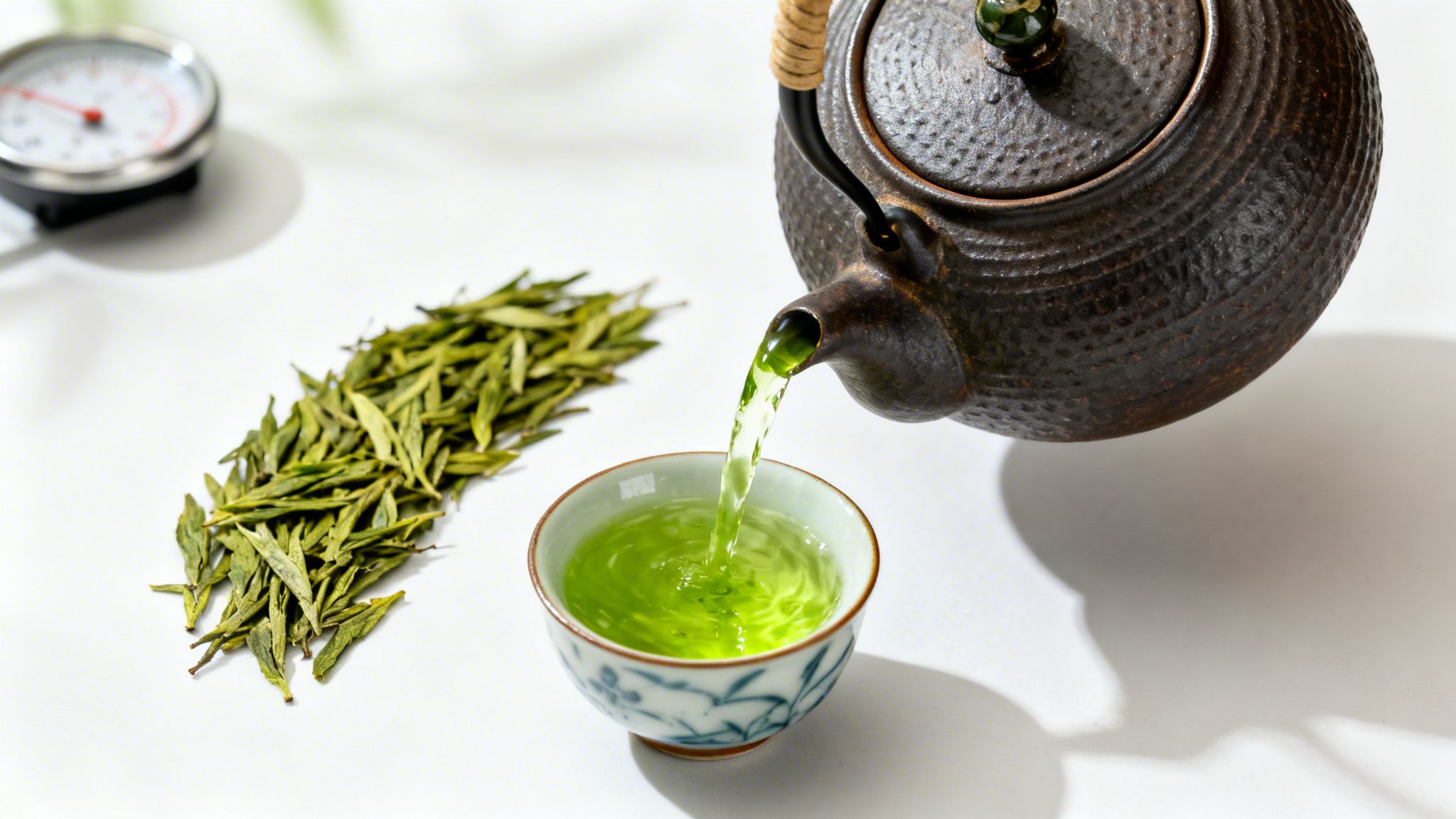
To really unlock sencha’s delicate, grassy flavour and its full range of health benefits, the way you brew it is everything. It's not about being complicated; it's about respecting the delicate nature of the leaves. A few simple tweaks can be the difference between a bitter, disappointing brew and a smooth, deeply rewarding cup.
It all comes down to three things: the temperature of your water, how much tea you use, and how long you let it steep. Get these right, and you'll coax out all those beneficial compounds we've talked about, like EGCG and L-theanine, without scorching the leaves and unleashing a wave of bitterness.
The Three Pillars of Perfect Sencha
Think of these as your golden rules. Nailing each one is key to finding that perfect balance between flavour and the healthy properties locked inside the leaves.
-
Water Temperature is Crucial: This is easily the most common mistake. Pouring boiling water over sencha is far too harsh. It burns the leaves, killing the sweet, nuanced notes and releasing a flood of tannins that make the tea taste astringent and bitter. For sencha, cooler is always better.
-
Mind Your Measurements: You don't need a scientist's precision, but a good starting point helps. Too little leaf, and you’ll get a weak, watery tea. Too much, and the flavour can become overpowering very quickly.
-
Timing is Everything: Sencha infuses incredibly fast. Letting it steep for too long is another classic route to bitterness. The first infusion, especially, needs to be short and sweet to capture that fresh, vibrant character.
A Step-by-Step Brewing Guide
Ready to give it a go? Here’s a simple, reliable method to start with. Feel free to adjust the timings and amounts to suit your own taste once you get the hang of it.
The Golden Rules of Brewing:
- Leaf Quantity: Start with about one teaspoon (2-3 grams) of loose-leaf sencha for every cup (around 150-200 ml) of water.
- Water Temperature: Aim for around 80°C (176°F). If you don’t have a fancy temperature-controlled kettle, no problem. Just boil the water, then let it sit for a minute or two to cool down before you pour.
- Steeping Time: For the first brew, a mere 60 to 90 seconds is all you need. That’s plenty of time to pull out the best of its flavour.
This isn't just about taste; science backs it up. Studies show that brewing at 80°C hits the sweet spot for extracting catechins like EGCG, giving you the good stuff without too many of the bitter-tasting tannins. You can dive deeper into the science of tea extraction here if you're curious.
One of the best things about a quality sencha is that you can brew the same leaves more than once. For your second infusion, try slightly hotter water and a much shorter steep—sometimes just 30 seconds is perfect—and you’ll discover a whole new layer of flavour.
Taking this little bit of care not only makes for a much better cup of tea but also ensures you're getting the most wellness from every single leaf. If you're after more tips, pop over to our guide on how to make good-tasting green tea.
Sourcing Quality Sencha for the Best Experience
You can know all the health benefits and master the perfect brewing technique, but it all comes down to one thing: the quality of the tea itself. Not all green teas are created equal, and starting with a superior leaf is the only way to get both that incredible flavour and the full range of health perks we’ve been talking about.
Before you even think about boiling the kettle, a premium sencha should be a treat for the eyes and nose. Open the bag and look closely. The leaves should have a vibrant, deep emerald green colour. This is your first clue that they were harvested at their peak and steamed quickly to lock in all that goodness. If you see dull, yellowish, or brownish leaves, it’s likely older stock or a sign of poor processing – and that means fewer of those precious antioxidants.
Now, take a deep breath. A high-quality sencha has a fresh, sweet, and unmistakably grassy aroma, a bit like a spring meadow with a hint of the sea. That clean, vegetal scent is a signature of its rich amino acid content, especially the L-theanine that gives you that lovely feeling of calm focus.
Our Commitment to Quality and Ethical Sourcing
At Jeeves & Jericho, we’re firm believers that an extraordinary cup of tea starts long before it reaches your kitchen. It begins with an unwavering commitment to quality and transparency right from the source. That’s why we go directly to the celebrated tea gardens of Uji, Japan—a region that has been producing some of the world’s finest green teas for centuries. This direct relationship means we can be sure every single batch meets our exacting standards.
Choosing ethically sourced tea isn't just about feeling good; it’s about a better product. When farmers are treated fairly and sustainable practices are used, the result is healthier soil, more vibrant tea plants, and ultimately, a more flavourful and potent leaf in your cup.
This dedication is at the heart of everything we do. It’s how we know our tea is pure, the farms we work with are sustainable, and the final cup you drink is the best it can be.
Why Jeeves & Jericho Sencha Stands Apart
Our philosophy is simple: we want to connect you with the best tea the world has to offer, without compromise. The journey of our sencha, from the pristine fields of Uji to your teapot, is one defined by care and a deep respect for tradition.
Here’s what makes our sencha a truly superior choice:
- Exceptional Origin: Sourced from Uji, the historic heartland of Japanese tea excellence, giving it a pedigree you can taste.
- Vibrant Flavour Profile: Our sencha delivers those classic brisk, vegetal notes, but with a pleasing sweetness and a smooth, buttery finish.
- Peak Freshness: We take great care to ensure our tea is handled properly from farm to cup, preserving its bright colour, fresh aroma, and potent health benefits.
- Ethical Partnership: Our sustainable and transparent sourcing supports the skilled farmers who cultivate this incredible tea, ensuring their craft can continue for generations.
When you choose Jeeves & Jericho, you’re not just buying tea. You’re investing in a product crafted with integrity, designed to deliver the ultimate sencha experience.
Your Sencha Questions, Answered
As you get to know this beautiful Japanese tea, a few questions are bound to pop up. We’ve put together some answers to the queries we hear most often, helping you get the very best out of every cup.
How Much Caffeine Is In Sencha?
You’ll find a modest 20-30 milligrams of caffeine in a typical cup of sencha. That’s generally less than half of what you’d get from a filter coffee.
But the number doesn’t tell the whole story. Sencha is also rich in an amino acid called L-theanine, which works in harmony with the caffeine. This partnership is what creates that feeling of 'calm alertness' – a gentle, steady lift without the jittery spike and subsequent crash you sometimes get from coffee. It's perfect for that mid-afternoon moment when you need to refocus.
Can I Drink Sencha Every Day?
Absolutely. For most people, enjoying sencha daily is a wonderful habit. Drinking 2-3 cups per day is a great way to tap into its wellness benefits without overdoing it on the caffeine.
One small thing to keep in mind: tannins in tea can slightly affect how your body absorbs iron from plant-based foods. If you’re managing an iron deficiency, you might want to enjoy your tea between meals, rather than right alongside them.
Of course, if you have any health conditions, are pregnant or breastfeeding, it’s always a good idea to have a quick chat with your doctor before making any big changes to your diet.
What's the Difference Between Sencha and Matcha?
They both come from the same Camellia sinensis plant, but sencha and matcha are two completely different tea experiences. It all comes down to how they’re grown, processed, and prepared.
- Sencha: You brew these whole, sun-grown tea leaves in hot water. Once infused, you remove the leaves and simply drink the golden-green liquor.
- Matcha: This is a vibrant powder made from stone-ground tea leaves that have been carefully shaded from the sun before harvest. You whisk the powder directly into water, meaning you consume the entire leaf.
Because you’re drinking the whole leaf with matcha, you get a much more concentrated dose of everything – caffeine, L-theanine, and antioxidants – compared to a cup of brewed sencha.
How Should I Store My Loose Leaf Sencha?
To keep your sencha tasting as fresh and vibrant as the day it was packed, good storage is essential. Tea has four enemies: light, air, heat, and moisture.
Your best bet is to keep the loose leaves in an airtight, opaque container tucked away in a cool, dark place, like a kitchen cupboard. Steer clear of the fridge, as condensation can introduce moisture, and your delicate tea leaves might pick up unwanted odours from last night’s leftovers. Stored properly, a quality sencha will keep its beautiful flavour and aroma for months.
Ready to discover the exceptional flavour and wellness of authentic Japanese tea? Explore our premium, ethically sourced collection at Jeeves & Jericho and find your perfect cup today. You can learn more at https://www.jeevesandjericho.com.