


Say goodbye to the bitter, cloudy iced teas of your past. We’re going to walk through how to craft incredibly smooth, flavourful iced green tea right in your own kitchen. The real secret isn't complicated; it comes down to two things: using high-quality tea leaves and picking the right brewing method.
Why Your Brewing Method Matters
Learning to brew a proper iced green tea is about more than just a recipe. It's about understanding how small tweaks in temperature and time can completely change the drink in your glass. Nail the fundamentals, and you’ll sidestep common pitfalls like bitterness, creating a sophisticated, healthy drink for any time of day. This is where starting with premium leaves, like those from Jeeves & Jericho, really lays the groundwork for something special.
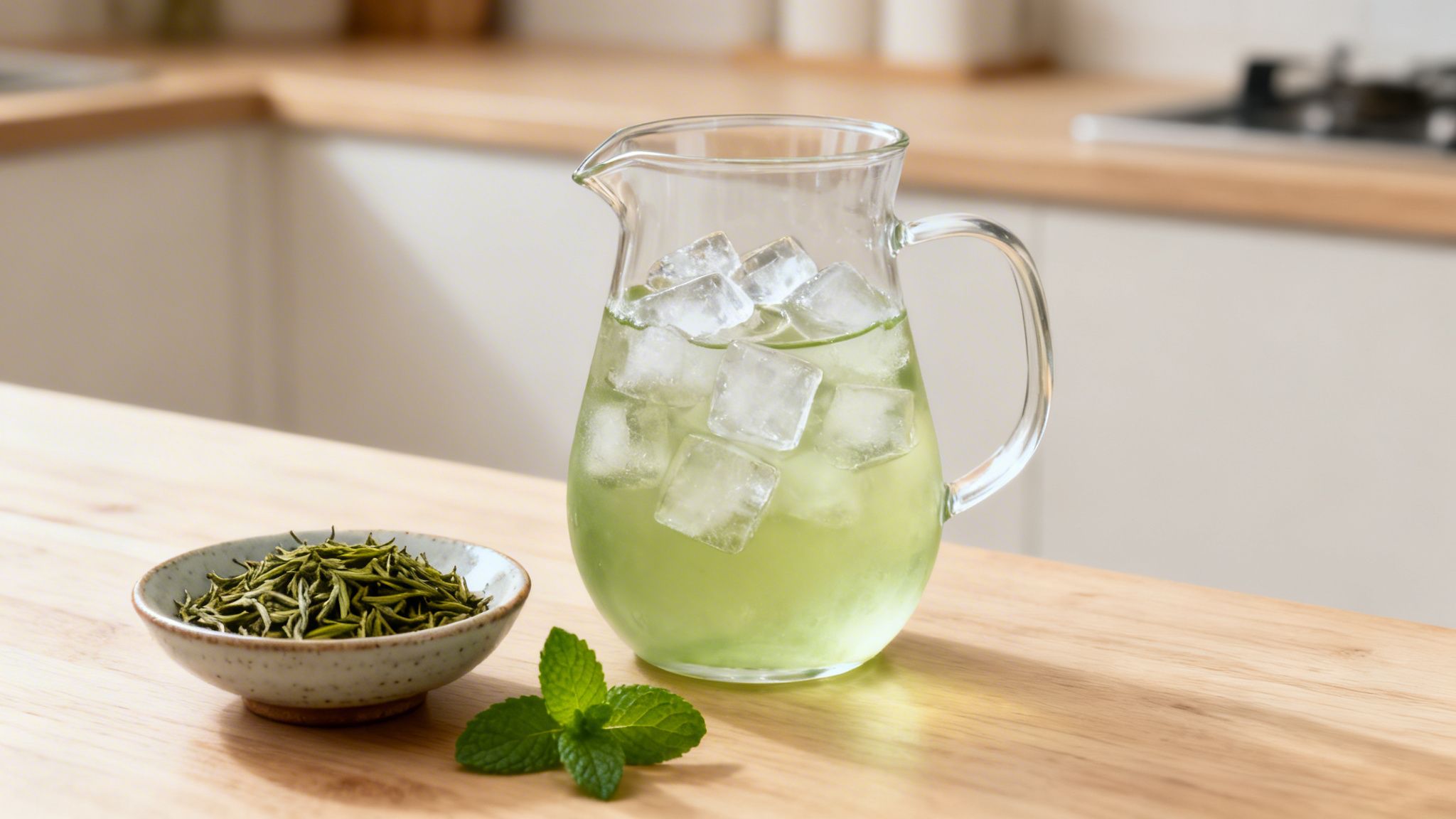
It’s clear there’s a growing appreciation for a proper cup of tea. The UK's green tea market was valued at an impressive $1,150 million, and it's set to nearly double, reaching $2,230 million by 2035. This boom is largely thanks to health-conscious Brits looking for the antioxidant benefits of catechins, which help fight oxidative stress. It’s exactly why it’s so rewarding to master your own home brew with great ingredients. You can actually read the full market research on this green tea trend if you fancy a deep dive.
What This Guide Covers
We’ll move beyond the generic advice and give you actionable steps for four very different, but equally brilliant, brewing methods. You don't need to be a tea master to get fantastic results.
- Japanese Flash-Chill: The go-to for an instantly refreshing, aromatic brew that locks in the tea’s brightest, most vibrant notes.
- Classic Cold Brew: The ultimate set-and-forget method. It yields an incredibly smooth, naturally sweet tea with almost zero bitterness.
- Concentrated Brew for Pitchers: An efficient technique perfect for making large batches for parties or just to have a jug ready in the fridge all week.
- Iced Matcha Latte: A creamy, contemporary take on iced tea that perfectly balances earthy matcha with your milk of choice.
Think of it like cooking. Choosing your base ingredient is half the battle. A chef wouldn’t use subpar produce, and the same principle applies here—selecting the right tea is crucial for the final flavour.
Each of these techniques creates a different character in the final drink. Once you get the hang of them, you can pick the perfect method for any mood or occasion. Before we jump in, you might want to have a look at our guide on what is the best green tea to find one that suits your taste.
The Japanese Flash-Chill Method for Instant Flavour
When you want that vibrant, authentic flavour of iced green tea but don't have time for a cold brew, the Japanese flash-chill method is your answer. Known in tea circles as the kyusu method, it’s designed to capture the freshest, most delicate notes of the leaves. The idea is simple, but getting it just right requires a bit of precision.
You start by brewing a double-strength batch of hot tea. This concentrate is then poured straight over a glass packed with ice. The rapid cooling does something quite brilliant: it locks in all the bright, nuanced aromas and flavours that make green tea so special. Crucially, it stops the slow oxidation that happens as tea cools down gradually—the main culprit behind bitterness and astringency.

Why Flash-Chilling Works So Well
The magic here is all about thermodynamics. Hot water is fantastic at extracting the full spectrum of compounds from tea leaves, including those lovely amino acids like L-theanine and the delicate aromatic oils. By shocking the hot brew with ice, you halt any further chemical reactions that would otherwise continue as it cools, preserving that perfect "just-brewed" taste.
This method really gives you the best of both worlds—the deep extraction you get from a hot brew combined with the crisp, clean finish of an iced drink. There's a reason it's the go-to technique in speciality tea shops; it produces a consistently excellent glass of iced tea, on demand.
Pro Tip: Your choice of ice matters more than you might think. For the best results, use large, clear ice cubes made from filtered water. They melt much more slowly than cloudy, smaller cubes, meaning they cool your tea properly without diluting the flavour.
A Practical Recipe for One
Getting the ratio right is key to avoiding a watery, disappointing brew. Here’s a reliable starting point for a single serving that delivers a perfect balance every time.
-
Prep your glass and tea: Fill a heat-proof glass or cocktail shaker (around 350ml) to the brim with large ice cubes. In a separate teapot, measure out 4-5 grams of a quality loose-leaf Sencha or another Japanese green tea.
-
Brew the concentrate: Heat 150ml of filtered water to 75°C. Pour it over your tea leaves and let them steep for exactly 2 minutes. Any longer and you risk pulling out too many of those bitter tannins.
-
Flash-chill and serve: As soon as the two minutes are up, strain the hot tea concentrate directly over your ice-filled glass. The ice will melt just enough to create the perfect dilution. Give it a quick stir to make sure it’s fully chilled, and enjoy that remarkably fresh flavour straight away.
Cold Brewing for Ultimate Smoothness and Simplicity
If the flash-chill method is all about speed and bright, intense flavours, then cold brewing is its patient, laid-back cousin. This is the ultimate set-it-and-forget-it technique, and it’s your secret weapon for creating an iced green tea that’s exceptionally smooth, naturally sweet, and incredibly forgiving.
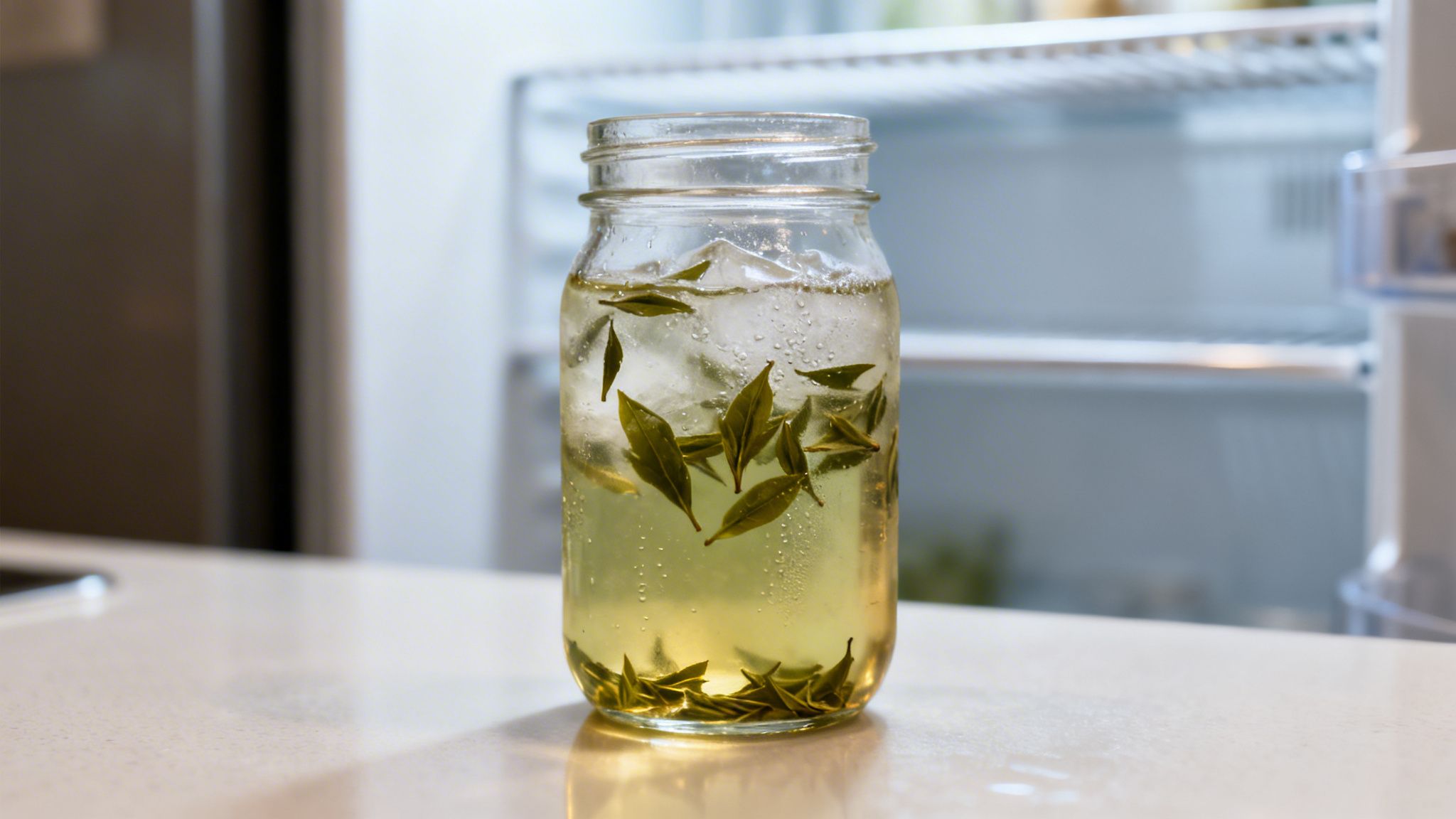
By steeping tea leaves in cold water over several hours, you’re doing a much gentler extraction. This slow, cool process is precisely what gives it such a unique flavour profile. Hot water can be a bit aggressive, quickly pulling out the bitter-tasting compounds called tannins. Cold water, on the other hand, gently coaxes out the sweeter, more delicate notes while leaving most of that bitterness behind.
Why Is Everyone Cold Brewing?
Honestly, the simplicity of cold brewing is its greatest strength. You don't need a special kettle with precise temperature settings or a timer going off. It's almost foolproof and gives you a consistently delicious result every single time. It's the perfect method for anyone who wants a refreshing, healthy drink ready and waiting in the fridge.
This gentle extraction has another benefit: it changes the caffeine and tannin levels. Studies have shown that a hot brew can extract up to 30% more caffeine, while cold brewing yields a much smoother drink with around 50% fewer tannins. It's a fantastic method for iced tea, and it's catching on, especially in the UK where green tea now has a 13% market share. Younger drinkers aged 18-24 are particularly keen, with 20% trying out new methods like cold brew.
For many of us in the tea world, cold brewing is the purest expression of the tea leaf. Without the influence of heat, the tea’s inherent sweetness and nuanced, grassy notes can truly shine. You're left with a drink that is both sophisticated and effortlessly refreshing.
Now that we've covered the two main approaches, let's put them side-by-side to make choosing the right one for you a little easier.
Hot Brew vs Cold Brew Iced Green Tea at a Glance
| Attribute | Hot Brew (Flash-Chill) | Cold Brew |
|---|---|---|
| Taste Profile | Bright, vibrant, slightly more astringent. Captures the 'lively' notes of the tea. | Exceptionally smooth, sweet, with very low bitterness. Mellow and nuanced. |
| Brew Time | Fast. Ready in under 10 minutes. | Slow. Requires 6-12 hours of steeping time. |
| Caffeine Level | Higher. Extracts more caffeine due to the hot water. | Lower. A gentler infusion results in less caffeine. |
| Best For | When you want a glass of iced tea right now. Great for teas with bold, vegetal notes. | Making a large batch to keep in the fridge. Perfect for delicate, sweet green teas. |
Both methods produce a fantastic cup of iced tea, but as you can see, the final result is quite different. It really comes down to whether you prioritise speed and vibrancy or smoothness and convenience.
A Simple Cold Brew Recipe
Ready to give it a go? All you need is a large glass jar or pitcher, some quality tea, and cold water.
Here’s a reliable ratio to start with.
- Get your ratio right: We find a good starting point is 10 grams of loose-leaf tea per litre of water. A tea like our Genmaicha, with its toasty rice notes, works beautifully for this.
- Combine and steep: Simply pop the loose leaves and cold, filtered water into your jar. Give it a gentle stir, cover it, and place it in the fridge.
- Be patient: This is the hard part! Let the tea steep for anywhere between 6 to 12 hours. The longer it sits, the stronger the flavour will be, so feel free to experiment and find what you like best.
- Strain and serve: Once it’s steeped to your liking, strain the leaves out and pour the tea over a glass full of ice. That’s all there is to it. For more tips, check out our detailed guide on brewing green tea cold.
Brewing a Tea Concentrate for Parties and Pitchers
Making iced green tea for a crowd calls for a different game plan than brewing a single glass. Rather than getting stuck in a cycle of brewing endless small batches, creating a tea concentrate is by far the smartest way to go. The whole trick is to brew a strong, full-bodied batch that can be diluted later without losing its character or, crucially, turning bitter.
The aim is to pull as much flavour as possible into a smaller amount of water. Then, when you're ready to serve, you just dilute this potent brew with cold water and ice. You instantly get a full-strength pitcher that tastes like it was freshly made. It’s a brilliant time-saver for summer get-togethers, barbecues, or even just prepping a week's supply of iced tea for yourself.
Perfecting Your Concentrate Ratio
Getting the numbers right is key to a good concentrate. You need enough tea so the flavour isn't lost when you dilute it, but you also have to be careful with the steep time and temperature to dodge any astringency. A more robust green tea is your best friend here—something with a bit of body, like a quality Gunpowder tea, works beautifully.
Here’s a reliable starting point for a concentrate that will make about two litres of iced tea:
- Tea: Use 20 grams of a strong loose-leaf green tea.
- Water: Heat 500ml of filtered water to 80°C. The slightly higher temperature helps pull more flavour out for the concentrate.
- Steep Time: Let the leaves infuse for exactly 3 minutes. This is just long enough to extract those deep flavours without letting any harsh bitterness creep in.
As soon as the three minutes are up, strain the leaves and get the concentrate cool as quickly as you can. An ice bath is perfect for this—just pop your heatproof container of concentrate into a larger bowl filled with ice and water.
Think of a tea concentrate like making a great squash or cordial. You want the base to be packed with flavour so that when you add water, it doesn't just taste like a watered-down version of the original. It should taste just right.
Serving and Flavouring Your Pitcher
Once your concentrate has cooled, it's ready to go. The real beauty of this method is how simple it is when it's time to pour. A straightforward ratio of one-part concentrate to three-parts cold water works a treat. For the 500ml of concentrate you just made, that means adding it to a pitcher with 1.5 litres of cold, filtered water.
This is also the perfect moment to get creative and infuse other flavours into your tea.
- Fresh Mint: Chuck a generous handful of fresh mint sprigs into the hot concentrate right after you've strained the tea leaves. Let it infuse while the liquid cools.
- Ginger Zest: A few slices of fresh ginger will add a lovely, warming spice that's a brilliant contrast to the cool tea.
- Citrus Peel: Use a vegetable peeler to get wide strips of lemon or lime peel (try to avoid the bitter white pith) and add them to the hot concentrate.
Little additions like these can turn a simple pitcher of iced green tea into something really special for any occasion. Just remember to fill the pitcher with plenty of ice right before serving to keep it perfectly chilled.
Crafting the Perfect Iced Matcha Latte
Moving on from loose-leaf tea, the iced matcha latte is a vibrant, creamy, and thoroughly modern way to enjoy green tea over ice. But a truly great matcha latte begins long before you pick up a whisk. It all starts with the powder.
You'll want a high-quality, ceremonial-grade matcha, ideally from a respected region like Uji in Japan. The fine texture and distinct sweet, umami flavour are what make the difference between a good latte and a great one.
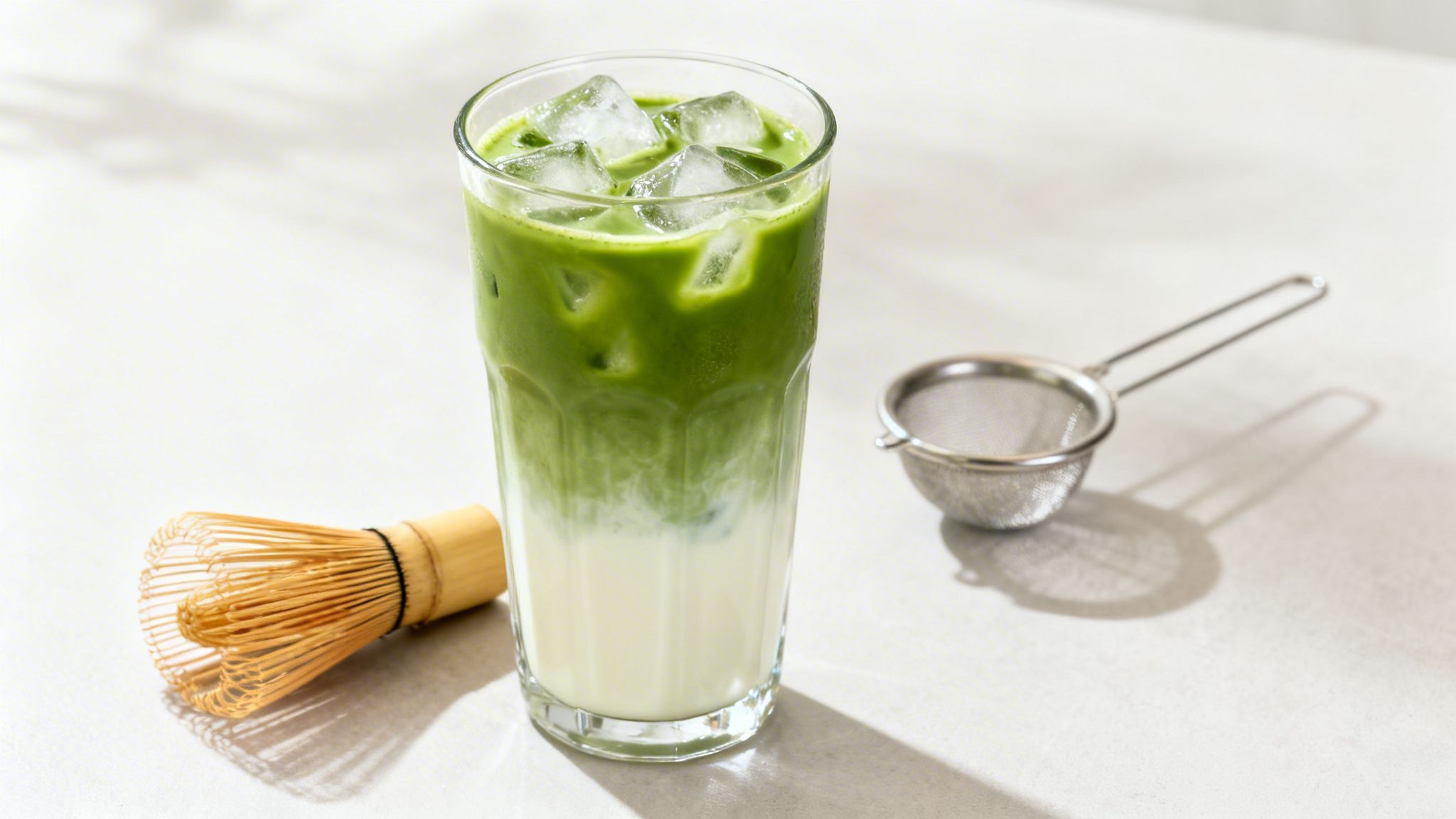
The actual process is a simple, satisfying ritual. But there’s one step you absolutely cannot skip: sifting the matcha through a fine-mesh sieve. It might seem fussy, but this little action is your secret weapon against clumps, ensuring the final drink is silky smooth, not gritty.
Creating a Silky Smooth Emulsion
Once sifted, it's time to create a smooth paste. Add just a splash of warm—never boiling—water to the powder and whisk it like you mean it until you see a fine foam appear. The traditional bamboo whisk, or chasen, is designed for this very job, but a handheld electric milk frother is a fantastic modern shortcut that works brilliantly.
Your goal here is to completely suspend the matcha in the water, creating a uniform, lump-free liquid.
For a perfectly balanced single serving, this is a ratio we come back to time and again:
- Matcha: 2 grams (about 1 teaspoon) of ceremonial-grade powder
- Water: 60ml of water at around 80°C
- Milk: 180ml of your favourite milk (we find oat and almond work especially well)
The real secret to a cafe-quality matcha latte is the initial paste. If you nail that part—smooth, vibrant, and fully incorporated—the rest is just assembly. Rushing this step is where most homemade lattes fall a bit short.
To serve, fill a tall glass with plenty of ice and pour in your milk. If you like it sweet, now’s the time to stir in a touch of honey or maple syrup.
Then, for that beautiful layered effect you see in cafes, slowly pour the vibrant green matcha liquid over the top of the iced milk. The result is a stunning drink that perfectly balances the earthy notes of matcha with the creamy texture of the milk.
For those looking to really perfect their technique, we've put together a more detailed guide to making the ultimate iced matcha latte.
Creative Serving and Storage Tips
You’ve gone to the trouble of brewing the perfect iced green tea, so the final presentation ought to be just as thoughtful. Those finishing touches are what take a simple, refreshing drink and turn it into something truly special.
Instead of using plain ice cubes that dilute the delicate flavour of your tea, why not try freezing a handful of raspberries, blueberries, or even small chunks of mango? They'll keep your drink perfectly chilled while slowly infusing it with a subtle fruitiness. A simple sprig of fresh mint or a fine slice of lemon on the rim of the glass also adds an instant, elegant lift.
Natural Sweeteners and Infusions
If you fancy a touch of sweetness, there are far more interesting options than just white sugar. A little drizzle of agave nectar or a good local honey works beautifully. Just be sure to stir it in while the tea is still a bit warm so it dissolves properly.
For those who want to get a bit more creative, an infused simple syrup is a brilliant way to add another layer of flavour.
- Rosemary-Lemon Syrup: Gently warm equal parts water and sugar with a sprig of fresh rosemary and the peel of one lemon. Stir until the sugar is gone, then let it cool completely.
- Ginger-Lime Syrup: For something with a bit of a kick, simmer some fresh ginger slices and lime peel in your sugar and water mixture.
A splash of one of these syrups can bring a really sophisticated, almost cocktail-like quality to your iced tea.
Storing for Maximum Freshness
To protect the clean, crisp flavour you’ve created, proper storage is key. Always keep your iced green tea in a sealed, airtight glass container in the fridge. I find that plastic can sometimes impart a strange taste, so a clean glass jug or bottle is always your best bet for keeping things pure.
Your homemade iced green tea is at its best for about two to three days. It’s still fine to drink after that, but you’ll probably notice those bright, grassy notes have started to fade a little.
It’s worth remembering that this principle of protecting your tea from air and light also applies to your dry leaves. After all, a great brew starts with great ingredients, which is why it’s so important to know how to store loose leaf tea correctly.
A Few Common Iced Tea Questions
Even with the best instructions, you can run into a few snags when brewing iced green tea. We get asked a lot of questions, so we’ve put together the answers to the most common ones to help you get it right, every single time.
Why Did My Iced Green Tea Turn Cloudy?
Ah, the dreaded cloudy tea. It’s a common frustration, but thankfully, the science behind it is pretty simple. Cloudiness usually happens when the tannins and caffeine in the tea bind together as it cools down too slowly. This reaction creates tiny solids that make your brew look hazy.
The best way to sidestep this is to use the Japanese flash-chill method. When you pour hot, concentrated tea straight over a ton of ice, you crash-cool it. This rapid drop in temperature doesn't give those compounds a chance to get together and cloud up your glass, leaving you with a beautifully clear, vibrant tea.
Can I Use Tea Bags Instead of Loose Leaf?
Of course. Using tea bags is undeniably convenient, especially if you're in a hurry.
That said, for the best possible flavour, we’ll always champion loose-leaf tea. The larger, whole leaves have much more surface area, which allows for a more complex and layered extraction of flavour. If you are using tea bags, a good starting point is one tea bag for every 150-200ml of water. Just be mindful that the tea in bags is often made of smaller particles (known as 'fannings'), which can release tannins much faster and lead to bitterness if you’re not careful with your steep time.
Think of it like cooking with fresh herbs versus dried. Both will get the job done, but one delivers a far more aromatic and richer experience.
How Can I Sweeten My Iced Tea Without Sugar?
If you're looking to sweeten your brew without reaching for the sugar, you've got some brilliant options that work beautifully with the delicate notes of green tea.
A little drizzle of honey, pure maple syrup, or agave nectar all work wonders. Just be sure to stir them in while the tea is still a bit warm so they dissolve properly.
Another approach is to let the tea do the talking. A high-quality Japanese Gyokuro, for instance, has a wonderful natural sweetness and umami depth. These notes really come to the forefront when you cold brew it, meaning you might not need any sweetener at all.
Ready to brew a batch that’s guaranteed to be smooth, clear, and delicious? Explore our curated collection of premium loose-leaf green teas at Jeeves & Jericho and find the perfect leaves for your next pitcher of iced tea. Discover your new favourite brew at https://www.jeevesandjericho.com.