


If you're new to matcha, the ritual can seem a bit intimidating. But at its heart, it's wonderfully simple: a moment of mindfulness created by whisking finely ground green tea powder with hot water. The secret to a beautiful, frothy bowl lies in two things: using high-quality ceremonial grade matcha and water that’s hot, but not boiling—aim for around 80°C to coax out the sweet notes without any bitterness.
Your Introduction to the World of Matcha
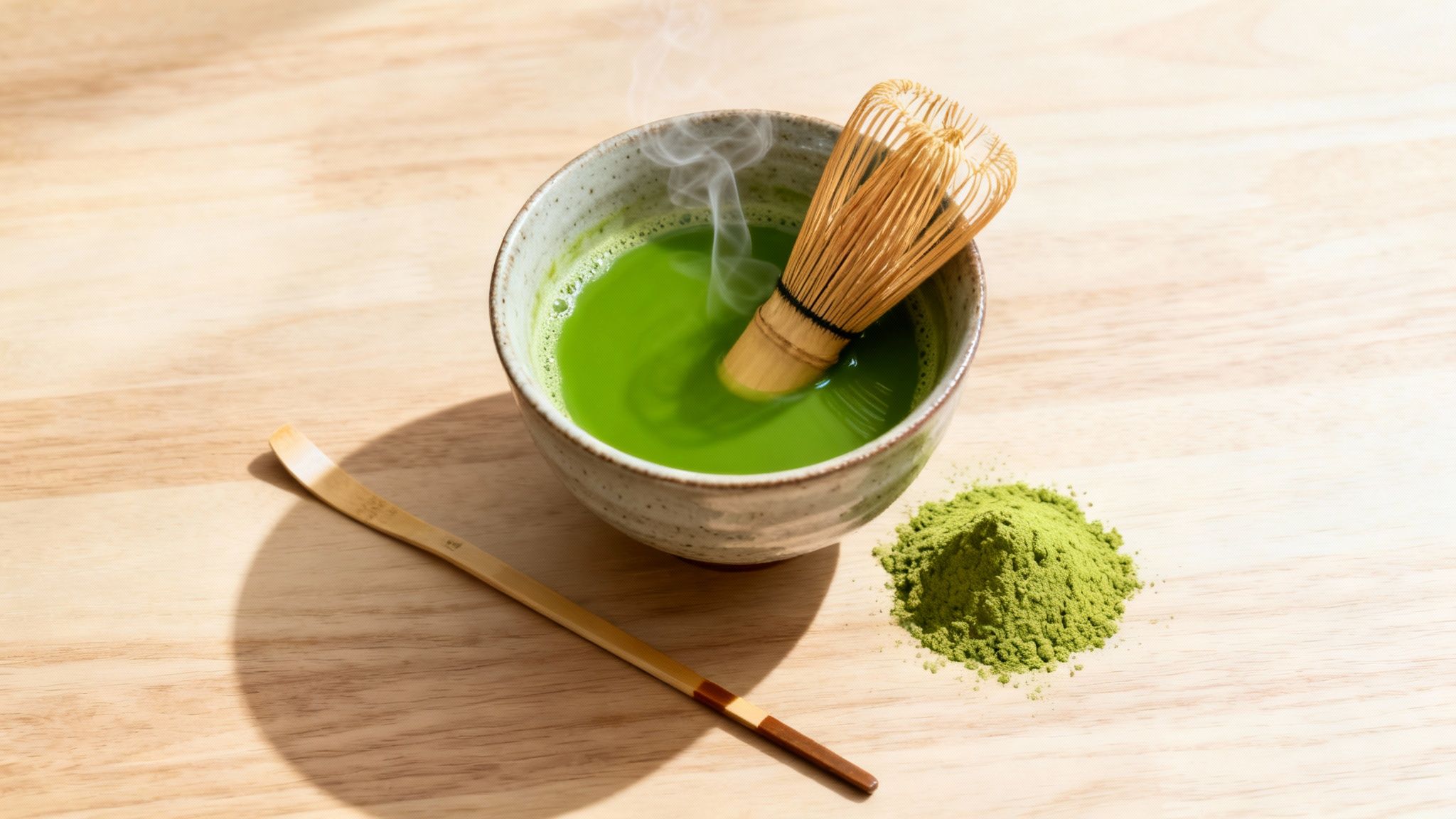
Welcome. If you’ve found your way here, you’re probably curious about what makes this powdered green tea so special. It's so much more than a café trend; it's a practice steeped in cultural history, a ritual that takes you a step beyond the everyday latte and closer to its ceremonial roots in Japan.
Unlike a regular cup of green tea where the leaves are steeped and then thrown away, with matcha, you’re drinking the entire leaf. This is what gives it such a distinct character, vibrant colour, and potent flavour. It’s also why it delivers a calm, focused energy that many people find far preferable to the jittery rush of coffee. In fact, people looking for effective coffee alternatives for a steady energy boost often land right here.
Why Is Everyone Talking About Matcha?
Matcha’s appeal really comes down to its unique combination of flavour, wellness, and versatility. It's a tradition, yes, but modern twists have made it incredibly easy to enjoy. Just look at the numbers: in the UK, matcha tea sales shot up by an astonishing 202% in 2023 alone. That boom shows just how much Brits are embracing it—not only as a simple tea but whisked into frothy lattes and poured over ice for a refreshing lift.
So, what’s behind this surge? A few things, really:
- Mindful Energy: Matcha contains L-theanine, an amino acid that works alongside caffeine to create a state of relaxed alertness. Think focus, without the frantic feeling.
- Health Halo: It’s absolutely packed with antioxidants, especially catechins like EGCG, which are celebrated for their health-promoting properties. We dive deeper into the specific matcha powder health benefits in our other guide.
- A Moment of Calm: The simple act of preparing matcha is a ritual in itself. It offers a quiet moment to pause and recentre during a hectic day.
Think of this guide as your roadmap to making a truly incredible cup of matcha at home. We'll walk you through everything, from picking the right grade to mastering the whisk.
Choosing the Right Matcha Grade and Tools
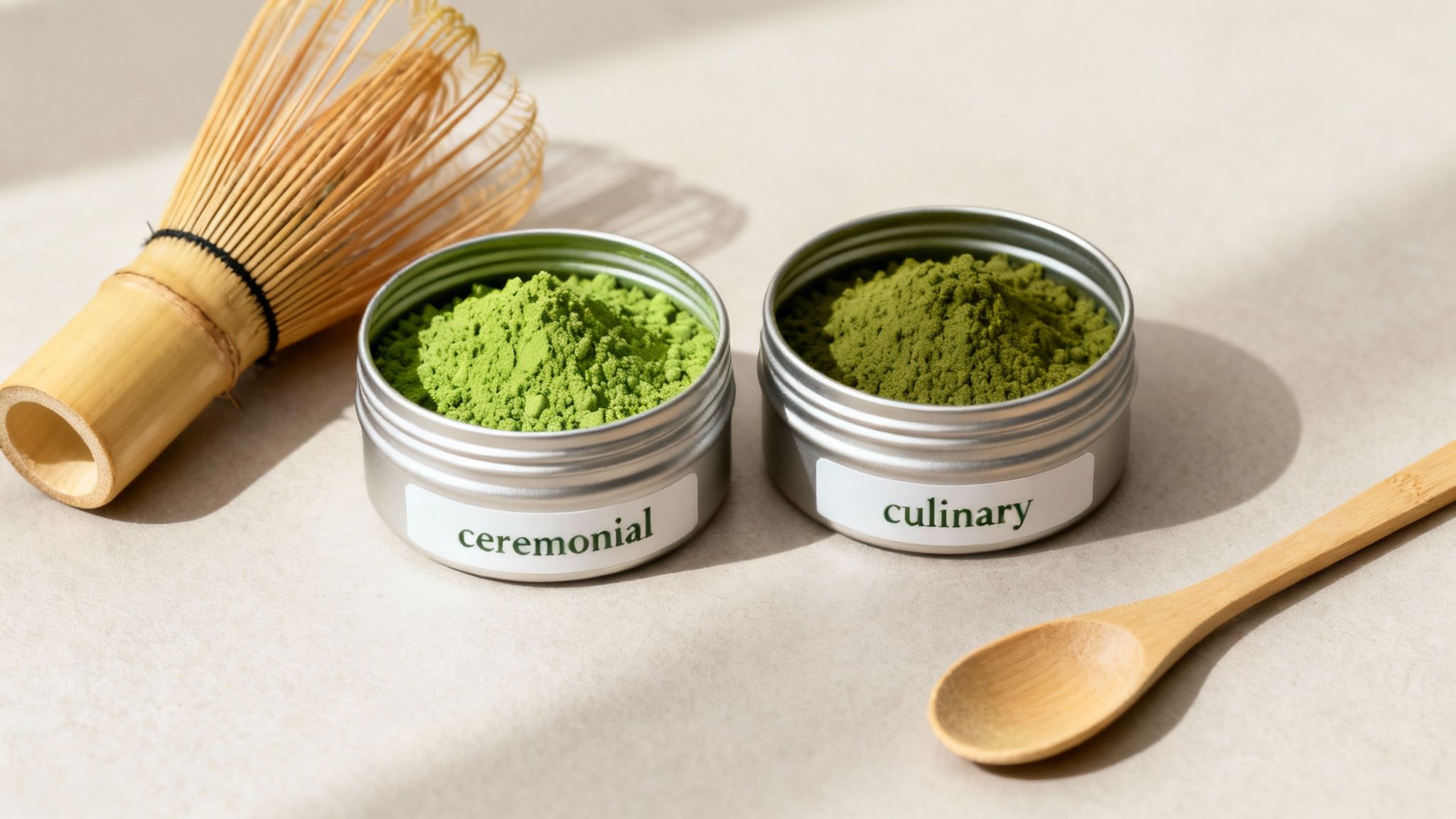
Before you can even think about whisking up that perfect bowl, you need the right foundation. This all comes down to choosing a quality matcha and gathering a few key tools.
Stepping into the world of matcha can feel a bit overwhelming at first, but the most important thing to get your head around is the difference between ceremonial grade and culinary grade. Getting this right is crucial for the flavour you're after.
Ceremonial vs. Culinary: What's the Difference?
Ceremonial grade is the star of the show. It’s made from the youngest, most delicate tea leaves, which gives it a vibrant, almost electric green colour. The flavour is incredibly smooth and nuanced, full of that sought-after natural sweetness and a deep umami character. This is the one you want for drinking straight with just hot water.
Culinary grade, on the other hand, comes from older, more mature leaves. It has a much stronger, more robust flavour that can lean towards bitterness, and its colour is a duller, more yellowish-green. That bolder profile is exactly what makes it perfect for lattes, smoothies, and baking, as it won’t get lost amongst other ingredients.
Trust me, trying to make a traditional tea with culinary grade will likely end in a harsh, bitter disappointment.
For a pure matcha experience—just tea and water—always invest in a high-quality ceremonial grade. Save the culinary stuff for when you’re adding milk, sweeteners, or other bold flavours.
A Quick Comparison of Matcha Grades
This table should help you choose the right matcha for your needs, whether you're planning a traditional tea moment or whipping up a latte.
| Feature | Ceremonial Grade | Culinary Grade |
|---|---|---|
| Colour | Vibrant, electric green | Duller, yellowish-green |
| Texture | Ultra-fine, silky powder | Slightly coarser texture |
| Flavour | Delicate, smooth, naturally sweet, high in umami | Robust, strong, can be slightly bitter |
| Best For | Drinking with water (usucha, koicha) | Lattes, smoothies, baking, cooking |
| Source | Youngest, first-harvest tea leaves | Later-harvest, more mature leaves |
| Price | Higher | More affordable |
Ultimately, the best grade is the one that suits what you’re making. Neither is "better" overall; they just have different jobs.
Spotting a High-Quality Matcha
Beyond just the grade, how can you tell if you’ve got the good stuff? There are three simple signs of a premium powder that will deliver on taste and health benefits.
- Vibrant Colour: Look for a vivid, bright green. A dull or brownish hue is a dead giveaway of older, lower-quality leaves or poor storage.
- Fine Texture: Top-tier matcha is stone-ground into an incredibly fine, silky powder, almost like talcum powder. If it feels coarse, your drink will end up gritty.
- Sweet Aroma: Open the tin and have a good sniff. It should smell fresh, sweet, and slightly grassy. If it smells flat or dusty, it’s past its best.
If you’re keen to go deeper, you can learn more about the different types of matcha tea and what makes each unique.
The Essential Toolkit
While you can make do with kitchen gadgets, using the traditional tools not only connects you to the ritual but genuinely produces a better result. There are really only three things you need.
The Chasen (bamboo whisk) is non-negotiable for a lump-free, frothy tea. Its hundred-or-so delicate prongs are specifically designed to suspend the powder in the water and create that signature creamy foam. A metal whisk or fork just can’t replicate this.
Next up is the Chawan (tea bowl). Its wide, flat bottom gives you the perfect canvas for whisking, allowing the chasen to move freely and do its job properly.
Finally, the Chashaku (bamboo scoop) helps you measure out the perfect amount of matcha. A simple teaspoon works in a pinch, of course, but the chashaku is all part of the mindful experience.
If you're just starting and mainly making lattes, a small electric milk frother is a decent stand-in for a chasen. But for an authentic usucha (thin tea), the bamboo whisk is king.
Mastering Traditional Matcha Preparation
This is where the real magic of matcha happens. Preparing a traditional bowl is a beautifully simple, mindful practice that transforms a few basic ingredients into something truly special. Forget any complex techniques you might have heard about; the focus here is on a few key details that make all the difference.
We'll mostly be looking at usucha (thin tea), which is the most common and approachable way to enjoy matcha. It gives you a light, frothy, and invigorating drink that’s perfect for a daily ritual. With just a little guidance, you’ll be making it like a pro in your own kitchen.
First things first, and this is non-negotiable: you have to sift your matcha powder. Ceremonial grade matcha is ground so incredibly fine that it naturally wants to clump together. If you skip this, you’ll end up with a lumpy, uneven drink, no matter how furiously you whisk.
Preparing a Perfect Bowl of Usucha
To get started, measure out about 1-2 grams of ceremonial grade matcha – that's roughly one scoop from a traditional chashaku or half a teaspoon. Sift it through a small, fine-mesh sieve straight into your chawan (tea bowl). This simple action is the secret to a silky-smooth texture.
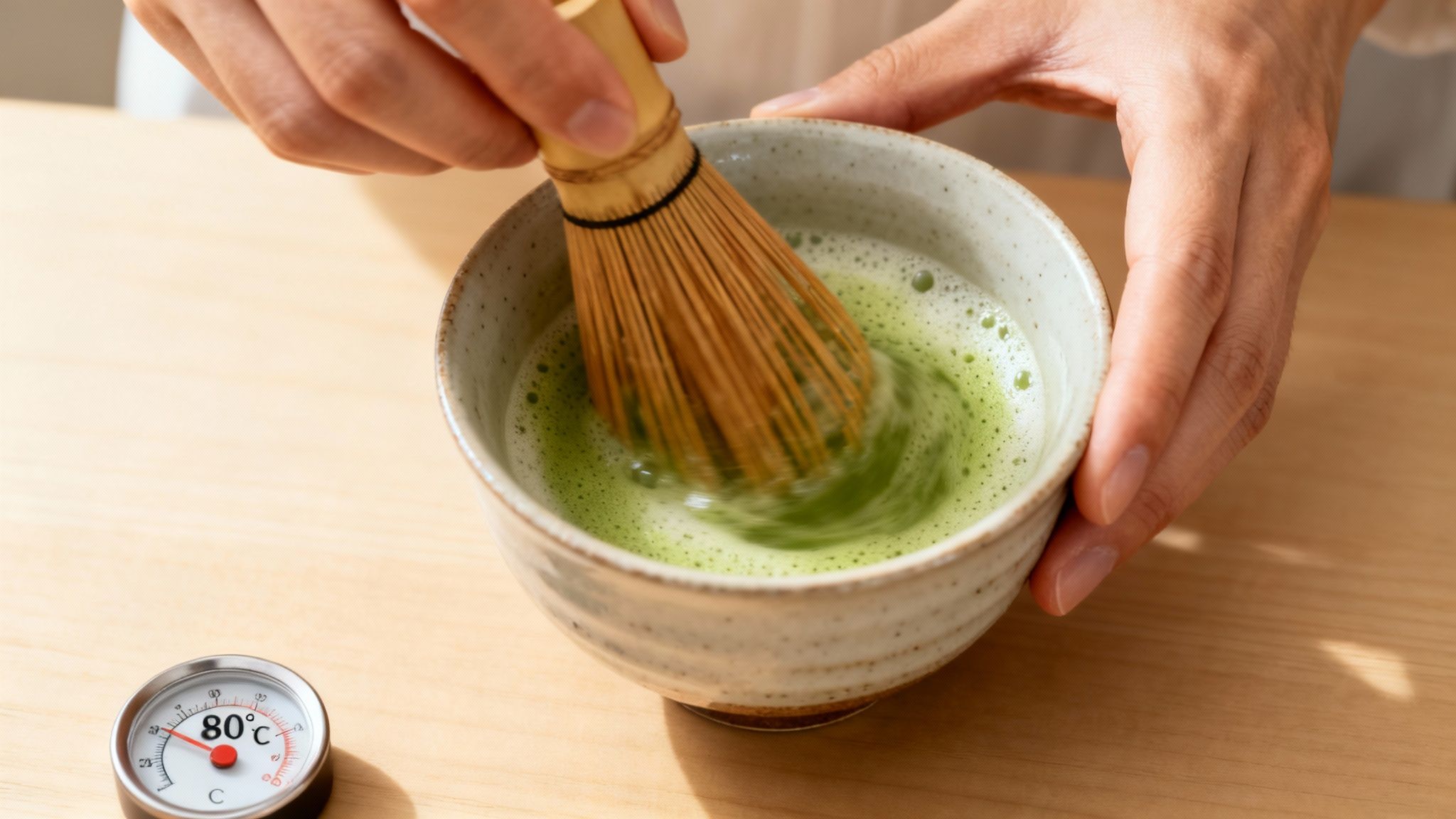
Next up is the water. You’re aiming for a temperature of around 80°C. Boiling water will just scorch the delicate tea leaves, pulling out all the bitter compounds and ruining the flavour. A good rule of thumb is to let a boiled kettle sit with the lid off for a few minutes before you pour.
Pour about 70ml of the hot water over your sifted matcha. Now, grab your chasen (bamboo whisk) and get ready for the most satisfying part of the whole process.
Pro Tip: The whisking motion isn't circular, like you'd beat eggs. Instead, you need to move the whisk back and forth rapidly in a 'W' or 'M' shape, just lightly scraping the bottom of the bowl. This is what aerates the tea and creates that signature creamy foam.
Whisk energetically for about 20-30 seconds. What you’re looking for is a uniform layer of tiny, delicate bubbles covering the surface—the true sign of a well-prepared bowl. For a few more pointers, you can dive into our more detailed guide on preparing matcha tea.
The Meditative Practice of Koicha
For those after a more intense, profound matcha experience, there’s koicha (thick tea). This style is usually reserved for formal Japanese tea ceremonies and uses a much higher ratio of powder to water. The result is a thick, almost viscous brew with a powerful, concentrated flavour.
To prepare koicha, you’ll want to use:
- 4 grams of the highest quality ceremonial matcha you can find.
- Just 30ml of 80°C water.
The whisking technique for koicha is completely different, too. Instead of a rapid zig-zag, you use a slow, deliberate kneading motion to gently combine the powder and water. The aim is a smooth, paint-like consistency without any foam at all.
This thicker, more intense brew is meant to be sipped slowly and meditatively. It’s a practice that has gained a surprising amount of traction here in the UK, especially with mindfulness apps. In a post-pandemic survey, 72% of Londoners mentioned matcha's role in easing their anxiety, which makes sense given its antioxidant content is 137 times higher than standard green tea.
Whether you choose the light frothiness of usucha or the deep intensity of koicha, mastering the traditional preparation is all about connecting with the process. It's a quiet moment to focus, create, and enjoy something truly beautiful.
Exploring Modern Ways to Enjoy Matcha
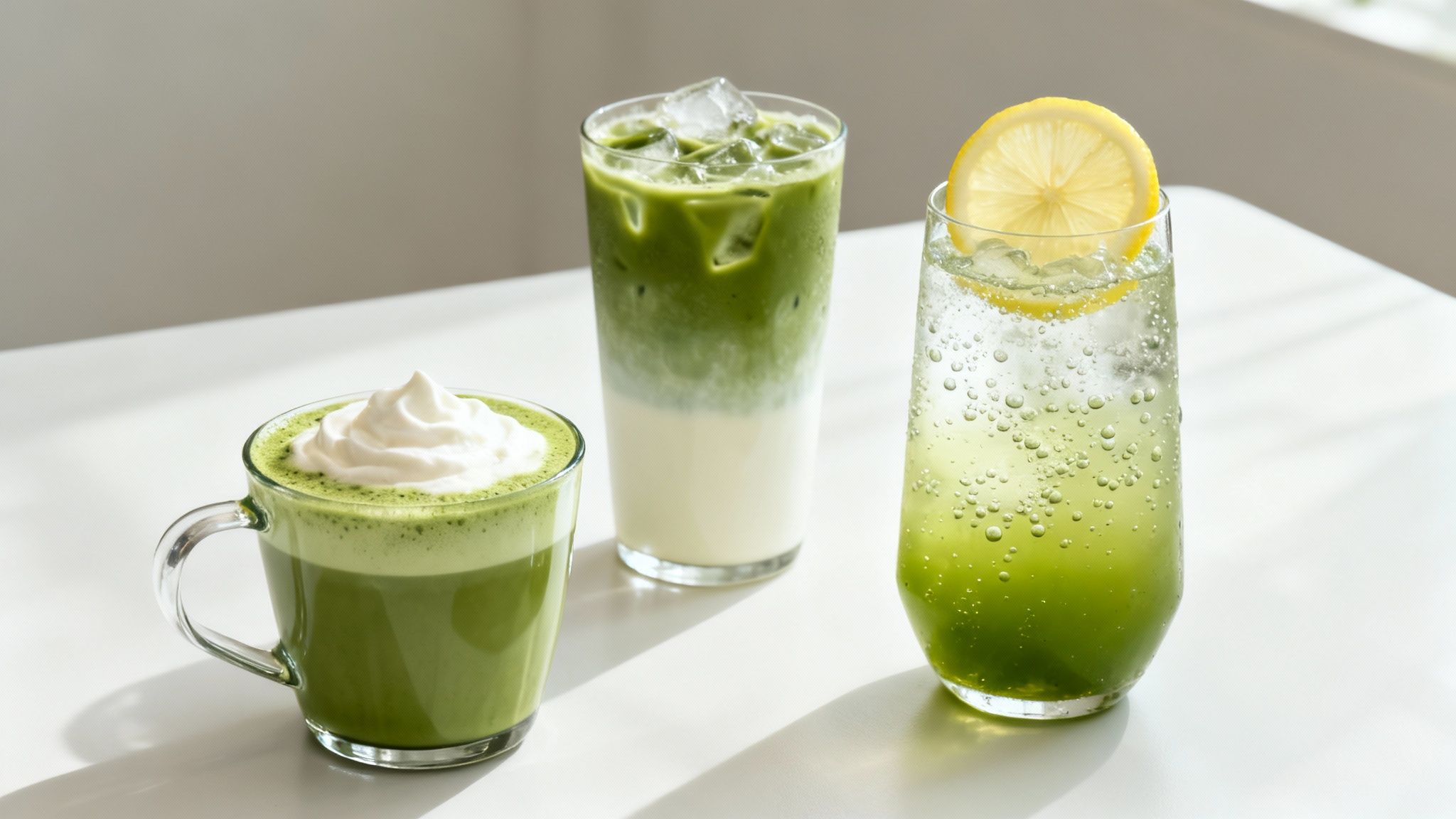
While the traditional tea ceremony offers a moment of beautiful calm, the versatility of matcha truly shines in more modern recipes. This is where you can get creative, moving beyond the whisk and bowl to craft drinks that fit perfectly into any part of your day. From creamy lattes to vibrant, sparkling coolers, understanding how to drink matcha in these contemporary styles opens up a whole new world of flavour.
The secret to any great matcha-based drink is creating a smooth, concentrated "matcha shot" first. This crucial step prevents clumps and ensures the flavour is evenly distributed, whether you're adding steamed milk or pouring it over ice. Just whisk your usual amount of matcha with a small amount of hot water (around 30ml) until it's a smooth, vibrant paste—exactly as you would for a traditional usucha.
How to Make a Perfect Matcha Latte
The matcha latte has become a café staple for good reason—it’s a comforting, energising alternative to coffee. Making one at home that rivals your favourite coffee shop is surprisingly simple once you get the hang of it. The magic lies in a good matcha shot and properly textured milk.
For a hot latte, start with your smooth matcha shot in your favourite mug. Gently heat and froth around 200ml of your chosen milk. Oat milk is a fantastic choice, as it froths beautifully and its natural creaminess complements matcha’s earthy notes perfectly. Of course, almond and dairy milk also work wonderfully. Pour the frothed milk over your matcha shot, holding back the foam with a spoon at first, then topping it all off at the end.
For an Iced Matcha Latte, the process is even simpler:
- Prepare your matcha shot and pour it into a tall glass.
- If you have a sweet tooth, add honey or maple syrup now, stirring until it dissolves completely.
- Fill the glass right up with ice cubes.
- Slowly pour over 200ml of cold milk for that beautiful layered effect. Give it a stir just before you take the first sip.
The most common mistake is adding matcha powder directly to a full cup of milk. This almost always results in a clumpy, disappointing drink. Always make a concentrated shot with a little water first for a silky-smooth finish.
Get Creative with Refreshing Matcha Drinks
Beyond the latte, matcha’s unique flavour profile lends itself to a huge range of inventive drinks. These are perfect for warmer days or whenever you fancy something a little different.
A sparkling Matcha Lemonade, for instance, has become a breakout star. Cafés in Manchester report that 25% of their menus now feature iced matcha lemonades, with sales soaring by 180% since 2023. This trend is a testament to matcha's adaptability. For UK drinkers, 62% note improved focus from its unique blend of caffeine and L-theanine, which often outperforms coffee for sustained alertness. To make your own, just blend a matcha shot with lemon juice and a touch of honey, then top with sparkling water for a perfect UK summer cooler. You can discover more insights about the UK matcha tea market on MarketResearchFuture.com.
Another excellent option is a nutrient-packed Matcha Smoothie. This is a brilliant way to incorporate the benefits of matcha into your morning routine, giving you a steady release of energy to power through your day.
Simply blend a teaspoon of culinary-grade matcha with ingredients like:
- Banana for natural sweetness and a creamy texture
- Spinach for an extra hit of greens
- A scoop of protein powder for a post-workout boost
- A splash of your favourite milk or coconut water
Getting the Best Flavour and Freshness from Your Matcha
You can get all the steps right in your preparation, but the real secret to a beautiful cup of matcha lies in the details. It's not just about how you whisk; it's about how you look after the powder itself.
The biggest enemies of good matcha are air, light, and heat. They'll quickly zap the life out of your powder, turning its vibrant colour and delicate flavour into something dull and bitter. Once you crack open a new tin, the clock is officially ticking. To enjoy it at its best, try to finish it within two months.
How to Store Your Matcha
The number one thing you can do to preserve your matcha’s quality is to store it properly. Don’t just stick it in the cupboard with your other teas – treat it more like a fresh ingredient.
- Airtight is non-negotiable: Oxygen is the main culprit behind flavour loss, so always keep your matcha in a properly sealed, airtight container.
- Keep it in the dark: An opaque tin or jar is a must. Light will quickly fade that brilliant green colour and dull its complex taste.
- Keep it cool: Your fridge is the best place for an opened tin of matcha. The cool temperature slows down oxidation, keeping it fresher for much longer. Just make sure the lid is on tight to keep out moisture and any stray fridge smells!
A little tip: if you buy matcha that comes in a bag, it's worth decanting it into a small, airtight tin before it goes in the fridge. It gives the powder better protection and makes scooping it out each day much easier.
Understanding and Balancing its Flavour
A high-quality ceremonial matcha should have a deep umami flavour – that satisfying, savoury note that balances its natural sweetness and slight bitterness. If you find your matcha tastes overwhelmingly bitter, it’s usually down to one of two things: your water is too hot (anything over 80°C will scorch the delicate leaves), or the powder isn't the best quality.
That said, taste is a very personal thing. If you find the umami notes a bit too intense at first, don't be afraid to adjust. A tiny drop of maple syrup or a little honey can soften those vegetal notes and bring out the sweetness, making it more approachable while your palate gets accustomed to it.
Troubleshooting Common Problems
Even the most seasoned matcha drinkers run into issues now and then. Luckily, the fixes are usually quite simple.
If you’re plagued by clumps no matter how hard you whisk, the answer is almost always sifting. Use a small, fine-mesh sieve to sift the powder directly into your bowl before adding any water. It’s a game-changer for breaking up those little static-charged clumps and guarantees a silky-smooth finish every time.
Is your foam collapsing almost immediately? This can happen if your whisking isn't quite energetic enough, or if you're just stirring in circles. Remember to use a quick, sharp 'M' or 'W' motion, making sure the tines of the whisk gently scrape the bottom of the bowl. It's this vigorous movement that whips up a stable, lasting foam.
A Few Final Pointers on Matcha
As you get started, it's natural for a few questions to pop up. Think of this as a quick-start guide to troubleshoot the common queries, helping you get the best out of every bowl.
Why Does My Matcha Taste Bitter?
This is the number one issue people run into, and thankfully, it’s an easy fix. The culprit is almost always one of two things: the water is too hot, or the matcha quality isn’t up to scratch.
If your water is hotter than 80°C, you’re essentially scorching the delicate tea leaves. This releases tannins, the compounds responsible for that harsh, bitter flavour. A simple trick is to let a boiled kettle sit for a few minutes before you pour. The other factor is the matcha itself; lower-grade culinary powders are designed for cooking and have a much stronger, more astringent profile. A good ceremonial grade should taste smooth, savoury, and even a little sweet.
Can I Drink Matcha Every Day?
Absolutely. A daily bowl (or two) of matcha is a fantastic habit for most people. It gives you a gentle, sustained lift thanks to a moderate amount of caffeine that’s beautifully balanced by the amino acid L-theanine. This unique combination is what gives you that famous ‘calm alertness’—none of the jitters you might get from a strong coffee.
It’s also packed with antioxidants, making it a brilliant addition to your daily routine. As with anything, just listen to your body and find the rhythm that feels right for you.
Many people find that a daily matcha ritual does wonders for their focus and mood. It’s a moment of mindfulness that offers sustained energy and a whole host of wellness benefits.
Do I Really Need a Bamboo Whisk?
For a traditional matcha, I’d say yes. While you can make it without one, the chasen (bamboo whisk) is purpose-built for the job. Its hundred-plus delicate prongs are designed to suspend the fine powder perfectly in water, creating that signature velvety foam that makes the experience so special.
- For the traditionalist: Nothing beats a chasen for a perfectly smooth, frothy usucha (thin tea).
- The best modern alternative: Making a latte? A small electric milk frother does an excellent job of creating a smooth matcha shot before you add your milk.
- What to avoid: Please don't just use a spoon or a fork! You'll be left with a clumpy, disappointing brew every time.
Using the right tool not only makes the process easier but turns the preparation itself into a truly rewarding part of your day.
Ready to start your own matcha ritual? At Jeeves & Jericho, we source only the finest ceremonial grade matcha directly from Uji, Japan, ensuring every cup is smooth, vibrant, and full of flavour. Explore our premium matcha collection today.