


On the surface, making tea seems simple enough. Freshly drawn, boiled water poured over a tea bag or leaves, steeped for 3-4 minutes, then finished with milk or lemon. That’s the basic ritual, but the real magic happens when you start dialling in the temperature and time for different teas. It's what turns a good cup into a great one.
The Science Behind a Perfect Cup
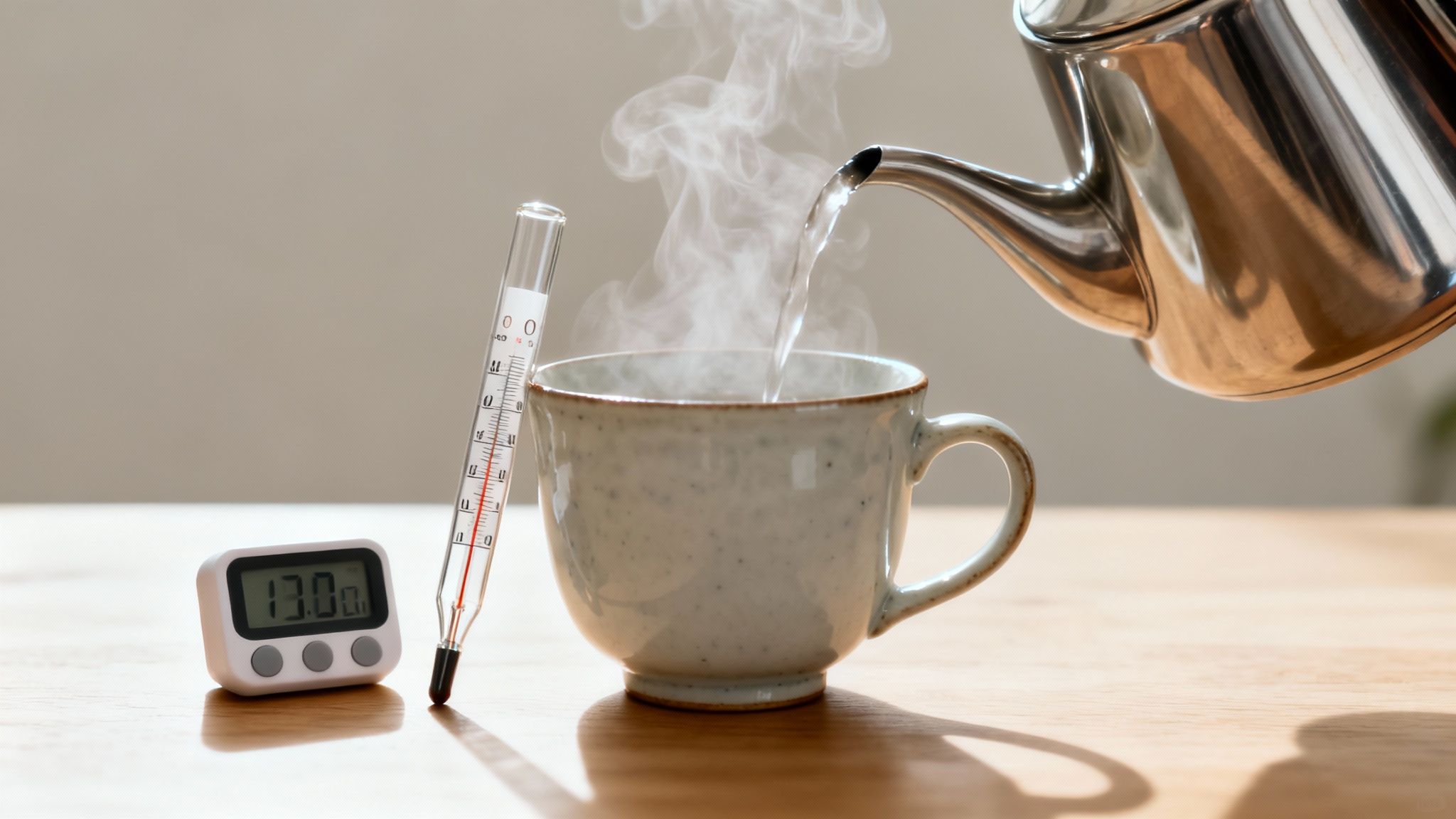
Brewing fantastic tea isn't about some complicated ceremony; it’s about understanding the simple chemistry of extraction. The two most important levers you can pull are water temperature and steep time. These two elements dictate which flavour compounds are coaxed out of the leaves and how quickly.
Nail these, and you’re rewarded with a balanced, aromatic cup. Get them wrong, and you might be left with something bitter, weak, or just plain disappointing. For example, a delicate green tea needs cooler water to avoid scorching the leaves, which releases bitter tannins. A robust black tea, on the other hand, demands boiling water to properly unlock its deep, malty character.
Why Timing Is Everything
How long you let your tea steep has a direct impact on its strength and personality. A shorter brew will be lighter and more subtle, while a longer one creates a more powerful, full-bodied experience. But there’s a razor-thin line between strong and stewed. Over-steeping is the number one culprit behind unpleasantly bitter tea, as too many tannins are drawn out.
Interestingly, it seems many of us are cutting this crucial step short. A recent UK Tea and Infusions Association study revealed that a massive 73% of Brits brew their black tea for less than the recommended three minutes. Only a tiny 7% get it just right, which means most people are missing out on the full flavour their tea has to offer.
The ideal steep time strikes a perfect balance, extracting desirable compounds like theanine (which gives a savoury, umami taste) and caffeine, without being overwhelmed by bitter tannins.
Understanding this balance is what takes your tea-making to the next level. If you're curious about how timing influences the kick you get from your cup, you can dive deeper into the caffeine content in different teas in our other article.
Quick Guide to Tea Brewing Fundamentals
To help you get started on the right foot, we've put together a handy cheat sheet. Think of this as your starting point; feel free to experiment to find what you like best.
| Tea Type | Water Temperature | Steep Time | Common Flavour Profile |
|---|---|---|---|
| Black Tea | 95-100°C (Boiling) | 3-5 minutes | Malty, robust, brisk |
| Green Tea | 75-85°C | 1-3 minutes | Grassy, vegetal, sweet |
| White Tea | 70-80°C | 2-4 minutes | Delicate, floral, subtle |
| Oolong Tea | 85-95°C | 2-5 minutes | Varies: floral to roasted |
| Herbal Infusion | 100°C (Boiling) | 5-10 minutes | Varies: fruity, spicy, floral |
Use this guide as a foundation for your brewing adventures. You'll soon develop an intuition for what works for each tea in your collection.
Mastering Your Everyday Brews
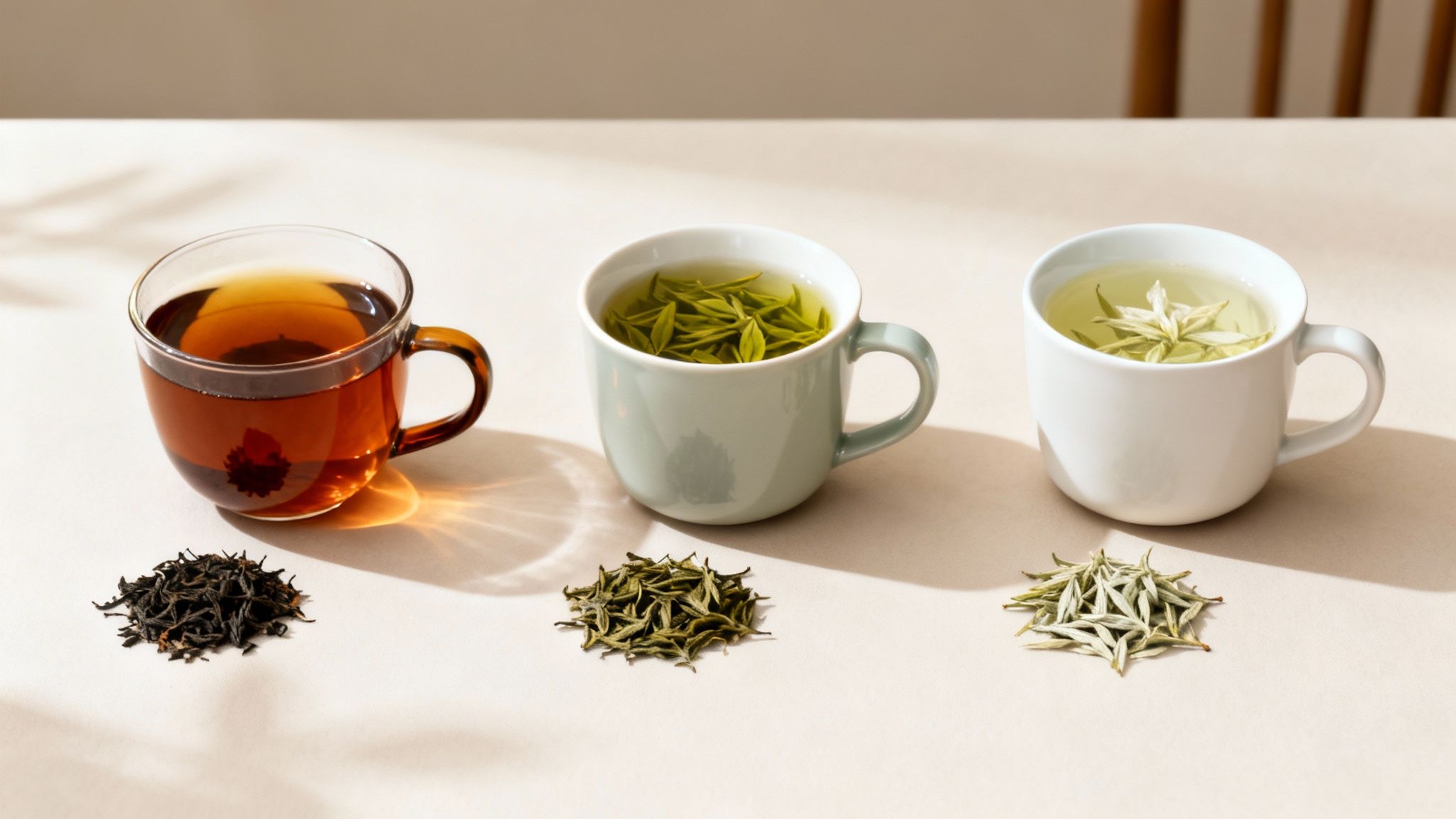
With a solid handle on temperature and time, you’re ready to get the absolute best out of the teas that probably fill your cupboard. Black, green, and white teas are the backbone of the tea world, each with a unique personality that truly sings when you get the technique right.
Learning to brew these classics properly isn't just about following rules; it's about understanding why they work. A few tiny tweaks can unlock a whole new world of flavour, turning your daily cuppa from something routine into something remarkable.
Perfecting Black Tea
When most of us think of black tea, a strong, hearty "builder's brew" springs to mind. For that, you absolutely need freshly boiled water, right around 95-100°C, to pull out those deep, malty flavours.
But what about a more delicate black tea, like a floral Darjeeling or a fragrant Earl Grey? Using water that’s just off the boil, say at 95°C, helps protect those beautiful aromatic oils from becoming harsh or bitter.
For a single mug from a tea bag, a steep of 3-4 minutes is your sweet spot. If you’re brewing loose leaf in a pot, you can push that to 5 minutes for a fuller infusion. The key is finding what works for you. For a deeper dive into timing, you can explore our guide on how long you are supposed to brew tea.
The great milk debate: first or last? Traditionally, milk went in first to stop the searing heat of the tea from cracking fragile porcelain cups. These days, it’s all down to personal taste, but adding milk last gives you much better control over the final colour and strength of your brew.
Brewing Flawless Green Tea
The biggest mistake people make with green tea is using water that's far too hot. It's the reason so many think they don't like it! Boiling water literally scorches the delicate leaves, releasing a flood of tannins that creates that bitter, astringent taste we all want to avoid.
To get those wonderfully sweet, grassy notes from a Japanese Sencha or the mellow, smooth character of a Chinese Dragon Well, you need to bring the temperature right down to 75-80°C. No fancy kettle? No problem. Just boil your kettle, open the lid, and let it stand for 2-3 minutes before you pour.
This simple adjustment makes all the difference. It's something younger tea drinkers have really embraced. Mintel found that 37% of 25-34-year-olds in the UK drank five to six different types of tea in a month, largely because they understand that treating a delicate green tea with cooler water is the key to a great brew.
For the best results, remember this:
- Go cooler: Never, ever use boiling water. Stick to around 80°C.
- Keep it short: A steep time of 1-3 minutes is usually plenty. Taste it after a minute—you can always let it brew a bit longer.
- Brew it again: Good quality green tea leaves are made for re-steeping. Each infusion will reveal new, subtle layers of flavour. Just add a little extra time to each subsequent brew.
Handling Delicate White Tea
White tea is the most minimally processed of all, made from the youngest leaves and buds. This makes it incredibly delicate, with subtle, sweet notes that are easily destroyed by high temperatures. Brewing white tea is an exercise in gentleness.
The water needs to be even cooler than for green tea, somewhere between 70-80°C. Think of it as gently warming the leaves, not cooking them. This soft heat coaxes out all its nuanced character without a hint of bitterness.
You’ll want a slightly longer steep time here, often between 2-4 minutes, to give those complex flavours a chance to unfurl. The leaves are often larger and less processed, so they need a bit more time to hydrate and release their magic. Just like a good green, white tea leaves are fantastic for re-steeping, often giving you three or more beautiful infusions.
Exploring More Complex Flavours
Once you've got the hang of the classic trio—black, green, and white teas—you'll find a whole new world of flavour opens up. This is where things get really interesting. Stepping into the realms of oolong and herbal infusions introduces an incredible spectrum of tastes, from nutty and roasted to bright and floral.
These brews are wonderfully distinct from one another. Oolong is a true tea from the Camellia sinensis plant, celebrated for its staggering complexity. Herbals, on the other hand, are caffeine-free tisanes made from just about any plant you can imagine, offering pure comfort and wellness in every cup. Learning to brew them properly is the key to unlocking their true character.
The Ever-Changing World of Oolong Tea
Oolong is easily one of the most fascinating categories of tea. It sits somewhere between green and black tea in terms of oxidation, and this unique processing creates an astonishingly diverse range of flavours. A lightly oxidised oolong might remind you of a fresh, floral green tea, while a heavily oxidised one can be deep, fruity, and malty, much like a black tea.
The real magic of a quality oolong, though, is its ability to be steeped multiple times. Unlike most teas that give their best on the first go, oolong leaves are often tightly rolled and designed to unfurl slowly, revealing new layers of flavour with each infusion. This makes brewing oolong a genuinely active, engaging experience.
Many tea connoisseurs give their oolong a quick "rinse" before the first proper steep. Just pour hot water over the leaves for about 10-15 seconds and immediately discard it. This little ritual helps to "awaken" the tightly rolled leaves, prepping them for a much fuller flavour release.
Ready to give it a try? Here’s a good approach:
- Use water that's just off the boil, around 85-95°C.
- Keep your first steep incredibly short—think 30-60 seconds.
- For each infusion after that, just add another 15-30 seconds to the steep time.
- Make sure you taste each infusion. You'll be amazed at how the flavour profile shifts and evolves from one cup to the next.
This method takes you on a real journey of taste, from the initial bright notes to the deeper, more complex character that emerges later. It’s a brilliant way to appreciate the craftsmanship behind these remarkable teas.
Unlocking Flavours from Herbal Infusions
Unlike true teas, herbal infusions (or tisanes) can be made from a huge variety of flowers, herbs, spices, and fruits. Think of calming chamomile, invigorating peppermint, or the naturally sweet, earthy rooibos from South Africa. Because they don't contain any tea leaves, they are all naturally caffeine-free.
The best part about brewing herbals is just how forgiving they are. They lack the tannins found in true teas, so there's virtually no risk of them turning bitter if you steep them for too long. In fact, most herbals benefit from a longer, hotter infusion to really pull out all their delicate flavours and beneficial compounds.
For the best results, use freshly boiled water (100°C) and let them steep for a good 5-10 minutes. Don't be afraid to leave the bag or infuser in your mug the whole time you're drinking it; the flavour will only get deeper and richer.
If you fancy cultivating your own ingredients for some truly unique brews, starting with an herbal tea seed pack is a fantastic idea. There's nothing quite like that hands-on approach to connect you more deeply with the wonderful world of herbal infusions.
Advanced Tea Preparation Techniques
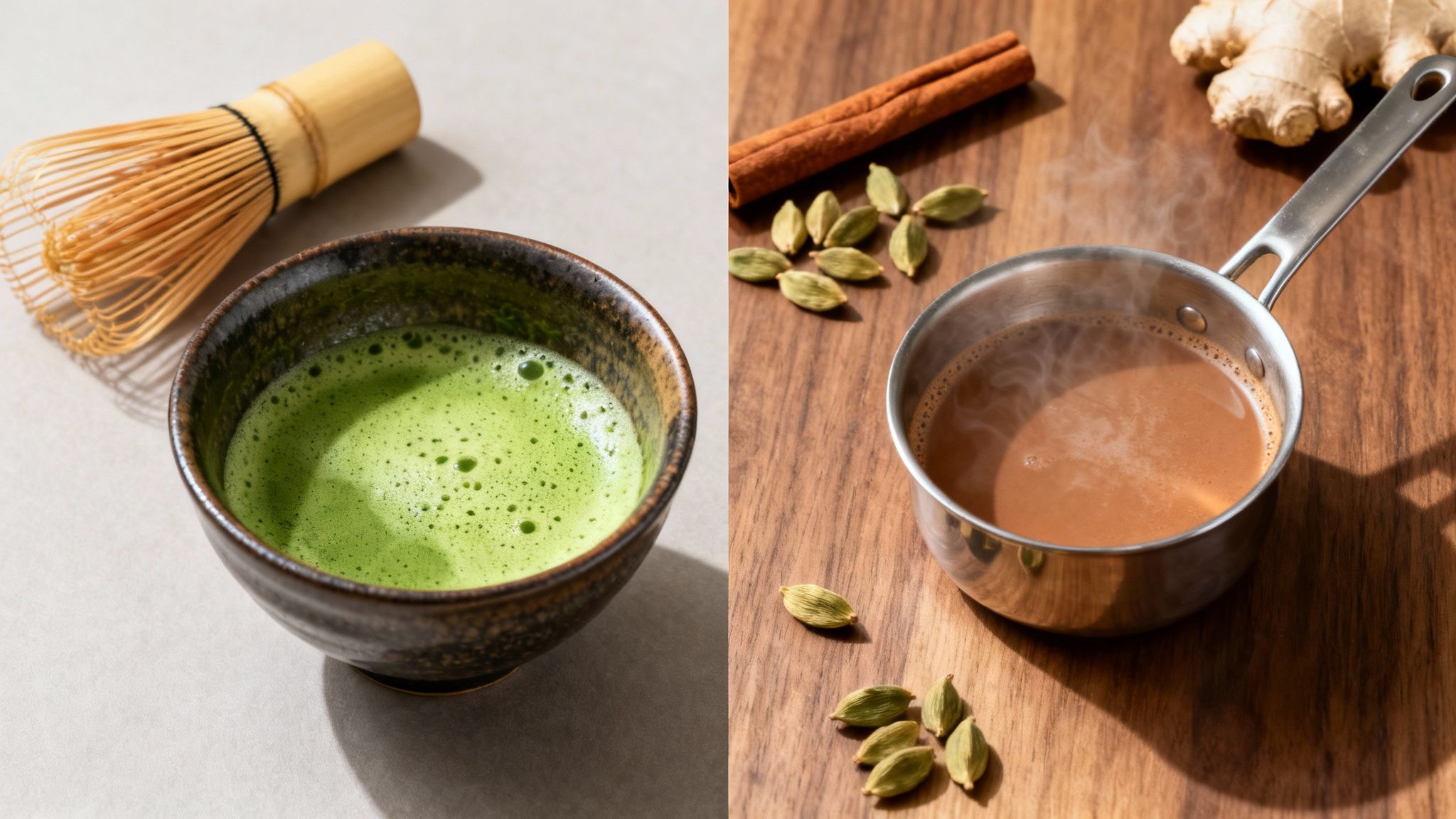
Some teas are more than just a simple brew; they're a ritual. When you move past the basics of infusion, preparations like matcha and masala chai invite you into a more hands-on experience, rewarding your efforts with a depth of flavour that pre-made mixes just can't touch.
Learning these traditional styles is a brilliant way to connect more deeply with the tea itself. You’re not just making a drink; you’re crafting something special from scratch.
The Art of Whisking Perfect Matcha
Matcha isn't your average green tea. It's a fine powder made from specially grown and processed tea leaves. The big difference? You’re consuming the entire leaf, not just an infusion from it. This is what gives matcha its vibrant character, potency, and nutrient kick.
The key to a beautiful bowl of matcha is achieving that smooth, frothy texture. You won't get there by stirring. It’s all about a vigorous whisking with a bamboo whisk, known as a chasen. Its delicate tines are designed to whip air into the tea, breaking down clumps and creating that signature creamy foam on top. If you're just starting out, our full guide on preparing matcha tea has some extra tips.
One of the most common mistakes is to use boiling water. This will scorch the delicate powder, making it bitter. Aim for water around 80°C—hot, but not boiling—to protect those sweet, umami notes.
To prepare it the traditional way, here’s what to do:
- Sift the Matcha: First, use a small, fine-meshed sieve to sift 1-2 teaspoons of matcha powder into a wide, shallow bowl (a chawan). This is a non-negotiable step to avoid lumps.
- Add the Water: Pour about 60ml of hot (80°C) water over the sifted powder.
- Whisk Vigorously: Holding the bowl steady, use your chasen to whisk back and forth in a rapid 'W' or 'M' shape. You're looking for a smooth liquid with a thick layer of foam, which should take about 20-30 seconds.
- Drink Immediately: Enjoy your matcha straight from the bowl, taking in its rich flavour and velvety texture.
Of course, for a modern café-style treat, a matcha latte is fantastic. Just make a concentrated shot as above, and then pour it into steamed milk for a creamy, comforting drink.
Crafting Authentic Masala Chai from Scratch
Forget the sugary, powdered chai from the supermarket. Real masala chai is a fragrant, warming brew made by simmering black tea and whole spices in a mix of milk and water. The word "masala" simply means a blend of spices, and "chai" means tea.
The best part about making your own is having complete control. You can tweak the spice blend to be more warming, fiery, or sweet, depending on your mood and what’s in the cupboard.
A classic chai blend usually includes a few key players:
- Cardamom Pods: Lightly crushed to release their sweet, floral aroma.
- Cinnamon Sticks: For that familiar warm, woody sweetness.
- Fresh Ginger: Sliced or grated, it adds a lovely pungent kick.
- Cloves: Lends a pungent, almost medicinal warmth.
- Black Peppercorns: Gives a surprising but welcome heat that cuts through the sweetness.
The process is all about a gentle simmer, which allows the flavours to really meld. Start by toasting your whole spices in a dry pan for a minute or so until they become fragrant. Then, add your water and fresh ginger, and let it simmer for 5-10 minutes to create a spicy decoction.
Next, add a robust black tea (an Assam works perfectly) and your milk, plus any sweetener you fancy. Bring it back to a gentle simmer—never a rolling boil—for a few more minutes before straining into your favourite mug. The result is a rich, complex, and deeply satisfying cup, perfect for a chilly afternoon.
Essential Gear and Common Brewing Mistakes
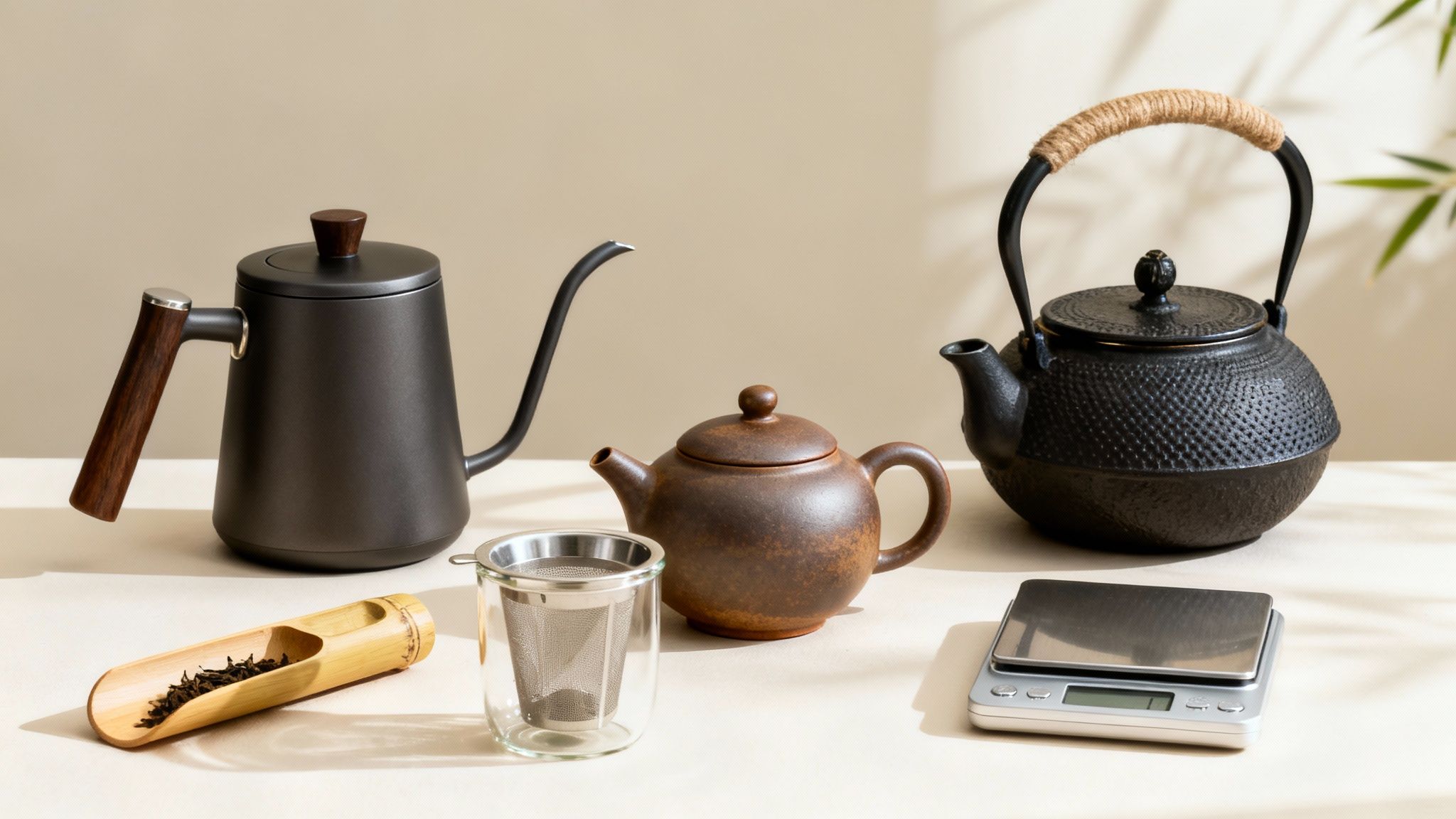
You can absolutely make a decent brew with just a mug and a kettle, but the right kit can elevate your daily ritual into something special. It's not about spending a fortune; it's about finding functional tools that suit the teas you enjoy most.
At the end of the day, all you really need is something to heat water in and a vessel for steeping. Still, a small collection of reliable equipment will make your tea-making more precise, consistent, and frankly, more enjoyable.
Choosing Your Brewing Equipment
The kettle is the heart of any tea setup. A standard stovetop or electric kettle is perfect for black and herbal teas that need boiling water. When you're ready to upgrade, selecting the right electric kettle for perfect tea brewing can make a surprising difference.
If you find yourself drinking a lot of green, white, or oolong teas, a variable temperature kettle is an absolute game-changer. It lets you heat water to an exact temperature, taking the guesswork out of brewing delicate leaves and helping you dodge that dreaded bitterness.
When it comes to infusers, there are a few solid choices:
- Basket Infusers: These are my go-to. They sit nicely inside a mug or teapot and give the leaves plenty of room to unfurl and release their full flavour. They're also a breeze to use and clean.
- Ball Infusers: We've all seen them, but these little spheres tend to cramp the tea leaves, which can lead to a weak brew. They’re best reserved for strong, broken-leaf black teas that don’t need much space.
- Teapots with built-in strainers: A classic for a reason. Ceramic, porcelain, or glass teapots hold heat well and are brilliant for brewing a few cups at once.
The material of your teapot can subtly influence the taste of your brew. Porous materials like unglazed clay absorb tea oils over time, enhancing the flavour of one specific tea with each use. Glass and porcelain, on the other hand, remain neutral.
Fixing Common Tea Brewing Mistakes
Even with the best gear, a few common slip-ups can stand between you and the perfect cup. The good news is they are all easy to spot and fix, which will instantly improve your home brewing.
It’s no secret that the UK is a nation of tea lovers. The UK Tea and Infusions Association reckons we drink over 100 million cups daily, with 41% of us having at least two cups at home each day. And yet, it's estimated that a staggering 73% of people under-brew their tea. That’s a huge opportunity to level up our national beverage!
Let’s troubleshoot a couple of the most frequent issues.
Why Does My Green Tea Taste Bitter?
Nine times out of ten, this is a temperature problem. As we’ve mentioned, green tea leaves are delicate. Pouring boiling water over them essentially "burns" them, forcing them to release an excess of bitter-tasting tannins.
The Fix: Let your kettle cool for a minute or two after it boils, aiming for around 80°C. Also, watch your steep time like a hawk—start with just one minute, then have a taste. You can always let it steep longer, but you can’t un-bitter a brew.
How Can I Make My Tea Stronger Without It Tasting Stewed?
Lots of people think a longer steep is the only way to get a stronger flavour, but that usually just makes it taste stewed and astringent. The real secret is in the tea-to-water ratio.
The Fix: Don’t steep it for longer; just use more tea. Adding an extra half-teaspoon of leaves to your infuser will create a more robust, full-bodied flavour without that harshness you get from over-extraction.
Your Tea Questions Answered
Even when you've got your temperatures and timings down, a few practical questions always seem to come up. We get asked these all the time, so we've put together some quick, clear answers to help you solve those last little mysteries and brew with confidence.
What Is the Difference Between Loose Leaf Tea and Tea Bags
The real difference comes down to the size and quality of the leaf. Loose leaf tea is just that—whole or large pieces of tea leaves. When they hit hot water, they have plenty of room to expand and unfurl, releasing their full, complex range of flavours and aromas. You get a cup with far more nuance and depth.
Your standard tea bag, on the other hand, is usually filled with much smaller, broken bits of tea, often called 'fannings' or 'dust'. These infuse incredibly fast, which gives you a strong, bold brew in no time. While they're unbeatable for convenience, they just don't have the subtle notes you find in their whole-leaf cousins.
Pyramid tea bags are a great middle-ground. They give larger leaf pieces more space to move around than flat bags do, landing you somewhere between the ease of a bag and the exceptional flavour of loose leaf.
For the very best taste and aroma, loose leaf is the way to go. For speed and simplicity, you can't beat a classic tea bag.
How Should I Store Tea to Keep It Fresh
Keeping your tea fresh is all about protecting it from its five enemies: air, light, moisture, heat, and strong odours. Tea is like a sponge; it will soak up any smells from its surroundings, which can completely change its character.
Here’s how to keep it tasting its best:
- Use an Airtight Container: An opaque, airtight tin or jar is your best friend. It keeps out both oxygen and light, which are the main culprits behind stale tea.
- Find a Cool, Dark Place: Think of a kitchen cupboard or pantry, well away from the oven, a radiator, or any direct sunlight. That's the perfect home for your tea.
- Keep It Away from Strong Smells: Never, ever store your tea next to coffee, herbs, or spices. The leaves will absorb those powerful aromas, and you’ll never get them out.
- Avoid the Fridge or Freezer: It might seem like a good idea, but the constant temperature changes create condensation. That moisture can ruin your tea, leading to mould or a musty taste.
Can I Re-steep Tea Leaves
Absolutely! Getting multiple infusions from the same leaves is one of the great pleasures of drinking high-quality loose leaf tea. It’s a fantastic way to discover how a tea's flavour can evolve and shift with each brew.
Oolong teas are legendary for this. It’s not uncommon to get five, seven, or even more infusions from a good oolong, with each cup revealing something new. High-grade green, white, and pu-erh teas also re-steep beautifully, offering several delicious cups from one serving.
When you're ready for your next cup, just add more hot water to the leaves. You'll probably need to nudge the temperature up a little or add an extra 15-30 seconds to the steep time for each subsequent infusion to draw out the flavour.
Most black teas and almost all herbal infusions, however, give their best on the first go. You can try for a second round, but it will likely be a much weaker, less satisfying version of the first.
At Jeeves & Jericho, we believe every cup of tea should be an exceptional experience. From ethically sourced whole leaf teas to our vibrant, ceremonial-grade matcha, our collection is curated to help you discover the rich world of flavour that proper brewing unlocks. Explore our full range and find your new favourite brew today at https://www.jeevesandjericho.com.