


At its heart, a perfect matcha recipe is beautifully simple. You just need to sift 1-2 teaspoons of ceremonial grade matcha into a bowl, add around 60ml of hot (but not boiling) water at about 80°C, and whisk like you mean it until a delicate froth forms on top. This small ritual is all it takes to unlock that vibrant, umami-rich flavour and the calm, focused energy that makes matcha so special.
Why the UK is Embracing the Matcha Moment
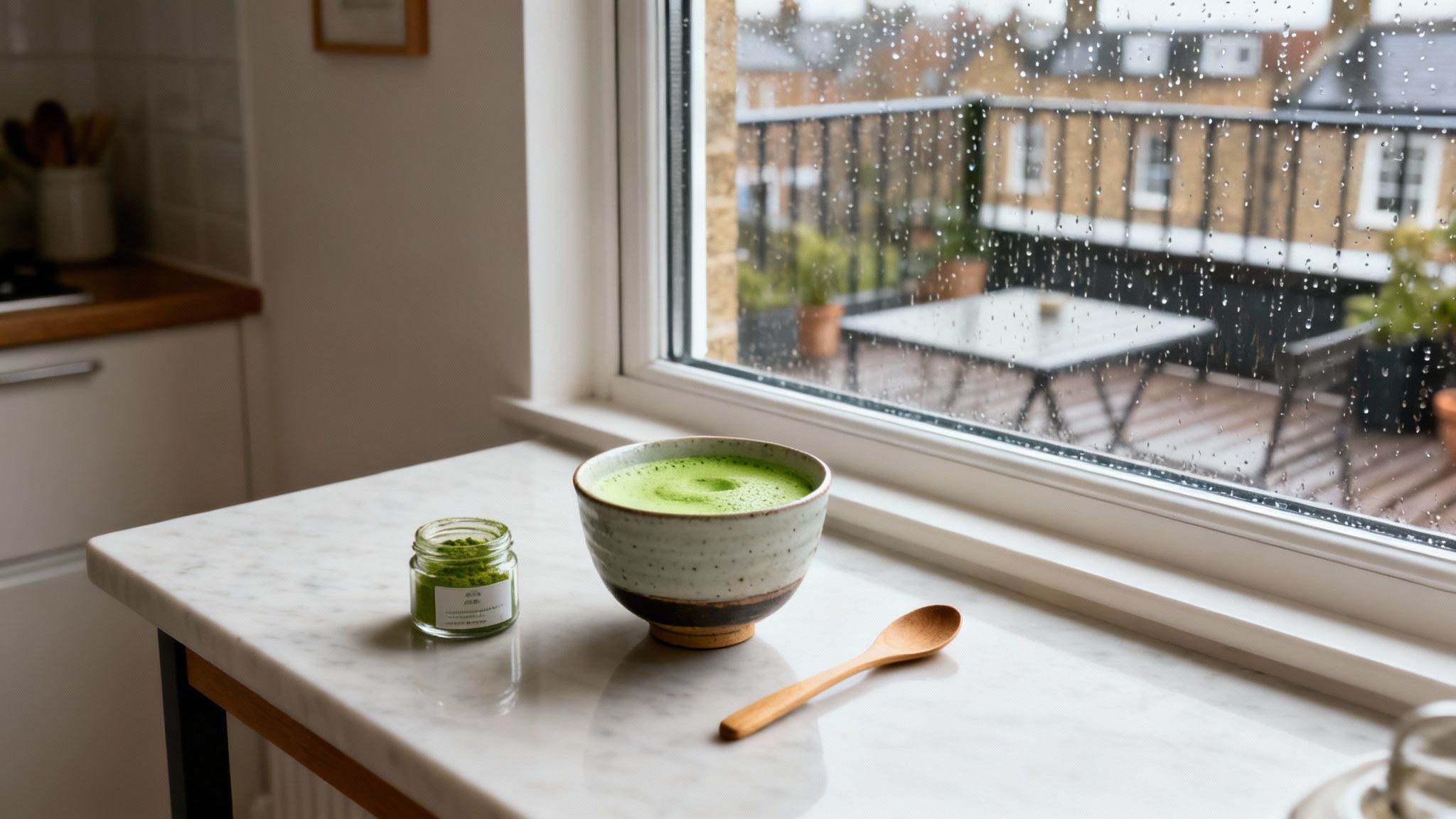
It’s impossible to ignore—matcha has truly arrived in the UK. What was once a niche health-food item is now a daily ritual for many of us, with people swapping their morning flat white for a bowl of vibrant green tea. It seems we’ve all been drawn in by its unique promise of sustained, calm energy without the caffeine jitters.
This isn't just a passing trend; it's a genuine shift towards more mindful moments in our day. The numbers really tell the story. During the summer of 2025, the UK had what many are calling its 'matcha moment'. An incredible 1,606,627 matcha drinks were sold across the country in June and July alone. Unsurprisingly, London led the charge, making up almost 76% of the national total with over 1.2 million sales. If you're curious, you can dive deeper into the data on Britain's growing love for matcha from Squareup's findings.
This surge in popularity speaks to a growing appreciation for both flavour and function. The complex, earthy taste of a high-quality matcha offers a sophisticated alternative to other drinks, and the very act of preparing it provides a welcome pause.
The Allure of a Home-Brewed Ritual
Bringing this experience into your own kitchen is not only possible but also deeply rewarding. When you master a matcha tea recipe, you’re not just making a drink; you’re connecting with an ancient practice and tailoring it to your exact liking. Our goal here is to show you just how accessible and enjoyable crafting the perfect bowl of matcha can be.
At Jeeves & Jericho, we believe the foundation of any great matcha experience is exceptional quality. That’s why we’re committed to sourcing our matcha from the finest artisans in Uji, Japan, ensuring your home-brewed cup rivals what you’d find in the very best cafés.
Think of this guide as the start of your own matcha journey. We'll walk you through everything from choosing the right powder to mastering the whisk, giving you the confidence to create a flawless cup every single time. Your perfect 'matcha moment' is just a few steps away.
Choosing Your Matcha and Essential Tools
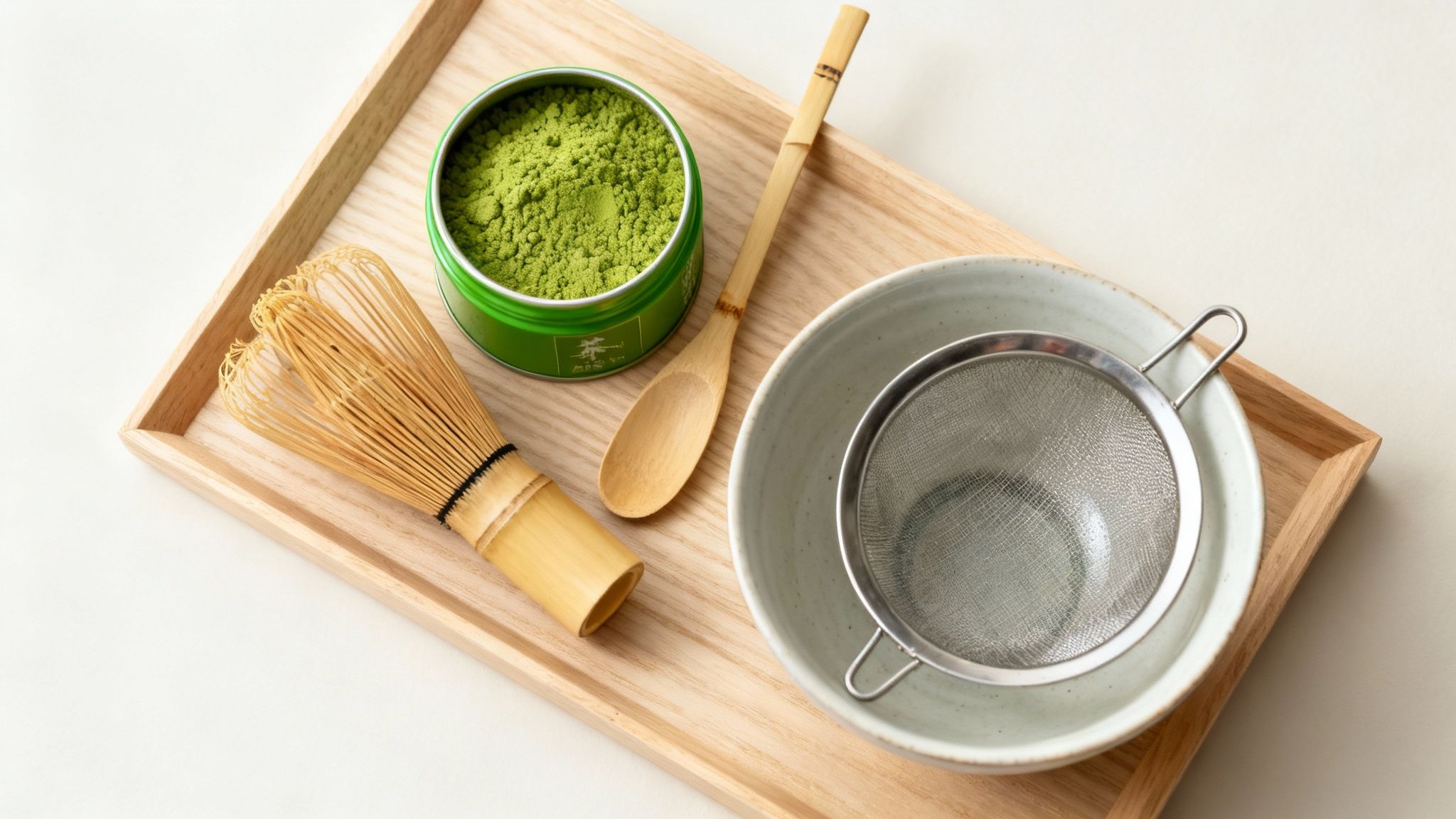
Before you even think about whisking up your perfect bowl of matcha, the quality of your powder and a few key pieces of equipment will make all the difference. Diving into the world of matcha can feel a bit overwhelming at first, but getting the fundamentals right is surprisingly simple and sets you up for a truly authentic experience.
The single most important decision is the matcha itself. Not all green powders are the same, and picking the right grade is the secret to unlocking that incredible flavour everyone talks about.
And it seems more and more people are catching on. The UK matcha tea market is expected to surge from USD 340 million in 2025 to a staggering USD 790 million by 2031, according to a recent UK matcha tea market report. This isn’t just about drinking more green tea; it’s about a growing demand for premium, traceable products, with a real shift towards high-quality organic and ceremonial grades straight from Japanese farms.
Understanding Matcha Grades
When you’re browsing for matcha, you’ll mainly come across two types: Ceremonial and Culinary. Knowing the difference is crucial.
-
Ceremonial Grade Matcha: This is the best of the best. It’s made from the youngest, most tender tea leaves, giving it that famously vibrant green colour and a fine, silky texture. The flavour is smooth, complex, and packed with umami with almost no bitterness. This is the grade you want for drinking straight with hot water, just like in the traditional Japanese tea ceremony.
-
Culinary Grade Matcha: Made from slightly older leaves, this grade has a more robust, slightly bitter flavour. It’s designed to shine in recipes where it has to compete with other ingredients, making it perfect for lattes, smoothies, and baking.
For a pure, traditional bowl of matcha, always choose Ceremonial Grade. Its delicate, nuanced flavour is the star of the show and can easily get lost. At Jeeves & Jericho, we source our ceremonial matcha to ensure you get that perfect, authentic taste every single time.
If you want to delve deeper into the subtleties, our guide on the different types of matcha tea is a great place to start.
Ceremonial vs Culinary Matcha At a Glance
Still unsure which one to grab? This should clear things up.
| Feature | Ceremonial Grade Matcha | Culinary Grade Matcha |
|---|---|---|
| Colour | Bright, electric green | Dull, often yellowish or brownish-green |
| Texture | Extremely fine and silky, like talcum powder | Coarser and less fine |
| Taste | Smooth, naturally sweet, rich umami, very little bitterness | Strong, bold, slightly bitter, designed for mixing |
| Best For | Drinking on its own with hot water (Koicha or Usucha) | Lattes, smoothies, baking, ice cream, and other recipes |
| Source | First harvest, youngest leaves from shade-grown tea plants | Later harvest, more mature leaves |
| Price | Higher | More affordable |
Ultimately, both have their place. It’s all about matching the grade to what you’re making. For that perfect, meditative bowl of tea, ceremonial is non-negotiable.
Your Essential Matcha Toolkit
You don’t need a full-blown ceremonial setup to get started, but a few specific tools are non-negotiable if you want that smooth, frothy texture.
-
Chawan (Matcha Bowl): A wide, flat-bottomed bowl is best. The shape gives you plenty of room to whisk properly without splashing everywhere, which is key for creating that signature frothy head. In a pinch, a wide soup or cereal bowl can work.
-
Chasen (Bamboo Whisk): This is probably the most important tool of all. A traditional bamboo whisk has dozens of delicate prongs designed to break up clumps and whip air into the tea. It creates a creamy froth that a metal whisk or a fork simply can’t achieve.
-
Furui (Fine-Mesh Sieve): Matcha powder is incredibly fine and loves to clump together the second it hits water. Sifting your matcha into the bowl before you add any liquid is the secret to a lump-free, silky-smooth drink. Don't skip this step!
-
Chashaku (Bamboo Scoop): This elegant scoop is designed to measure the perfect amount of matcha, usually one to two scoops for a single serving. Of course, a regular teaspoon will do the job just fine—aim for about ½ to 1 tsp.
With these basics in hand, you're perfectly equipped to start your matcha journey.
How to Prepare Traditional Matcha at Home
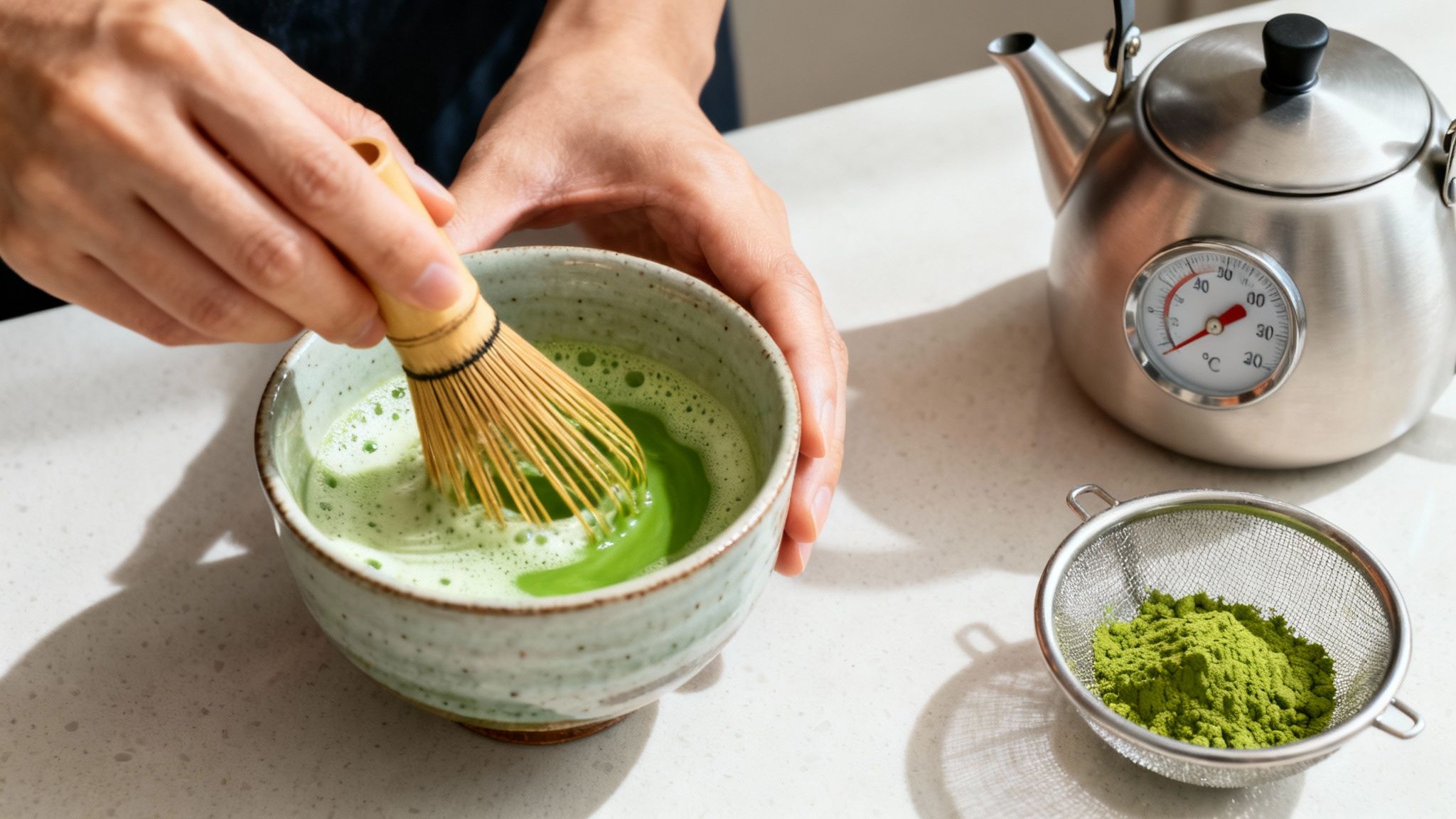
With your ceremonial grade matcha and tools at the ready, it’s time to bring this wonderful ritual to life. Making traditional matcha is less about following a strict recipe and more about embracing a mindful practice. We'll walk you through the little details that make all the difference, helping you craft a perfect bowl every single time.
First, set yourself up for success. Creating a clean, dedicated space in your kitchen really helps you focus. If you're getting serious about your matcha journey, you might even consider a suitable food prep table to keep all your gear organised and within easy reach.
Mastering the Sift
Don't be tempted to skip this part. Sifting your matcha is the first, and arguably most important, step to a smooth, delicious brew. Matcha powder is so incredibly fine that it loves to clump together. If you don't sift, you’ll spend your time chasing lumps around the bowl, which leads to a gritty and often bitter cup.
Simply hold a fine-mesh sieve over your chawan (matcha bowl) and use your chashaku (bamboo scoop) or a small spoon to gently push the powder through. What you're left with is a light, airy mound of matcha that will dissolve like a dream. You'll want about 1-2 grams per bowl, which works out to one or two bamboo scoops.
Getting the Water Temperature Just Right
This is the classic rookie mistake. Pouring boiling water straight onto your delicate matcha will scorch it, killing all those lovely sweet, umami notes and leaving you with a mouthful of bitterness. The sweet spot for water temperature is around 80°C (175°F).
No fancy kettle? No problem. Here’s how to nail it:
- Boil your water, then simply let it stand for three to five minutes to cool down.
- A quicker trick is to pour the boiled water into a different cup first. The transfer instantly cools it to a much more matcha-friendly temperature.
Key Takeaway: Never, ever use boiling water. A few minutes of patience is the single best thing you can do for your matcha's flavour.
Once the water is at the right temperature, pour about 60ml (or 2 ounces) over your sifted matcha. This small amount of water is just enough to create a thick, smooth paste, which is the perfect foundation for a frothy finish.
The Art of the Whisk
Now for the fun part—the whisking. This is where your bamboo chasen really comes into its own. With its 80-plus delicate prongs, it’s designed specifically to aerate the tea and whip up that signature creamy foam. If you’re curious about this essential tool, we have a whole guide dedicated to the matcha green tea bamboo whisk.
The key is to forget stirring. You’re not making a cup of instant coffee. The proper technique is a fast, zig-zag motion, like you’re frantically drawing the letters 'M' and 'W' in the bowl.
- Start by holding the bowl steady with one hand.
- Grip the whisk vertically with your other hand, so the prongs just brush the bottom of the bowl.
- Now, get whisking! Use a loose wrist and move back and forth for about 15-20 seconds.
You’re aiming for a thick layer of tiny, even bubbles, almost like the crema you’d see on a great espresso. Once you have a lovely froth, gently lift the whisk out from the centre of the foam to leave a perfect little peak.
And there you have it. A beautiful, traditional bowl of matcha, ready to be sipped and savoured. Take a moment to enjoy the vibrant green colour and the fresh aroma. You've just performed an ancient ritual right in your own kitchen.
Crafting The Perfect Matcha Latte and Modern Twists
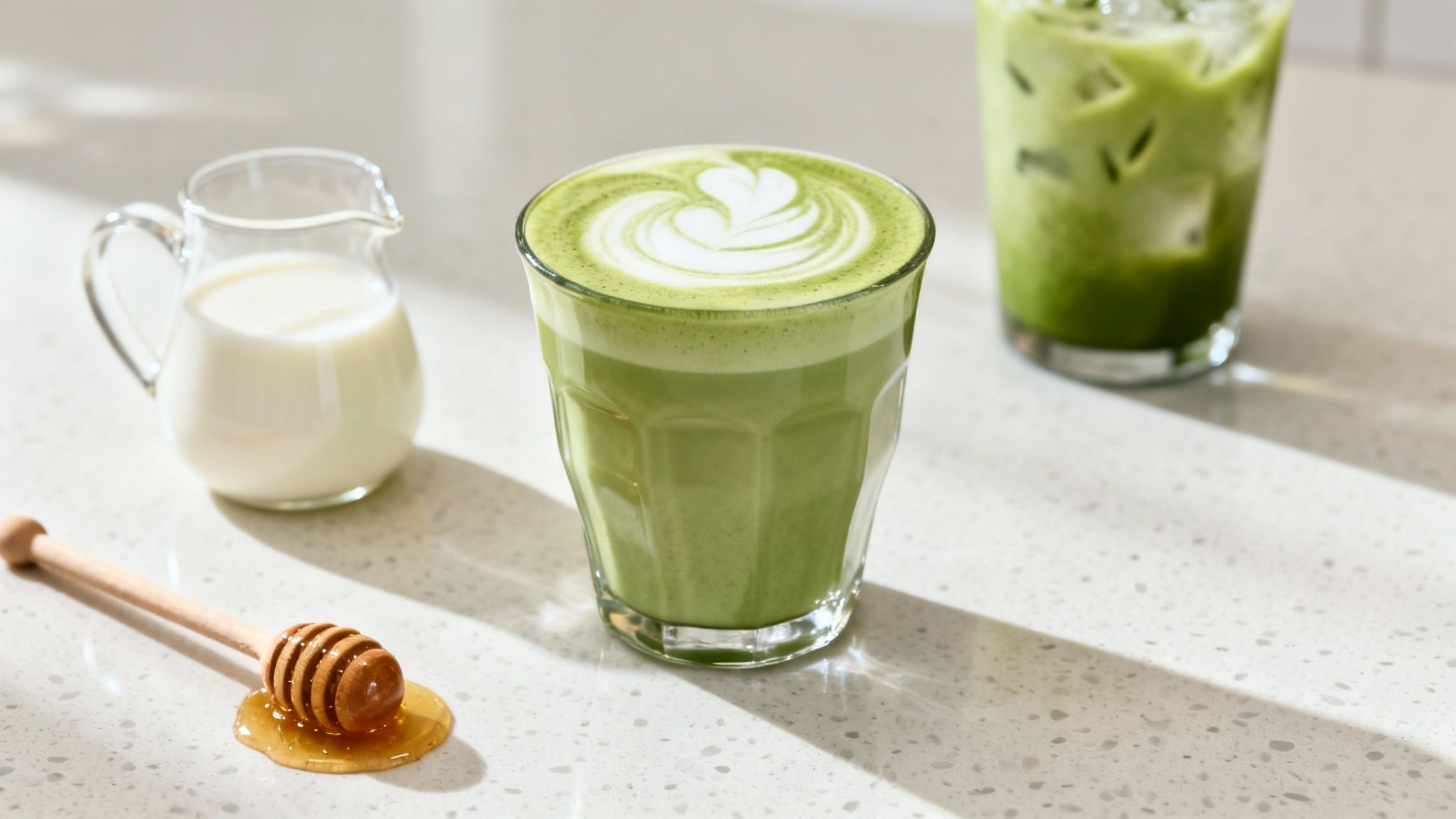
Once you’ve got the hang of a traditional bowl of matcha, a whole world of new creations opens up. The matcha latte is probably the most famous of the bunch, and for good reason. It transforms matcha's deep, earthy notes into a creamy, comforting drink that’s become a café staple everywhere.
If you find the pure, unadulterated flavour of matcha a bit too intense on its own, a latte is the perfect entry point. The secret to a truly great one is to start with a concentrated matcha "shot." You'll prepare it just like a traditional bowl, but use a touch less water—around 30-40ml—to create a potent base. This little trick ensures the matcha’s complex character holds its own against the milk.
Choosing Your Perfect Milk
The milk you go for will completely change the personality of your latte. There’s no right or wrong here, it’s all down to what you enjoy.
- Oat Milk: A crowd-pleaser, and our personal favourite. Its natural creaminess and hint of sweetness are a beautiful match for matcha’s grassy profile, making for a ridiculously smooth, well-rounded drink.
- Dairy Milk: For a classic, rich texture, you can’t beat whole milk. The fat content works wonders to soften any potential bitterness, letting the pure matcha flavour take centre stage.
- Almond Milk: A lighter alternative that brings a lovely, nutty undertone. We’d recommend an unsweetened barista blend, as it froths up better and won’t overshadow the delicate tea.
- Coconut Milk: If you fancy a more tropical vibe, coconut milk adds a bold flavour and a thick, luxurious mouthfeel. It’s a delicious pairing, but be ready for the coconut to be a main character.
Whichever milk you choose, aim to heat it to about 65-70°C. Just like the water for your matcha shot, you don’t want to scald it. This is the sweet spot for creating a silky microfoam while keeping the milk’s natural sweetness intact.
Pro Tip: For a velvety, café-quality froth, a handheld electric frother is your best friend. Start with the whisk near the bottom of your jug of warm milk, then slowly bring it towards the surface as the foam builds. You’ll get a much finer texture this way, avoiding those big, airy bubbles.
Once it's perfectly frothed, gently pour the milk over your matcha shot. You can even have a go at some latte art if you're feeling fancy.
Inspiring Matcha Variations
Your matcha journey doesn't end with lattes. This vibrant powder is incredibly versatile, especially when the weather starts to warm up. A crisp, refreshing iced matcha latte is one of our go-to drinks on a sunny afternoon. For a foolproof method, check out our guide for the perfect iced matcha latte.
But why stop there? It’s fun to get a bit creative.
- Matcha Lemonade: This combination sounds unusual, but it’s an absolute winner. Whisk your matcha shot, pour it over a tall glass of ice, and top it up with fresh lemonade. A slice of lemon to garnish makes it perfect. The zesty tang of the citrus cuts through the matcha’s earthiness for a seriously invigorating drink.
- Sweetened and Spiced: If you prefer a softer flavour, a small drizzle of honey or maple syrup can work wonders. For a bit of warmth and complexity, try adding a drop of vanilla extract or a dusting of cinnamon to your latte. It takes it from a daily drink to a proper treat.
The best thing to do is experiment. The perfect matcha recipe is simply the one you enjoy drinking the most. Use these ideas as a starting point, tweak the ingredients, and you’ll soon find your own signature blend.
When Matcha Goes Wrong (And How to Fix It)
Even with the best of intentions and our finest Ceremonial Grade Matcha, things can sometimes go a bit sideways. Don't worry if your first few bowls aren't quite perfect – making great matcha is a craft, after all. Let’s walk through the most common hiccups and get your next brew tasting smooth, rich, and beautifully frothy.
Finding little green clumps at the bottom of your bowl is probably the most frequent complaint we hear. The culprit is almost always skipping the sifting step. Matcha powder is so incredibly fine that it loves to clump together due to static. A quick push through a fine-mesh sieve before adding water is the simple secret to a silky-smooth finish.
Why Does My Matcha Taste Bitter?
A harsh, bitter aftertaste can really spoil the moment. Nine times out of ten, it comes down to one thing: water temperature. If your water is boiling or just too hot (anything over 80°C), it will literally scorch the delicate tea leaves. This releases an excess of catechins, which are responsible for that unpleasant flavour.
The fix is beautifully simple. Just boil your kettle, then let it sit for a few minutes to cool down before you pour. This small act of patience makes all the difference, protecting the matcha’s subtle umami and sweet, vegetal notes. If it's still not quite right, you might be using a little too much powder, so try adjusting your ratio.
Your matcha should taste fresh and vibrant with a touch of sweetness. If it’s overwhelmingly bitter, it’s a sign that either your technique or ingredients need a slight tweak. A brilliant bowl of matcha is all about a balance of quality, temperature, and motion.
How Can I Get More Froth?
Ah, the froth. That signature creamy foam (or usura) isn't just for looks; it aerates the tea, softening its flavour and creating a luxurious mouthfeel. If your matcha is falling flat, it's almost certainly down to your whisking technique.
Forget a gentle, circular stir. What you need is a rapid, energetic zig-zag motion. Think of it like drawing a quick 'M' or 'W' over and over in the bowl with your bamboo whisk, or chasen. This vigorous action is what whips air into the liquid to create that lovely layer of micro-foam. Also, make sure you're using a proper matcha bowl (chawan) – its wide base gives you the space you need to whisk properly. A narrow mug just won’t do the job.
We've put together a quick guide to help you pinpoint any issues you're having at a glance.
Matcha Troubleshooting Guide
This table is your go-to for quickly diagnosing common matcha-making problems and finding their simple solutions.
| Problem | Likely Cause | Simple Solution |
|---|---|---|
| Lumpy or Gritty Texture | Matcha powder wasn't sifted. | Always pass your matcha through a fine-mesh sieve before adding water. |
| Overly Bitter Flavour | Water was too hot (above 80°C). | Let your boiled water cool for 2-3 minutes before pouring it over the matcha. |
| Weak or Watery Taste | Incorrect matcha-to-water ratio. | Try using a bit more matcha (2g to 70ml water is a good start) or a little less water. |
| No Froth (Usura) | Whisking technique is incorrect. | Use a fast, zig-zag 'M' or 'W' motion, not a circular stir. Ensure you're using a chasen. |
| Flat, Dull Colour | Stale or low-quality matcha. | Use fresh, high-quality matcha. Store it in an airtight container in the fridge. |
Hopefully, with these pointers, you’ll be well on your way to a perfect bowl every time. Practice really does make perfect
A Few Final Matcha Musings
Now that you've got the essentials down, let's clear up a few of the questions that often pop up when you're just starting out. Consider this your quick-fire round to smooth out any lingering wrinkles in your matcha-making routine.
Probably the biggest question we get is about the caffeine kick. Is a bowl of matcha just a green version of your morning espresso? Not quite. A standard one-gram serving has around 35-70mg of caffeine, a touch less than your average coffee, which clocks in at about 95mg.
The real difference, though, is in how you feel. Matcha contains an amino acid called L-theanine, which works with the caffeine to create a sense of calm, focused energy. It’s a gentle lift, without the jitters and eventual crash that so often comes with coffee.
Goodness in, Goodness Out: Benefits & Storage
That unique, focused energy is just the start. Because you’re consuming the whole leaf, you get a direct hit of all its goodness – especially antioxidants like EGCG, which are linked to all sorts of health benefits. From supporting your metabolism to sharpening your focus, it's a small ritual with a big impact.
But to keep all that goodness intact, you have to treat your matcha right.
- Seal It Up: Air is matcha’s worst enemy. Always make sure your tin or pouch is sealed tightly after you’ve taken what you need.
- Keep It Cool: Heat and light will sap the colour and flavour from your powder in no time. Once opened, the fridge is your best bet for keeping it fresh.
Think of your matcha like any other fresh ingredient. Once you crack the seal, you’ll want to enjoy it within two months to catch it at its absolute best. You’ll know it’s past its prime when it loses that electric-green colour and tastes a bit flat or bitter.
Can I Get Away With Not Using a Whisk?
We hear this one all the time. Can you just use an electric milk frother, or shake it up in a jar? Well, you can, but the results won't be the same. A traditional bamboo whisk, the chasen, is a pretty special bit of kit. Its 80-plus prongs are designed specifically to break up every tiny clump and whip air into the tea, creating that beautiful, velvety froth.
A metal frother can sometimes add a metallic taste, and just shaking it often leaves you with a gritty, clumpy brew. If you’re after that authentic, smooth texture, the bamboo whisk really is a non-negotiable.
Ready to put it all into practice? At Jeeves & Jericho, we source our premium ceremonial grade matcha directly from the tea fields of Uji, Japan, making sure every bowl you whisk up is as vibrant and flavourful as it should be. Explore our matcha collection and find your perfect ritual.