


English Breakfast tea isn’t one specific type of tea leaf. Instead, it’s a robust and full-bodied blend of different black teas, specifically designed to give you a strong, invigorating start to the day and to stand up to a proper hearty breakfast. It's little wonder it's one of the most popular teas on the planet.
The Anatomy of an Iconic Blend
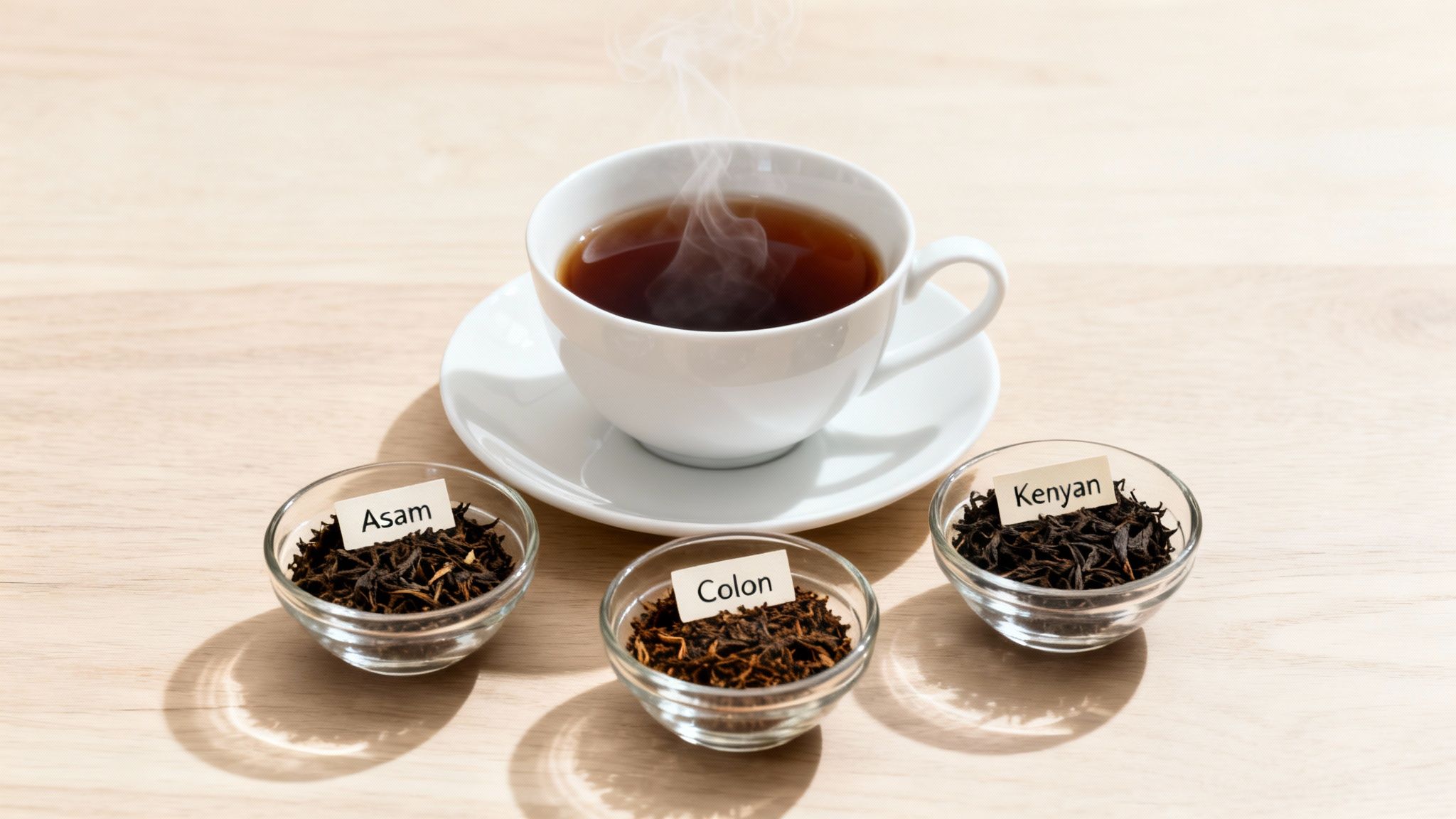
So, what exactly goes into an English Breakfast tea? It helps to think of it less like a solo artist and more like a perfectly rehearsed band. Each member—each type of tea leaf—plays a crucial part in creating that final, harmonious flavour.
While there’s no single, set-in-stone formula, a classic English Breakfast blend usually brings together a trio of powerful black teas from different corners of the globe. This masterful combination is the most recognised breakfast blend in the UK, making up a huge chunk of all black tea sales. Modern blenders, including us, select specific teas for their distinct qualities to create a cup that’s both balanced and bracing. You can find out more about the history of these classic blends on Wikipedia.
To give you a clearer picture, here’s a quick rundown of what you’ll typically find in a quality brew.
English Breakfast Tea At a Glance
| Characteristic | Description |
|---|---|
| Tea Type | A blend of black teas. |
| Origin | Typically includes teas from Assam (India), Ceylon (Sri Lanka), and Kenya. |
| Flavour Profile | Full-bodied, robust, and rich with malty and brisk notes. |
| Caffeine | Moderate to high, usually around 40-70 mg per cup. |
| Best Enjoyed | Hot, often with milk and sometimes a touch of sugar. |
This table shows the building blocks, but the real magic is in how they come together.
The Core Components
The true character of this beloved brew comes from the interplay between its main ingredients. Each one contributes a unique note to the overall flavour profile.
- Assam: Sourced from India, Assam forms the blend’s foundation. It delivers a deep, malty, and full-bodied character that gives the tea its signature strength and richness.
- Ceylon: Hailing from Sri Lanka, Ceylon adds a bright, crisp high note. It introduces a lively, almost citrusy briskness that cuts beautifully through the maltiness.
- Kenyan: Teas from Kenya are known for lending a bold, vibrant colour and a strong, satisfying finish to the blend, rounding everything out perfectly.
Together, these teas create a symphony of flavour that is both complex and deeply comforting. The goal is to produce a brew that’s strong enough to handle milk and sugar, yet so well-balanced it can be savoured all on its own. It's this careful art of blending that makes English Breakfast tea a timeless classic.
The Surprising History Behind the Blend
You’d be forgiven for thinking English Breakfast tea has been a cornerstone of British life for centuries, but its story is far richer and more debated than you might imagine. While it feels timeless, the blend we know and love was actually forged in the 19th century, with a fascinating history that spans continents and even includes a touch of royal influence.
The truth is, its origin story isn’t a single, straight line. Instead, it’s a tale with two competing narratives that show just how this robust brew became an institution on both sides of the Atlantic.
An American Beginning
Surprisingly, one of the most compelling stories begins not in London, but in New York City. Back in the 1840s, an English immigrant and tea merchant named Richard Davies decided to market a gutsy blend of black teas to his fellow expats. His genius move? He branded it "English Breakfast Tea."
It was a clever bit of marketing, giving a name to the strong, hearty brew they all missed from home. The brand was a huge success and carved out a new category in the American market—a taste of England, expertly packaged to evoke a sense of comforting tradition.
A Scottish Twist with Royal Approval
The other major thread in our story takes us over the water to Scotland. Here, a tea master in Edinburgh, Robert Drysdale, is said to have created his own powerful blend, specifically designed to be the perfect morning kick-starter. His creation was so good that it supposedly caught the attention of Queen Victoria during one of her stays at Balmoral Castle.
Legend has it that the Queen was so taken with Drysdale's brew that she brought a supply back to London, where it quickly became the talk of the English aristocracy. This royal seal of approval cemented its status as a quintessentially British drink.
The tea-drinking culture of this period was absolutely buzzing. To really get a feel for it, it’s worth exploring afternoon tea's journey to becoming a British institution. It was an era, not unlike the one Jane Austen wrote about, where tea was becoming a central part of daily life. For a deeper dive into this, you might enjoy our article on a cup of tea with Jane Austen.
Deconstructing the Flavour: The Core Teas
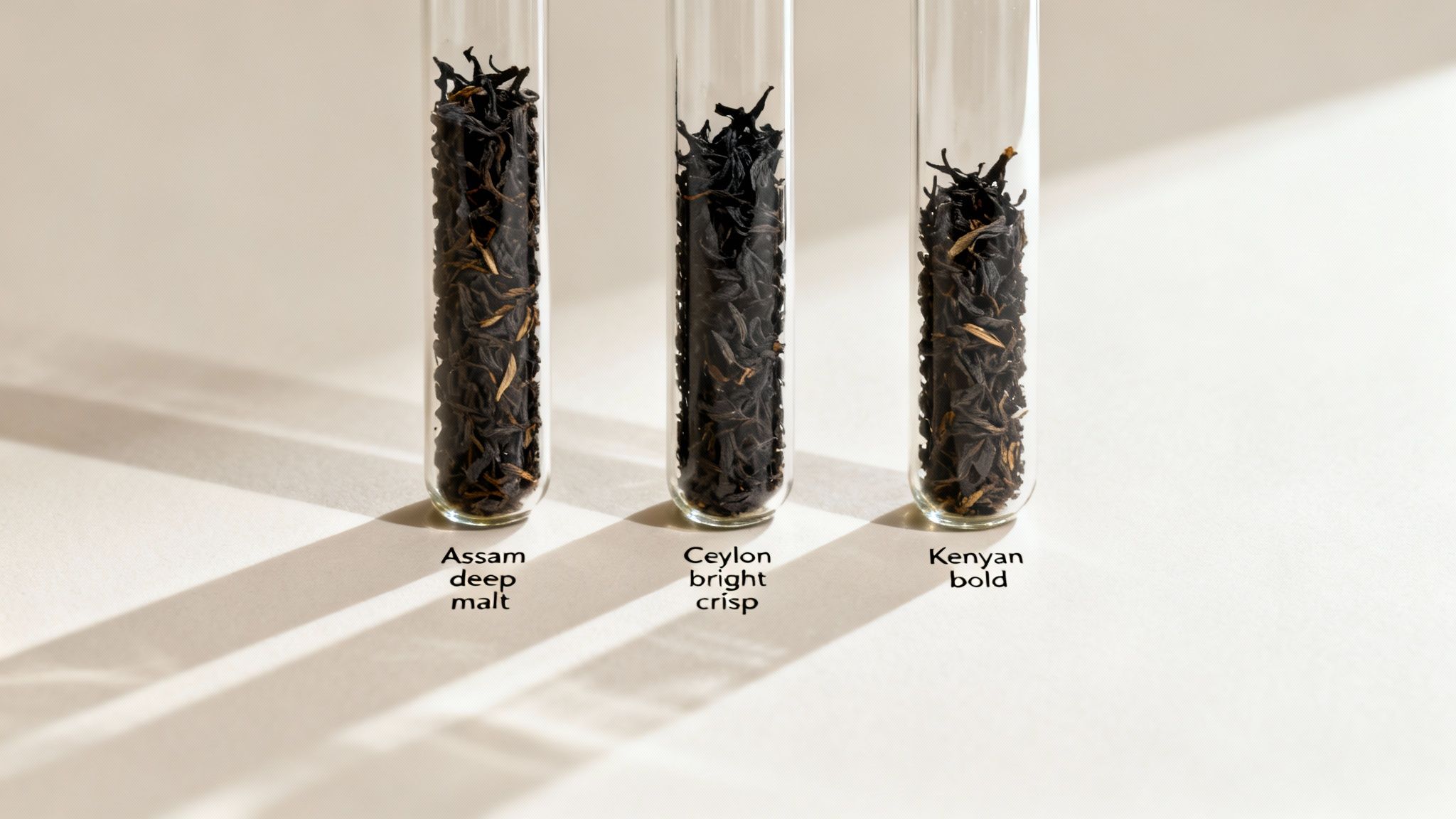
So, what gives English Breakfast tea its signature taste? It’s not just one type of leaf, but a masterful blend of several distinct black teas, each picked for the unique character it brings to the cup. Think of a tea blender like a conductor leading an orchestra—every instrument has its part to play in creating a harmonious final piece.
The classic recipe is built around a powerful trio of teas. Understanding what each one contributes is the key to appreciating the depth behind this seemingly straightforward brew.
The Foundation: Assam
First up is Assam, hailing from the lush, rainy plains of India. This is the heart and soul of the blend, providing the deep, malty foundation. It’s what gives the tea its full-bodied strength and comforting, robust character.
Without Assam, an English Breakfast would feel a bit lost. It’s the sturdy backbone that stands up brilliantly to a splash of milk and a bit of sugar, making it the perfect partner for a proper fry-up.
The Brightness: Ceylon
Next in the mix is Ceylon tea from Sri Lanka. If Assam is the deep bass note, Ceylon provides the bright, crisp high notes. Its job is to introduce a lively, almost citrusy briskness that cuts cleanly through the maltiness.
This zesty quality lifts the entire flavour profile, stopping it from feeling too heavy and adding a wonderfully refreshing finish.
The art of blending isn't just about combining strong teas; it's about achieving harmony. The maltiness of Assam, the brightness of Ceylon, and the strength of Kenyan tea must work together to create a flavour that is greater than the sum of its parts.
The Strength: Kenyan
Finally, we have Kenyan tea. Grown in the rich volcanic soils of the Kenyan highlands, this tea is all about its bold colour and vigorous, satisfying character. It adds a powerful punch and contributes to that deep, coppery hue we all look for in a perfect brew.
Each tea plays a specific, complementary role, much like ingredients in a time-honoured recipe.
The Role of Each Tea in the Blend
To put it all together, here’s a quick look at how these three powerhouses work in concert.
| Tea Origin | Primary Flavour Contribution | Role in the Blend |
|---|---|---|
| Assam (India) | Rich, malty, full-bodied | Provides the strong, comforting base and depth. |
| Ceylon (Sri Lanka) | Bright, crisp, citrusy | Lifts the blend with a brisk, refreshing top note. |
| Kenyan (Africa) | Bold, strong, astringent | Adds strength, a vibrant colour, and a robust finish. |
This classic combination creates that invigorating flavour that has made English Breakfast a global favourite for centuries. To dig deeper into the world of these amazing leaves, take a look at our guide to black tea varieties.
How to Brew the Perfect Cup Every Time
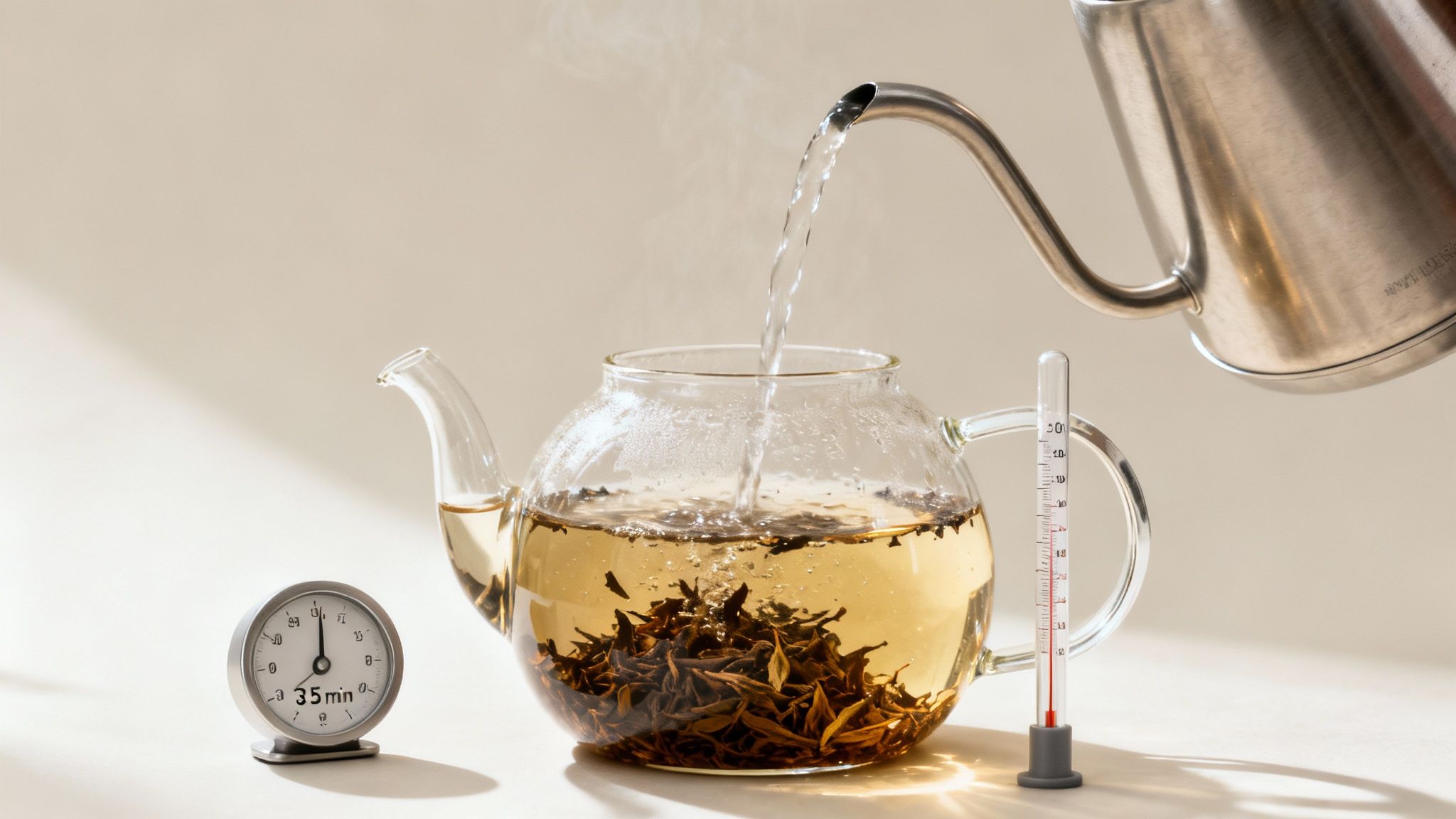
There’s a simple art to unlocking the rich, malty flavour of a proper English Breakfast tea, and a few little details make all the difference. Get them right, and you'll sidestep a bitter or watery brew for a perfect, invigorating cup. Every single time.
First things first, the water. You want it just off the boil, ideally around 95-100°C. Water that isn't hot enough gives you a flat, underwhelming taste, while fiercely boiling water can scorch the more delicate notes in the leaves.
Next up is getting the leaf-to-water ratio just so. A good rule of thumb is one heaped teaspoon of loose-leaf tea (or one teabag) for every 250ml of water. This gives the brew enough backbone without being overpowering.
Steeping for Optimal Flavour
Now for the magic part: the steep. For a classic English Breakfast, you’re aiming for anywhere between 3 to 5 minutes. Any less, and the flavour won't have a chance to properly unfurl. Any more, and you risk unleashing too many tannins, which is what gives tea that sharp, bitter edge.
The perfect steep is a balancing act. It draws out all those deep, satisfying notes from the Assam and Kenyan leaves while keeping the bright, crisp character of the Ceylon.
If you’re using loose-leaf, a bit of extra guidance can go a long way. To really get your technique down, have a look at our full guide on how to brew loose leaf tea.
The Great Milk Debate
And finally, the age-old question: milk or no milk? The punchy, robust profile of English Breakfast was practically made for a splash of milk. It softens the tea's briskness and creates that creamy, comforting cuppa we all know and love.
Of course, there's absolutely nothing wrong with drinking it black. In fact, doing so lets the complex, malty notes really take centre stage. If you take sugar, it's best to add it after the milk so it can dissolve properly.
What Does English Breakfast Taste Like? And What To Eat With It.
A truly great cup of English Breakfast tea is a full sensory experience, delivering a flavour that’s both wonderfully powerful and deeply comforting. The first thing you'll notice is that rich, malty aroma—a warm, inviting scent that promises a proper, robust brew.
When you take a sip, it’s all about that full-bodied, satisfying character. It's deep, earthy, and then comes the finish: a brisk, slightly sharp astringency that cleanses the palate, leaving you feeling refreshed and ready for the day. It’s this fantastic combination of strength and brightness that makes the tea so invigorating.
The Perfect Partner on Your Plate
While delicious on its own, this tea really comes alive when you pair it with food. Its bold character was practically tailor-made to stand up to a hearty meal, making it the undisputed champion alongside a traditional full English breakfast. That briskness cuts cleanly through the richness of bacon, sausages, and fried eggs, balancing every single bite.
This isn't a modern foodie trend, either. The blend's very makeup tells a story of historical trade routes. When strong Assam tea started flooding into Britain from the mid-1800s, it began to replace the lighter Chinese teas in many blends. This shift is what helped cement the gutsy, malty profile we now expect from a proper breakfast brew. You can get a bit more of the backstory in this tea trade history.
Of course, it's not just for fry-ups. English Breakfast tea is brilliant with all sorts of things.
- Toast and Marmalade: There’s a simple joy in a warm piece of toast slathered with sharp, citrusy marmalade, and the tea’s malty notes just make it even better.
- Scones with Jam and Cream: A classic for a very good reason. The tea has enough oomph to hold its own against sweet jam and indulgent clotted cream.
- Pastries and Cakes: Its robust flavour offers the perfect counterpoint to buttery croissants or a dense slice of fruitcake.
The real secret to pairing is all about balance. The tea’s powerful character isn’t meant to be drowned out by strong flavours, but to complement them, making the whole experience more rounded and satisfying.
How to Choose a Quality English Breakfast Tea
Walking down the tea aisle can be a bit dizzying, but finding a truly exceptional English Breakfast blend is easier than you think. It’s all about knowing what to look for beyond the fancy packaging.
First things first, let's talk about the tea itself. While teabags are undeniably handy, the most incredible flavour is almost always locked away in whole-leaf teas. Larger leaves hold onto their precious essential oils, giving you a much more complex and layered cuppa. Many standard teabags, on the other hand, are filled with finer particles—often called 'dust'—which can brew up strong, but often taste flat and a bit bitter.
Look for the Blend and its Origin
A great English Breakfast is a masterpiece of blending. Have a peek at the packaging for clues about where the teas come from. Any tea maker worth their salt will be proud to tell you about their sources. Keep an eye out for that classic trio: Assam, Ceylon, and Kenyan teas. That kind of transparency is usually a great sign.
The secret to its iconic character is in the balance. Each origin plays a specific role, and a thoughtful blend ensures a harmonious, full-bodied flavour that is robust without being harsh.
Prioritise Ethical Sourcing
Finally, we believe a truly great cup of tea should do good as well as taste good. Look for brands that are open about their sourcing and any certifications they hold.
- Ethical Tea Partnership: This is a non-profit group dedicated to improving the lives of tea workers and promoting environmental sustainability.
- Fairtrade: This label ensures that the farmers who grow the tea receive a fair price, helping to support their communities.
- Organic: Certified organic teas are grown without synthetic pesticides or fertilisers, which is better for you and for the planet.
When you choose brands like Jeeves & Jericho that champion these values, you're doing more than just buying tea. You're supporting a more sustainable and fair-minded tea world.
Your English Breakfast Questions, Answered
Let's dig into some of the most common questions about this classic brew. Getting to grips with the details is the best way to appreciate what makes a proper English Breakfast so special.
Is It Just Another Black Tea?
Not quite. While it is made entirely from black tea leaves, the real magic is in the blend. English Breakfast isn't a single-origin tea from one place; it’s a carefully balanced mix of several, usually from Assam, Ceylon, and Kenya. This is what creates that specific, punchy flavour profile that a single tea leaf just can't deliver on its own.
How Much of a Kick Does It Have?
A typical mug of English Breakfast tea contains somewhere between 40-70 milligrams of caffeine. That’s about half what you’d find in a similar-sized cup of filter coffee, making it the perfect morning pick-me-up without the jitters. It gives you a much more steady, sustained lift.
There's no denying its place in the nation's heart. Black teas, especially strong breakfast blends, consistently top the charts in British retail sales, cementing their cultural and economic importance. You can read more on its journey from Yorkshire Tea's brew news.
Do I Have to Add Milk?
Absolutely not! While a splash of milk is the traditional way to enjoy it, giving it that creamy, comforting character, drinking it black is a whole other experience. Without milk, you’ll really taste the complex notes coming through – the deep, malty body from the Assam and the brighter, almost citrusy notes from the Ceylon.
What’s the Difference Between English, Irish, and Scottish Breakfast?
Think of them as cousins, each with its own distinct personality shaped by regional tastes.
- English Breakfast: This is the quintessential all-rounder. It’s strong, full-bodied, and beautifully balanced.
- Irish Breakfast: Tends to lean more heavily on the Assam, giving it a stronger malty flavour, a distinct reddish hue, and an even bigger, bolder character.
- Scottish Breakfast: Often the strongest of the lot, this blend was originally created to stand up to Scotland’s soft water. It’s incredibly powerful and designed to get you going on a cold morning.
Each one offers a slightly different take on the breakfast brew, so it's well worth trying them all to find your favourite.
At Jeeves & Jericho, we believe the art of a perfect blend makes all the difference. Explore our ethically sourced, whole-leaf teas and discover the true character of a premium English Breakfast at https://www.jeevesandjericho.com.