


Making a proper cup of loose leaf tea really comes down to three things: getting the right amount of tea, the right water temperature, and the right steeping time. As a starting point, think one teaspoon of leaves per cup of water. For a classic black tea, use water just off the boil and let it steep for 3-5 minutes. It’s that simple, but this approach unlocks a world of flavour that just isn’t possible with a standard teabag.
Why Loose Leaf Tea Is Worth It
Making the switch from a teabag to loose leaf tea is less about extra effort and more about turning a daily habit into a small, mindful ritual. For so many of us here in the UK, that first proper loose leaf brew is a revelation. Suddenly, you discover a depth of flavour and aroma that teabags simply can't deliver. The reason is simple: whole leaves have the space they need to unfurl and release all their complex essential oils.
This guide is here to show you how to make tea with loose leaf without any fuss. It’s not about rigid rules, but a few key ideas that will help you brew a consistently brilliant cup, every single time.
The Core Principles of a Proper Brew
Forget any notion that this is complicated. Brewing loose leaf tea is a simple craft that elevates your daily cuppa from something mundane to something truly special. Once you get the hang of these basics, you can apply them to any tea, from a strong English Breakfast to a delicate Silver Needle.
There are really only three pillars to a great cup of tea:
- The Leaf-to-Water Ratio: This is all about the strength of your brew. One teaspoon per cup is a brilliant guideline, but feel free to play around. You might find you prefer a stronger Assam or a lighter Darjeeling.
- Water Temperature: This is crucial. Different teas need different temperatures to bring out their best without turning bitter. While boiling water is fine for robust black teas and herbal infusions, it will easily scorch delicate green and white teas.
- Steeping Time: This is how long you let the leaves infuse. Go too long, and you risk a bitter, astringent taste. Too short, and you’ll end up with a weak, watery brew that hasn’t had a chance to develop its flavour.
Getting these three things right—the ratio, temperature, and time—gives you complete control over the final cup. It’s the difference between a flat, one-note drink and a rich, nuanced experience that’s genuinely satisfying.
Think of these principles as a starting point, not a strict set of rules. Part of the joy of loose leaf tea is making those little tweaks to find what works perfectly for you. Our goal is just to give you the confidence to start that journey.
To get you started, here’s a quick reference table for brewing a standard black tea. It’s often the gateway into the world of loose leaf, and for good reason!
Quick Guide to Brewing Loose Leaf Tea
| Element | Recommendation | Why It Matters |
|---|---|---|
| Tea Quantity | 1 tsp (2-3g) per 250ml cup | Ensures a balanced strength—not too weak, not too overpowering. |
| Water Temperature | 95-100°C (Just off the boil) | Hot enough to extract the deep, malty flavours of black tea. |
| Steeping Time | 3-5 minutes | Allows full flavour development without drawing out excess bitterness. |
| Equipment | Infuser or teapot | Gives leaves room to expand and release their full aromatic profile. |
This simple framework is your foundation. Once you're comfortable with this, you can start experimenting and tailoring every cup to your exact liking.
Gathering Your Essential Tea Brewing Tools
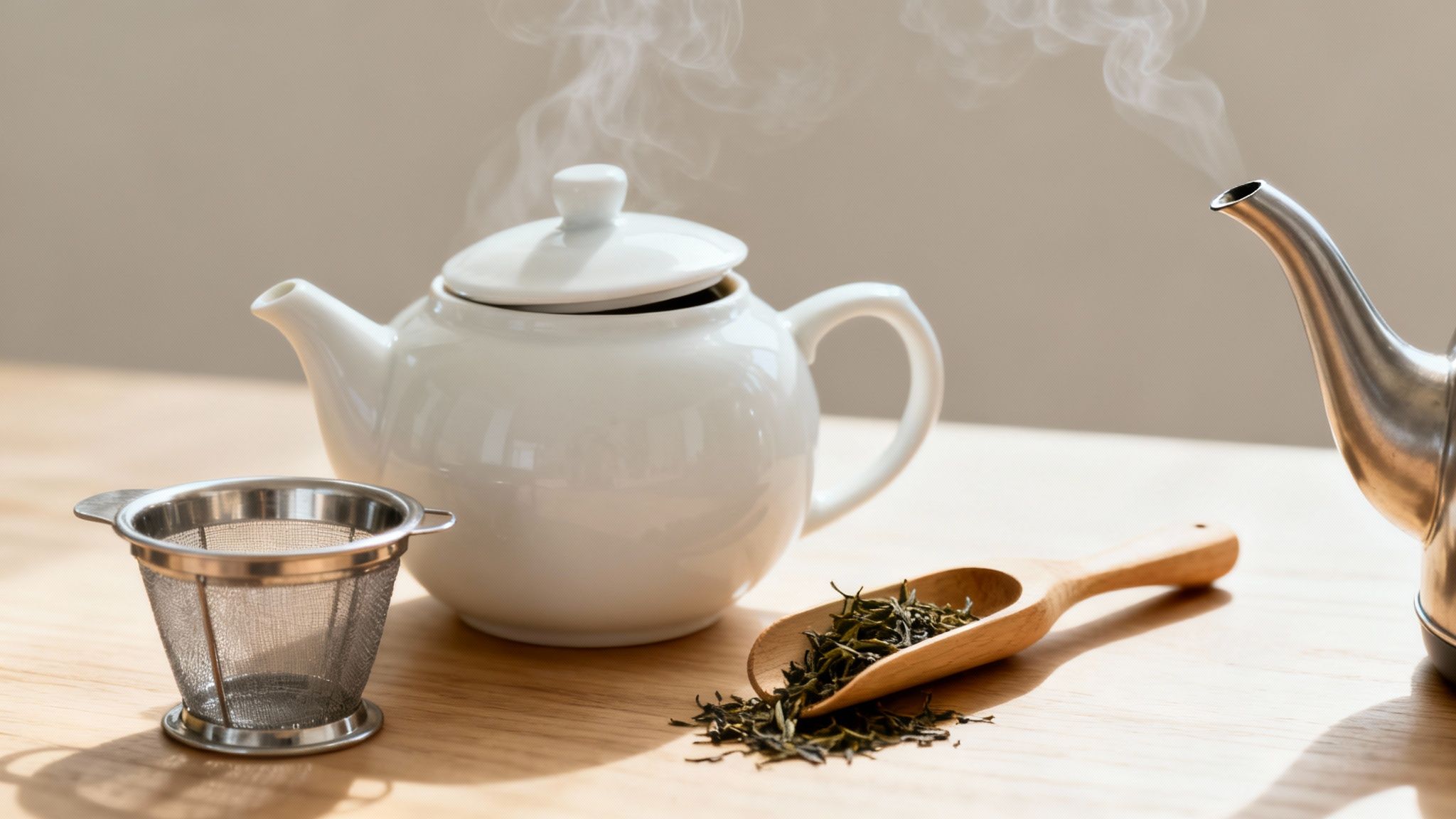
Before you dive into the world of loose leaf tea, let's talk about kit. The good news is, you don't need a cupboard overflowing with expensive gadgets. The real beauty of brewing proper tea lies in its elegant simplicity, but a few well-chosen tools can make all the difference.
At its most basic, all you really need is a way to heat water and something to steep your leaves in. Everything else is about refining the process, giving you more control over the final flavour and making your daily tea ritual that much more enjoyable.
Your Kettle: The Heart of the Operation
Your journey to a perfect cup starts with a reliable kettle. Any kettle will get water hot, but a variable temperature kettle is a genuine game-changer, especially if you plan on exploring the delicate worlds of green, white, or oolong teas.
Boiling water at 100°C is absolutely perfect for robust black teas and herbal infusions, but it will scald more fragile leaves, leaving you with a bitter, astringent brew. A kettle with presets for 70°C, 80°C, and 90°C takes all the guesswork out of it. It’s an investment that pays for itself with every consistently delicious, perfectly brewed cup.
Choosing Your Infuser
An infuser holds the leaves while they work their magic, allowing water to circulate freely while keeping them neatly contained. The goal here is simple: give the leaves as much room as possible to unfurl and release their full, complex flavour.
- Brewing Baskets: We think these are the best option. They're deep, wide mesh baskets that sit inside your mug or teapot, giving the leaves plenty of space to expand. They’re a doddle to use and even easier to clean.
- Tea Balls or Spoons: These are small, perforated metal spheres or spoon-shaped gadgets. While handy and portable, their compact size can sometimes cramp the leaves' style, preventing them from fully expanding. They work best for teas with smaller leaves, like some black teas.
- Built-in Teapot Infusers: Many modern teapots come with a removable brewing basket already fitted – a brilliant all-in-one solution for making a few cups at once.
No matter which infuser you choose, the key principle is space. The more room your tea leaves have to dance around in the hot water, the more flavourful and aromatic your final brew will be.
For brewing a single, perfect cup directly in your favourite mug, there's nothing quite like a dedicated infuser mug. These clever designs combine the mug, infuser, and lid into one seamless package, making them ideal for your desk at work or a quiet moment at home. If this sounds like your cup of tea, you can learn more about the convenience of integrated infuser tea cups in our detailed guide.
The Teapot: A Worthy Centrepiece
While you can certainly brew directly in a mug, a good teapot is a worthy investment for anyone who's serious about their tea. A well-made teapot does more than just hold hot water; it plays a vital role in heat retention, making sure your tea steeps at a stable temperature.
Materials like porcelain, ceramic, and glass are all excellent choices. They don't hang onto flavours from previous brews (unlike unglazed clay pots, which are best dedicated to a single type of tea) and provide great insulation.
Here’s a little tip from us: always pre-warm your teapot with a splash of hot water before adding the leaves. It's a small step that makes a surprisingly big difference, keeping your brew hotter for longer and ensuring a complete, even extraction of flavour.
The Fundamental Brewing Method Explained
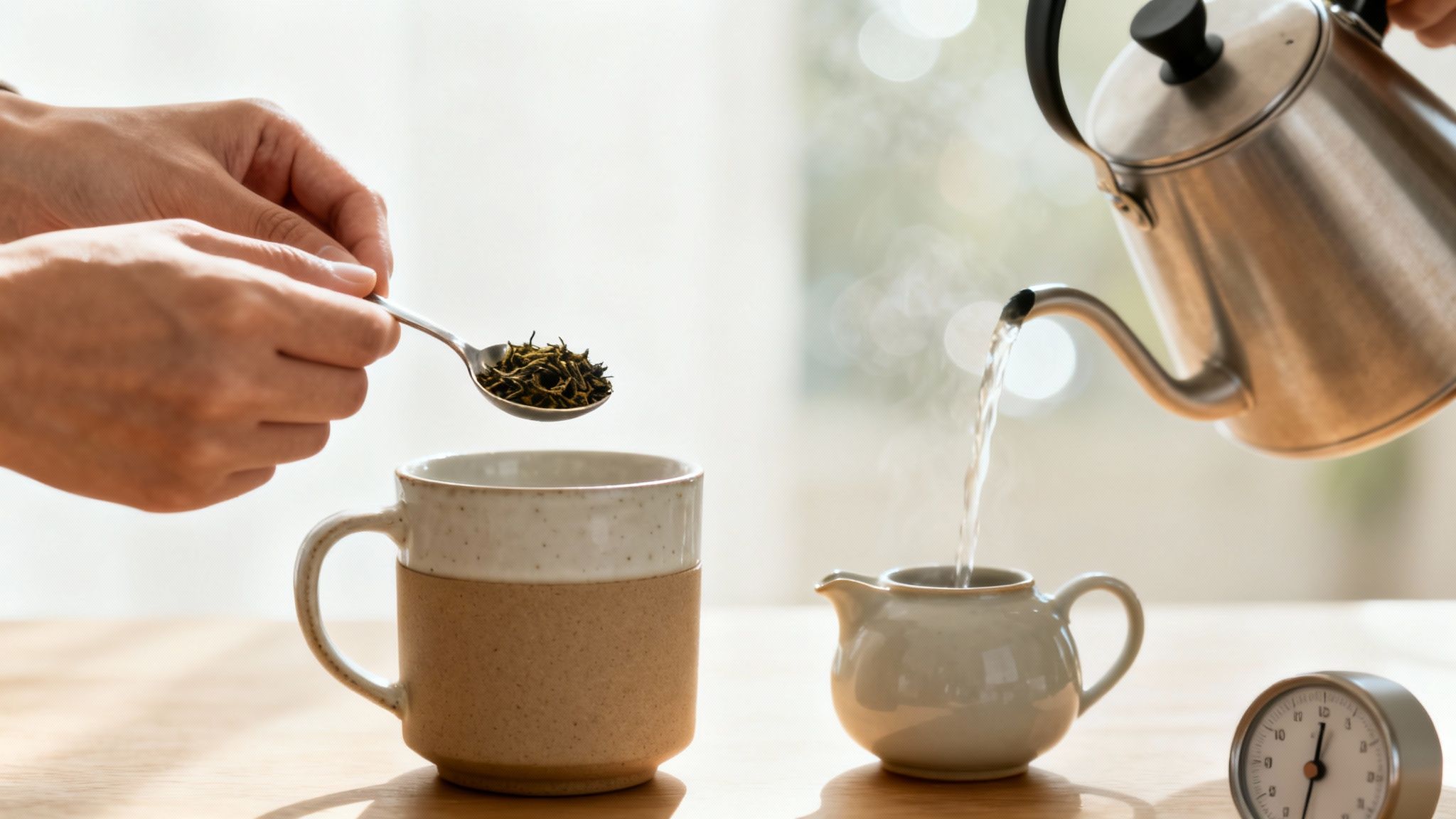
Alright, you've got your tools ready. Let's get to the heart of the matter: the brew itself. Learning how to make tea with loose leaf isn't complicated; it's a simple, rewarding process that can turn a quick cuppa into a truly mindful moment.
The fundamental method is thankfully universal, giving you a solid foundation you can apply to just about any tea you fancy. Each part of the process, from warming the pot to pouring the water, plays its own small but significant role in the final flavour. Mastering these principles will set you up for success with everything from a bold breakfast blend to a delicate white tea.
Start with Superior Water
It sounds almost too simple, but the quality of your water has a massive impact on the taste of your tea. After all, your finished brew is over 98% water. Always use freshly drawn, cold water. Water that's been boiled before tends to taste flat and dull because it has less oxygen.
If you live in a hard water area, filtering your water can make a world of difference. It removes the minerals and impurities that can make your tea look cloudy and mask its delicate flavour compounds. This one small change really lets the true character of the leaves shine through.
Prepare Your Brewing Vessel
This is a tiny step that many people skip, but it’s a professional habit that really elevates your brew. Before you add any tea leaves, take a moment to pre-warm your teapot, mug, or infuser. Just pour a little hot water from your kettle in, swirl it around for a few seconds, and then tip it out.
This simple action stops the cold ceramic or glass from causing a sudden temperature drop when you add the water for your infusion. It helps keep the water at a consistent, optimal temperature throughout the steep, which is absolutely key for a full and even flavour extraction.
Measure Your Leaves Correctly
Next up, measuring your tea leaves. The ‘perfect’ strength is always going to be subjective, but a brilliant starting point for most teas is one rounded teaspoon (about 2-3 grams) per 250ml cup. This ratio usually gives a balanced, full-bodied flavour that isn’t overpowering.
Of course, this is just a guideline.
- For stronger teas like a robust Assam, you might start with a slightly smaller amount.
- For lighter, fluffier teas like our White Peony or some herbal blends, you might need a more heaped teaspoon to get the same weight.
Don't be afraid to adjust this to suit your own taste. If your first brew feels a little weak, add a touch more leaf next time. Too strong? Use a little less. This is where you become the master of your own cup.
The perfect measurement is the one that tastes best to you. Start with the one-teaspoon rule, and then confidently tweak it until you find the strength that makes you say, "Ah, that's the one."
The Art of the Infusion
This is where the magic happens. Once your leaves are in your warmed pot or infuser, pour the hot water over them. Make sure the water is at the right temperature for the specific tea you’re brewing—we’ll get into the details of that in the next section.
As the leaves start to hydrate and unfurl, they release their essential oils, antioxidants, and unique flavours into the water. This is why using an infuser with plenty of space is so important; it lets the leaves "dance" freely, ensuring a complete and flavourful brew.
It turns out patience is a virtue many of us lack here. A UK Tea and Infusions Association census of over 1,000 people revealed that an overwhelming 73% of Brits brew their black tea for less than two minutes. With only 7% believed to be brewing it correctly, just steeping it for the right amount of time is a simple way to dramatically improve your tea. You can learn more about how the UK takes its tea by exploring the full 2025 census study.
Separating and Savouring
Once the timer goes off, you need to separate the leaves from the water straight away. If you leave them steeping for too long, the tea will over-extract and become bitter as tannins continue to be released. Just lift out the infuser or strain the tea into your cup.
And that’s it. Your perfectly brewed tea is ready. Take a moment to enjoy the aroma and the rich colour before your first sip.
Embrace Multiple Infusions
One of the best, most sustainable things about loose leaf tea is the practice of multiple infusions. High-quality whole leaf teas—especially oolongs, greens, and pu-erhs—are designed to be steeped more than once. You’ll often find the flavour profile evolves with each brew, revealing new and subtle notes.
To re-steep, just pour more hot water over the same leaves. You might need to increase the steeping time a little for the second or third infusion. This is not only more economical but also a wonderful way to experience the full journey of a truly great tea.
A Brewer's Guide to Different Tea Types
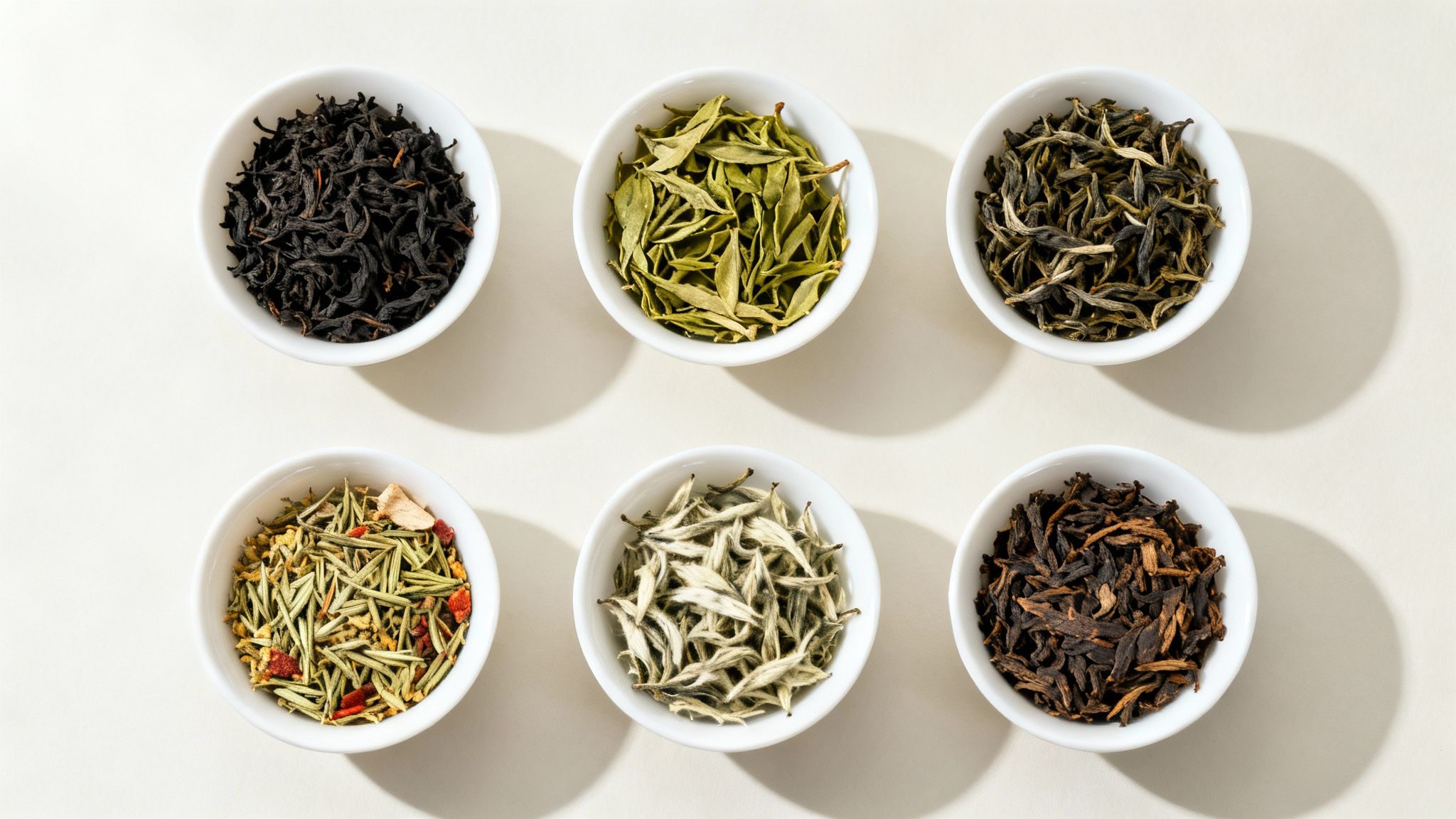
Once you’ve got the hang of the basic brewing process, you quickly learn that not all teas are created equal. Far from it. Each variety, from a punchy Assam to a whisper-light white tea, has its own personality. To get the best out of them, you need to tweak your approach.
Treating every tea the same is like cooking all your vegetables for the exact same time—you might get something edible, but you’ll miss out on all the beautiful subtleties. This is your field guide to perfecting the most common types of loose leaf tea, giving you the confidence to brew each one to its full potential.
If you want a deeper dive into what makes each one unique, you can explore the main categories in our comprehensive article on the different types of tea.
Mastering Black Tea
Black teas are fully oxidised, which is what gives them their deep, rich colour and strong, malty flavours. Because they're so robust, they can handle much hotter water than their more delicate cousins.
For most classic black teas like an English Breakfast or a hearty Assam, water just off the boil (around 95-100°C) is spot on. That high temperature is crucial for extracting the complex compounds that give these brews their signature character. Let it steep for 3 to 5 minutes; any longer, and you risk pulling out too much tannin, which leads to bitterness.
There are exceptions, of course. Some finer black teas, like a first flush Darjeeling, are a bit more sensitive. They do better with slightly cooler water (around 85-90°C) and a shorter steep of 3 minutes to protect their brighter, floral notes.
The Delicate Nature of Green Tea
Now, this is where temperature control becomes non-negotiable. Green tea leaves are unoxidised and incredibly delicate. Dousing them in boiling water is the single fastest way to ruin a good cup, as it scalds the leaves and unleashes a harsh, grassy bitterness. Nobody wants that.
The sweet spot for most green teas, like Sencha or Gunpowder, is much lower—somewhere between 70°C and 80°C. A variable temperature kettle is a game-changer here, but if you don't have one, no worries. Just boil your water and let it stand for a few minutes to cool down before pouring.
Steep times are also much shorter, usually just 1 to 3 minutes. Many high-quality green teas are fantastic for multiple infusions, with the flavour profile shifting and evolving with each new steep.
The science is simple: the catechins responsible for green tea's fresh, vegetal taste are highly soluble at lower temperatures. Boiling water extracts too many tannins and other bitter compounds, completely overwhelming the delicate flavours you want to enjoy.
Unfolding the Complexity of Oolong Tea
Oolong is the fascinating middle ground between green and black tea, with an oxidation level that can range from a light 10% all the way to over 80%. This huge spectrum means there's no single rule for brewing it. It all depends on the specific tea in your pot.
- Lighter, greener oolongs are best brewed at around 85-90°C.
- Darker, more roasted oolongs can take slightly hotter water, closer to 90-95°C.
Oolongs are famous for their tightly rolled leaves that unfurl beautifully in the water. They are practically made for multiple infusions, often giving you 5 to 8 brews from a single measure. Try a short initial steep—maybe just 1 to 2 minutes—and then add a little more time with each subsequent brew to discover all the layers of flavour.
To help you keep track, here's a quick reference table with our recommended brewing parameters.
Brewing Parameters by Tea Type
| Tea Type | Water Temperature (°C) | Steep Time | Notes |
|---|---|---|---|
| Black Tea | 95-100°C | 3-5 mins | Use slightly cooler water (85-90°C) for delicate varieties like first flush Darjeeling. |
| Green Tea | 70-80°C | 1-3 mins | Crucial to avoid boiling water to prevent bitterness. Great for multiple infusions. |
| Oolong Tea | 85-95°C | 1-5 mins | Lighter oolongs prefer cooler temps; darker ones can handle hotter water. Increase steep time with each infusion. |
| White Tea | 75-85°C | 2-4 mins | Very delicate; handle with care and use water well below boiling. |
| Pu-erh Tea | 95-100°C | 2-4 mins | Give the leaves a quick rinse with hot water before the first proper steep. Re-steeps wonderfully. |
| Herbal Infusion | 100°C | 5+ mins | Most herbals are very forgiving and need boiling water to fully extract their flavours. |
| Chai | 100°C | 3-5 mins | Boiling water is needed to draw out the deep flavours from both the black tea base and the spices. |
These are great starting points, but don't be afraid to experiment to find what works perfectly for your palate.
The Subtlety of White and Pu-erh Tea
White tea is the least processed of all, made from young, downy buds and leaves. Its flavour profile is exceptionally subtle, so it needs a gentle touch. Use water well below boiling, somewhere around 75-85°C, and steep for 2 to 4 minutes.
Pu-erh, on the other hand, is a completely different beast. This fermented tea from Yunnan, China, has a deep, earthy character. It's robust and actually benefits from a quick rinse with hot water before you start the first real infusion. Use water just off the boil (95-100°C) and steep for 2 to 4 minutes. Like a good oolong, high-quality pu-erh can be re-steeped again and again.
Brewing Herbal Infusions and Chai
Strictly speaking, herbal infusions (or tisanes) aren't 'teas' because they don't come from the Camellia sinensis plant. They're made from a whole host of flowers, herbs, fruits, and spices. The good news? Most are incredibly forgiving. You can generally use fully boiling water (100°C) and steep them for 5 minutes or more without any risk of bitterness.
Traditional spiced chai blends, which are built on a black tea base, also need that high heat to properly extract the complex notes from all the different spices. It's this robust brewing that gives you the rich, aromatic cup you’d expect, like those found in a unique Chaiwala Cocktail Afternoon Tea where flavour is everything.
Getting it Right: Fixing Common Brewing Mishaps
We’ve all been there. You do everything by the book, but the cup of tea in front of you is just… disappointing. Don't worry, it happens to the best of us. Most of the time, a disappointing brew comes down to a few simple things that are incredibly easy to fix.
Think of learning to brew loose leaf as a journey, not a destination. Once you know what to look for, you can tweak your technique and make sure every cup is a good one.
Why Does My Tea Taste Bitter?
Ah, bitterness. It's the most common complaint we hear, and it’s almost always a sign of over-extraction. This is just a fancy way of saying you've pulled too many tannins (the naturally occurring, bitter compounds) from the tea leaves, resulting in that harsh, mouth-puckering taste.
Usually, it's a combination of two culprits:
- The water was too hot. This is especially true for delicate green and white teas. Using boiling water essentially scalds the leaves, causing them to release all their bitter compounds at once. Always check the recommended temperature for your specific tea.
- You steeped it for too long. Leaving tea leaves to infuse past their prime is a sure-fire way to draw out excess tannins. A timer is your best friend here—it’s a simple change that makes a huge difference.
If your last cup was too bitter, try knocking 30 seconds off your steep time or dropping the water temperature by 5-10°C. A small adjustment can completely change the result.
What if My Tea is Weak and Watery?
The flip side of the coin is a weak, watery brew that tastes of, well, not much at all. This is a classic case of under-extraction, where the leaves haven't had enough time or oomph to release their full flavour.
Luckily, the fix is usually straightforward. You could try adding an extra half-teaspoon of tea to your pot to boost the leaf-to-water ratio. Or, you might just need to let it steep for a little longer. Just be careful not to push it too far and end up back in bitter territory!
A great cup of tea is all about balance. Think of it like seasoning your food; sometimes you need a little more, sometimes a little less. Your taste buds are the ultimate guide to getting it just right.
Keeping Your Tea Clear and Fresh
Ever made a lovely, rich black tea only for it to turn cloudy as it cools? This is usually down to the minerals in hard water reacting with the tea’s compounds. The simplest way to get a brilliantly clear brew every time is to use filtered water.
Just as important is how you store your tea. To keep your leaves tasting their best, you need to protect them from their three greatest enemies: light, air, and moisture.
- Store your tea in an airtight, opaque container.
- Keep it in a cool, dark cupboard, well away from the oven or any heat sources.
- Avoid the spice rack! Tea is like a sponge for aromas, so keep it away from coffee, spices, or anything else with a strong smell.
By getting a handle on these common issues, you’re not just fixing mistakes; you’re learning the craft. It's this knowledge that will help you create a cup you truly love, every single time.
Storing Tea and Embracing Sustainability
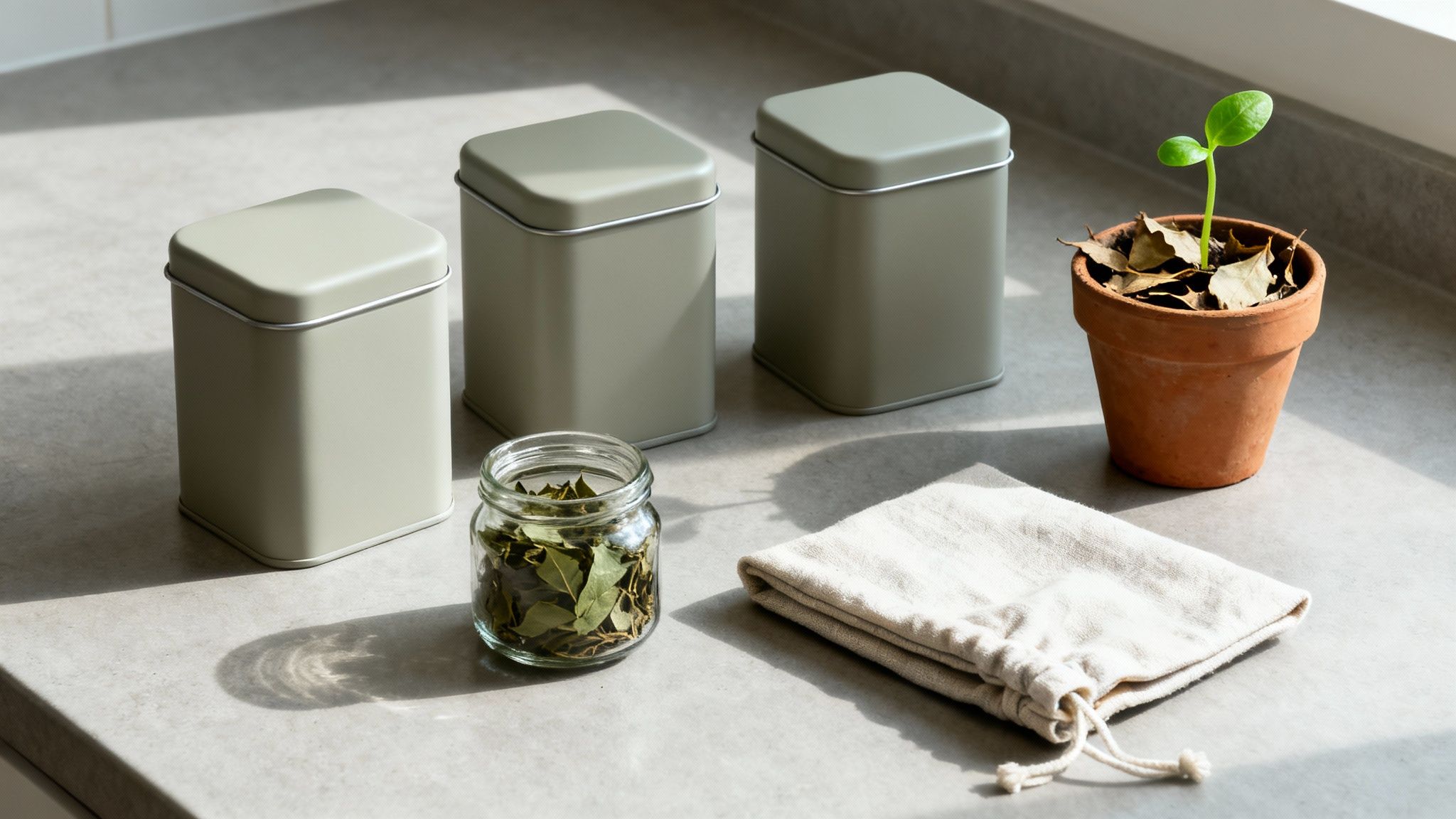
The ritual of enjoying loose leaf tea doesn't end when the kettle clicks off. If you've invested in beautiful, high-quality leaves, you'll want to protect them. Proper storage is every bit as important as the brewing itself, as it’s the key to preserving those delicate flavours and aromas that drew you in.
Your tea has three main enemies: air, light, and moisture. Letting any of them get to your leaves will quickly degrade the essential oils, leaving you with a cup that tastes flat and lifeless. The solution is simple: a good, airtight, opaque container. Think of it as a little vault for your tea.
Best Practices for Tea Storage
Find your tea a home in a cool, dark place, like a kitchen cupboard well away from the oven's heat or a sunny window. It's also wise to keep it separate from anything with a strong scent, such as coffee beans or spices, because tea leaves are surprisingly good at absorbing aromas from their surroundings.
- Airtight Tins: We love metal or ceramic tea tins. They block out all light and usually have a fantastic seal.
- Opaque Jars: If you prefer glass jars, just make sure they're a dark, opaque colour, or that you keep them tucked away in a completely dark spot.
- Label Everything: A simple label with the tea's name and the date you bought it is a brilliant habit. It saves you from guessing games later on!
Storing your tea correctly is the single most effective way to ensure that your last cup from a batch is just as fresh and vibrant as the first. It's a simple step that honours the quality of the leaves.
We've gone into even more detail on this, so for a full breakdown of the dos and don'ts, check out our guide on how to store loose leaf tea and keep it in peak condition.
A More Sustainable Cuppa
There's another great feeling that comes with brewing loose leaf tea: it's a wonderfully simple way to live a bit more sustainably. By switching from single-use teabags, many of which are sealed with plastics, you're making a real dent in your daily waste. This small change is part of a much bigger consumer shift toward mindful consumption, which you can see reflected in current food service industry trends that champion sustainability.
Better yet, the journey doesn't end in the bin. Used tea leaves are packed with nitrogen and make a fantastic addition to your compost heap. You can even sprinkle them directly around acid-loving plants like roses. It creates a lovely, waste-free cycle, turning your daily ritual into a small act of kindness for the planet.
A Few Common Questions
Dipping your toes into the world of loose leaf tea can bring up a few questions. We get it. We've put together some of the most common queries we hear to help you feel confident as you start exploring.
First up, the big one: "How much tea should I actually use?" While it always comes down to personal taste, a solid rule of thumb is one rounded teaspoon (around 2-3 grams) per 250ml cup. This is the perfect starting point to get a balanced brew that’s neither too weak nor too punchy, letting the tea’s character shine through.
Can I Re-Steep Loose Leaf Tea?
Yes, you absolutely can! In fact, this is one of the best things about switching to whole leaf tea. The good stuff, especially oolongs, greens, and pu-erhs, is made for multiple infusions.
You’ll often find the flavour changes and unfolds with each subsequent brew, revealing new layers of complexity. Just pour more hot water over the leaves and maybe add another 30-60 seconds to your steep time. It’s a brilliant way to get more from your tea and explore its full personality.
Think of re-steeping as a conversation with your tea. The first steep is the introduction, and each one after that reveals a little more of its story.
Just How Much Tea Do We Drink?
It’s no great secret that Britain is a nation of tea lovers. As a country, we get through over 100 million cups a day. A recent survey even found that 35% of us enjoy more than three cups daily.
With that much tea being enjoyed, knowing the simple knack of brewing loose leaf—like that standard 2-3g of leaves per cup—is an easy way to elevate a proper national pastime. If you're curious, you can read more about the UK's tea habits by exploring the latest findings on British tea consumption.
Ready to explore a world of incredible flavour? Jeeves & Jericho offers a curated collection of the finest whole leaf teas, ethically sourced and packed with character. Discover your new favourite brew today.