


Preparing matcha is more than just making a drink; it's a small, mindful ritual. The process is beautifully simple: sift the fine green powder, add warm—never boiling—water, and whisk it all into a vibrant, frothy brew. The real secret to a café-worthy bowl at home lies in getting the water temperature and whisking technique just right.
Your Guide to the Art of Making Matcha at Home
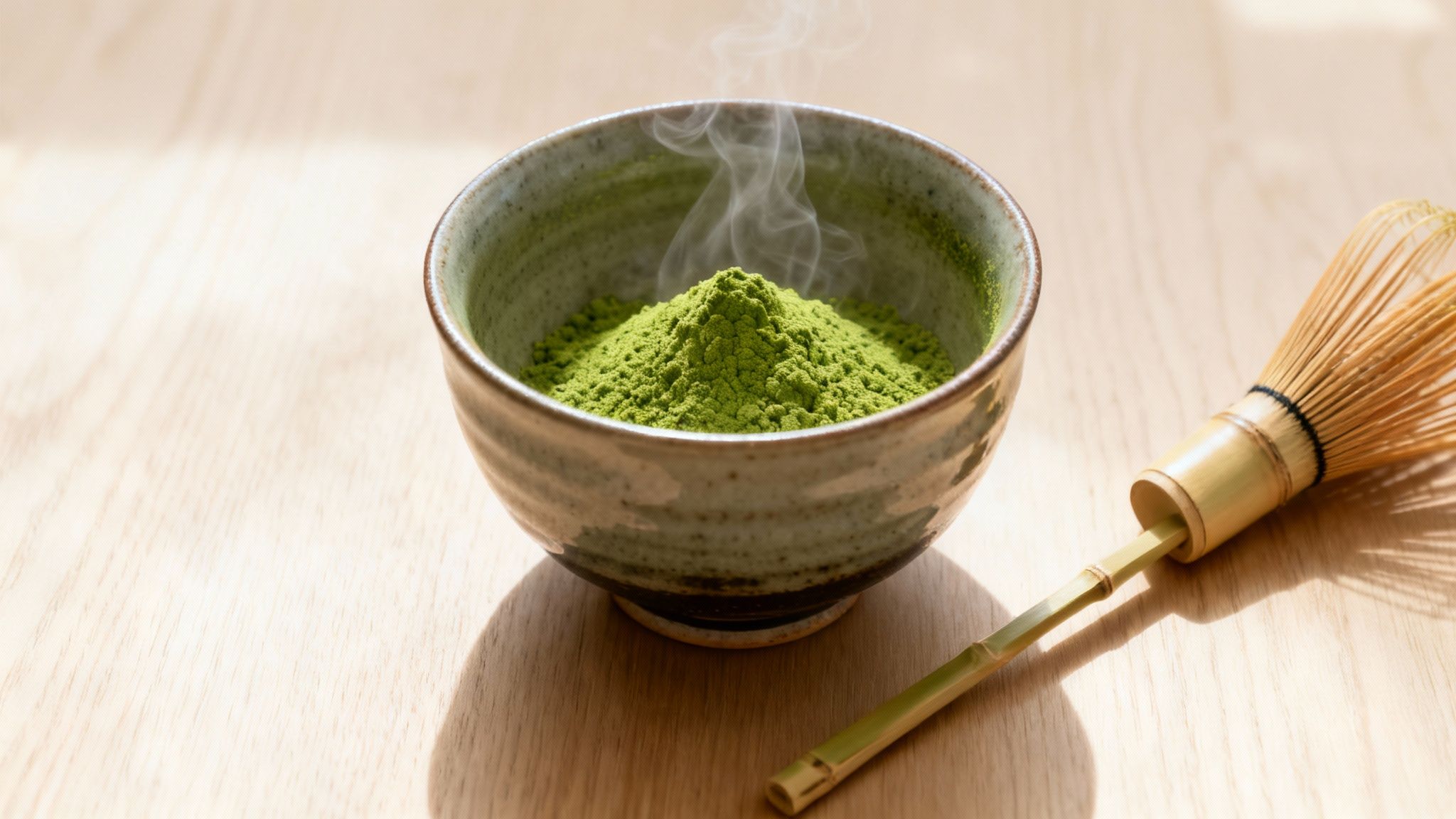
Welcome to the wonderful world of preparing matcha. We’re here to help you turn what might feel like a café luxury into a simple, rewarding part of your daily routine. It’s a moment of calm and a source of focused energy that’s accessible to everyone.
It’s no surprise matcha has become so popular, moving from a niche part of Japanese tea ceremonies to a firm mainstream favourite. The UK green tea market, with matcha as a premium player, was valued at approximately $1.15 billion in 2024 and is tipped to almost double by 2035. This incredible growth is a testament to a growing appreciation for its unique flavour and wellness properties.
Beyond the Brew: A Daily Ritual
This guide is about more than just a recipe; it's an invitation to connect with a centuries-old tradition. We’ll walk you through the essentials, helping you make choices that elevate your entire experience. We’ll be covering:
- Choosing the right grade: Demystifying the difference between ceremonial and culinary matcha.
- Using proper tools: Understanding why authentic equipment really does make a difference.
- Mastering the technique: Nailing the small details that create that signature smooth, frothy texture.
The real beauty of making matcha green tea lies in the process itself. It's a few minutes of focused activity that calms the mind while preparing you for the day ahead, offering sustained energy without the jitters often associated with coffee.
When you start with high-quality, ethically sourced matcha, you're not just getting the best flavour—you're unlocking its full spectrum of benefits. For a deeper look at its advantages, check out our complete guide to the incredible health benefits of matcha powder. Our aim is to give you the confidence to create a perfect bowl, every single time.
Choosing Your Matcha and Gathering the Right Tools
Before you can get lost in the mindful ritual of making matcha, you have a crucial first decision to make: which powder to use. This choice will shape the entire character of your drink, from its vibrant colour to its complex flavour.
Not all matcha is created equal, and the biggest difference you'll come across is between ceremonial grade and culinary grade.
Think of ceremonial grade as the best of the best. It's crafted from the youngest, most delicate tea leaves, which are then stone-ground into an impossibly fine powder. The result is a brilliant green hue and a flavour that’s naturally sweet, smooth, and full of that sought-after umami richness. It's meant to be savoured simply, whisked with hot water.
Culinary grade, as the name suggests, is designed to be an ingredient. Made from slightly older leaves, it has a stronger, more assertive flavour that won't get lost when mixed with milk for a latte or blended into a smoothie. It’s still excellent quality, but its profile is built for pairing.
Ceremonial vs Culinary Matcha At a Glance
So, how do you pick? It really comes down to what you’re making. Using a premium ceremonial matcha for a sweetened bake would be a waste of its subtle elegance, while using a culinary grade for a traditional tea would lack that refined, smooth finish.
For a clearer picture, here’s a quick breakdown:
| Feature | Ceremonial Grade Matcha | Culinary Grade Matcha |
|---|---|---|
| Tea Leaves | Youngest, first-harvest leaves | Later-harvest leaves |
| Colour | Vibrant, electric green | Duller, slightly yellowish-green |
| Flavour | Delicate, sweet, rich umami, no bitterness | Robust, slightly bitter, strong green tea flavour |
| Texture | Ultra-fine, silky powder | Fine, but slightly more coarse than ceremonial |
| Best For | Traditional tea (usucha/koicha), drinking with water | Lattes, smoothies, baking, cooking, and ice cream |
| Price Point | Higher | More affordable |
Ultimately, having both on hand is never a bad idea. To dive even deeper into the nuances, we explore the different types of matcha tea in another guide.
Your Essential Matcha Toolkit
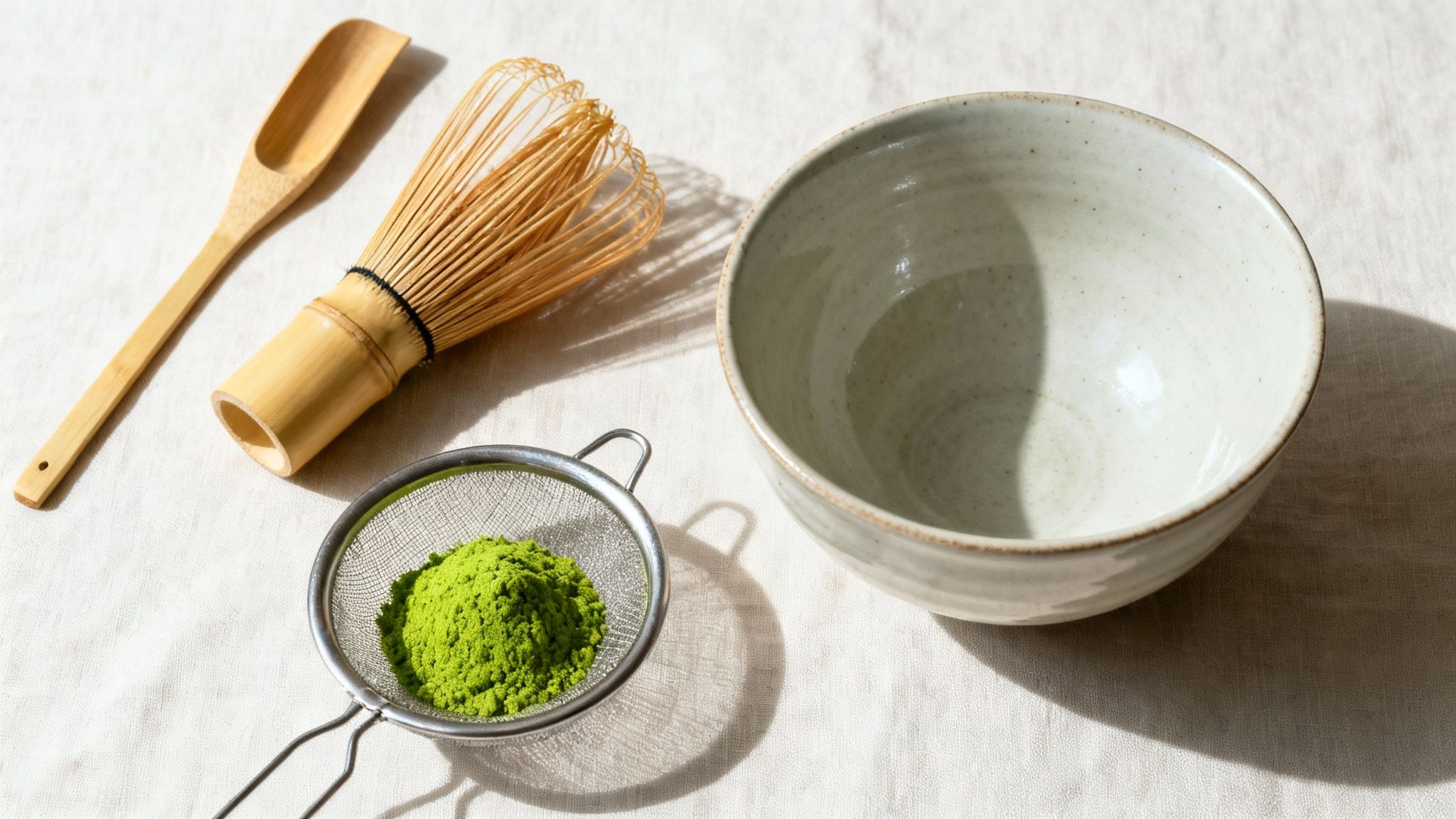
With your matcha selected, it’s time to gather your tools. While you can certainly get by with everyday kitchen items, using the traditional implements makes the process feel special and genuinely improves the final result.
Here's what you’ll need:
-
Chawan (Tea Bowl): A wide, reasonably flat-bottomed bowl is key. This shape gives your whisk enough room to move freely, helping you build that signature, velvety froth.
-
Chasen (Bamboo Whisk): This is the one non-negotiable tool. Hand-carved from a single piece of bamboo, its delicate tines are designed to break up the powder and whip air into the tea, creating a smooth, clump-free drink.
-
Chashaku (Bamboo Scoop): This simple, elegant scoop helps measure the perfect amount of matcha powder for a single serving—usually one to two grams.
-
Fine-Mesh Sifter: Don't skip this step! Sifting your matcha just before you add the water is the secret to a silky-smooth brew. It breaks up any little clumps that form naturally.
If you’re just starting and aren't ready to commit, a small bowl and an electric milk frother will do in a pinch. But investing in a proper set transforms making tea into a truly enjoyable ritual. Honing your skills with these tools, alongside other essential kitchen tools, can really elevate your entire approach to making drinks at home.
The Method for Traditional Matcha Preparation
This is where the quiet magic of making matcha really comes alive. We’re going to prepare usucha, which translates to "thin tea." This is the most common way to enjoy matcha, resulting in a light, frothy, and wonderfully revitalising drink.
Forget a rigid list of instructions; think of this as a mindful ritual. It only takes a few minutes, but it can set a beautifully peaceful tone for your entire day.
First, a small but essential gesture: warm your tools. Pour a little of the hot water you've prepared into your chawan (tea bowl) and place your chasen (bamboo whisk) inside, tines pointing down. Let them sit for about 30 seconds.
This simple act does two important things. It preheats the bowl, so your matcha doesn’t cool down too quickly, and it softens the delicate bamboo tines of the whisk. This makes them more pliable and far less likely to break when you start whisking. After a moment, discard the water and dry the bowl thoroughly with a clean cloth.
Perfecting Your Measurements and Sifting
Now for the matcha itself. For a standard bowl of usucha, you’re aiming for between 1.5 to 2 grams of ceremonial grade matcha. This works out to be about two scoops with a traditional chashaku or roughly half a level teaspoon.
With your powder measured, it’s time for the most critical step for achieving a silky, smooth texture: sifting. Place a fine-mesh sifter over the dry bowl and gently push the matcha through it using your scoop or the back of a spoon. This breaks up any tiny clumps that naturally form due to static and humidity.
Our Top Tip: Never, ever skip the sifting. It's the single best thing you can do to avoid a lumpy, gritty brew. Taking an extra 20 seconds here guarantees a professional-quality, velvety finish every single time.
This tiny bit of effort ensures the fine powder will dissolve completely, creating a smooth suspension rather than a clumpy mess. It's the foundation upon which the perfect froth is built.
Temperature and Whisking: The Heart of the Ritual
Getting the water temperature right is paramount. Water that’s too hot will scorch the delicate tea, leaving you with a bitter, unpleasant taste. Boiling water is the number one enemy of good matcha. The sweet spot is around 80°C (176°F).
If you don't have a temperature-controlled kettle, no problem. Just bring your water to a boil, then let it cool for a few minutes before pouring.
Pour approximately 60 to 70 millilitres (about 2.5 ounces) of your heated water over the sifted matcha. This ratio is key for achieving the perfect consistency and flavour for usucha.
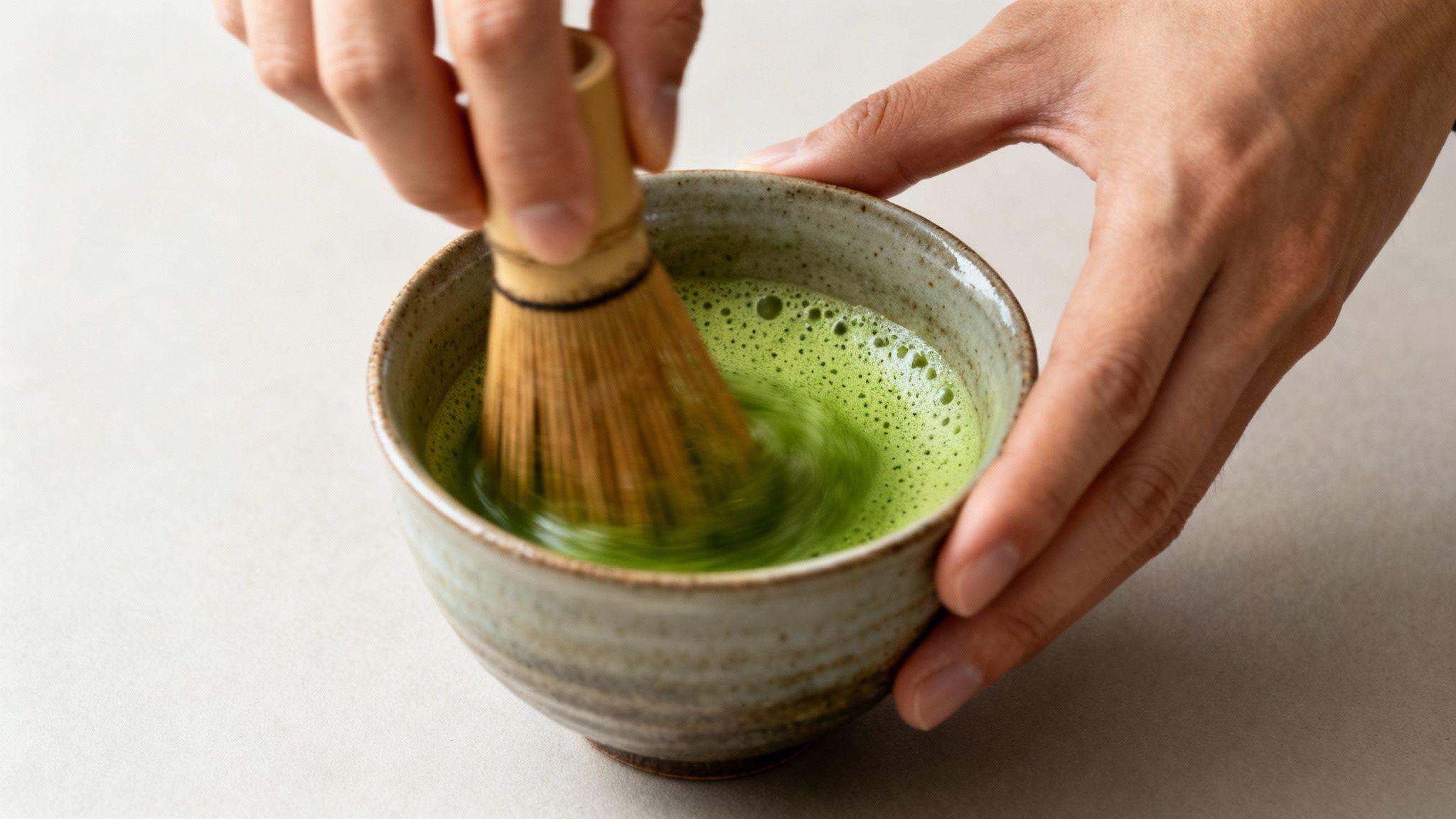
And now, for the whisking. Hold the chawan firmly with one hand. With the other, grip the chasen lightly from the top, keeping your wrist relaxed and loose—all the action should come from the wrist, not your arm.
The Whisking Motion
- The First Mix: Begin by gently moving the whisk along the bottom of the bowl, just to get all the powder incorporated into the water.
- The 'M' or 'W' Motion: Now, lift the whisk ever so slightly off the bottom and start a rapid, zig-zag motion. Think of tracing the shape of an 'M' or 'W' back and forth across the bowl.
- Building the Froth: Whisk vigorously like this for about 15-20 seconds. You'll see a thick layer of tiny bubbles forming on the surface, creating that beautiful jade-coloured crema.
- The Finishing Touch: As the froth develops, slow your whisking right down. Gently float the whisk on the surface to pop any larger bubbles, leaving behind a fine, velvety foam. Finally, lift the whisk cleanly from the centre.
Your matcha is now ready. Be sure to enjoy it immediately, while that delicate froth is at its absolute peak.
Common Matcha Mistakes and How to Fix Them
Even with the best intentions and the finest matcha, your first few attempts at home might not turn out quite right. Don't worry, it happens to everyone. Think of this as your troubleshooting guide to the most common hurdles, because getting these little details right is what separates a good bowl from a truly exceptional one.
The most frequent complaint we hear is about lumpy matcha. You’ve followed the steps, but you’re still finding those stubborn little clumps at the bottom of your bowl. This almost always comes down to one simple, but crucial, missed step: sifting. The fine powder naturally clumps together due to static, and a whisk alone often isn't enough to break them down completely.
Another classic pitfall is a bitter aftertaste. If your matcha tastes harsh or unpleasantly sharp, the culprit is almost certainly water that’s too hot. Pouring boiling water directly onto the delicate tea leaves scorches them, destroying their subtle, sweet notes and drawing out the tannins responsible for that bitterness.
Fine-Tuning Your Technique
Right, so you’ve dealt with the lumps and nailed the temperature, but your matcha has no foam. A flat, lifeless surface is usually a sign of one of two things: an incorrect whisking motion or using matcha that’s a bit past its prime. Remember, the goal is a rapid ‘M’ or ‘W’ movement with a loose wrist, designed to whip air into the tea.
To solve these common issues, let's focus on these simple fixes:
- For Lumps: Always, always sift your matcha through a fine-mesh strainer just before you add the water. This is a non-negotiable step for achieving that silky-smooth texture we're all after.
- For Bitterness: Aim for water that’s around 80°C (176°F). If you don't have a variable temperature kettle, just boil the water and let it sit for a minute or two to cool down. It makes a world of difference.
- For No Foam: Make sure your matcha is fresh (ideally, use it within a few weeks of opening the tin) and really perfect your zig-zag whisking technique for a good 15-20 seconds.
Building your matcha intuition is all about recognising these small signals. A bitter taste tells you to check your water temperature next time, while a lack of foam might mean adjusting your whisking speed or checking the freshness of your powder.
These little adjustments will quickly become second nature. It's no wonder matcha is becoming such a staple here in the UK; recent data showed that between June and July 2025, over 1.6 million matcha drinks were sold across the country. It’s clearly moved from a niche interest to a mainstream favourite. You can read more about Britain's growing love for matcha and explore further insights on Squareup.com. Getting the preparation right means you can enjoy this beloved drink at its very best, right at home.
Expanding Your Matcha Skills with Modern Recipes
Once you've got the hang of whisking a traditional bowl of usucha, you’ve unlocked the foundation for a whole world of matcha creativity. The skills you've developed in making a smooth, vibrant tea base are your ticket to crafting modern café favourites right in your own kitchen. It's time to move beyond the bowl and get experimenting.
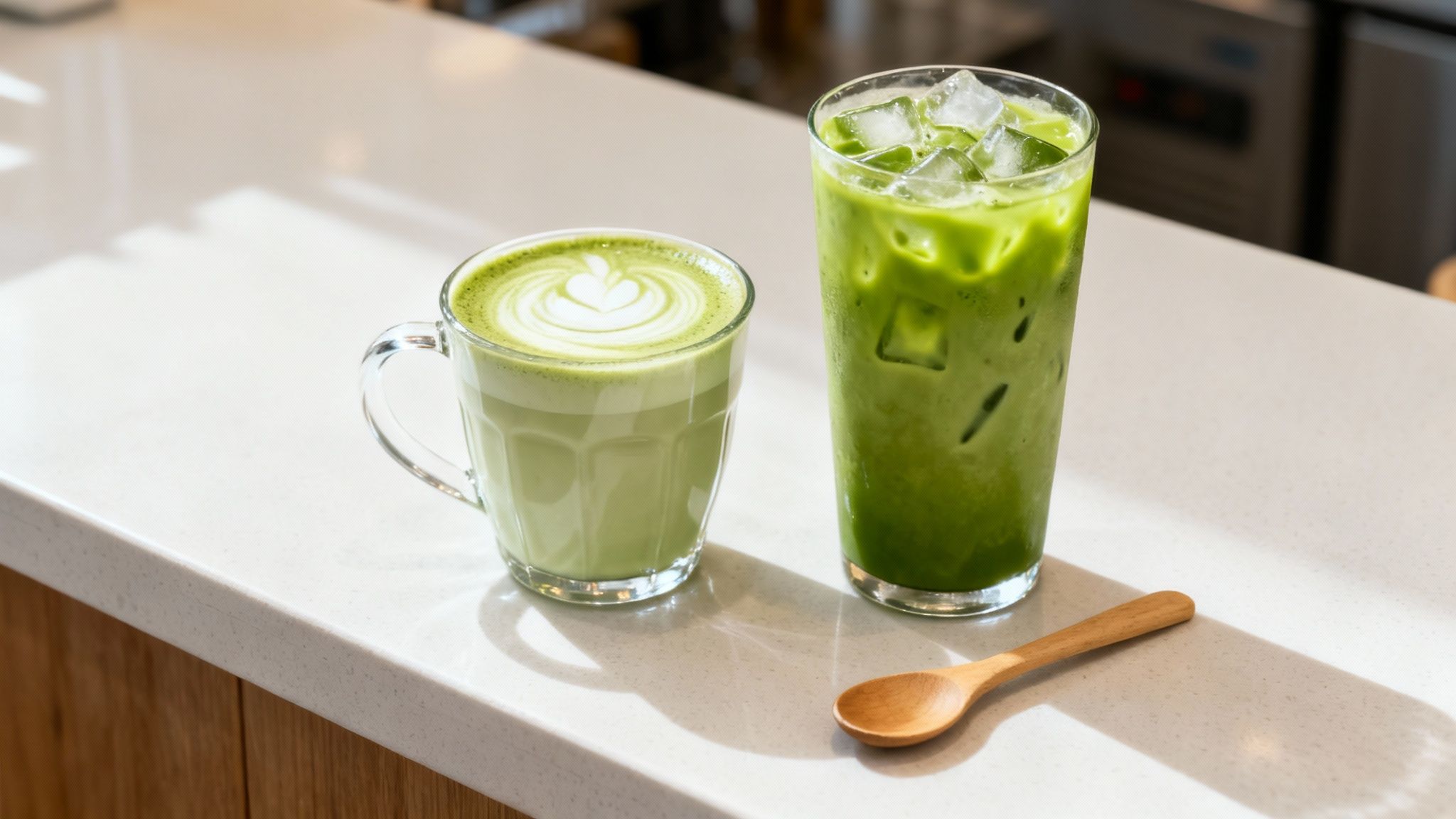
One of the most popular ways to enjoy matcha is in a creamy, comforting latte. This is where a good culinary grade matcha can really hold its own, as its more robust flavour profile stands up beautifully to the richness of milk. Making one at home is surprisingly simple, and it means you get to control the sweetness and ingredients.
Crafting the Perfect Matcha Latte
The real secret to a brilliant latte is to first create a concentrated matcha "shot," much like you would with espresso. Start by whisking one teaspoon (around 2 grams) of sifted culinary matcha with about 60ml of 80°C water. Whisk it just as you would for traditional tea until it’s perfectly smooth and has a nice froth.
Next up, heat and froth your milk. The kind you choose will make a big difference to the final texture and taste.
- Dairy Milk: Whole milk is a classic for a reason. It creates a rich, creamy foam that’s an absolute delight.
- Oat Milk: A firm favourite for its naturally creamy body and fairly neutral flavour, which really lets the matcha take centre stage.
- Almond Milk: A lighter option, but make sure you grab a barista blend if you want it to froth properly.
- Soy Milk: This one creates a dense, stable foam and adds its own subtle sweetness.
Once your milk is ready, simply pour it over your matcha shot. If you fancy a bit of sweetness, a touch of honey or maple syrup works wonders.
A well-made latte isn't just about mixing ingredients; it's about layering textures. The smooth, earthy matcha concentrate blends with the light, airy foam of the milk to create a drink that is both invigorating and incredibly satisfying.
Refreshing Iced Matcha Variations
On a warmer day, there's nothing quite like an iced matcha. The process starts the same way: create that concentrated matcha shot by whisking the powder with a little warm water. Don’t skip this step – it’s vital for dissolving the powder completely and avoiding any grittiness later on.
With your smooth concentrate ready, fill a tall glass with ice. You can pour the matcha shot directly over and top it up with cold water for a simple, revitalising iced tea. For a creamier version, use cold milk instead. You could even get creative and add a splash of vanilla or a hint of mint. For a full walkthrough, have a look at our guide to the ultimate iced matcha latte.
The Next Level: Koicha or "Thick Tea"
For the true matcha aficionado ready for a new challenge, there is koicha. This is a far more intense, syrupy preparation traditionally served during formal Japanese tea ceremonies.
It calls for double the matcha (around 4 grams) and half the water (about 30ml), and the whisking technique is completely different. Instead of a rapid M-shaped motion, you use a slow, kneading movement. The result is a profound, potent brew with an incredibly rich umami flavour—truly the pinnacle of the matcha experience.
A Few Final Pointers on Matcha
Once you start making matcha a regular part of your day, you’ll probably find a few questions pop up. We get asked these all the time, so we’ve put together some quick answers to help you perfect your ritual.
How you look after your matcha powder is every bit as important as how you prepare it. That vibrant colour and delicate flavour can fade quickly if it’s exposed to light, air, or heat.
How Should I Store My Matcha to Keep It Fresh?
Think of your matcha as a fresh ingredient, a bit like a delicate green vegetable. To keep it at its best, you need to protect it from the elements.
The simplest way is to keep it in its original airtight tin and pop it in the fridge. The cool, dark environment is perfect for slowing down oxidation and preserving its character. Once opened, try to enjoy your matcha within a few weeks to really appreciate it at its peak.
If you’ve bought a larger tin, a great little tip is to decant a week’s worth into a smaller airtight container. This way, your main supply stays sealed and fresh in the fridge, minimising its contact with the air.
Key Takeaway: Treat your matcha like fresh produce. An airtight container in the fridge is the best way to maintain its bright flavour and lock in all those beneficial compounds.
What Are the Main Health Benefits of Drinking Matcha?
The real magic of matcha is that you're consuming the entire tea leaf, not just an infusion. This makes it a nutritional powerhouse, far more potent than your average cup of green tea.
It’s absolutely packed with antioxidants, particularly a catechin known as EGCG, which helps protect the body's cells from oxidative damage. But the other star of the show is an amino acid called L-theanine.
This is the component responsible for that unique feeling of ‘calm alertness’. It works in harmony with matcha's natural caffeine to give you a sustained, focused energy boost, but without the jitters or crash you can get from coffee.
Can I Make Matcha Without a Traditional Bamboo Whisk?
While a chasen (the traditional bamboo whisk) is hands-down the best tool for creating that silky texture and delicate foam, you can definitely make a good cup of matcha without one. Your best bet is a small, handheld electric milk frother.
An electric frother does a surprisingly good job of blending the powder smoothly and whipping up a decent layer of froth. In a real pinch, you could even shake the matcha and warm water together vigorously in a sealed jar. Just be warned, getting that truly velvety, lump-free consistency is much, much easier with a proper whisk or an electric frother.
Ready to start your own matcha ritual with an ethically sourced, premium-grade tea? Explore the exceptional collection at Jeeves & Jericho and find the perfect matcha to elevate your day. Discover our range at https://www.jeevesandjericho.com.