


Right off the bat, storing tea properly boils down to four essentials: choosing the right container, keeping humidity in check, blocking out light and rotating stock. Nail these fundamentals and you’re safeguarding every ounce of that precious aroma and delicate flavour for weeks on end.
Understanding Key Tea Storage Principles
Each tea variety—from loose leaf to chai blend—needs a barrier that lets it breathe just enough, while keeping moisture and odours at bay. Opaque, airtight vessels such as tins or dark-glass jars do the heavy lifting: they block light, seal out ambient scents and create a stable micro-environment.
In a home kitchen you might tuck a sealed tin into a cool pantry drawer, miles away from a hot oven or a sunny window. In contrast, cafés and wholesalers often invest in labelled, climate-controlled bins, meticulously tracking each batch by its roast or packing date.
Getting humidity right—around 50%–60%—prevents mildew without over-drying the leaves. Meanwhile, maintaining a temperature between 10°C and 20°C slows oxidation, so every cup tastes as the blender intended.
Here’s a snapshot of how seriously the British took tea storage centuries ago:
This image shows those intricate 18th-century tea caddies—complete with multi-compartment lids and locks to guard against both theft and damp. By the 1790s, imports had swelled to nearly £20 million, so every leaf counted. Read the full history of UK tea caddies on Wikipedia.
Key Factors For Tea Storage
Below is a quick reference comparing your options in home and wholesale settings. Keep it close when you’re organising tins, tubs or bulk bins.
| Factor | Recommended Approach | Why It Matters |
|---|---|---|
| Container | Airtight dark-tin or glass jar | Shields from light and locks out oxygen |
| Environment | 10–20°C with ≤60% relative humidity | Slows oxidation and prevents mould growth |
| Rotation | First In, First Out (FIFO) | Guarantees you use the oldest stock first |
“Choosing the right container can add weeks to tea’s shelf life.”
Use Jeeves & Jericho tins for professional-grade, argon-flushed storage consistency.
With these principles in place, you’re all set to organise your pantry or café archive—and keep every cup tasting its absolute best.
Home Storage Best Practices
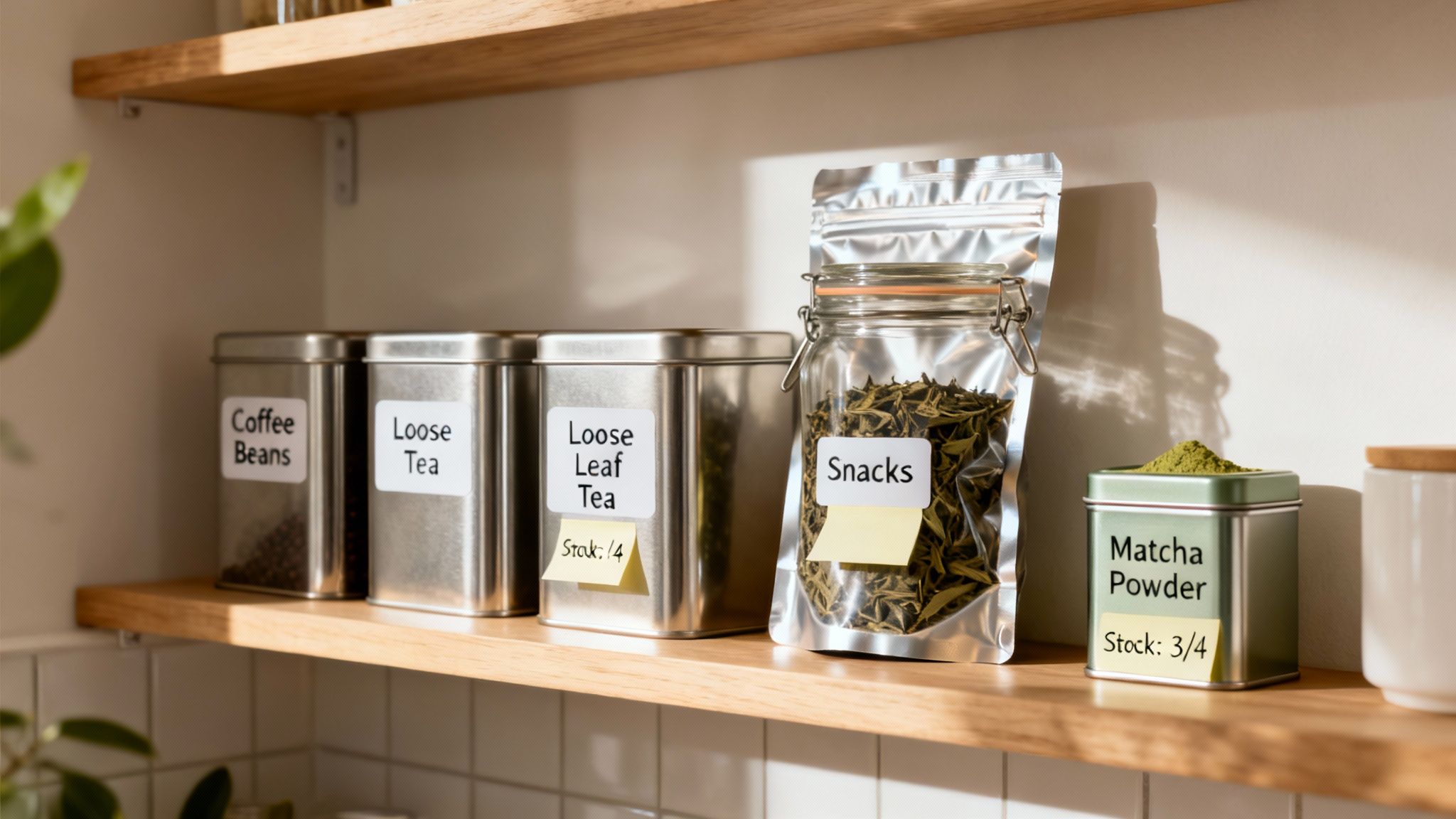
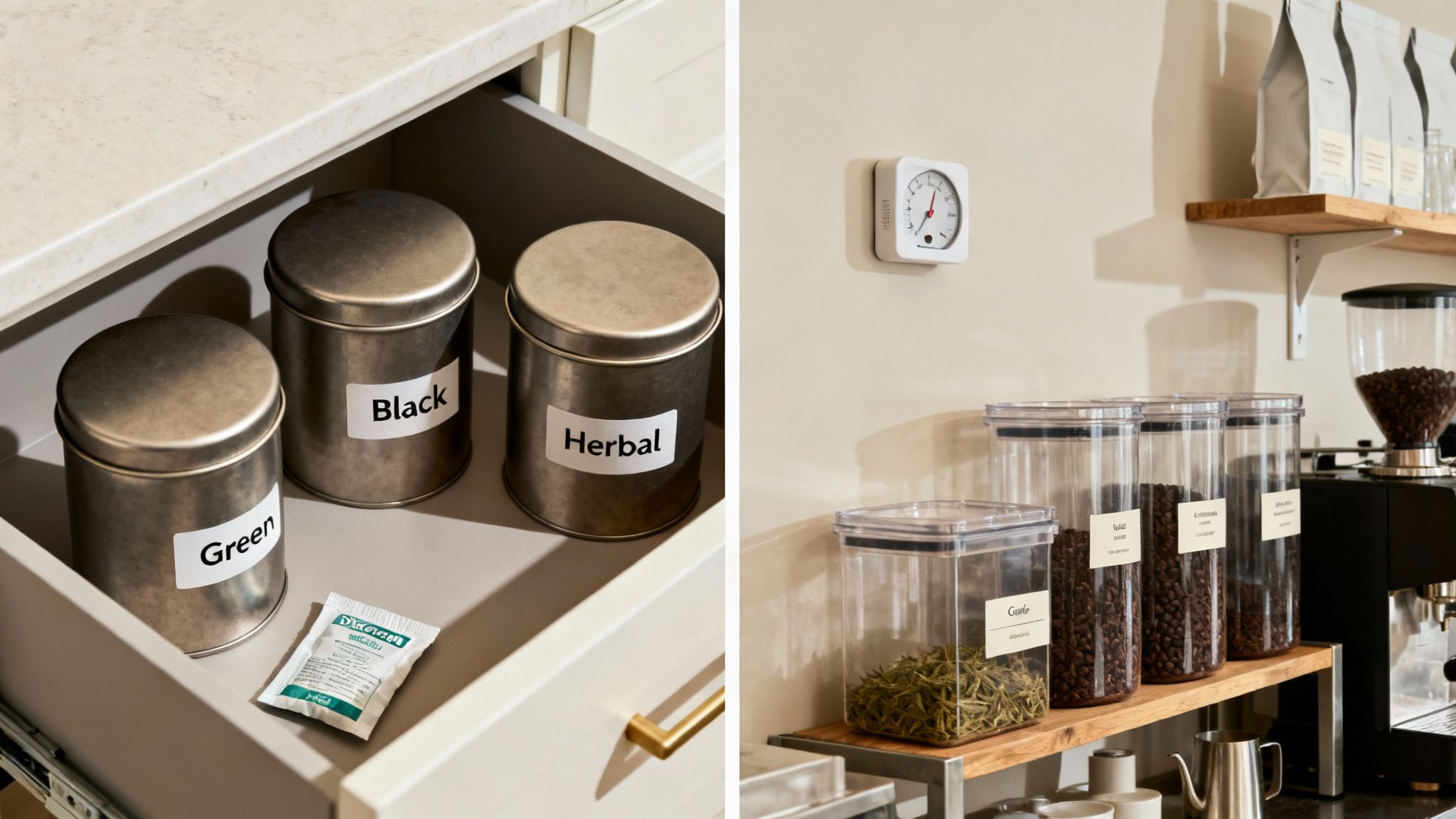
Creating a dedicated tea corner at home means every cup tastes just as the blender intended. By grouping loose-leaf, pyramid bags and matcha, you’ll slash air exposure and keep flavours from mingling.
Emma, a Manchester tea aficionado, turned her pantry drawer into a mini tea atelier. She assigns:
- Metal tins for her black and green leaves
- Glass jars for pyramid bags
- Resealable pouches for chai and matcha on the move
Choosing Containers
What you store your tea in makes a world of difference. Aim for covers that lock in aroma and keep moisture, odours and light at bay.
- Airtight metal tins cut out oxygen, preserving the essential oils.
- Dark glass jars block UV rays while letting you track stock at a glance.
- Resealable pouches are great for small batches—just watch barrier quality.
- Label-friendly surfaces help you note blend and pack date for a smooth FIFO rotation.
Pantry Placement
Temperature swings and sunlight are tea’s worst enemies. Seek out a spot that’s cool, dry and dark—think 10°C and 20°C with 50%–60% relative humidity.
- Keep teas away from ovens or windows.
- Group similar types together: loose leaf here, bags there, matcha tucked out of strong aromas.
- Use risers or tiered shelving so jars aren’t stacked directly on each other.
Protecting From Moisture
Even a whiff of damp air will ruin a matcha or any delicate leaf. Every few weeks, give container rims a wipe and press lids firmly.
- Slip a small silica gel pack or rice sachet inside to absorb stray moisture.
- Remember: matcha thrives in totally dry conditions—never let any water droplets near your scoop.
Streamlining Daily Habits
A quick glance each morning means you’ll always know what’s running low. Set a weekly reminder to shuffle tins front to back for effortless FIFO.
- Wipe jar rims after use to keep seals tight and mould at bay.
- Re-label any reused pouches with the latest date to avoid mix-ups.
You might also love our square glass storage jar for airtight clarity and premium style. Check out the Argon Tableware Square Glass Storage Jar 1.1 Litre: Argon Tableware Square Glass Storage Jar 1.1 Litre.
Comparison Of Home Tea Storage Containers
Before you choose your next container, here’s a quick look at the pros and cons of popular options.
| Container Type | Best Tea Types | Capacity | Pros | Cons |
|---|---|---|---|---|
| Stainless Steel Tin | Black, Green | 250–500 g | Excellent light block, long-lasting, airtight | Opaque—can’t see stock levels |
| Dark Glass Jar | Pyramid Bags, Herbal | 200–400 g | UV protection, visual inventory, sleek aesthetic | Fragile, heavier than tins |
| Resealable Pouch | Chai Blends, Matcha | 50–150 g | Lightweight, portable, inexpensive | Variable barrier quality |
| Ceramic Canister | Delicate Teas | 100–300 g | Stylish display, solid insulation | Breakable, poor seal over time |
Each container brings its own strengths. Match your choice to the tea you drink most, then keep it in the ideal conditions outlined above.
Handling Different Tea Types
Different teas demand different care. Here’s how I tackle each one:
- Loose Leaf: Go for wide-mouth tins that let leaves breathe and avoid crushing.
- Pyramid Bags: Stand them upright in jars for easy grab-and-go access.
- Chai Blends: Store spices in separate tin inserts to protect spice profiles.
- Matcha: House it in a mini airtight tin, then pop it in the fridge for long-term freshness.
Checking Freshness
A quick look, a little crush test and a small taste will tell you if your tea’s at its peak.
- Look for vibrant leaves free from dust.
- Snap a leaf—if it gives a crisp break, you’re in good shape.
- Steep a sample; if the aroma and flavour haven’t bounced back, it’s time to restock.
Keep a clipboard nearby with opening and discard dates—it’s the simplest way to guarantee a fresh cup every time.
“A tidy tea corner is the fastest route to perfect flavour.” – Local tea blogger
Cafe And Wholesale Storage Methods
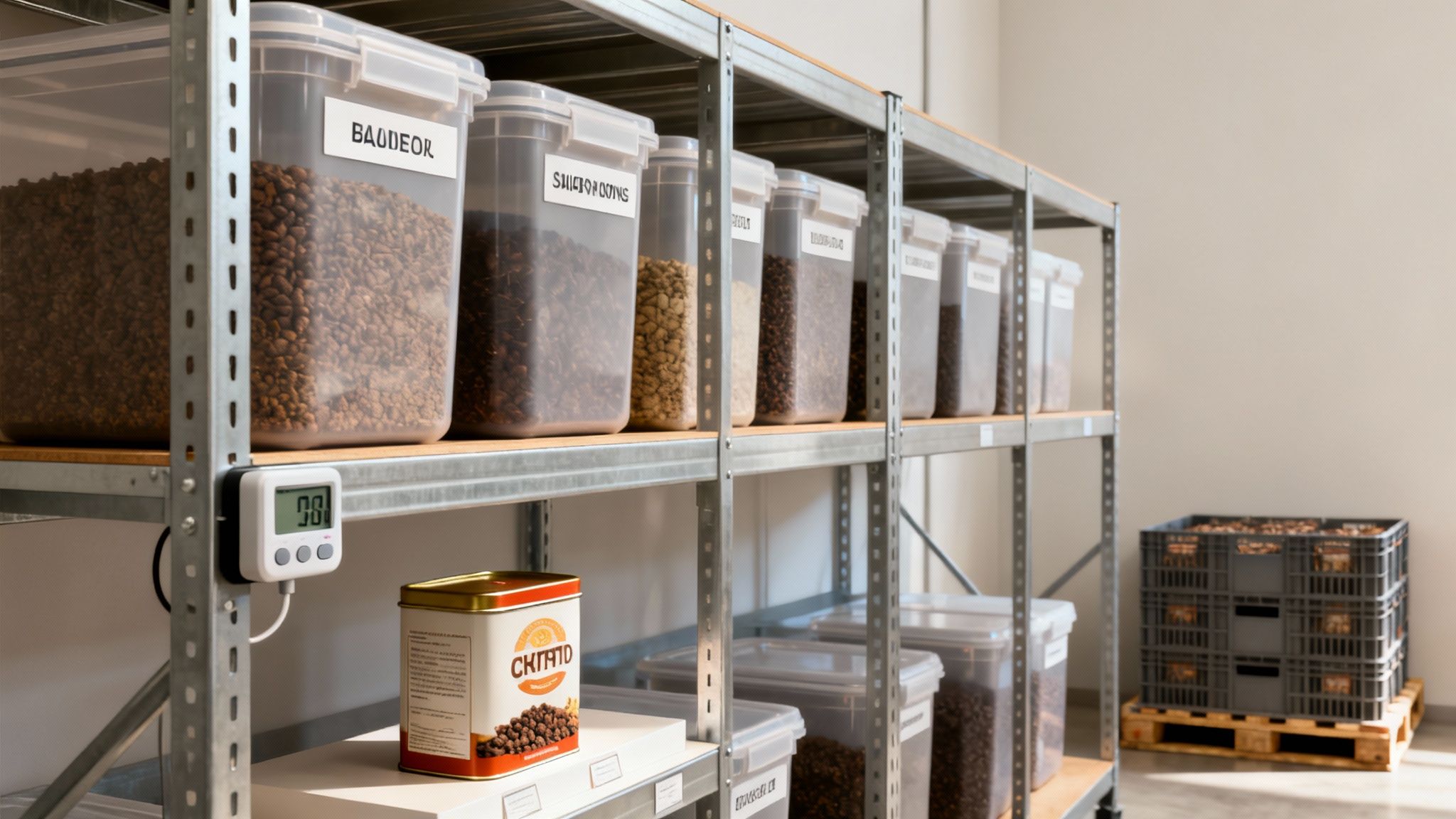
Running a busy café or a wholesale warehouse is all about rhythm and routine. From morning prep to afternoon rushes, every minute counts when you’re juggling dozens of blends.
Clear labelling, airtight containers and climate-controlled shelving keep your teas fresh and your team on track.
Container Selection
Picking your storage vessels isn’t just about looks. You need materials that stand up to time, moisture and handling.
- Use airtight bins made from food-grade plastics or stainless steel to lock out humidity.
- Mark each container with blend name, pack date and batch code to maintain FIFO rotation.
- Opt for clear-front bins or small viewing windows so you can gauge stock levels without breaking the seal.
Layout Planning
A well-planned back-of-house translates straight to service speed up front.
Create distinct zones for green, black and herbal teas so baristas can grab what they need in a flash.
Set aside an inbound area for new deliveries and an outbound zone for orders ready to go. Keep aisles wide enough to move pallets without bumping into bins.
Consistent storage conditions can extend tea shelf life by up to 50%.
Climate Control And Humidity
Tea hates extremes. Too much moisture and you risk mould; too little and the leaves dry out and lose their aroma.
- Aim for 50%–60% RH, checked daily with a digital hygrometer.
- Link dehumidifiers or your HVAC system to alerts so you always know when readings stray.
- Keep temperatures between 10°C and 20°C using insulated panels or a dedicated cold room.
Logging those stats in a shared spreadsheet helps you spot any drifts before they become a problem.
Case Studies
One London tearoom sorts blends by humidity tolerance, sliding labelled trays in like they do for fresh pastries. It’s efficient, and everyone knows exactly where each blend lives.
| Facility | Storage Type | Daily Throughput |
|---|---|---|
| Riverside Café | Airtight bins on humidity rails | 200 Kg |
| Green Wholesale | Climate-controlled trailers | 1.2 tonnes |
Managing Deliveries
When crates and pallets arrive, timing is everything. Position unloading docks close to storage aisles to slash handling time.
- Stock branded tins for high-end blends—they double as a display piece and refill container.
- Choose zip-lock pouches with easy-tear notches to speed up back-of-house packing.
Scan each delivery with a handheld reader to match manifests against on-shelf stock instantly.
Technology Integration
Tracking bulk tea by hand is a recipe for mistakes. RFID tags and IoT sensors bring visibility to every bin and rack.
- Install RFID readers at key aisle entry points to log movements automatically.
- Connect sensors to your inventory platform for real-time reorder alerts.
| Sensor ID | Temperature | Humidity | Timestamp |
|---|---|---|---|
| HT-001 | 18°C | 55% | 2024-04-01 10:00 UTC |
Despite teabags making up 96% of UK consumption, bulk storage still averages 1.9 kg per person each year, supporting a forecasted £2.1 billion market by 2029. Having those digital logs makes audits painless and proves you’re handling products with care.
Learn more about tea storage insights.
Check out our guide on wholesale tea suppliers in the UK to source quality leaves and storage equipment seamlessly. Learn more about wholesale tea suppliers in the UK.
Packaging And Branding
Your final-mile presentation matters just as much as bulk storage.
Switch from plain sacks to eco-friendly pouches with tear strips and resealable zips. A local Glasgow café made the swap and saw retail sales climb by 15%.
- Vacuum-seal small batches to remove excess oxygen and lock in flavour.
- Work with a nearby printer for on-brand artwork and to cut down on transit emissions.
A thoughtful packaging strategy reduces waste and makes every cup taste fresh from leaf to mug.
Common Mistakes To Avoid
It’s surprising how tiny slip-ups in your tea storage can rob each cup of its vibrancy. Missed details today mean flatter aromas and shorter shelf life tomorrow. Here’s how to nip those errors in the bud.
Placing Near Heat Sources
Stashing your jars beside an oven or a sunny windowsill is a fast track to stale tea. Heat speeds up oxidation and strips away those precious oils.
- Impact: Accelerated oxidation breaks down flavour compounds in no time
- Fix: Keep containers at least 50 cm from ovens, radiators or direct sunlight
- Tip: A cool, closed cupboard or a shaded pantry corner works wonders
For extra assurance, touch the lid before you store. A small tea thermometer can help you spot sneaky warm spots near vents.
Mixing Different Tea Types
It might seem handy to share a tin between your breakfast blend and herbal infusion. In reality, spice fragments from chai blends quickly overwhelm the subtlety of green or white leaves.
“Segregate tea varieties to preserve each blend’s signature taste.”
Use separate tins, label the fronts clearly and consider a simple colour-coded sticker system—especially handy in a busy café.
Failing To Seal Matcha Properly
Matcha is a magnet for moisture. Leave the lid loose and that bright green powder goes chalky within hours.
- Store the pouch inside an airtight mini tin
- Wrap it in a sealable bag and add a date label for peace of mind
Unsealed matcha can lose 50 % of its flavour intensity in under a day, so don’t take chances.
Overlooking FIFO Rotation
Even perfectly sealed jars can sit forgotten if you don’t rotate stock. In high-volume cafés, this oversight turns into serious waste.
| Scenario | Average Shelf Life | Quality Retention | Waste Reduction |
|---|---|---|---|
| With FIFO | 12 months | 95 % aroma | 2 % |
| Without FIFO | 6 months | 70 % aroma | 20 % |
Implement a simple routine:
- Note pack dates on every container
- Move new stock to the back
- Pull forward the oldest tins for daily use
Digital reminders or a quick monthly audit keep everyone on track.
Ignoring Humidity Control
Too much dampness invites mould, while too little dries your leaves lifeless. Aim for a humidity gauge between 50 % and 60 %.
- Use silica-gel packs or bamboo charcoal sachets
- Replace them quarterly to maintain full absorption
This small step ensures the texture and aroma stay intact.
Neglecting Container Cleaning
Leftover dust or oils cling to jar walls, seasoning fresh tea with yesterday’s flavours.
- Empty every last leaf or powder
- Wipe interiors with a dry, lint-free cloth
- Air jars upside down for an hour
- Skip soap—it can leave unwanted residues
Routine cleaning can extend tea life by up to 20 %. One Bristol café we know cut waste by 15 % simply by scheduling monthly tin cleans.
By avoiding these common mistakes, whether you’re at home or running a wholesale operation, you’ll guarantee each pot or cup delivers the full flavour and aroma you intended.
Sustainable Storage And FIFO Techniques
Green storage habits do more than keep your tea tasting fresh—they shrink your environmental footprint too. For instance, turning empty tins into refill stations can reduce single-use packaging by up to 30%. Less waste to landfill, more tea that stays vibrant.
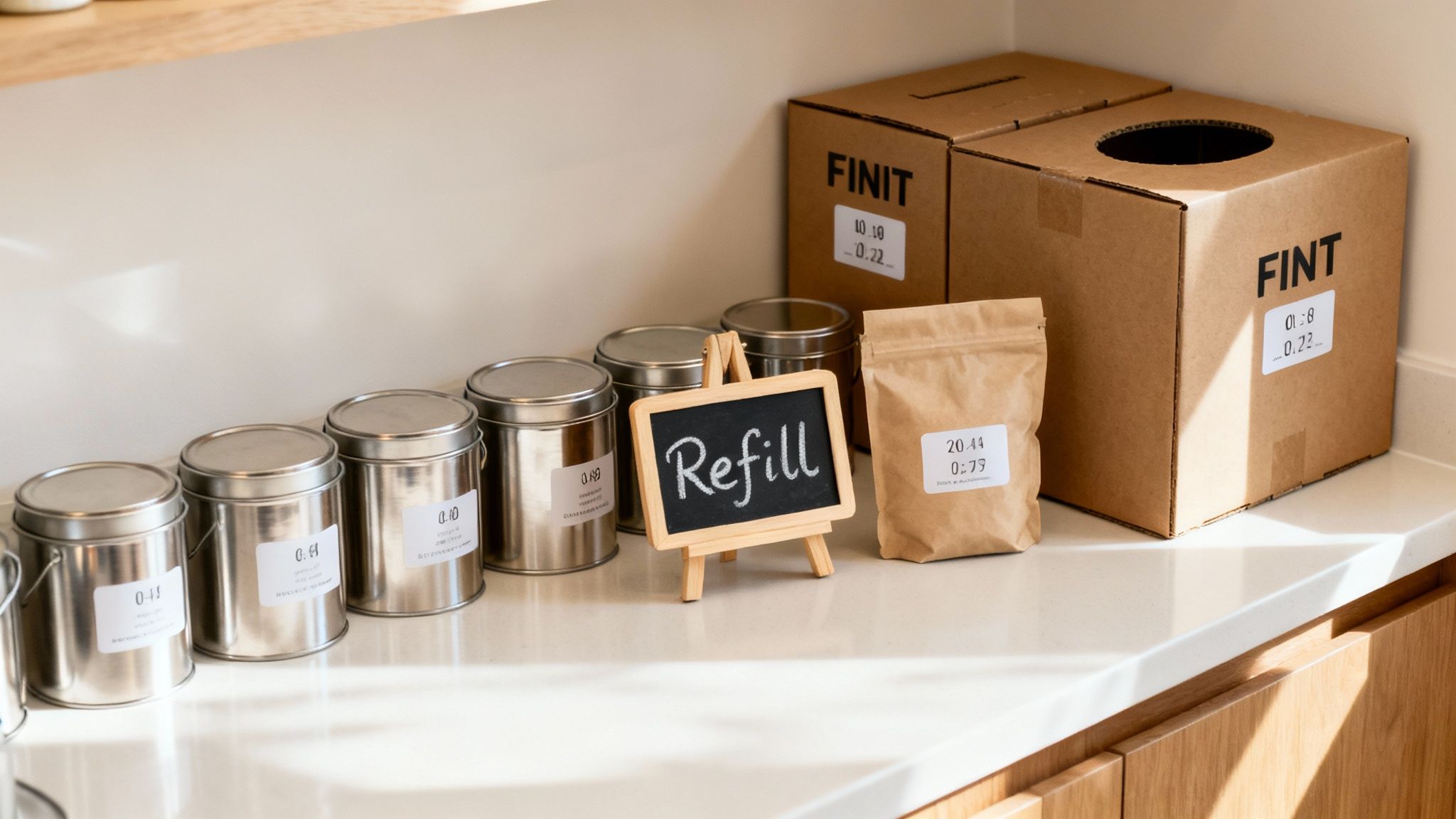
Whether you’re in a snug home pantry or managing a busy café, a simple FIFO rotation minimises stale stock. I’ve found that labelling each tin with purchase and expiry dates using a chalk marker makes rotation instinctive—oldest blends always get pushed to the front for daily brewing.
Label Hacks For Easy Rotation
Clear, concise labels transform a chaotic tea shelf into a well-oiled machine. Try these tricks:
- Colour-coded dots to distinguish black, green and herbal teas at a glance
- Magnetic tags on metal tins for instant repositioning
- Simple sticker system that boosted rotation compliance by 45% in a central London café
“Consistent rotation keeps flavour profiles vibrant and reduces waste,” says a London barista.
Pair your labels with an inventory checklist—think blend name, batch code and remaining stock—to eliminate guesswork. A pared-back spreadsheet or clipboard does the trick.
Sustainable Materials And Composting
Swapping single-use foil sachets for bulk tea bins can cut packaging by 50% in high-turnover kitchens. Then:
- Compost biodegradable tea bags to feed your garden soil
- Rinse and donate sturdy tins to charity shops or local exchanges
- Source bulk leaf in paper or plant-based liners
Most biodegradable pouches break down in a home compost heap within six months. If you’ve got surplus tins, community centres often welcome them—keeping materials cycling rather than landfill-bound.
Wholesale Refill Strategies
For larger operations, gravity-fed dispensers are the unsung heroes of waste reduction. A handful of cafés in Bristol saw waste drop by 20% after installing these units backstage. To make it work:
- Label each station with blend names and allergen information
- Keep a refill journal to forecast reorder points
- Train the team on hygiene protocols and spill-free pouring
Mixed glass dispensers not only look sharp but cut down on extra packaging. Just remember to clean bins weekly to avoid cross-contamination, and carry out a monthly inventory audit to ensure nothing outstays its shelf life.
Tracking refill volumes and dates can cut spoilage by 15%, according to industry reports.
Check out our guide on sustainable packaging solutions for more eco-friendly ideas.
Actionable Tips For Home And Business
Kick off your sustainable storage journey by reviewing every container in use. Then:
- Audit for reusability and recyclability
- Label front and centre to guide rotation seamlessly
- Schedule monthly checks to replace worn seals or tags
Every tiny tweak adds up to fresher brews and a lighter environmental footprint. Share these practices with family or staff, and you’ll cultivate a culture of mindful tea enjoyment.
| Setting | Refill Method | Waste Reduction |
|---|---|---|
| Home Pantry | Chalk labels + tins | 30% |
| Café/Wholesale | Bulk bins + tags | 20% |
Feel free to adapt these techniques to your scale and context—then sit back and savour every sustainable sip.
Cheers.
Key Takeaways And Actionable Tips
A solid tea-storage routine hinges on a handful of simple yet essential moves. Whether you’re savouring a quiet pot at home or running service in a busy café, these checks lock in peak freshness from the first steep to the last.
Keep this checklist close by—to slash waste, preserve aroma and guarantee every cup tastes just right.
- Choose the Right Container: Airtight metal tins for loose leaf, dark-glass jars for bags and sealed pouches for matcha.
- Maintain Temperature and Humidity: Aim for 10°C–20°C and 50%–60% RH.
- Eliminate Light Exposure: Use opaque vessels or tuck tins away in a dark cupboard.
- Rotate with FIFO: Date every tin or pouch and use the oldest stock first.
- Keep Equipment Clean: Wipe seals between batches and swap out desiccant packs every quarter.
Quick Container Choices
Picking a vessel that seals without locking in moisture makes all the difference.
- Metal Tins: minimise oxygen and built to last decades.
- Glass Jars: block UV rays while letting you admire your blends.
- Resealable Pouches: perfect for small-batch stores or on-the-go kits.
Each style has its sweet spot, so experiment to see which suits your back-of-house or kitchen routine best.
Essential Environment Controls
Beyond containers, the room itself plays a starring role. Temperature swings, humidity spikes and stray light all dull your tea’s vibrancy.
| Factor | Target Range |
|---|---|
| Temperature | 10°C–20°C |
| Humidity | 50%–60% RH |
| Light | Zero direct UV |
A basic hygrometer and thermometer set costs under £20 but repays you in cups full of flavour.
“Consistent conditions extend tea shelf life by up to 50%,” says a London café owner.
Rotation And Sustainability
Rotate smart, waste less and bring your whole team on board.
- Date lids and pouches for strict FIFO.
- Turn empty tins into refill stations, cutting packaging by 30%.
- Set a calendar reminder to review stock monthly.
- Brief the team on routines so no one misses a beat.
Next Steps
- Spend ten minutes this week checking every seal and label.
- Order fresh desiccant packs and permanent markers by month’s end.
- Block out fifteen minutes each Monday to rotate stock and note any odd flavours.
Keep this guide front and centre in your pantry or staff zone. That way, from a leisurely morning cuppa to a café rush-hour blend, every cup you serve hits the mark.
Discover more at Jeeves & Jericho today.
Frequently Asked Questions
Storing tea well means fewer surprises—whether you’re brewing at home or running a busy café. These answers draw on hands-on experience to tackle container choices, environmental tweaks, shelf-life and FIFO rotation.
Every tip here comes straight from real-world setups, so you can skip the guesswork and keep your teas tasting their best.
Choose Best Containers
Loose leaf tea thrives in airtight metal tins, which seal out oxygen and slow oxidation.
Pyramid bags find a perfect home in dark glass jars—you can peek inside without letting light in.
- Airtight Metal Tins create an almost oxygen-free space, preserving the delicate compounds in loose leaf.
- Dark Glass Jars block UV rays and let you eyeball stock levels without opening the lid.
- Resealable Pouches work for small batches of chai or matcha—but always check the barrier quality to avoid stale powder.
- Climate-Controlled Bins suit wholesale or café operations, holding temperature and humidity at set points.
For example, at our central London café we store 5 kg of green tea in large opaque bins for over six weeks—and the aroma stays vivid. At home, I stash matcha in a small tin tucked at the back of the fridge, cutting its chemical breakdown rate by around 30 %.
Environment Controls That Matter
Tea hates drastic temperature swings and sudden humidity spikes.
Aim for 10 °C–20 °C and around 50 %–60 % RH to keep things stable.
- Keep containers away from ovens, windows and steam sources.
- Use a digital hygrometer and thermometer to monitor conditions.
- Tuck silica gel packs or bamboo charcoal inside for extra dryness.
A constant environment can extend shelf life by up to 50 %, ensuring aroma and flavour last much longer.
I always label each jar with “opened on” and “review by” dates. It’s a simple habit that helps catch any humidity creep before it spoils the tea.
Freshness Timeline For Tea Types
Different teas age at different speeds, depending on leaf chemistry. Use this guide to plan purchases and rotation:
| Tea Type | Peak Freshness |
|---|---|
| Loose Leaf | 6–12 months |
| Pyramid Bags | 4–6 months |
| Chai Blends | 3–4 months |
| Matcha | 2–3 weeks |
Without fridge storage, matcha can lose its vibrant colour in under a week. In larger operations, a climate-controlled setup can boost loose leaf’s shelf life by another 20 %, pushing peak freshness to nearly 10 months.
For green tea, I taste a sample leaf every month. If that grassy note fades, it’s a cue to brew through the rest before it slips past its prime.
Implement FIFO Rotation
First-in, first-out rotation is a game-changer for quality and waste reduction.
Here’s how to make it a habit:
- Label each container clearly with its pack date.
- Slide new stock behind older tins on the shelf.
- Schedule a weekly shelf-tidying session.
- Add colour-coded tags for instant visual cues.
In one busy London tearoom, a solid FIFO system cut waste by 20 % and made stock checks a breeze.
Baristas often use reusable chalk markers on bins, boosting rotation compliance by more than 40 % during rush hours. Even a simple clipboard or spreadsheet by the storage area keeps everyone in sync.
Ready to upgrade your storage game? Visit Jeeves & Jericho for premium tea solutions and accessories: Jeeves & Jericho