


Tea is more than just a beverage; it's a global tradition steeped in history, culture, and artistry. From the misty mountains of China to the lush estates of India, the Camellia sinensis plant offers a mesmerising spectrum of flavours, aromas, and experiences. But with so many options available, navigating the world of tea can feel overwhelming. Where does one begin?
This definitive list of types of tea is designed to be your comprehensive guide, demystifying the ten essential categories every tea lover should know. We will journey through the unique characteristics of each, from the unoxidised purity of white tea to the fermented complexity of pu-erh, and explore the vibrant world of herbal tisanes. You will learn the secrets to achieving the perfect brew for each variety, including precise water temperatures and steeping times, which are crucial for unlocking their intended flavour profiles. For those seeking innovation in their brewing process, modern self-heating teapot sets offer convenience and precise temperature control.
Beyond brewing, this guide provides actionable insights into ideal food pairings, highlights the distinct health notes associated with each type, and offers practical storage tips to preserve freshness. For every tea on our list, we’ll also suggest a meticulously sourced option from our collection at Jeeves & Jericho, complete with details of our commitment to ethical practices and exceptional quality. Prepare to elevate your understanding and deepen your appreciation of this timeless drink.
1. Green Tea
Green tea stands out in the vast list of types of tea for its vibrant character and minimal processing. Sourced from the Camellia sinensis plant, its leaves are harvested and quickly heated, either by pan-firing or steaming, to prevent oxidation. This crucial step preserves its natural green colour, delicate flavour profile, and high concentration of beneficial antioxidants and nutrients.
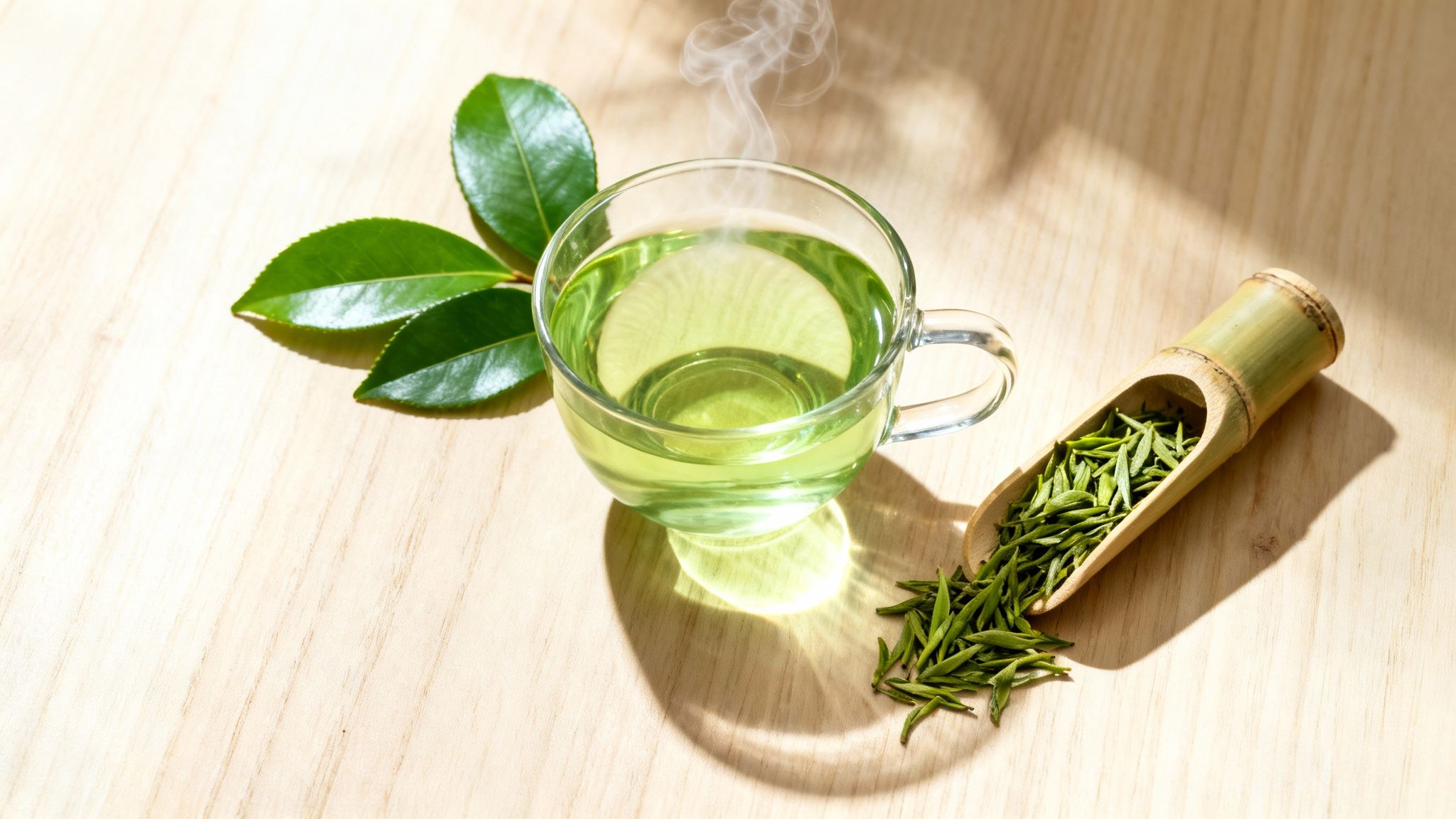
Originating in China and deeply embedded in Japanese culture, green tea’s flavour can range dramatically depending on its terroir and processing method. Chinese varieties like Dragon Well (Longjing) are often nutty and mellow, while Japanese Sencha offers a more vegetal, grassy, and sometimes oceanic taste.
Key Characteristics & Brewing Guide
- Flavour Profile: Vegetal, grassy, nutty, sweet, with a fresh and clean finish. Notes can vary from buttery to marine.
- Processing: Unoxidised; leaves are steamed (Japanese method) or pan-fired (Chinese method) to halt oxidation.
- Ideal Brewing: Use water between 70-80°C (160-180°F). Steeper temperatures can scald the leaves, resulting in a bitter taste. A steep time of 1-3 minutes is typically sufficient. For a deeper exploration of its unique qualities, you can learn more about how green tea compares to black tea in our detailed guide.
- Caffeine Level: Low to medium (approx. 20-45 mg per 230 ml cup).
- Food Pairings: Complements seafood, chicken, steamed vegetables, and light, subtle desserts beautifully.
- Storage: Keep in an opaque, airtight container away from direct sunlight, moisture, and strong odours to maintain its freshness.
Health & Sourcing Notes
Green tea is celebrated for its high levels of catechins, particularly Epigallocatechin gallate (EGCG), a powerful antioxidant linked to numerous health benefits. At Jeeves & Jericho, we ensure our green teas, like the exquisite Japanese Sencha, are sourced from gardens that prioritise sustainable farming practices and ethical treatment of workers, bringing you a product that is as wholesome as it is delicious.
2. Black Tea
A cornerstone in the global list of types of tea, black tea is renowned for its bold character and invigorating aroma. Made from the leaves of the Camellia sinensis plant, it undergoes a full oxidation process, where the leaves are allowed to react with oxygen after being withered and rolled. This transformation is responsible for its dark amber or deep red colour, robust flavour, and higher caffeine content compared to its less-oxidised counterparts.
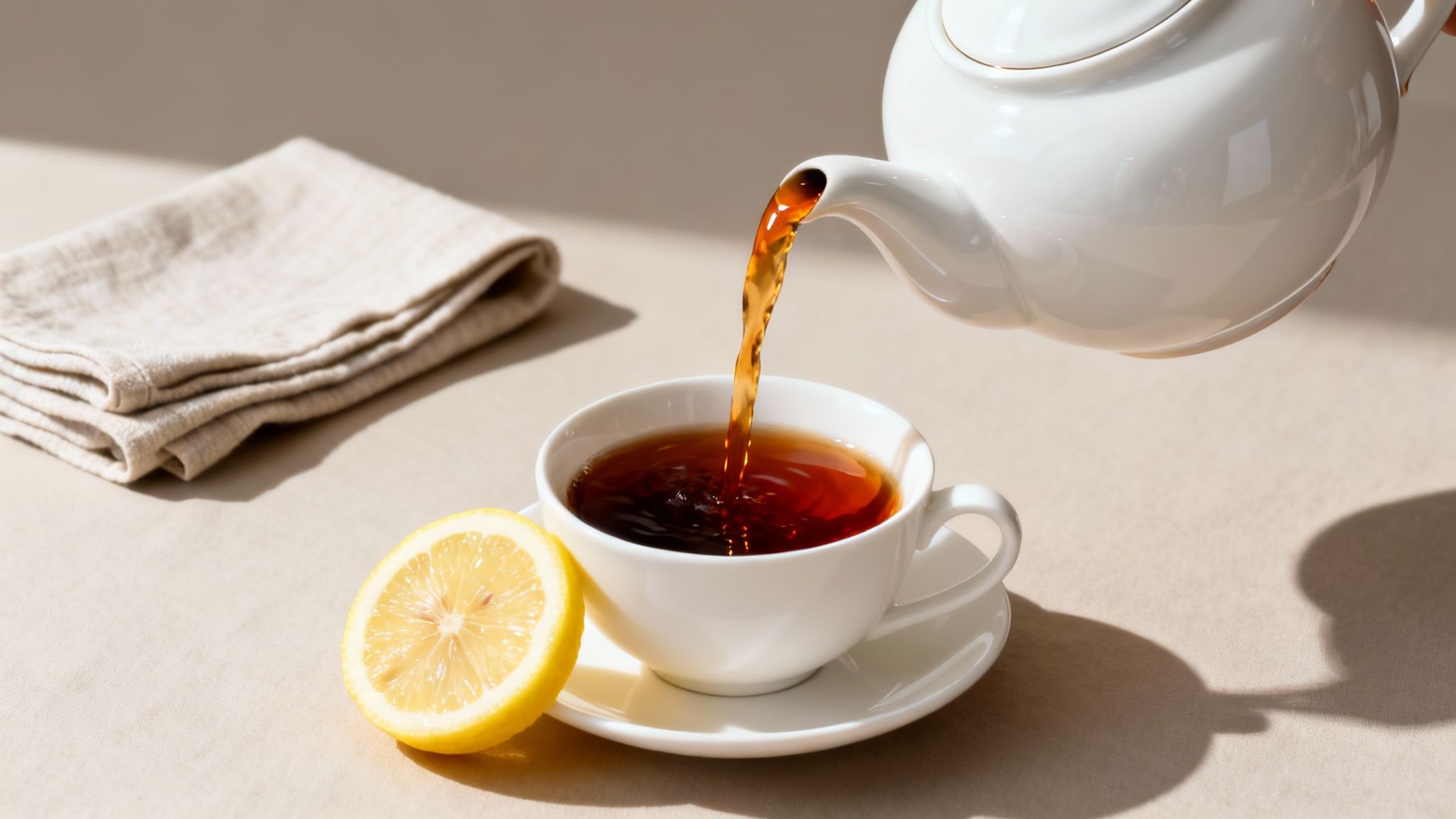
Popularised by British tea culture and colonial trade, black tea is the most widely consumed tea in the Western world. Regional variations offer a diverse tasting experience, from the malty richness of Indian Assam and the bright, crisp notes of Ceylon from Sri Lanka, to the complex, wine-like character of Darjeeling, often called the "Champagne of teas".
Key Characteristics & Brewing Guide
- Flavour Profile: Malty, robust, and full-bodied with notes of honey, fruit, and spice. Can range from brisk and bold to smooth and delicate.
- Processing: Fully oxidised; leaves are withered, rolled, oxidised, and then dried to halt the process.
- Ideal Brewing: Use water just off the boil, around 93-100°C (200-212°F). High temperatures are needed to extract the deep flavours. Steep for 3-5 minutes, adjusting to your strength preference. Many black teas can be re-steeped.
- Caffeine Level: Medium to high (approx. 40-70 mg per 230 ml cup).
- Food Pairings: A versatile companion to rich foods like full English breakfasts, roasted meats, strong cheeses, and decadent chocolate desserts.
- Storage: Store in a cool, dry, dark place inside an airtight container to protect the leaves from light and moisture, preserving their potent flavour.
Health & Sourcing Notes
Black tea contains a group of polyphenols called flavonoids, which are beneficial for heart health. At Jeeves & Jericho, we take pride in our ethical sourcing. Our classic blends, including the beloved English Breakfast and aromatic Earl Grey, are crafted from teas sourced from estates committed to fair labour practices and environmental stewardship, ensuring every cup is both satisfying and responsibly produced.
3. Oolong Tea
Oolong tea occupies a fascinating middle ground in the diverse list of types of tea, positioned uniquely between green and black tea. Sourced from the Camellia sinensis plant, its leaves undergo partial oxidation, a meticulous process that can range from 20% to 80%. This controlled oxidation is what gives oolong its remarkable complexity and wide spectrum of flavours, from light and floral to dark and roasted. The name itself, meaning 'dark dragon', hints at the tea's twisted, dark leaves and profound character.
Originating from China and perfected in Taiwan, oolong represents one of the most artisanal tea categories. Famous varieties like the floral and creamy Tie Guan Yin (Iron Goddess of Mercy) from China or the buttery, milky Alishan High Mountain oolong from Taiwan showcase the incredible diversity shaped by terroir, cultivar, and the tea master's skill.
Key Characteristics & Brewing Guide
- Flavour Profile: Highly varied; can be light, floral, and sweet (like lilac or orchid) or dark, woody, roasted, and fruity (like honey and stone fruit).
- Processing: Partially oxidised; leaves are withered, shaken, and bruised to encourage oxidation, then fired to halt the process at the desired level.
- Ideal Brewing: Use water between 85-99°C (185-210°F). Lighter oolongs prefer lower temperatures, while darker ones can handle near-boiling water. Steep for 1-5 minutes. Oolong leaves are renowned for yielding multiple infusions, with the flavour evolving in each steep.
- Caffeine Level: Medium (approx. 30-60 mg per 230 ml cup).
- Food Pairings: Lighter oolongs pair well with scallops and sweet pastries. Darker, roasted oolongs complement duck, grilled meats, and caramel desserts.
- Storage: Keep in a sealed, opaque container away from light, heat, and moisture to preserve its complex aromatics.
Health & Sourcing Notes
Oolong tea combines the beneficial properties of both green and black teas, containing a rich blend of antioxidants, including theaflavins and EGCG. It is often noted for its potential to support metabolism. At Jeeves & Jericho, we source exceptional oolongs like our award-winning Oriental Beauty, ensuring they come from gardens that uphold the highest standards of quality and ethical farming, allowing you to experience the pinnacle of this traditional craft.
4. White Tea
White tea is the most delicate and minimally processed variety in the list of types of tea, celebrated for its subtlety and purity. Sourced from the young, unopened buds and leaves of the Camellia sinensis plant, it is simply harvested and withered, with no rolling or oxidation. This gentle handling preserves the fine, silvery-white hairs on the tea buds, which give the tea its name and contribute to its prized, delicate character.
Originating from the Fujian province of China, white tea’s flavour is nuanced and ethereal. Renowned varieties like Silver Needle (Bai Hao Yin Zhen), made exclusively from buds, offer a sweet, honey-like taste, while White Peony (Bai Mu Dan) includes leaves for a fuller body with melon and floral notes. Its gentle nature makes it a favourite among connoisseurs and those seeking a refined tea experience.
Key Characteristics & Brewing Guide
- Flavour Profile: Delicate, subtle, sweet, and floral. Notes of melon, honey, apricot, and a light woodiness with a clean, smooth finish.
- Processing: Unoxidised; leaves and buds are withered and dried naturally or with minimal heat to prevent oxidation.
- Ideal Brewing: Use cooler water, between 70-80°C (160-180°F), to protect its delicate flavours. A longer steep time of 3-5 minutes is recommended. White tea leaves can often be steeped multiple times, with each infusion revealing new layers of flavour.
- Caffeine Level: Very low (approx. 15-30 mg per 230 ml cup).
- Food Pairings: Pairs wonderfully with light salads, mild cheeses like brie, fresh fruit, and simple white fish dishes.
- Storage: Must be stored in an airtight, opaque container in a cool, dark place, far from any strong aromas that it could easily absorb.
Health & Sourcing Notes
White tea is revered for its high concentration of antioxidants, as its minimal processing helps retain more of these beneficial compounds compared to other teas. At Jeeves & Jericho, we take great care in sourcing our white teas, ensuring they come from gardens that employ ethical and sustainable practices. This commitment guarantees a pure and wholesome cup that is both exquisite in flavour and responsibly produced.
5. Pu-erh Tea
Pu-erh tea occupies a unique and revered spot in the list of types of tea, distinguished by its post-fermentation and ageing process. Hailing exclusively from the Yunnan province of China, this tea is made from the leaves of the Camellia sinensis var. assamica tree. Unlike other teas, Pu-erh undergoes microbial fermentation, a process that transforms its flavour profile over time, much like a fine wine.
This remarkable tea comes in two main varieties: Sheng (raw), which ages naturally over decades, and Shou (ripe), which undergoes an accelerated fermentation process developed in the 1970s. Often compressed into shapes like cakes (bing cha) or bricks, Pu-erh is a living tea that evolves, with aged versions becoming highly sought-after by collectors and connoisseurs for their complexity and depth.
Key Characteristics & Brewing Guide
- Flavour Profile: Deeply earthy, woody, and musky with notes of damp soil, camphor, and mushroom. Aged Sheng can develop complex, sweet, and fruity notes, while Shou is typically smoother and darker.
- Processing: Post-fermented; leaves are withered, pan-fired to halt oxidation (for Sheng), rolled, sun-dried, and then aged either naturally (Sheng) or through a 'wet-piling' process to accelerate fermentation (Shou).
- Ideal Brewing: Use boiling water, around 95-100°C (203-212°F). It's traditional to perform a quick "rinse" of the leaves with hot water before the first proper infusion. Steep for just 20-30 seconds initially, increasing the time with each subsequent infusion.
- Caffeine Level: Medium to high (approx. 30-70 mg per 230 ml cup), though the exact level can vary with age and processing.
- Food Pairings: Its robust character stands up well to rich, savoury dishes, greasy foods, and strong cheeses.
- Storage: Store in a cool, dry place away from strong odours. Unlike other teas, Pu-erh benefits from some air circulation, so avoid completely airtight containers.
Health & Sourcing Notes
Pu-erh tea is traditionally valued in Chinese medicine for its digestive properties and is believed to aid in metabolism and cholesterol management. The fermentation process cultivates beneficial microorganisms that contribute to its unique health profile. At Jeeves & Jericho, we appreciate the craft behind this ancient tea, ensuring our selections are sourced from reputable Yunnan producers who honour the traditional methods and sustainable practices that make Pu-erh truly exceptional.
6. Herbal Tea (Tisanes)
Herbal tea, technically known as a tisane, earns a unique place in this list of types of tea as it is not derived from the Camellia sinensis plant. Instead, it is an infusion or decoction made from a wide array of botanicals, including fruits, flowers, spices, herbs, and roots. This caffeine-free category offers a nearly endless spectrum of flavours and wellness properties, cherished in traditional remedies and modern wellness practices alike.
From the calming properties of chamomile to the digestive comfort of peppermint and the zesty kick of ginger, each tisane offers a distinct experience. Popular blends like South African Rooibos provide a rich, earthy alternative to black tea, while vibrant hibiscus infusions are celebrated for their tart, cranberry-like notes and potential cardiovascular benefits.
Key Characteristics & Brewing Guide
- Flavour Profile: Extremely varied, ranging from floral (chamomile, lavender) and minty (peppermint, spearmint) to fruity (hibiscus, rosehip), spicy (ginger, cinnamon), and earthy (rooibos).
- Processing: Simply involves drying the chosen plant materials. The ingredients can be used whole, cut, or powdered.
- Ideal Brewing: Use freshly boiled water at 93-100°C (200-212°F). Unlike true teas, most herbal infusions are forgiving and will not turn bitter if steeped longer. A steep time of 5-10 minutes is generally recommended to fully extract the flavours and compounds. For a more in-depth look at caffeine-free options, explore our guide to non-caffeinated teas.
- Caffeine Level: Naturally caffeine-free.
- Food Pairings: Varies by herb. Peppermint pairs well with chocolate, chamomile with light pastries, and rooibos with rich, creamy desserts.
- Storage: Store in a cool, dark place within an airtight container to preserve the potency of the aromatic oils and prevent moisture spoilage.
Health & Sourcing Notes
The health benefits of herbal teas are as diverse as their ingredients. Chamomile is renowned for promoting sleep, peppermint for aiding digestion, and ginger for its anti-inflammatory and anti-nausea effects. At Jeeves & Jericho, we meticulously source our botanicals, such as those in our Organic Peppermint blend, from growers who adhere to sustainable and ethical practices, ensuring every cup is pure, potent, and responsibly produced.
7. Matcha Green Tea
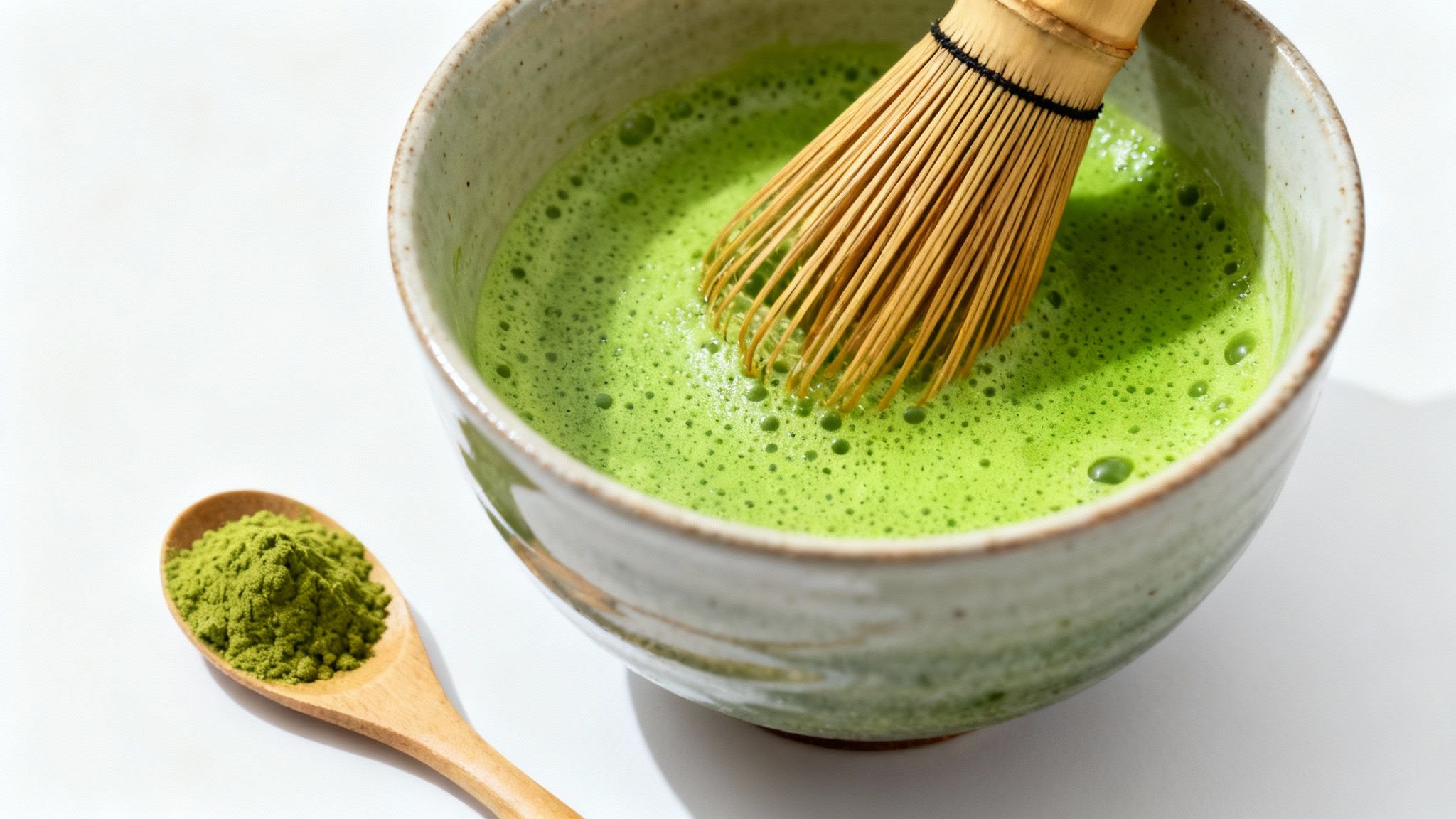
A unique entry in the list of types of tea, matcha is not an infused leaf but a finely ground powder of specially grown and processed green tea leaves. Originating in Zen Buddhist monasteries in Japan, the traditional tea ceremony, or chanoyu, centres around the preparation, serving, and drinking of matcha. To produce it, tea plants are shade-grown for about three weeks before harvest, which boosts chlorophyll and L-theanine levels, resulting in its brilliant green colour and a complex, umami-rich flavour.
Unlike other teas, when you drink matcha, you consume the entire leaf, making it a more potent source of nutrients and caffeine. Its popularity has surged globally, moving from ceremonial settings to trendy lattes in cafes. Matcha is graded based on quality, with "ceremonial grade" being the highest, intended for traditional preparation with water, while "culinary grade" is designed for lattes, smoothies, and baking.
Key Characteristics & Brewing Guide
- Flavour Profile: Rich, umami, vegetal, and slightly sweet with a creamy texture and a lingering, pleasant aftertaste. Lower grades can be more bitter.
- Processing: Shade-grown green tea leaves are harvested, steamed, dried, de-stemmed, and de-veined before being stone-ground into a fine powder.
- Ideal Brewing: Sift 1-2 teaspoons of matcha powder into a bowl. Add about 60 ml of hot water at 70-75°C (160-170°F). Whisk vigorously in a "W" or "M" motion with a bamboo whisk (chasen) until a fine froth forms. You can explore the differences in more detail with our guide to the various types of matcha tea.
- Caffeine Level: Medium to high (approx. 35-70 mg per 1g serving), as you ingest the entire leaf.
- Food Pairings: Pairs well with sweet Japanese confections (wagashi), white chocolate, coconut, and light, creamy desserts.
- Storage: Keep in a small, airtight, opaque container in the refrigerator to protect it from light, heat, and air. Use within a month of opening for optimal freshness.
Health & Sourcing Notes
Matcha is exceptionally rich in antioxidants, particularly EGCG, and the amino acid L-theanine, which promotes a state of calm alertness, counteracting the jittery effects of caffeine. At Jeeves & Jericho, we source high-quality matcha that honours its Japanese heritage, ensuring it is grown and processed using traditional methods that yield a superior product, both in flavour and in its wellness benefits.
8. Yellow Tea
Yellow tea is one of the rarest and most exclusive categories in the list of types of tea, prized for its subtle complexity and historical significance. Produced almost exclusively in China, this tea undergoes a unique, gentle post-harvest processing step called men huang (sealed yellowing). After an initial heating to halt oxidation, similar to green tea, the warm, damp leaves are carefully wrapped in special cloth or paper. This sweltering process encourages a slight, non-enzymatic oxidation, which mellows the tea, removing the grassy notes typical of green tea and developing a smoother, sweeter, and more delicate character.
Historically an imperial tribute tea, the intricate and labour-intensive production methods mean that yellow tea is produced in very small quantities. Its rarity makes it a sought-after treasure for connoisseurs. Famous examples include Junshan Yinzhen from Hunan and Huoshan Huangya from Anhui, each offering a unique expression of this elusive tea type. Its flavour is often described as a perfect bridge between the freshness of green tea and the floral softness of white tea.
Key Characteristics & Brewing Guide
- Flavour Profile: Mellow, smooth, and sweet with notes of toasted grains, apricot, and a floral, lingering finish. Lacks the astringency or vegetal quality of many green teas.
- Processing: Lightly oxidised; involves a unique "sealed yellowing" phase where warm leaves are smothered to gently oxidise, creating its distinctive colour and taste.
- Ideal Brewing: Use water between 70-80°C (160-176°F). This gentle temperature preserves its delicate aromatic compounds. Steep for 3-5 minutes, and be sure to try re-steeping the leaves up to four times.
- Caffeine Level: Low to medium (approx. 30-50 mg per 230 ml cup).
- Food Pairings: Pairs wonderfully with light pastries, soft cheeses like brie, unsalted nuts, and simple rice dishes.
- Storage: Protect its delicate character by storing it in an opaque, airtight container, kept in a cool, dark place away from any strong odours.
Health & Sourcing Notes
Yellow tea shares many of the antioxidant benefits of green tea, including a high concentration of polyphenols, but is often considered gentler on the stomach due to its processing. At Jeeves & Jericho, we understand the importance of authenticity and rarity. While we curate our core collection, we admire the craftsmanship of yellow tea producers and encourage enthusiasts to seek it from reputable, specialist retailers who can guarantee its provenance from historic, quality-focused tea gardens in China.
9. Oolong Tea - Dark Roasted Varieties
Dark roasted oolongs occupy the richer, more robust end of the oolong spectrum in our list of types of tea. Sourced from the Camellia sinensis plant, these teas undergo significant oxidation (60-80%) and a crucial final roasting step. This intense heat transforms the leaves, developing deep, complex flavours of roasted nuts, dark chocolate, and caramel, creating a tea that bridges the gap between the floral notes of lighter oolongs and the malty strength of black tea.
This style is famously represented by the Wuyi Rock oolongs from Fujian, China, such as Da Hong Pao, and by heavily roasted Taiwanese varieties like Dong Ding. The roasting process not only creates a comforting, rich aroma but also allows the tea to be re-steeped multiple times, with each infusion revealing new layers of its complex character.
Key Characteristics & Brewing Guide
- Flavour Profile: Rich and complex with notes of roasted nuts, dark chocolate, caramel, stone fruit, and a distinct mineral or "rock" finish.
- Processing: Semi-oxidised (60-80%) and then heavily roasted to develop its signature dark character.
- Ideal Brewing: Use water just off the boil, around 93-100°C (200-212°F). Start with a 3-5 minute infusion, increasing the time with each subsequent steep. These teas are renowned for their ability to be re-steeped 8-10 times.
- Caffeine Level: Medium (approx. 30-60 mg per 230 ml cup).
- Food Pairings: Pairs exceptionally well with rich, savoury dishes like roasted meats, hearty stews, and strong cheeses.
- Storage: Keep in an opaque, airtight container to protect the delicate roasted aromas from moisture and foreign odours.
Health & Sourcing Notes
Dark roasted oolong tea shares many of the antioxidant properties of other teas, containing polyphenols that are valued for their health-promoting qualities. The unique roasting process may also create a tea that is gentler on the stomach for some individuals. At Jeeves & Jericho, we source exceptional oolongs from artisans who have mastered these traditional processing techniques, ensuring a truly authentic and flavourful experience that honours centuries of craftsmanship.
10. Flavoured and Blended Teas
Flavoured and blended teas represent a creative and expansive category in the world of tea, where a base of true tea leaves or herbal tisanes is enhanced with other ingredients. This process involves infusing the base with fruits, flowers, spices, oils, or natural flavourings to craft unique and aromatic taste profiles that go beyond the original leaf. This category is home to some of the most famous and beloved teas globally.
From the quintessentially British Earl Grey, scented with bergamot oil, to the warming spices of Indian Masala Chai, these blends have rich cultural histories. The art of blending allows for endless innovation, resulting in a vast and diverse selection that caters to every palate, making it a significant part of any comprehensive list of types of tea.
Key Characteristics & Brewing Guide
- Flavour Profile: Highly varied; can be citrusy, spicy, fruity, floral, sweet, or minty, depending on the added ingredients. The base tea provides an underlying character.
- Processing: Starts with a processed tea (black, green, etc.) or herbal base, which is then blended or scented with additional components.
- Ideal Brewing: Follow the brewing guidelines for the base tea. For a black tea blend like Earl Grey, use water around 95°C (203°F) for 3-5 minutes. For a green tea blend, use cooler water (around 80°C or 176°F).
- Caffeine Level: Varies depending on the base tea used, from caffeine-free for herbal blends to high for black tea bases.
- Food Pairings: Pairings are specific to the blend. Earl Grey is classic with scones and citrus desserts, while Chai pairs beautifully with biscuits and spiced cakes.
- Storage: Store in a completely sealed, opaque container away from other strong-smelling items, as the flavourings can absorb external odours.
Health & Sourcing Notes
The health benefits of a flavoured tea are primarily derived from its base, whether it's the antioxidant properties of black tea or the calming effects of a chamomile tisane. At Jeeves & Jericho, we take great care in creating our blends, like the iconic Lady Jeeves. We source high-quality base teas and use natural ingredients to ensure a pure, authentic flavour that is both delicious and ethically produced.
Quick Comparison of 10 Tea Types
| Tea Type | Brewing complexity | Equipment & cost | Expected outcomes (flavor & effects) | Ideal use cases | Key advantages |
|---|---|---|---|---|---|
| Green Tea | Moderate — precise temperature/time | Low — simple infuser; generally affordable | Fresh, grassy, light; high antioxidants; low–moderate caffeine | Daily wellness, light afternoon sips, pair with light foods | High antioxidant content; versatile brewing; widely available |
| Black Tea | Low — forgiving steeping | Low — minimal gear; inexpensive in bulk | Bold, malty, full-bodied; higher caffeine | Morning beverages, with milk/sweeteners, long storage | Robust flavor, long shelf life, widely consumed |
| Oolong Tea | High — careful technique; multiple infusions | Medium — gongfu tools optional; mid-range price | Complex, evolving floral-to-fruity notes; balanced caffeine | Tasting sessions, multi-infusion brewing, specialty tea time | Exceptional complexity; re-steeps well; terroir-driven variety |
| White Tea | Moderate — gentle low-temperature brewing | Medium–High — premium leaves costly; delicate storage | Very delicate, naturally sweet; high antioxidants; low caffeine | Evening drinking, gentle palate, connoisseur tastings | High antioxidant concentration; low caffeine; subtle flavor |
| Pu-erh Tea | Moderate — rinse and staged steeping; aging knowledge | Variable — inexpensive to very expensive aged cakes; storage needed | Earthy, smooth, full-bodied; digestive support; improves with age | Digestive aid, collectors, long-session tastings | Ages like wine; many infusions; digestive and metabolic benefits |
| Herbal Tea (Tisanes) | Low — boiling water; forgiving | Low — minimal equipment; generally inexpensive | Wide range (floral, minty, spicy); usually caffeine-free; varied benefits | Evening relaxation, therapeutic infusions, caffeine-free option | Caffeine-free, highly versatile, specific herbal benefits |
| Matcha Green Tea | High — whisking technique and powder prep | Medium–High — chasen, sifter; ceremonial grades costly | Intense umami/grassy; highest antioxidants; sustained calm energy (L‑theanine) | Ceremonial use, lattes, cooking, focused work sessions | Whole‑leaf consumption; concentrated nutrients; versatile in recipes |
| Yellow Tea | Moderate — gentle temps; subtle extraction | High — rare and specialty-sourced; premium price | Subtle, mellow, slightly sweet; smooth with low astringency | Connoisseur exploration, premium tastings | Rare and collectible; smoother profile than green tea |
| Oolong — Dark Roasted | Moderate — hot water and staged steeps | Medium — specialty roasted leaves; mid-to-high price | Roasted, nutty, caramel notes; deep body; moderate caffeine | Evening drinking, pairs with rich foods and desserts | Rich roasted complexity; stable flavor; pairs well with food |
| Flavored & Blended Teas | Low–Medium — depends on base tea | Low — minimal gear; quality varies by brand | Wide flavor range; often aromatic or sweet; variable re-steepability | Beginners, flavored beverages, iced tea, culinary uses | Accessible entry point; endless variety; masks or enhances base tea qualities |
Your Tea Adventure Awaits
Our journey through this comprehensive list of types of tea has taken us from the misty mountains of China to the lush estates of India and beyond. We have explored the deep, malty notes of black tea, the delicate, floral whispers of white tea, and the complex, transformative character of oolong. Each variety, from the fermented earthiness of Pu-erh to the vibrant, umami-rich powder of matcha, represents a unique convergence of agriculture, artistry, and cultural heritage.
The most important takeaway is that tea is not a single entity but a vast and varied universe of flavour, aroma, and experience. Understanding the fundamental differences in oxidation levels, processing techniques, and regional terroir is the first step towards a more profound appreciation of this ancient beverage. This knowledge empowers you to move beyond simply drinking tea to truly savouring it.
Your Next Steps in the World of Tea
Now that you are equipped with detailed insights into each major tea category, the real adventure begins. The path to discovering your personal favourites is paved with curiosity and mindful experimentation. Here are some actionable steps to continue your exploration:
- Start a Tea Journal: Dedicate a notebook to your tasting experiences. For each new tea you try, jot down its name, origin, your brewing parameters (leaf quantity, water temperature, steep time), and your own tasting notes. Did you detect notes of honey, smoke, or seaweed? Was the mouthfeel thick or light? This practice sharpens your palate and helps you identify the characteristics you enjoy most.
- Experiment with Brewing: The "ideal" brewing parameters we provided are excellent starting points, not rigid rules. Try slightly altering one variable at a time. Brew your favourite green tea at 75°C and then at 80°C to see how the flavour profile shifts. A small change can unlock entirely new dimensions of taste, transforming bitterness into sweetness or revealing a hidden floral note.
- Curate a Tasting Flight: Choose three distinct teas from the same category, for example, a Chinese Dragon Well green tea, a Japanese Sencha, and a Vietnamese green tea. Brew them side-by-side using the same parameters. This comparative tasting is a powerful way to understand the subtle yet significant impact of terroir and processing on the final cup.
The Broader Impact of Your Choices
Mastering the art of selecting and brewing tea enriches your personal daily rituals, offering moments of calm, focus, and sensory pleasure. Beyond personal enjoyment, a deeper understanding of tea connects you to global traditions and ethical sourcing practices. By choosing high-quality, whole-leaf teas from purveyors like Jeeves & Jericho, you support sustainable agriculture and the skilled artisans who dedicate their lives to this craft.
Your passion might even grow beyond your own kitchen. As you consider where your personal tea journey might lead, you might even envision establishing a place where others can enjoy these diverse types of tea, from classic green tea to exotic herbal blends. For those with such an ambition, properly setting up a cafe to serve diverse tea selections is a crucial step that requires careful planning and the right tools to do justice to every leaf.
Ultimately, this list of types of tea is more than just a catalogue; it is an invitation. It is an invitation to slow down, to engage your senses, and to discover a world of complexity and delight in something as simple as a cup of hot water and leaves. Your perfect cup is out there waiting to be discovered.
Ready to begin your tasting adventure? Explore the ethically sourced, award-winning collections at Jeeves & Jericho. From classic single-origin estates to our signature innovative blends, we provide the exceptional quality you need to explore this incredible world of tea. Discover your next favourite brew with us at Jeeves & Jericho.