


A great tea house menu is so much more than a list of drinks. It's a curated experience, a guide that gently leads every single guest to their perfect cup. When you use smart, intuitive categories, you turn a simple menu into a genuine journey through the world of tea, making your offerings feel both exciting and easy to choose from.
Building Your Menu's Foundation with Smart Categories
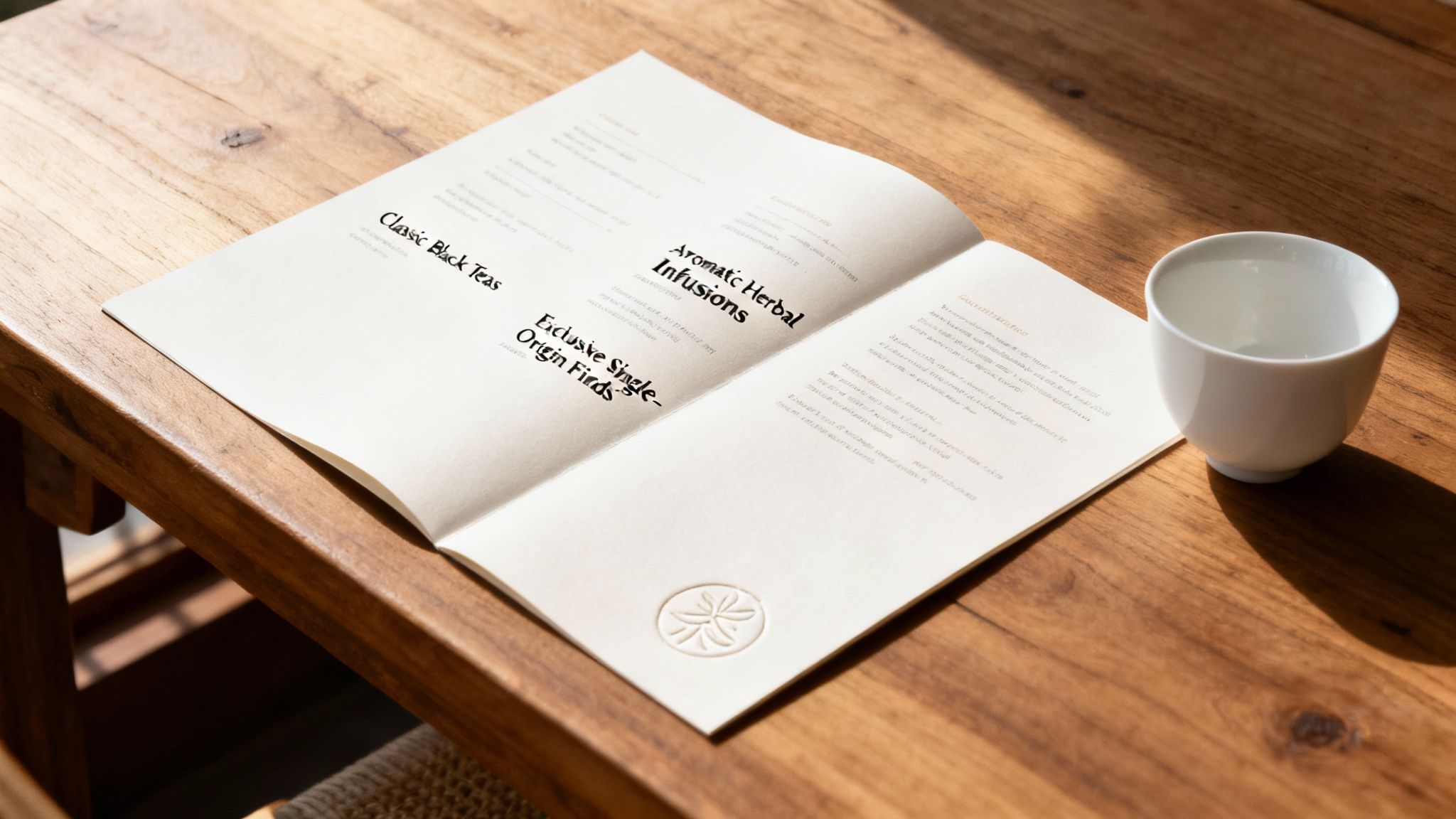
The structure of your menu is its bedrock. Before a customer even reads a single description, they’ll scan the headings to get their bearings. A cluttered or confusing layout can be an instant turn-off, but a logical, clean structure invites them in and makes ordering a pleasure.
Think of your menu categories as different rooms in your tea house. Each one should have its own distinct character, guiding visitors towards what they're looking for and making the whole experience feel seamless.
Start with the Classics
Every brilliant tea menu is built on a solid foundation of the familiar favourites. This is your chance to cater to traditional tastes and offer a comforting entry point for customers who know what they like. A strong "Classic Black Teas" section is absolutely non-negotiable.
Don't just take my word for it. A 2025 census by the UK Tea and Infusions Association found that 71% of Brits prefer a traditional black tea. It's the undisputed hero of any UK tea menu. For comparison, just 16% go for herbal infusions and 13% for green tea. This really highlights how vital it is to get the classics right before you branch out. You can read more in this UK tea preferences study.
A well-organised menu does more than just list what you sell; it tells your customers you understand them. Kicking off with familiar ground like "Black Teas" and "Green Teas" builds instant trust and makes the entire menu feel more approachable.
To help you get started, here’s a simple framework for the core categories that form the backbone of a balanced and appealing menu.
Core Tea Categories for a Balanced Menu
This table breaks down the essential tea categories, their distinct flavour profiles, and key examples to include for a comprehensive selection.
| Category | Flavor Profile | Must-Have Examples | Target Audience |
|---|---|---|---|
| Classic Black Teas | Robust, malty, full-bodied | English Breakfast, Earl Grey, Assam | Traditionalists, customers seeking a familiar cuppa |
| Vibrant Green Teas | Grassy, vegetal, sometimes nutty or sweet | Sencha, Gunpowder, Jasmine Green | Health-conscious drinkers, adventurous palates |
| Delicate White Teas | Subtle, floral, light-bodied | Silver Needle, White Peony (Bai Mu Dan) | Connoisseurs, guests looking for something refined |
| Complex Oolong Teas | Varies widely from floral and light to dark and roasted | Tie Guan Yin, Da Hong Pao | Tea enthusiasts, those exploring beyond the basics |
| Earthy Pu-erh Teas | Rich, earthy, deep, and often aged | Ripe (Shou) Pu-erh, Raw (Sheng) Pu-erh | Experienced tea lovers, customers seeking bold flavours |
| Herbal Infusions | Caffeine-free; varies from minty to fruity or spicy | Peppermint, Chamomile, Rooibos, Ginger | Everyone, especially those avoiding caffeine |
Having these core categories in place provides a solid starting point that caters to a wide range of tastes before you start adding your own unique flair.
Create Categories That Intrigue
Once you've got the essentials locked down, you can start having some fun. This is where you introduce more specialised categories that show off your unique identity and deep expertise. These sections are your chance to capture the imagination of serious tea lovers and curious newcomers.
Consider creating groups that tell a story or highlight a specific character:
- Aromatic Herbal Infusions: A perfect home for all your caffeine-free options, from calming chamomile to an invigorating peppermint blend.
- Exclusive Single-Origin Finds: Use this space to showcase rare or limited-run teas from specific estates. It’s a huge draw for seasoned tea drinkers.
- House Blends & Signatures: This is where you really get to show off your creativity. Feature unique blends that customers can only get at your tea house.
By thoughtfully arranging these sections, you cater to a huge range of preferences. For a deeper dive into the world of teas you could feature, check out our guide on the primary types of tea. It's this balance—between the traditional and the unique—that creates a dynamic menu that keeps people coming back for more.
Writing Tea Descriptions That Tell a Story
Once you've got the basic structure of your menu sorted, it’s time for the real magic. A truly great tea menu does more than just list what's in the pot—it paints a picture, sparks curiosity, and tells a story. This is where you turn a simple list into an invitation to explore.
The right words can completely change how a customer perceives a tea's value. You’re not just informing them; you're intriguing them. Think of it as the difference between labelling a painting "Flowers" and giving it a title that whispers of the artist's inspiration.
Moving Beyond Basic Flavour Notes
Anyone can write "black tea with bergamot." To really capture someone's attention, you need to go deeper with evocative language that gets the senses tingling. The goal is to be specific and sensory, helping your customer almost taste the tea before they’ve even ordered.
Focus on what makes each tea unique. This simple touch adds a layer of expertise and care to your tea house menus that people absolutely notice.
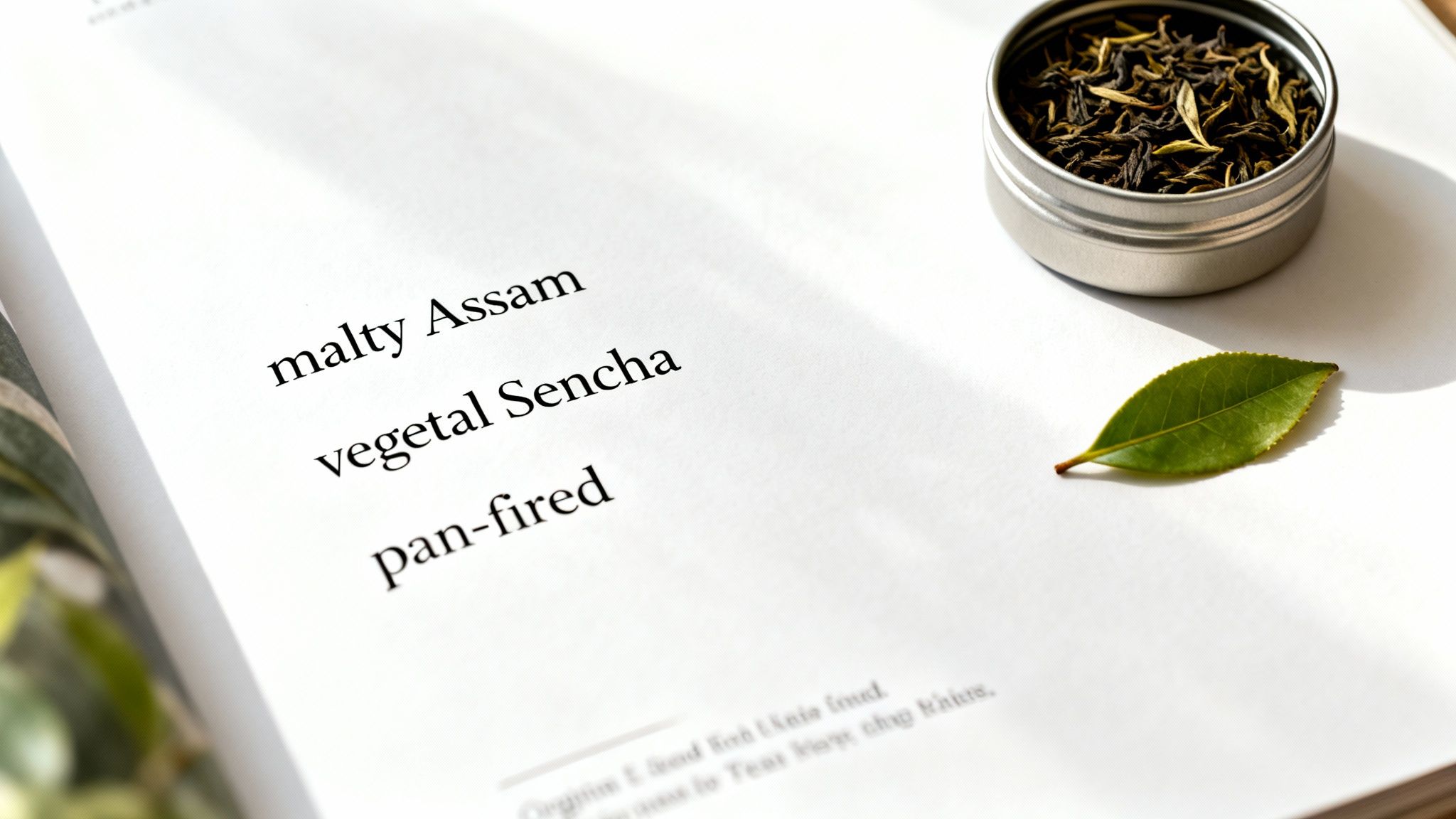
- For a classic Assam: Instead of "strong black tea," try something like, "A bold, full-bodied brew from the Brahmaputra valley, with rich, malty notes and a whisper of dark honey."
- For a Japanese Sencha: Go beyond "green tea" to "Vibrant and steaming with the scent of fresh spring meadows, this pan-fired green tea has a distinctly vegetal flavour and a smooth, sweet finish."
- For a smoky Lapsang Souchong: Don't just say "smoky." Create a scene: "Pine-fire dried in the traditional Wuyi Mountains method, this tea offers an intensely smoky aroma of a cosy campfire, with a surprisingly crisp, clean finish."
These details don't just describe a flavour; they transport your customer to another place.
Weaving in the Origin and Process
People care more than ever about where their food and drink come from. Your menu is the perfect place to share the story behind each leaf, building trust and a real connection with your customers. Transparency isn't just a buzzword; it's a brilliant way to build loyalty.
Shining a light on the unique journey of your teas adds a surprising amount of value. Mentioning a specific estate, the elevation where the leaves were grown, or a special processing method turns a simple drink into an artisanal experience.
A menu description that tells a story of origin, craft, and unique processing methods does more than sell a cup of tea. It sells an experience, justifies a premium price, and creates a memorable connection that encourages customers to explore your menu further.
For instance, you could add a small note about a single-origin Darjeeling. Explain that it’s from the prestigious Makaibari Estate and was harvested during the celebrated "second flush," renowned for its muscatel grape notes.
This kind of detail positions you not just as a tea seller, but as a genuine curator. In the same way, explaining that an oolong has been painstakingly hand-rolled or a white tea was picked at dawn adds a touch of romance and craft that fascinates people and makes the whole experience feel that much more special.
Pricing Strategically For Profitability And Value
Finding the right price point can feel like walking a tightrope. Price too low, and you chip away at your margins. Price too high, and you risk putting off guests. Ultimately, your pricing tells the story of your brand and the experience you deliver.
I always begin by drilling into costs. That means surveying every expense—from a pot of single-origin Silver Needle to a slice of lemon drizzle cake. Count the tea leaves, milk, sugar, filter paper, packaging and even the staff time. When you know your true COGS, you can apply a markup that covers overheads and still leaves room for profit.
Tiered Pricing For Teas
Organising your teas into clear categories guides guests and encourages them to trade up.
- Standard Tier: Reliable crowd-pleasers like English Breakfast or Peppermint, priced accessibly to welcome newcomers.
- Premium Tier: Handcrafted Oolong or a bespoke house blend, reflecting complexity and craft with a slightly higher price.
- Reserve Tier: Rare single-origin gems or ceremonial-grade matcha, set at a premium to honour its exclusivity.
To nail these tiers, source from reputable suppliers—explore options via https://www.jeevesandjericho.com/blogs/news/wholesale-tea-suppliers-uk to balance quality with cost.
Boosting Revenue With Pairings
Pairings turn two orders into one memorable moment. Suggest a robust Assam with a freshly baked scone or a floral Darjeeling alongside a citrus tart.
- Assam + Cream Tea
- Darjeeling + Lemon Tart
- Matcha Latte + Almond Biscotti
In the UK, a traditional three-tier afternoon tea typically fetches £25–£45 per person. Seasonal spins—peach themes in summer or savoury platters in autumn—keep your offer exciting. For more inspiration, check out current afternoon tea trends.
When developing your tea house menu's pricing strategy, a key component is how your price list integrates with digital tools. Understanding how loyalty platforms handle this is crucial; for more on this, explore the digital loyalty platform's Menu Price List feature.
Smart pricing is more than just numbers. It’s a conversation with your guests—one that balances value, quality and experience. Get it right, and both your profits and your patrons will flourish.
Designing a Menu That's Beautiful and Functional
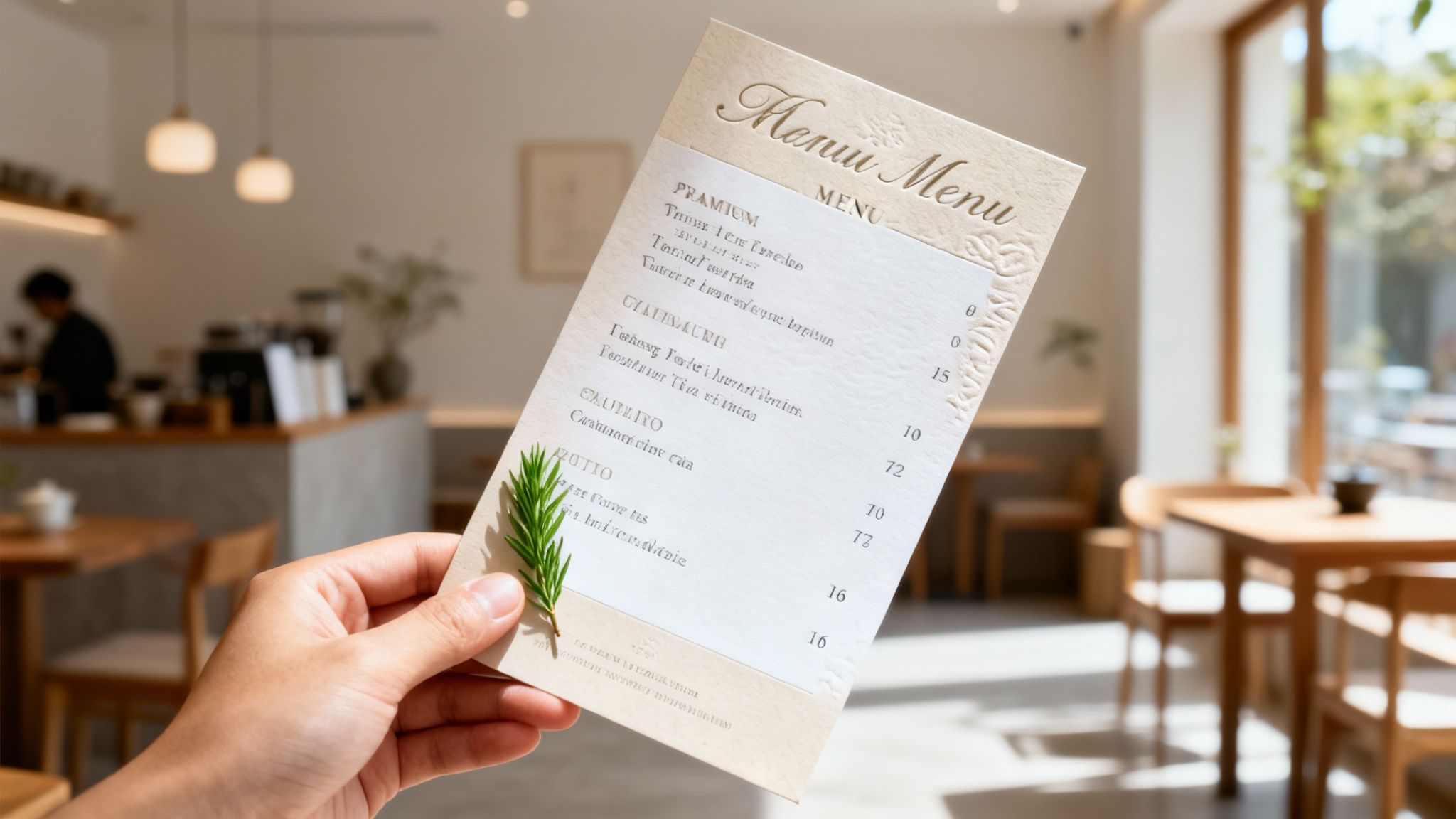
Your menu is so much more than a list of teas and prices—it’s one of the first things a customer touches, a real, physical piece of your brand. The design, from the typeface you choose to the very feel of the paper, speaks volumes about the care you pour into every cup. A well-crafted menu should make ordering a pleasure, guiding your customers without overwhelming them.
The trick is finding that sweet spot between beautiful design and practical usability. A cluttered, confusing menu can leave people feeling frustrated, but a clean, inviting layout encourages them to explore. This is where a little graphic design savvy can completely transform the customer experience.
Choosing Typography That Reflects Your Brand
The fonts you pick set the tone instantly. Are you a traditional, elegant spot steeped in history, or a bright, modern, minimalist space? Your typography should tell that story at first glance.
- Serif Fonts (like Garamond or Baskerville): These are the classics. Those little decorative strokes, or ‘feet’, feel traditional, reliable, and elegant. They’re perfect for tea houses with a heritage vibe.
- Sans-Serif Fonts (think Helvetica or Futura): Clean, crisp, and incredibly easy to read. These fonts communicate a modern, straightforward approach that feels fresh and welcoming.
- Script Fonts: A little goes a long way here. A beautiful script font can add a lovely, handcrafted charm, but it can quickly become hard to read if overused. Keep it for main headings or to highlight a special offer.
Stick to two complementary fonts at most—one for your headings and another for the descriptions. This keeps things looking tidy and avoids any visual chaos.
Mastering Layout and White Space
How you arrange everything on the page is just as crucial as what you’re putting on it. White space—the empty area around your text and images—is your secret weapon for creating a clean, premium feel.
A well-designed menu uses white space to give everything room to breathe. It makes it easier for customers to digest the information and subtly draws their eye to key sections, like your house specials or high-margin afternoon tea sets, without being pushy.
Resist the temptation to cram too much onto one page. Use simple columns, light borders, or boxes to group similar items, like your cakes or savoury snacks. This kind of organisation helps customers find exactly what they’re looking for without a fuss. For more contemporary tea houses, exploring high-impact digital display menus can offer a dynamic and visually engaging way to present your offerings.
Finally, think about how the menu feels. A heavier card stock with a matte or textured finish feels far more luxurious than flimsy paper. These small tactile details add to the overall sense of quality, reinforcing just how special your teas are before anyone has even taken a sip.
Keeping Your Menu Fresh with Modern Trends
A great menu is never really ‘finished’. Think of it as a living document, one that should breathe with the seasons and evolve with your customers' tastes. Keeping your offerings relevant gives regulars a brilliant reason to pop back in and see what's new.
A menu that never changes can feel stale pretty quickly. But one that reflects the time of year feels thoughtful and exciting, turning a one-off visit into a loyal habit. This doesn't mean you need to overhaul everything four times a year. A small, curated "Specials" section is often all it takes to capture the spirit of the season.
Embrace a Seasonal Rhythm
Introducing seasonal specials is one of the best ways to show off your creativity and highlight timely flavour profiles. It creates a lovely sense of urgency, encouraging people to try something special before it’s gone.
This simple strategy keeps your tea house menus feeling dynamic and current.
Here are a few ideas to get you started:
- Spring: Time for light, floral, and refreshing options. Think elderflower-infused white teas, a delicate rose oolong, or lattes made with a hint of lavender syrup. Pair them with a sharp citrus tart.
- Summer: Iced teas and cold brews should take centre stage. Get creative with vibrant fruit infusions like a classic peach black tea, a hibiscus cooler, or a zesty lime and mint green tea.
- Autumn: Lean into those warming, spiced flavours. A proper Bombay chai, a pumpkin-spice rooibos, or a maple-infused black tea feel incredibly comforting. Perfect alongside an apple crumble or some ginger biscuits.
- Winter: Offer rich, decadent, and cosy brews. A peppermint-infused hot chocolate with a black tea base, a spiced orange blend, or a robust, smoky Lapsang Souchong are ideal for cold days.
To help you plan, here's a simple framework for rotating your offerings throughout the year.
Ideas for Your Seasonal Menu Rotation
| Season | Featured Tea Ideas | Complementary Food Pairings | Marketing Angle |
|---|---|---|---|
| Spring | Rose Oolong, Cherry Blossom Green Tea, Elderflower White Tea | Lemon Drizzle Cake, Berry Tarts, Macarons | "Awaken Your Senses: Our New Spring Florals Are Here!" |
| Summer | Cold Brew Hibiscus, Peach Iced Tea, Mint & Lime Green Tea | Scones with Clotted Cream & Jam, Fruit Salads, Sorbet | "Cool Down with Our Summer Infusions – Freshly Brewed!" |
| Autumn | Spiced Bombay Chai, Pumpkin Rooibos, Maple Black Tea | Apple Crumble, Ginger Biscuits, Carrot Cake | "Get Cosy: Warm Up with Our Autumn Spice Collection." |
| Winter | Peppermint Black Tea, Spiced Orange Blend, Gingerbread Chai | Mince Pies, Chocolate Yule Log, Shortbread | "Festive Flavours Have Arrived! A Cup of Winter Comfort." |
A simple rotation like this gives customers something to look forward to and keeps your menu from feeling static.
Integrating Modern Tea Trends
Beyond the seasons, it’s always wise to keep an eye on what’s happening in the wider world of tea. The trick is to adopt trends in a way that feels authentic to your brand, not like you're just chasing a fad.
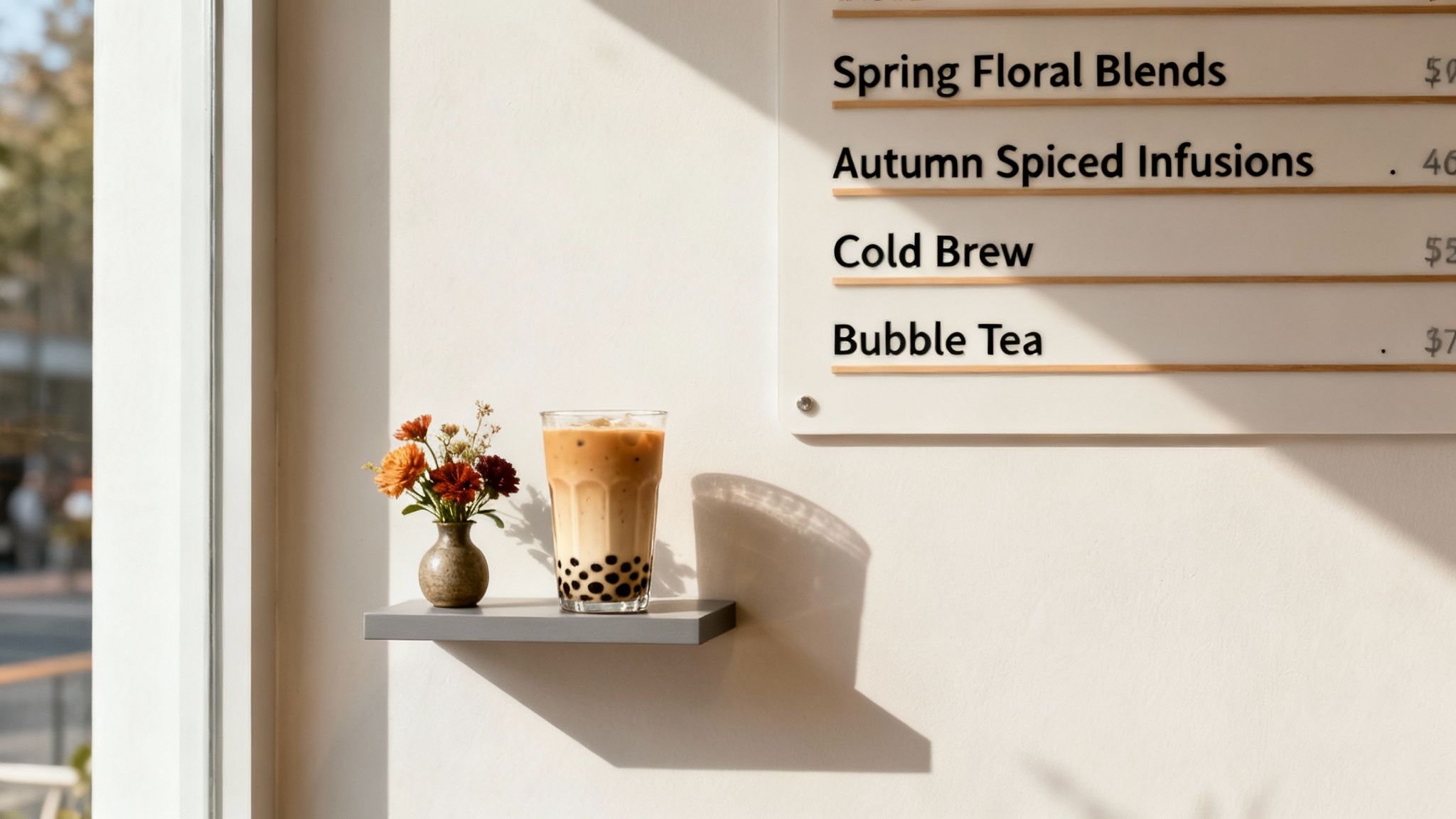
The rise of bubble tea, for instance, is impossible to ignore. The UK market was forecast to hit USD 168.4 million in 2025, and ready-to-drink formats are a huge part of that. It signals a clear demand for interesting, convenient, cold tea drinks. You can find out more about current UK tea industry trends to stay informed.
You can honour your traditional roots while still innovating. Adding a high-quality bubble tea using your own premium loose-leaf, or developing a signature cold brew, lets you tap into modern tastes without compromising your core identity.
Matcha is another great example. Offering a high-quality, ceremonial-grade matcha latte—or even a simple bowl of traditionally prepared matcha—can really appeal to health-conscious customers and tea purists. If you're considering it, it’s worth reading up on best practices for now serving matcha to ensure you do it justice.
By selectively weaving these trends into your menu, you keep things fresh and interesting for the widest possible audience.
A Few Final Questions Answered
Even the most carefully planned menu can leave you with a few nagging questions. Getting these last details right is often what separates a good menu from a truly brilliant one. Think of this as a quick chat over a cup of tea, sorting out those common hurdles we all face.
From finding that perfect balance in your selection to getting your team excited about it, a few simple answers can make all the difference to your day-to-day operations and, most importantly, your customer's experience.
How Many Teas Should I Actually Have on My Menu?
This is probably the question I hear most often. It’s so tempting to showcase every single tea you can get your hands on, but resist the urge. Overwhelming your customers with a massive list is a classic rookie mistake that leads to ‘decision fatigue’.
For most tea houses, the sweet spot is somewhere between 20 and 30 teas.
This gives you plenty of room to offer a proper variety across the main categories – black, green, oolong, white, and herbal – without the menu feeling like a novel. A tight, well-chosen selection always screams confidence and quality far more than a sprawling, generic list.
The secret isn’t how many teas you offer, but how well you curate them and tell their stories. A smaller, well-organised menu shows you know your stuff, guiding your customers toward their perfect cup every single time.
Ultimately, clever categorisation is your best friend here. When you group teas logically, even a list of 30 feels completely manageable and helps people find a new favourite they’ll love.
How Do We Handle Dietary Requirements?
When it comes to dietary needs, clarity is everything. If someone feels unsure or unsafe, you’ve lost them. The only way to handle this is to be completely upfront and transparent, right there on the menu.
- Use simple, clear icons: Everyone recognises symbols like (VE) for vegan, (GF) for gluten-free, and (N) for nuts. Just pop them discreetly next to each item. It’s incredibly helpful.
- Offer genuine choices: Don't just tick a box. Aim for at least one fantastic, dedicated option in each food category. A sad fruit plate isn’t enough. A truly delicious vegan scone or a gluten-free sandwich that someone has put real thought into? That’s what makes people feel welcome, not like an afterthought.
The other half of this puzzle is your team. Staff training on this is non-negotiable. Every single person on the floor needs to be able to talk confidently about ingredients and the risk of cross-contamination.
How Can I Get My Staff Excited About a Complicated Menu?
Turning your team into genuine tea ambassadors is a marathon, not a sprint. The trick is to make the learning process feel less like a chore and more like a discovery.
Why not hold regular, short tasting sessions? Instead of trying to cram the whole menu into one go, just focus on two or three teas each time. Chat about where they come from, what makes them special, and what food they’d pair beautifully with.
You could also create simple, one-page ‘cheat sheets’ for each tea that staff can glance at during a busy service. They should include just the essentials:
- Origin and a quick story.
- Key flavour notes (e.g., malty, floral, smoky).
- A perfect food pairing suggestion.
And finally, encourage everyone to find their own personal favourite. When a recommendation is genuine, customers can tell. A great way to build confidence is to role-play a few customer interactions, getting them to describe the tea they love.
At Jeeves & Jericho, we believe a great menu is the heart of a great tea house. Explore our wholesale collection of exceptional whole leaf teas, chai, and matcha to build a menu that tells your unique story. Learn more at https://www.jeevesandjericho.com.