


You might be surprised to learn that English Breakfast isn't actually a specific type of tea leaf. Instead, it’s a classic blend of different black teas, expertly combined to create a specific experience. It’s crafted to be full-bodied, wonderfully malty, and strong enough to get you going in the morning – the perfect companion to a proper breakfast.
Think of it like a chef’s signature spice mix. Each ingredient is carefully chosen to build a robust, harmonious flavour that really sings.
What Exactly Goes Into The Nation's Favourite Cuppa?
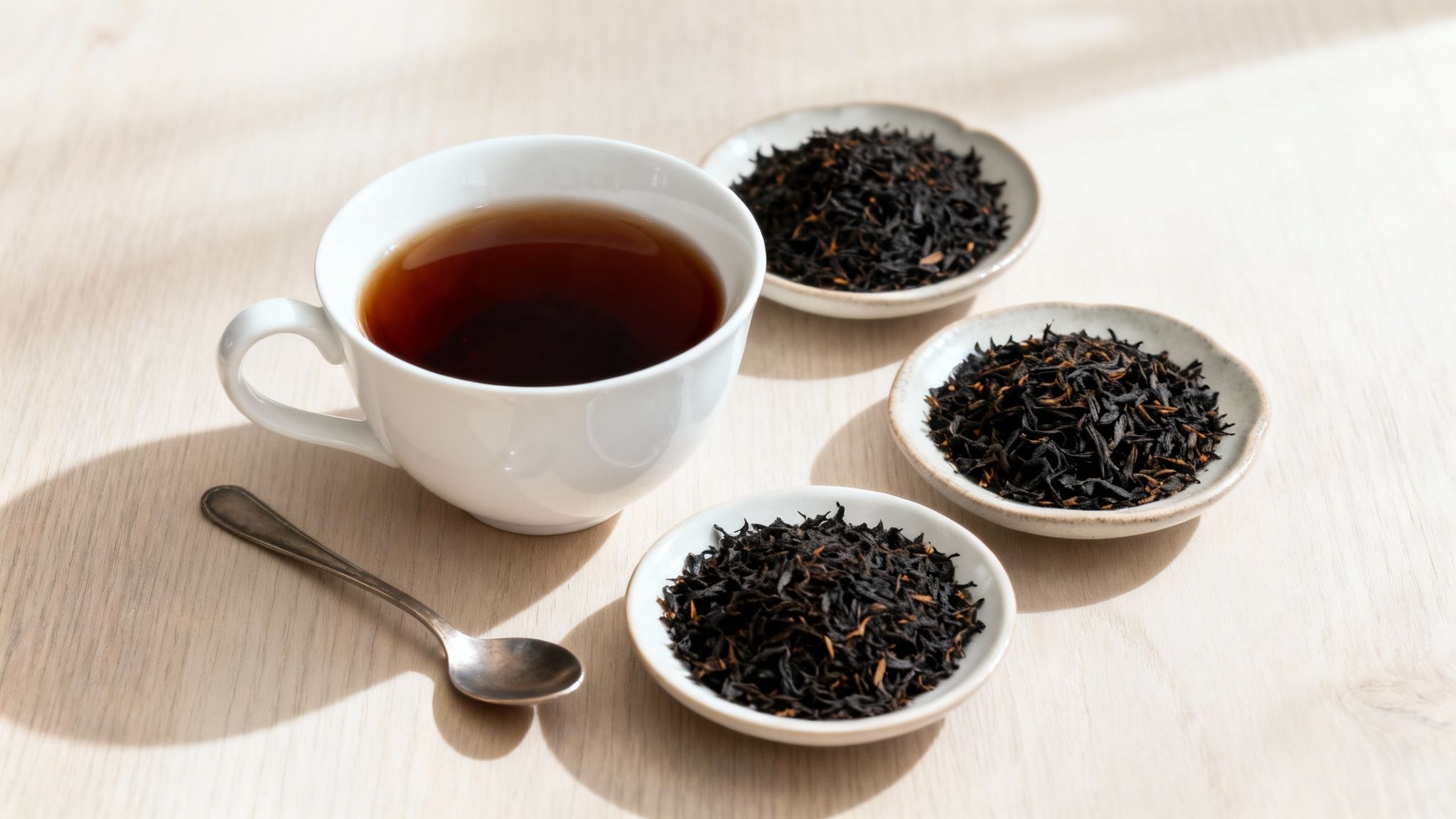
So, what is English Breakfast tea? At its heart, it's a powerful and invigorating blend designed to kick-start your day. Its famous strength means it stands up beautifully to a splash of milk and a bit of sugar, never losing its essential character.
There's a reason it’s so iconic. English Breakfast is the undisputed champion among British tea drinkers, with a staggering 52% of Brits calling it their favourite. It's a cornerstone of our national ritual, contributing to the over 100 million cups we drink daily. For more on the latest trends, the tea industry statistics on steepedcontent.com are a fascinating read.
English Breakfast Tea at a Glance
To give you a clearer picture, here’s a quick rundown of what makes this blend so special. These are the core traits that define a classic English Breakfast brew.
| Characteristic | Description |
|---|---|
| Tea Type | A blend of black teas |
| Flavour Profile | Full-bodied, robust, rich, and malty |
| Strength | Strong and brisk, designed to awaken the senses |
| Best Enjoyed | With milk and sugar, alongside a hearty meal |
| Aroma | Bright, with hints of malt and subtle sweetness |
This quick guide gives you the basics, but the real magic is in the drinking.
The beauty of English Breakfast tea lies in its versatility. While bold enough for a traditional fry-up, a high-quality whole-leaf version also offers complex notes that can be savoured on their own.
Ultimately, its enduring appeal comes from this perfect balance of strength and flavour. If you're curious about how it stacks up against other morning brews, you can dive deeper in our guide to what is breakfast tea.
The Surprising Scottish Origins of a Very English Brew
It might be called 'English' Breakfast, but the real story of this world-famous blend starts somewhere else entirely. In a twist that catches most people by surprise, we have to head north of the border, to 19th-century Scotland.
The original blend was the handiwork of a Scottish tea master, Robert Drysdale. He set out to create a stronger, more full-bodied tea that could stand up to a proper hearty breakfast, and so he developed a punchy concoction he simply called ‘Breakfast Tea’. It went down a storm locally, but its journey was just beginning.
The plot thickens with a royal visit in 1892. Queen Victoria, staying at her beloved Balmoral estate in Scotland, was served a cup of Drysdale’s brew. She absolutely loved its rich flavour and fortifying character, so much so that she took a stash back with her to England.
From Royal Favourite to National Staple
This royal seal of approval was all it took. London's tea merchants, always keen to follow the Queen’s lead, quickly started creating their own versions for their customers. To give it a patriotic ring and distinguish it from its Scottish roots, they added one crucial word.
And just like that, the Scottish 'Breakfast Tea' was rebranded as 'English Breakfast Tea.' The name stuck, and its true origins were largely forgotten for decades.
This rise in popularity happened at the perfect time. Britain’s global trade was booming, and tea was becoming an indispensable part of daily life for everyone. A strong, flavourful brew was no longer just for the afternoon; it was the essential kick-start to the day. The blend’s history is a brilliant lesson in how a bit of clever branding, a royal endorsement, and changing social habits can turn a simple cup of tea into a cultural icon.
What's Actually in the Blend?
Here's the thing: there’s no single, legally protected recipe for English Breakfast tea. Think of it less like a strict formula and more like a masterful symphony. A skilled tea blender acts as the conductor, weaving different black teas together to create that famously powerful and balanced flavour.
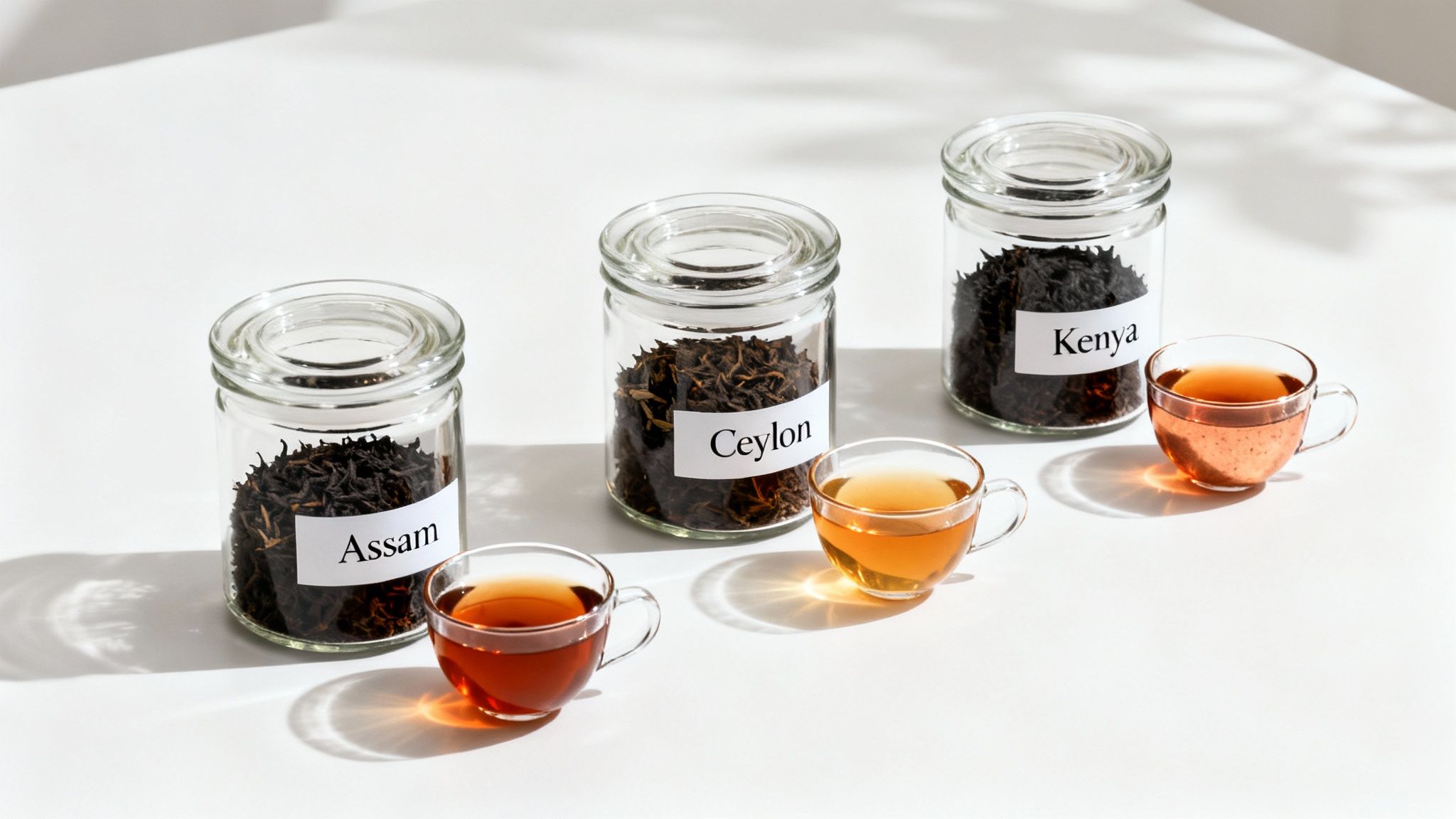
While the exact mix can vary, a classic English Breakfast tea is built around a core trio of black teas. Each one brings something unique to the cup, and getting the balance right is a true art form.
The Key Players in the Blend
Let's imagine our English Breakfast blend as an orchestra. Each tea variety is like a different section of instruments, contributing its unique sound to the final performance.
-
Assam (The Brass Section): This is the foundation. Hailing from India, Assam provides that deep, malty, and robust character. It’s the bold, brassy flavour that gives the blend its signature strength and richness.
-
Ceylon (The Woodwinds): Coming from Sri Lanka, Ceylon tea adds the bright, crisp, and lively top notes. Its subtle hints of citrus cut through the maltiness, bringing a refreshing briskness a bit like a melody floating over the top.
-
Kenyan (The Percussion): Teas from Kenya are all about vibrancy. They give the tea its beautiful coppery colour and a strong, brisk character that drives the rhythm of the blend and gives it an invigorating kick.
Getting this balance right is what makes a truly satisfying cuppa. The UK tea market, which is central to this tradition, is still dominated by black tea. In fact, its growth is now being driven by a thirst for premium blends that really show off the quality of their ingredients, like single-origin Kenyan tea. You can read more about the UK's role in the tea industry on ibisworld.com.
The real magic of English Breakfast is how these individual flavours merge. The goal isn’t for one tea to shout louder than the others, but for them all to unite, creating a single, rich experience that’s greater than the sum of its parts.
This is precisely why quality matters so much. When you use whole-leaf teas, like we do here at Jeeves & Jericho, each leaf has the space it needs to properly unfurl and release its full, complex flavour. If you want to dive deeper, have a look at our guide to the different types of black teas that form the backbone of this iconic brew.
English vs Irish and Scottish Breakfast Teas
To really get a feel for what makes an English Breakfast tea, it helps to see how it stacks up against its Celtic cousins. While they all share a name and a job—a proper strong start to the day—each blend has its own personality, shaped by regional tastes and even the local water.
You can think of them as three siblings. They're clearly related, but each has its own distinct character. English Breakfast is the balanced, well-rounded one. It’s got body and flavour, but it's generally the most moderate of the three, making it a brilliant all-rounder and a global favourite.
The Stronger Siblings: Irish and Scottish Blends
Irish Breakfast tea usually turns the volume up a notch. The big difference here is a heavy helping of Assam tea from India. This gives it a much stronger, maltier character and a beautiful deep reddish colour in the cup. Given that the Irish drink more tea per person than almost anywhere else on Earth, it’s no surprise their signature brew packs a punch.
Then you have Scottish Breakfast, which is often the boldest of the lot. This blend was originally created to be gutsy enough to stand up to Scotland’s famously soft water, which can sometimes make tea taste a bit weak. The result is an incredibly powerful, full-bodied brew that’s uncompromisingly robust.
The key thing to remember is that the differences aren't just about lines on a map; they're about the specific tea leaves in the blend. A bigger dose of Assam makes an Irish Breakfast malty, while the need to work with soft water gives Scottish Breakfast its formidable strength.
Comparing British Isles Breakfast Blends
To make it easier to see the differences at a glance, here’s a simple breakdown of what sets each of these famous morning teas apart.
| Blend | Strength | Primary Tea Component | Flavour Profile |
|---|---|---|---|
| English | Medium-Strong | A balanced mix, often with Ceylon & Kenyan notes | Robust, bright, and malty |
| Irish | Strong | Assam-dominant | Deeply malty, rich, and full-bodied |
| Scottish | Strongest | A powerful blend, often with African teas | Exceptionally bold, brisk, and sometimes smoky |
At the end of the day, there are no hard-and-fast rules for these blends, and the final taste always comes down to the person who created it. Still, these general characteristics hold true and can help you find the perfect morning cuppa for you, whether you’re after something balanced, malty, or seriously powerful.
How to Brew the Perfect Cup Every Time
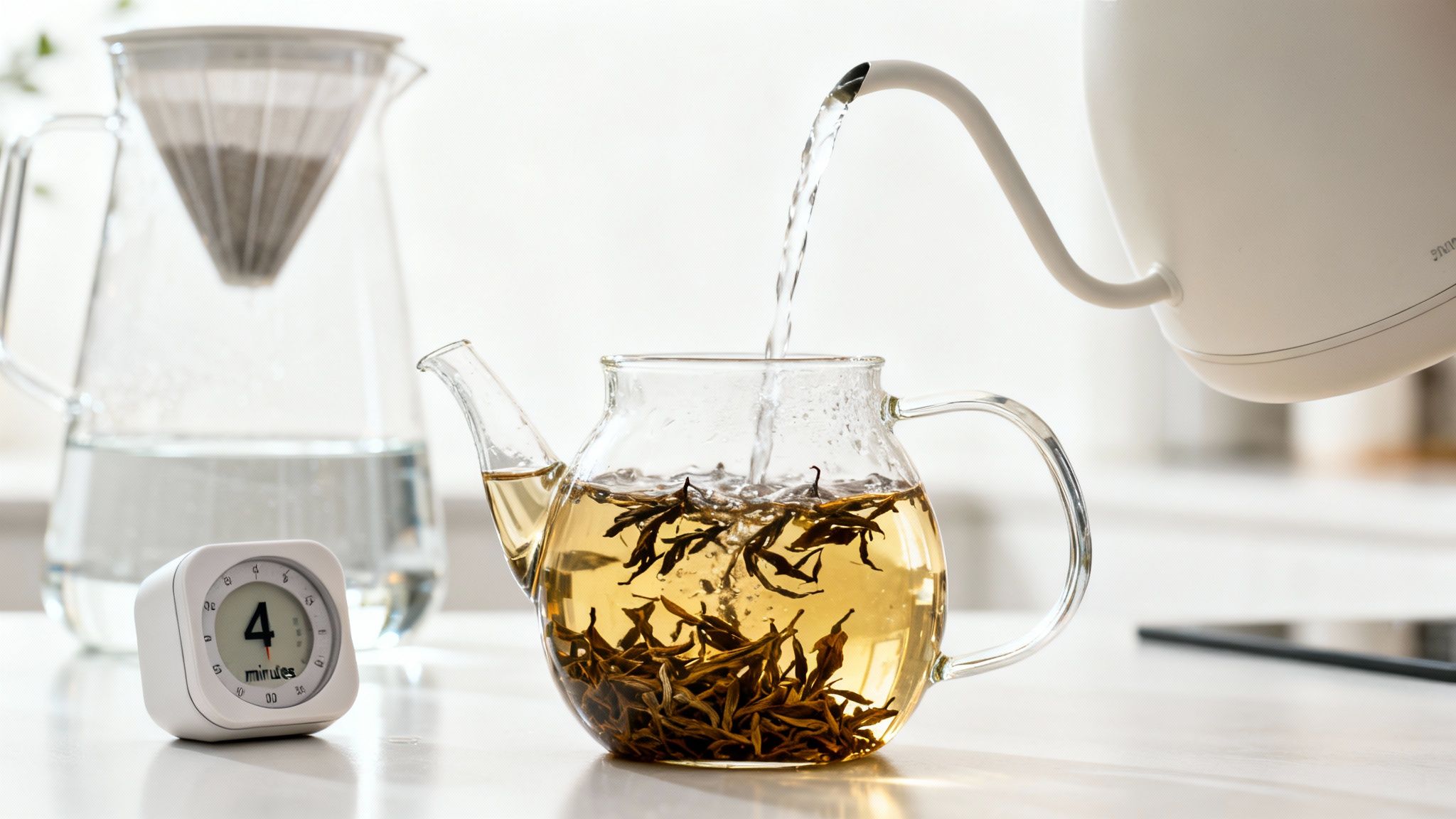
There’s a real art to brewing a proper cup of English Breakfast, and it goes far beyond just chucking a teabag in a mug. To really coax out that rich, malty character, a few simple details make all the difference. And it all begins with the water.
Always start with fresh, cold water in your kettle. If you're in a hard water area, filtered is best. Why? Because re-boiling water knocks the oxygen out of it, and that's what leads to a dull, flat-tasting brew. For black teas like this, you want the water just off the boil, around 96-98°C. Any hotter and you risk scalding the leaves, which brings out a bitter edge nobody wants.
Steeping for Success
The magic number for steeping is somewhere between 3 to 5 minutes. Go for less than three, and the tea will be weak and underwhelming. Leave it for much longer than five, and you'll start pulling out too many tannins, making the tea taste sharp and astringent.
This is exactly where loose-leaf tea comes into its own.
- Give Them Room: Unlike the fine dust in most teabags, whole leaves need space to unfurl and release all their wonderful flavours and aromas. A roomy teapot or a generous infuser is your best friend here.
- You're in Control: Timing is everything. Set a timer and have a little taste at the three-minute mark. You can then let it brew a little longer until it hits that perfect strength for you, then simply pull the leaves out.
Turning your daily brew into a small ritual really does make it taste better. If you want a full step-by-step guide, have a look at our tips on how to brew loose leaf tea.
The Great Debate: Milk In First or Last?
The old tradition of putting milk in first was purely practical – it stopped the piping hot tea from cracking fragile porcelain cups. These days, with tougher mugs, adding milk last lets you properly judge the tea's strength first. Honestly, though? It’s all down to personal taste.
Believe it or not, Brits get through over 100 million cups of tea a day. Yet studies show that a staggering 80% of us overfill the kettle every single time, wasting a huge amount of energy. Brewing your tea properly isn’t just about getting a better flavour, it's about being that little bit more mindful. You can find more facts on UK tea habits and efficiency on cbi.eu.
Got a Question About English Breakfast Tea?
Even for a brew as famous as this one, there are always a few questions that pop up. We get asked these all the time, so we’ve put together the answers to clear things up and help you get even more from your daily cup.
Is It Stronger Than Coffee?
Not when it comes to caffeine. A typical 237ml mug of English Breakfast tea has around 40-70 milligrams of caffeine, whereas the same sized coffee can easily pack 95 to 200 milligrams.
So, while it definitely provides a welcome morning lift, it’s a much gentler, more sustained boost. You get the focus without the jitters that a strong coffee can sometimes bring on.
Can I Drink It Without Milk?
Absolutely! In fact, we’d encourage you to try it. While a classic English Breakfast is blended to be bold enough for milk and sugar, a high-quality, whole-leaf blend is a completely different experience when drunk black.
When you brew it properly, you can really taste the different parts of the blend—the malty depth from the Assam, the brighter notes from the Ceylon, and that brisk finish from the Kenyan leaves. It’s the best way to appreciate what’s actually in your cup.
A truly well-crafted English Breakfast shouldn't need milk to be palatable. The goal of a premium blend is balance and depth, creating a smooth, rich flavour that stands proudly on its own.
Is There a Decaf Version?
Yes, and a good decaf can be a wonderful thing. The best ones are made using a gentle, natural CO2 process that removes the caffeine while leaving all that lovely, robust flavour behind.
It’s the perfect answer for anyone who loves the taste but is watching their caffeine intake, or for those who fancy a comforting brew in the evening without it keeping them up.
What Should I Eat With It?
Well, the clue is in the name! It’s the perfect partner for a full English breakfast, with its bold character cutting right through the richness of bacon, sausage, and eggs.
But it’s far more versatile than just a breakfast brew.
- For something savoury: Try it with a cheddar cheese scone, a hearty sandwich, or a sausage roll.
- For something sweet: It’s brilliant alongside a slice of rich fruit cake, crumbly shortbread, or just simple toast and marmalade.
Its sturdy flavour profile means it can stand up to almost any food, making it a reliable choice from morning to teatime.
At Jeeves & Jericho, we’re firm believers that an exceptional English Breakfast starts with the finest whole leaves, sourced ethically from the world's best tea gardens. To see what a difference that quality makes, you can explore our signature blend at https://www.jeevesandjericho.com.