


Making matcha is a simple ritual. You sift the fine, vibrant green powder, add hot (but never boiling) water, and whisk it all into a frothy, energising drink. It’s a process perfected over centuries, and the result is a brew that's smoother and far richer than anything you'll get from a standard teabag.
More Than a Drink, It's a Mindful Ritual
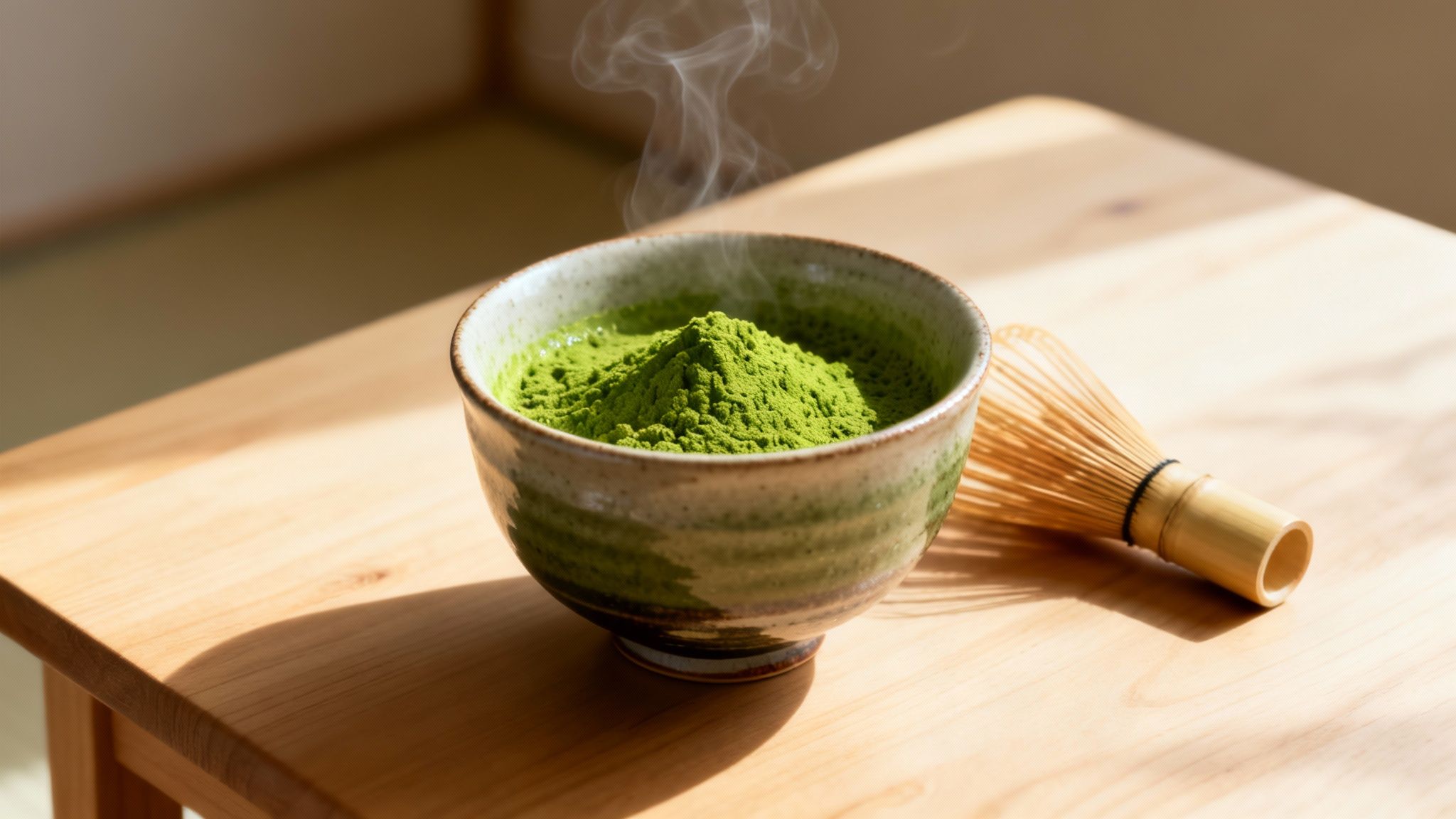
Welcome to our definitive guide to making proper matcha. This isn't just about mixing powder and water; it's about embracing a mindful practice that has captivated people around the world. We've seen so many people swap their morning espresso for a bowl of matcha, drawn to the promise of a calm, focused energy that coffee just can't replicate.
This guide will walk you through the entire process, demystifying everything from the tools to the technique. Matcha has come a long way from being a niche wellness drink to a staple in cafés right across the UK. The numbers don't lie—in just the first two months of 2025, over 1.6 million matcha drinks were sold nationwide. It's clear matcha has found a firm place in our daily routines.
Understanding What Makes Matcha So Special
Before we get into the whisking, it’s worth understanding why matcha is in a league of its own compared to regular green tea. It all starts in the fields.
The tea plants destined to become matcha are shade-grown for their final few weeks. This one simple step forces the leaves to produce a huge amount of chlorophyll and L-theanine—an amino acid that gives matcha its signature umami flavour and calming effects. You can get the full story on this process right here: https://www.jeevesandjericho.com/blogs/news/what-is-matcha-made-of.
After harvest, the leaves are gently steamed, dried, and then painstakingly stone-ground into an impossibly fine powder. Here’s the key difference: unlike steeped tea where you throw the leaves away, with matcha you consume the entire leaf. This means you're getting a much higher, more direct concentration of everything good inside.
- Antioxidants: To help protect your cells from damage.
- L-theanine: The source of that unique feeling of "calm alertness."
- Vitamins and minerals: The full nutritional spectrum of the whole tea leaf.
This whole-leaf consumption is what makes matcha so potent. Many people are looking for natural ways to boost their energy, and while matcha offers a gentle lift, it's interesting to see how other traditions approach this, like exploring Ayurvedic wisdom on restoring vitality.
With that foundation set, let's get into the practical advice to help you master this beautiful ritual at home.
Choosing Your Matcha and Gear
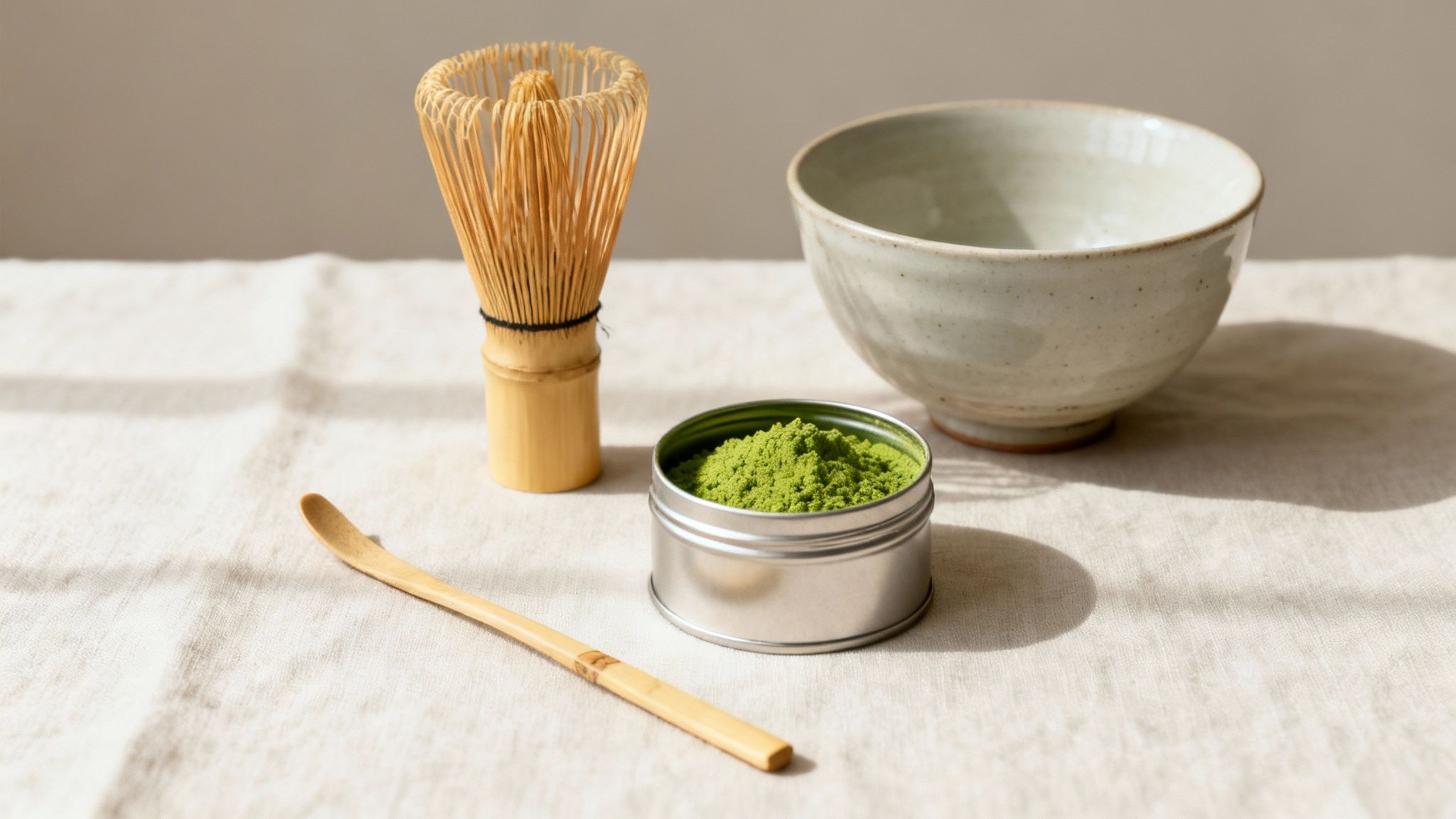
Before you even think about whisking, the secret to a brilliant bowl of matcha lies in what you choose to put in it and the tools you use. The journey starts with picking the right grade of matcha, a decision that shapes the entire flavour, colour, and experience. Get this right, and you're set for a truly satisfying ritual.
The matcha world is really split into two main camps: Ceremonial Grade and Culinary Grade. Knowing what sets them apart is the first real step to mastering your perfect cup. One is for drinking straight, the other is for adding that matcha magic to food and drinks.
Ceremonial Grade Versus Culinary Grade
Ceremonial grade is the best of the best. It’s made from the youngest, most delicate tea leaves, picked during the very first harvest of the season. These leaves are handled with incredible care to create a powder that’s ultra-fine, vividly green, and has a sweet, complex umami flavour with almost no bitterness. This is the stuff you want for a traditional tea, where the matcha is simply whisked with hot water and its subtle character gets to shine.
Culinary grade, as the name suggests, is for cooking and baking. It comes from leaves harvested a bit later, giving it a stronger, more assertive flavour that can be a little bitter. This robustness is actually a good thing – it means the matcha taste won't get lost when mixed with milk, sugar, or flour. Trying to drink this grade on its own would likely be a harsh, disappointing experience.
Ready to make a choice? This table breaks down the key differences to help you pick the right powder for the job.
Choosing Between Ceremonial and Culinary Matcha
| Attribute | Ceremonial Grade Matcha | Culinary Grade Matcha |
|---|---|---|
| Best For | Traditional tea (usucha, koicha) | Lattes, smoothies, baking, cooking |
| Harvest | First harvest (youngest leaves) | Second or later harvests |
| Colour | Vibrant, electric green | Duller, often yellowish-green |
| Texture | Silky, ultra-fine powder | Coarser, slightly grittier feel |
| Flavour | Sweet, delicate, rich umami | Bold, robust, slightly bitter |
| Price | Higher | More economical |
Ultimately, choosing between them isn’t about one being "better" than the other. It’s about matching the grade to what you’re making. For a pure, whisked tea, ceremonial is the only way to go. For that matcha-infused cake or morning latte, culinary is the smart, flavourful choice. If you want to dive deeper, you can explore the specific types of matcha and what makes each unique.
It’s no surprise that people in the UK are embracing the authentic experience. Powder-based products actually make up the largest slice of the market, at around 55.02% of all matcha sales. This just shows how much we love the real deal.
The Essential Kit for an Authentic Brew
You can make matcha with things you already have in your kitchen, but using the proper tools does more than just honour tradition – it genuinely gives you a much better result. These three bits of kit are the heart of any matcha set.
-
Chasen (Bamboo Whisk): If you buy one thing, make it this. Hand-carved from a single piece of bamboo, its many fine prongs are designed to perfectly aerate the tea and suspend the powder in the water, creating that iconic creamy froth. An electric whisk can do a job, but a chasen creates a much finer, more delicate foam.
-
Chawan (Matcha Bowl): This is more than just a bowl. A proper chawan has a wide, flat bottom that gives you the space you need to whisk properly. The shape helps you make that quick ‘W’ or ‘M’ motion required to build up a perfect froth without splashing it everywhere.
-
Chashaku (Bamboo Scoop): This elegant little scoop is designed to measure out the perfect amount of matcha for one serving. As a rule of thumb, two scoops from a chashaku is about one gram of powder – the ideal amount for a standard bowl of usucha (thin tea).
On a Budget? Beginner-Friendly Swaps
Just starting out and not quite ready to invest in the full setup? No problem. You can still whip up a decent bowl of matcha with a few clever kitchen swaps.
- The Whisk: An electric milk frother is your best bet as a chasen alternative. It will get the powder mixed in well and create a pretty good foam.
- The Bowl: A small cereal bowl or a wide-mouthed mug can work in a pinch. You just need something with enough flat space at the bottom to get a good whisking action going.
- The Scoop: A standard half-teaspoon measuring spoon is a perfect stand-in for a chashaku.
Mastering the Traditional Whisking Technique
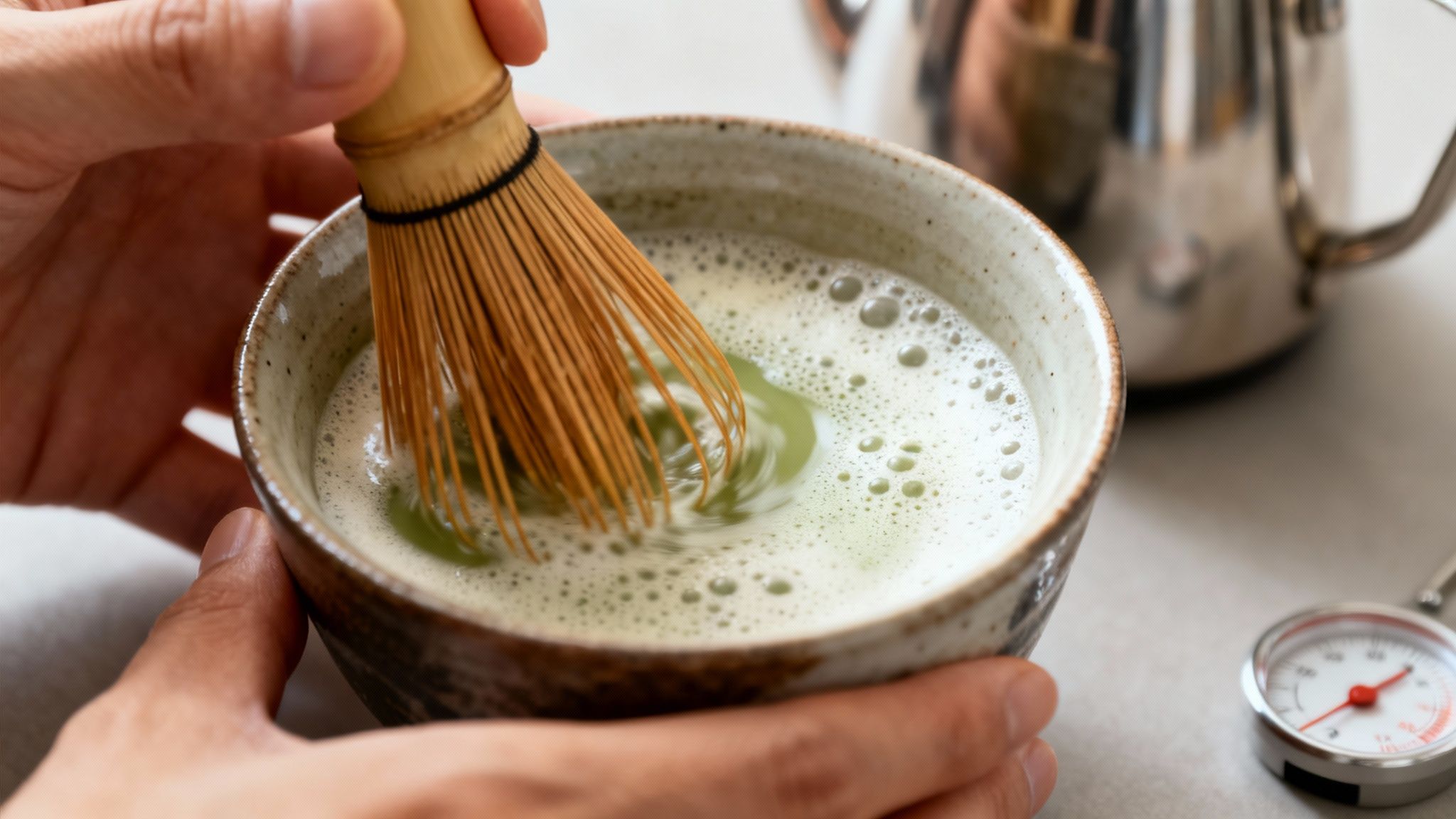
This is it. We've arrived at the heart of the ritual, the part where technique and a bit of mindfulness come together to create something special. We're going to walk through the exact process for a classic usucha (thin tea), focusing on the small details that transform a simple drink into a truly rewarding experience.
Forget just following a recipe; this is about turning a few steps into a daily practice. The aim is a smooth, vibrant, and frothy bowl of matcha that’s packed with flavour and completely free of bitterness or clumps. It’s much easier than it looks, and once you get the hang of it, you’ll be making café-quality matcha in your own kitchen.
The Non-Negotiable First Step: Sifting
If you take only one piece of advice from this entire guide, let it be this: always sift your matcha. Matcha powder is incredibly fine, which means it’s prone to static electricity and clumping. Trying to whisk those tiny clumps away in the bowl is a losing battle that almost always ends in a gritty, uneven brew.
Sifting breaks everything up and aerates the powder, making it a dream to dissolve into the water. It’s the secret to a perfectly smooth, velvety texture every single time. Honestly, it's a tiny step that makes a world of difference.
- How to do it: Just place a small, fine-mesh sieve over your chawan (matcha bowl).
- The amount: Use your chashaku (bamboo scoop) to measure out two scoops—that’s about 1-2 grams—of ceremonial grade matcha into the sifter.
- The action: Gently tap the side of the sifter or use the back of your scoop to push the powder through. You'll be left with a fine, fluffy mound at the bottom of the bowl.
Getting the Water Temperature Just Right
The next critical element is your water. This is where so many people go wrong. Using boiling water is the fastest way to ruin a beautiful bowl of matcha, as it scalds the delicate tea particles and creates a harsh, bitter flavour profile.
The sweet spot is around 80°C (175°F). This is hot enough to dissolve the powder properly but cool enough to coax out its sweet, umami notes. Understanding this is key, and it’s a principle you’ll see in any serious brewing guide, like those exploring the critical role of brewing temperature for other fine beverages.
Pro Tip: Don't have a variable temperature kettle? No problem at all. Just boil the water and let it stand for 2-3 minutes to cool. Another easy trick is to pour the boiling water into a separate cup first, which helps dissipate some heat before it hits your matcha.
Carefully pour about 60-70ml (2-2.5 oz) of your hot water over the sifted matcha. Now, you’re ready for the magic.
The Art of the Whisk
This is where your chasen (bamboo whisk) comes into its own. The goal here isn't just mixing; it's about suspending the matcha particles evenly throughout the water while creating a beautiful, creamy layer of foam on top. It’s all in the wrist.
Before you start, it’s always a good idea to soak the prongs of your chasen in warm water for a minute. This softens the bamboo, making it more flexible and far less likely to snap. We cover more on this in our detailed guide to caring for your matcha green tea bamboo whisk.
- Start slowly. Begin with a few gentle movements to make sure all the matcha at the bottom is incorporated into the water.
- Pick up the pace. Now, lift the whisk ever so slightly so you aren’t scraping the bottom of the bowl. Start whisking rapidly from the wrist in a zigzag pattern, like you’re drawing a quick 'W' or 'M' shape.
- Find your rhythm. Keep this sharp, energetic motion going for about 20-30 seconds. Remember, you aren’t stirring in circles; you're agitating the liquid to whip air into it. You should start to hear a satisfying frothing sound.
- The finishing touch. As a thick foam builds, slow down and gradually raise the whisk towards the centre of the bowl. This helps to break up any large bubbles, leaving you with a delicate microfoam. Gently lift the whisk out from the centre.
And that's it—your matcha is ready. The result should be a stunning bowl of vibrant green tea with a thick, creamy froth blanketing the surface. Take a moment to appreciate the colour and aroma before you take your first sip. It’s a simple, mindful process that sets a perfect tone for the day ahead.
Creative Matcha Recipes Beyond the Bowl
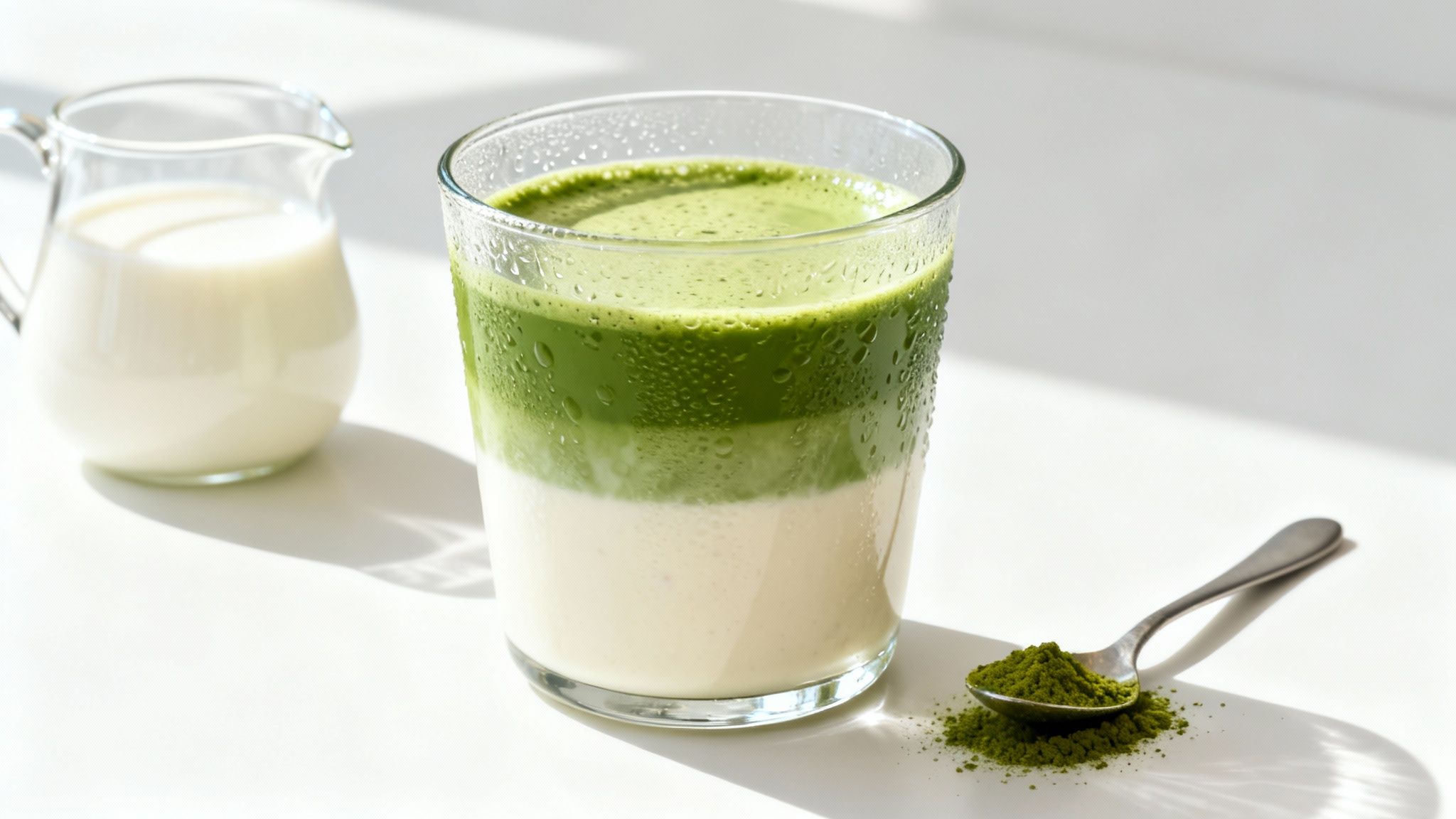
Once you’ve nailed the traditional whisked bowl, the real fun begins. All those skills you've just picked up—sifting, whisking, getting the water temperature just right—are your passport to the kinds of matcha drinks you see in the best cafés.
These recipes show just how versatile matcha is, playing beautifully with everything from cold milk and ice to different sweeteners. It's no wonder that making proper matcha at home has become such a rewarding ritual for so many. The UK matcha tea market alone was recently valued at £219.6 million USD and is on track to hit £234.97 million USD within a year. You can dive deeper into the numbers with this full research on the UK matcha tea market.
The Perfect Iced Matcha Latte
On a warm day, an iced matcha latte is hard to beat. The secret to a great one isn't just dumping powder into cold milk; it's about creating a smooth, concentrated matcha shot first. This ensures it blends perfectly instead of sinking to the bottom in sad little clumps.
For this, you’ll want a good Culinary Grade matcha. Its flavour is bold enough to stand up to milk and sweeteners, so you don't lose that distinct, earthy character.
Here’s our go-to method:
- Sift First: Always sift 1 teaspoon (about 2g) of your culinary matcha into your chawan or a small bowl. This is non-negotiable, even for lattes.
- Make the Concentrate: Pour in 60ml (2 oz) of hot water (aim for 80°C). Whisk like you mean it, using that 'W' motion, until you have a smooth, lightly foamed "espresso shot" of matcha.
- Sweeten (Optional): If you like it sweet, now's the moment. Stir in your sweetener—we find maple syrup or agave nectar work beautifully—while the shot is still warm.
- Build Your Latte: Grab a tall glass and fill it with ice. Pour over 180-200ml (6-7 oz) of your favourite cold milk. To finish, slowly pour the vibrant green matcha shot over the top for that classic layered look. Give it a stir just before you take that first sip.
Crafting a Creamy Dairy-Free Matcha Latte
The explosion of plant-based milks has been a game-changer for matcha lovers. The natural creaminess of oat milk or the subtle nuttiness of almond milk can make for an incredibly rich and satisfying latte. Oat milk, in particular, is a café staple for good reason—it froths up into a beautiful, velvety microfoam.
To make a hot dairy-free version, the process is almost identical to the iced one, just with the added step of warming and frothing your milk.
- Start by preparing your matcha concentrate exactly as above: sift 1 tsp of matcha, add 60ml of 80°C water, and whisk until smooth.
- While that sits for a moment, gently heat 180ml of oat or almond milk on the stove or with a steam wand. The key is to get it hot, not boiling.
- For that true coffee-shop texture, use an electric milk frother to create a light, airy foam.
- Pour the frothed milk into your mug, then pour the matcha concentrate right into the centre.
A Quick Tip on Sweeteners
Not all sweeteners are created equal when it comes to matcha. We find honey can sometimes overpower the tea's delicate notes, whereas maple syrup adds a complementary earthy sweetness. It’s worth experimenting to find your perfect match.
For the Enthusiast: Koicha (Thick Tea)
If you've truly fallen for matcha's deep, umami-rich character, then you must try koicha. This isn’t your everyday matcha; it's a much thicker, more intense preparation traditionally reserved for Japanese tea ceremonies. Forget the light froth of usucha—koicha is a potent, syrupy brew with the consistency of warm honey.
Making koicha demands the absolute best Ceremonial Grade matcha you can get your hands on, as any hint of bitterness will be amplified.
The ratio is where everything changes:
- Matcha: Double the usual amount, around 2 teaspoons (4g).
- Water: Halve the usual amount, just 30ml (1 oz) of 80°C water.
Instead of a brisk whisk, you'll use a slow, deliberate kneading motion with the chasen. Gently fold the powder and water together until they form a smooth, thick paste. The goal is a glossy, vibrant green liquid with absolutely no foam. Drinking koicha is a profound experience, offering the purest expression of the tea's soul.
Getting to Grips with Common Matcha Mistakes
Don't worry if your first few bowls of matcha aren't quite perfect. It’s a craft, and like any craft, there's a bit of a learning curve. The great news is that the most common issues are surprisingly easy to sort out once you know what to look for.
Think of this as your troubleshooting guide. We’ll walk through the usual suspects – from lumps and bitterness to a lack of froth – and give you the straightforward fixes to get you back on track. With a few small tweaks, you'll be whisking up a flawless, frothy bowl every single time.
Why Is My Matcha Lumpy?
You've whisked with determination, but your matcha is still dotted with little green specks that refuse to dissolve. Those clumps are the arch-nemesis of a good bowl, creating a gritty texture that completely ruins that smooth, velvety mouthfeel we're all after.
The culprit is almost always a combination of static and moisture. Matcha powder is so incredibly fine that it naturally clings together, and trying to break up those clusters with just a whisk is an uphill battle.
Fortunately, the solution is simple and, for anyone serious about their matcha, completely non-negotiable.
- Always, always sift your matcha. Just pop a small, fine-mesh sieve over your bowl and gently push the powder through before you add any water. This single step breaks up every clump and aerates the powder, making it a dream to whisk into a smooth liquid.
What Makes Matcha Taste Bitter?
A sharp, bitter aftertaste is the number one complaint from people new to matcha, and it's a dead giveaway that something’s gone wrong. A high-quality ceremonial grade matcha should be smooth, savoury, and even a little sweet—never harsh or astringent.
So, what causes it? In almost every case, you've accidentally burnt the delicate tea particles.
The single biggest cause of bitter matcha is using water that’s too hot. Boiling water literally scorches the fine powder, obliterating its complex, nuanced flavours and releasing tannins that create that unpleasant, bitter taste.
Aim for a water temperature of around 80°C (175°F). If you don’t have a fancy variable temperature kettle, no problem. Just boil your water, then let it sit for a few minutes to cool down before pouring it over the powder. This one small change will completely transform your matcha.
I Can't Get My Matcha to Froth
That beautiful, creamy layer of tiny bubbles (the usucha microfoam) is the hallmark of a beautifully prepared bowl of matcha. If you're whisking away but only managing a few sad, large bubbles, it usually points to a problem with your technique, tools, or ratios.
To get that signature froth, you need to whip air into the tea effectively.
- Check your whisking motion. Are you just stirring in circles? That’s not going to do it. You need a rapid, energetic zigzag motion—think of drawing a 'W' or an 'M' back and forth across the bowl very quickly.
- Use the right amount of water. Too much water makes it almost impossible to build a decent froth because the matcha is too diluted. Stick to the classic ratio of around 60-70ml of water for your 2g of matcha.
- Is your chasen (whisk) happy? A bamboo whisk with bent or broken prongs won't work as well. Remember to soak the tines in warm water for a minute before each use to make them soft and flexible.
How to Keep Your Matcha Fresh and Vibrant
Has your matcha powder lost its electric-green colour, or does it smell a bit dull and dusty? That’s almost certainly a storage issue. Matcha is incredibly sensitive to the elements—oxygen, light, and heat will all quickly degrade its quality, robbing it of its flavour and vibrancy.
Proper storage is crucial to protect your investment and ensure every bowl tastes as amazing as the first.
Once you open a tin, try to use the matcha within one to two months. Always store it in a truly airtight container (the tin it arrives in is designed for this) and keep it somewhere cool and dark, like a cupboard. For ultimate freshness, many people store unopened tins in the fridge.
A Few Final Matcha Questions
Even after you've got the basics down, a few questions always seem to pop up. Think of this as a quick-fire round to tackle the most common queries we hear, helping you refine your technique and really get to know this incredible tea.
We’ve pulled together some straightforward answers to help you troubleshoot, ensuring every bowl you whisk up is a pleasure.
How Much Caffeine Is In Matcha Compared To Coffee?
This is probably the question we get asked most often, and it's not a simple numbers game. A typical serving of matcha (about one gram of powder) has somewhere between 35-70mg of caffeine. For comparison, an average cup of coffee usually lands around the 95mg mark, sometimes much higher.
But that's only half the story. The real magic of matcha lies in an amino acid called L-theanine. It works alongside the caffeine, creating a state of calm alertness—a focused energy that can last up to six hours. You get the lift without the jitters or the dreaded afternoon crash that coffee can bring. It’s a completely different feeling.
Can I Make Matcha Without A Bamboo Whisk?
While the traditional bamboo whisk, or chasen, is absolutely the best tool for the job, you can definitely get by without one. The goal is simply to suspend the fine powder in the water and create a bit of foam, and a few household items can do the trick.
Here are your best bets:
- Electric Milk Frother: This is easily the best substitute. A small handheld frother is fantastic for mixing the powder evenly and whipping up a creamy foam in seconds.
- A Sealed Jar: It sounds odd, but it works surprisingly well in a pinch. Just pop your sifted matcha and hot water into a clean jar, screw the lid on tight, and shake it like you mean it for about 30 seconds.
- A Blender: If you're making a big batch of iced lattes, a blender is a decent option. It’s usually overkill for a single serving, though.
One thing to avoid is a standard kitchen whisk. It’s just too big and clumsy for a small matcha bowl and won't give you the texture you're looking for.
What Should I Look For In High-Quality Matcha?
Learning to spot exceptional matcha is a skill, but once you know the signs, it's easy. A high-quality ceremonial grade matcha should be a treat for all your senses, not just your taste buds.
A truly premium matcha announces its quality before you even add water. That vibrant colour, silky feel, and fresh, sweet smell are all hallmarks of the care that went into growing and grinding it.
Keep an eye out for these three signs:
- Colour: It has to be a vibrant, almost electric, green. If it looks dull, yellowish, or brownish, that’s a red flag for lower quality, older leaves, or poor storage.
- Texture: The powder should feel incredibly fine and silky, almost like talc. A gritty or coarse texture means it wasn't ground with the same care and precision.
- Aroma and Taste: Before you even whisk it, it should smell fresh, sweet, and slightly grassy. When you taste it, it should be smooth and rich with that signature umami character, not just bitter.
What Food Pairs Well With Matcha Tea?
Matcha's complex, savoury-sweet flavour profile is surprisingly versatile when it comes to food. The idea is to find a partner that complements its taste without stealing the show.
In Japan, matcha is traditionally served with wagashi—small, artistic sweets often made from mochi or sweet bean paste. They’re designed specifically to balance the tea's umami notes.
You don't need to be so formal at home, though. Anything with a gentle sweetness works beautifully. Why not try pairing your bowl with:
- A square of really good dark chocolate
- A simple shortbread biscuit
- Mochi or even a small scoop of vanilla ice cream
- Fresh berries or a slice of melon
Just try to steer clear of anything too spicy or overpowering. You don’t want to mask the delicate, nuanced taste of a perfectly prepared bowl of matcha.
Ready to start your own matcha ritual? At Jeeves & Jericho, we source exceptional ceremonial and culinary grade matcha directly from the esteemed tea fields of Uji, Japan, ensuring every tin is packed with vibrant colour and rich flavour. Explore our collection and find the perfect matcha to elevate your daily routine. https://www.jeevesandjericho.com