


At its core, making loose leaf tea is beautifully simple. Just add about one teaspoon of quality leaves to your mug, pour over hot water that’s the right temperature for that specific tea, let it steep for a few minutes, and you’re done. It's this small shift away from the humble teabag that can completely transform your daily cup into something far richer and more flavourful.
From Teabags to a Richer Brew
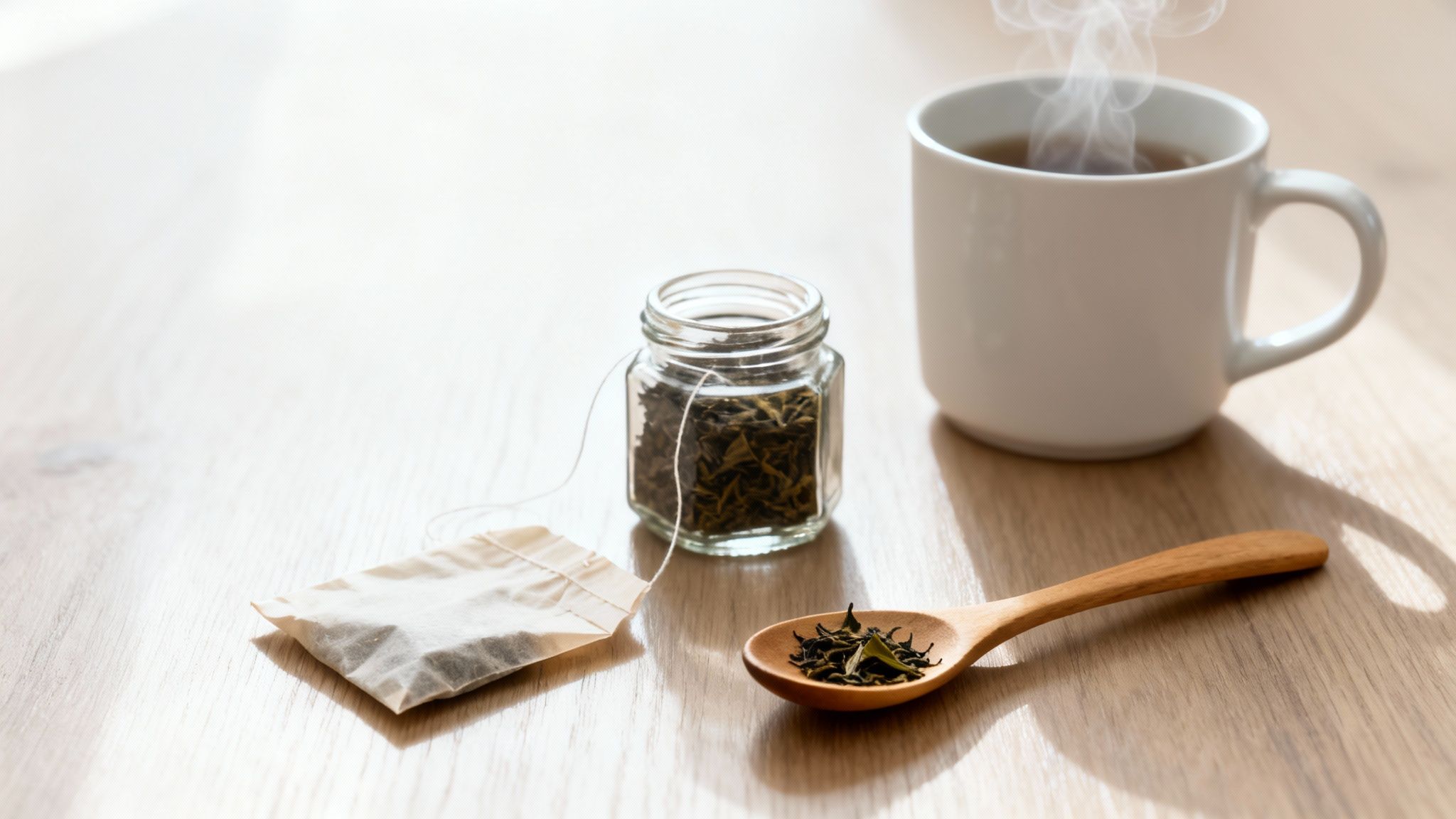
If you've spent years dunking teabags, the world of loose leaf can feel a bit daunting. But trust me, it’s far less about complicated rituals and much more about getting a few simple things right to unlock incredible flavour.
The real difference is all in the leaf itself. Most teabags are filled with "fannings" or "dust"—tiny, broken bits of tea that infuse very quickly. The trade-off is often a flat, one-dimensional, and sometimes bitter brew. Loose leaf tea, on the other hand, uses whole or larger pieces of leaves, which hold onto their essential oils and all those lovely, complex flavour compounds.
Why Make the Switch?
Moving to loose leaf isn't about being a connoisseur; it’s simply about getting a better cup of tea. When you give those larger leaves the space to unfurl in hot water, they release a depth of aroma and nuance that a teabag just can't compete with. Suddenly, your brew is less of a quick caffeine fix and more of a genuinely rewarding daily ritual.
Of course, for many of us here in the UK, the teabag habit is deeply ingrained. A 2025 census by the UK Tea & Infusions Association found that 93% of us prefer the convenience of teabags, and a whopping 73% brew our black tea for less time than recommended. If you're curious, you can read more about these UK tea habits and see how a small change in your routine can make all the difference.
By embracing a few simple techniques, you're not just making tea; you're crafting an experience. You get to control the strength, flavour, and character of every single cup, tailoring it perfectly to your own taste.
So, What Can You Expect?
Once you step away from the bag, a whole world of taste and tradition opens up. You’ll start to discover a spectrum of flavours you probably never knew existed in tea. Here’s what you’ll notice almost immediately:
- Superior Flavour and Aroma: Whole leaves deliver a much richer, more complex taste profile, free from the harsh bitterness you sometimes get from over-steeped teabag dust.
- A World of Variety: You’ll find an incredible diversity of single-origin teas and unique blends from across the globe that you just don't find in standard teabags.
- Total Control Over Your Brew: It's easy to adjust the amount of leaf and the steep time to make your tea stronger, weaker, or just a bit different each time you brew.
- Proper Value for Money: Many high-quality loose leaf teas can be steeped more than once. This not only offers a dynamic tasting experience but also makes them more economical in the long run.
This guide is here to walk you through everything, turning what might seem like a faff into an effortless and enjoyable daily practice.
Your First Perfect Cup: A Quick Guide
To get you started, here's a cheat sheet with the key details for brewing the most common types of loose leaf tea. Think of it as your starting point—feel free to experiment from here!
| Tea Type | Leaf Amount (per 250ml) | Water Temperature | Steep Time |
|---|---|---|---|
| Black Tea (e.g., Assam, Earl Grey) | 2-3g (1 tsp) | 95-100°C (Just off the boil) | 3-5 minutes |
| Green Tea (e.g., Sencha, Jasmine) | 2-3g (1 tsp) | 75-85°C (Steam, no bubbles) | 1-3 minutes |
| White Tea (e.g., Silver Needle) | 3-4g (1.5 tsp) | 70-80°C (Gentle steam) | 2-4 minutes |
| Oolong Tea (e.g., Tie Guan Yin) | 3-5g (1-2 tsp) | 85-95°C (Visible steam) | 2-5 minutes (multiple steeps) |
| Herbal Infusions (e.g., Peppermint) | 2-3g (1-2 tsp) | 100°C (Full boil) | 5-7 minutes |
These are tried-and-tested guidelines, but the best cup of tea is always the one you enjoy the most. Don't be afraid to tweak the numbers to find what works for you.
Choosing Your Tea Brewing Tools
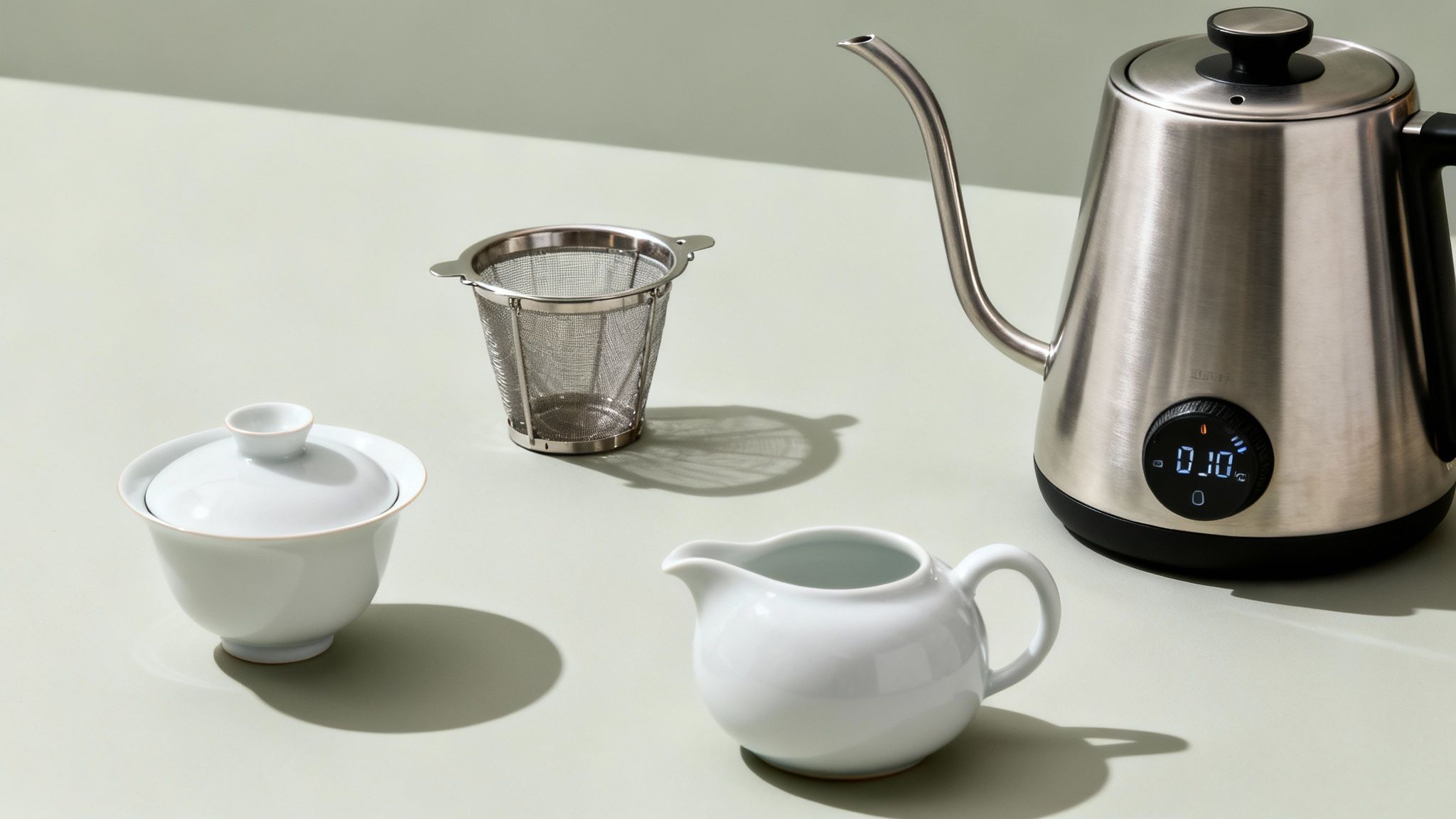
You absolutely don’t need a cupboard overflowing with expensive gear to make a fantastic cup of loose leaf tea. The right tools, however, can make the whole process smoother and more enjoyable, and most importantly, they help your leaves release their full, glorious flavour. Let’s have a look at the essentials that will make all the difference.
The Heart of the Brew: The Kettle
First things first, your kettle. While any kettle will boil water, I can’t stress enough how much of a game-changer a variable temperature model is. It’s a small investment that pays huge dividends, especially if you’re venturing into the world of delicate green or white teas.
Sure, boiling water (100°C) is fine for a robust black tea or a herbal infusion, but it will absolutely scorch more sensitive leaves. The result? A bitter, astringent brew that’s a shadow of what it could be. A variable temperature kettle removes all the guesswork. No more boiling and waiting for it to cool; you just set it to 80°C for your green tea, pour, and you're done.
Giving Leaves Room to Breathe: Infusers and Strainers
To get the most out of loose leaf tea, you need a way to keep the leaves out of your cup while giving them space to work their magic. This is where an infuser comes in, but they’re not all created equal. The golden rule is to give the leaves as much room as possible to expand and unfurl.
Here are a few of the most common options:
- Basket Infusers: Honestly, these are often the best choice for brewing a single mug. They sit right inside your cup and provide a lovely, wide-open space for the leaves to circulate. This means you get a much more even extraction and a richer, more complex flavour.
- Ball Infusers: We’ve all seen them, and while they’re neat and tidy, those little spheres often cramp the tea’s style. They just don't give the leaves enough room to properly expand, which can lead to a weaker, underdeveloped brew. They're okay in a pinch, but not ideal for larger whole-leaf teas.
- Teapots with Built-in Strainers: A classic for a reason. A good teapot is perfect when you’re making tea for more than one. Just look for one with a large, removable infuser basket. It makes cleaning a breeze and ensures your tea has plenty of space to swim.
If you’re keen to explore this a bit more, our guide on the best tea infusers for cups breaks down the pros and cons in more detail, helping you find the right fit for your daily cuppa.
Getting a Little More Adventurous
Once you've got the basics down, you might feel the pull to explore some of the more traditional brewing methods. These tools aren't complicated, but they open up a whole new world of tea tasting.
A gaiwan is a brilliant, inexpensive piece of kit for this. It’s simply a lidded bowl with no handle, and it’s central to the Chinese Gongfu brewing style. With a gaiwan, you use a lot more leaf to a little less water, and brew for very short bursts of time. This lets you make multiple infusions from the same leaves, with each steep revealing a slightly different facet of the tea’s personality. It’s a wonderfully dynamic way to experience your tea.
Choosing your tools is all about finding what fits your lifestyle. Whether it's a simple basket infuser for your morning brew or a gaiwan for a quiet afternoon ritual, the right gear makes the process effortless and so much more rewarding.
And for when you're on the move, handy things like collapsible travel cups mean you can still enjoy a proper loose leaf brew without lugging around a bulky flask.
Ultimately, you don't need to overcomplicate things. A good kettle and a spacious infuser will elevate your tea game immensely. Start there, and you’ll be well on your way to mastering the simple art of a perfect cup of tea.
Mastering the Art of the Brew

This is where we move from just making tea to truly crafting it. When you get a feel for the four pillars of brewing—leaf quantity, water volume, temperature, and time—you get the power to unlock the full potential of your tea leaves. It’s less about rigid rules and more about understanding the 'why' behind them.
Once you grasp these core concepts, you'll start to intuitively know how to get the best out of any tea you encounter. This knowledge is your key to brewing with confidence, experimenting with purpose, and consistently making a cup that tastes exactly how you want it to.
The Four Pillars of a Perfect Brew
Think of these four elements as the dials you can adjust to perfect your brew. Each one has a significant impact on the final taste, and learning to balance them is the essence of mastering how to drink loose-leaf tea.
- Leaf Quantity: How much tea you use. More leaf generally means a stronger, more robust flavour.
- Water Volume: The amount of water you're brewing with, which works hand-in-hand with leaf quantity to set the overall strength.
- Water Temperature: This is crucial. Too hot, and you can scorch delicate leaves; too cool, and you won’t extract the full flavour.
- Steep Time: How long the leaves mingle with the water. Longer steeping extracts more compounds, but can easily lead to bitterness if overdone.
Getting these right transforms your tea from a simple drink into a complex and satisfying experience.
Why Temperature Matters So Much
If there’s one pillar that beginners often overlook, it’s water temperature. Pouring boiling water over a delicate Japanese Sencha is a recipe for disaster; it scalds the leaves, releasing a flood of tannins and resulting in a harsh, bitter brew. This happens because the flavour compounds in green tea are much more soluble at lower temperatures.
On the other hand, a robust black tea or a dense, rolled oolong needs that near-boiling heat to fully open up and release its deep, rich flavours. Using water that's too cool will just leave it tasting weak and underdeveloped. A variable temperature kettle makes this incredibly easy, but you can also just let a boiled kettle sit for a few minutes to cool down.
Understanding the relationship between tea type and water temperature is perhaps the single biggest leap you can make in improving your brew. It’s the difference between a cup that makes you wince and one that makes you close your eyes in appreciation.
The Art of Multiple Infusions
One of the greatest joys of quality loose-leaf tea is its ability to be steeped multiple times. This isn't about being frugal; it's about experiencing the tea's evolving character. Many teas, particularly oolongs and pu-erhs, are specifically crafted to reveal different layers of flavour with each subsequent infusion.
The first steep might be bright and floral. The second could become richer and creamier, while a third might reveal deeper, more mineral notes. This dynamic tasting journey is something you simply can't get from a teabag designed for a single hit.
To try this, simply drain all the water from your leaves after the first infusion. When you're ready for another cup, just add hot water again, perhaps increasing the steep time slightly for each new round. It’s that simple.
A Deeper Dive Into Brewing Parameters
Moving beyond generic guidelines allows for true mastery. The table below offers more specific starting points for a wider variety of teas, including notes on how their flavour profiles can evolve over multiple steepings. Think of this as a foundation for your own experimentation.
Comprehensive Brewing Guide by Tea Type
| Tea Type | Leaf-to-Water Ratio | Ideal Water Temperature (°C) | First Steep Time | Subsequent Steep Times | Tasting Notes |
|---|---|---|---|---|---|
| Green (Sencha) | 3g per 200ml | 75-80°C | 45-60 seconds | Add 15-20 seconds | Grassy, marine, umami; can become sweeter. |
| White (Silver Needle) | 4g per 200ml | 80-85°C | 2-3 minutes | Add 1 minute | Delicate, melon, honey; light and subtle. |
| Oolong (Tie Guan Yin) | 5-6g per 150ml | 90-95°C | 1-2 minutes | Add 30 seconds | Floral, creamy, orchid; develops complexity. |
| Black (Assam) | 3g per 200ml | 95-100°C | 3-4 minutes | N/A (usually one steep) | Malty, bold, brisk; full-bodied. |
| Pu-erh (Shou) | 5g per 150ml | 100°C (Boiling) | 15 sec rinse, then 30 sec | Add 10-15 seconds | Earthy, dark, smooth; mellows with each steep. |
Notice how the ratios and times change. A dense, tightly rolled oolong requires more leaf and can handle hotter water and repeated infusions. A delicate white tea, however, needs a gentler touch to coax out its subtle sweetness.
Ultimately, brewing loose-leaf tea is a personal craft. These guidelines are your map, but your palate is your compass. Pay attention to how small adjustments—a little less leaf, 10 seconds less steeping, slightly cooler water—change the taste in your cup. This mindful approach is what elevates brewing from a routine to a rewarding ritual.
Exploring Different Brewing Methods
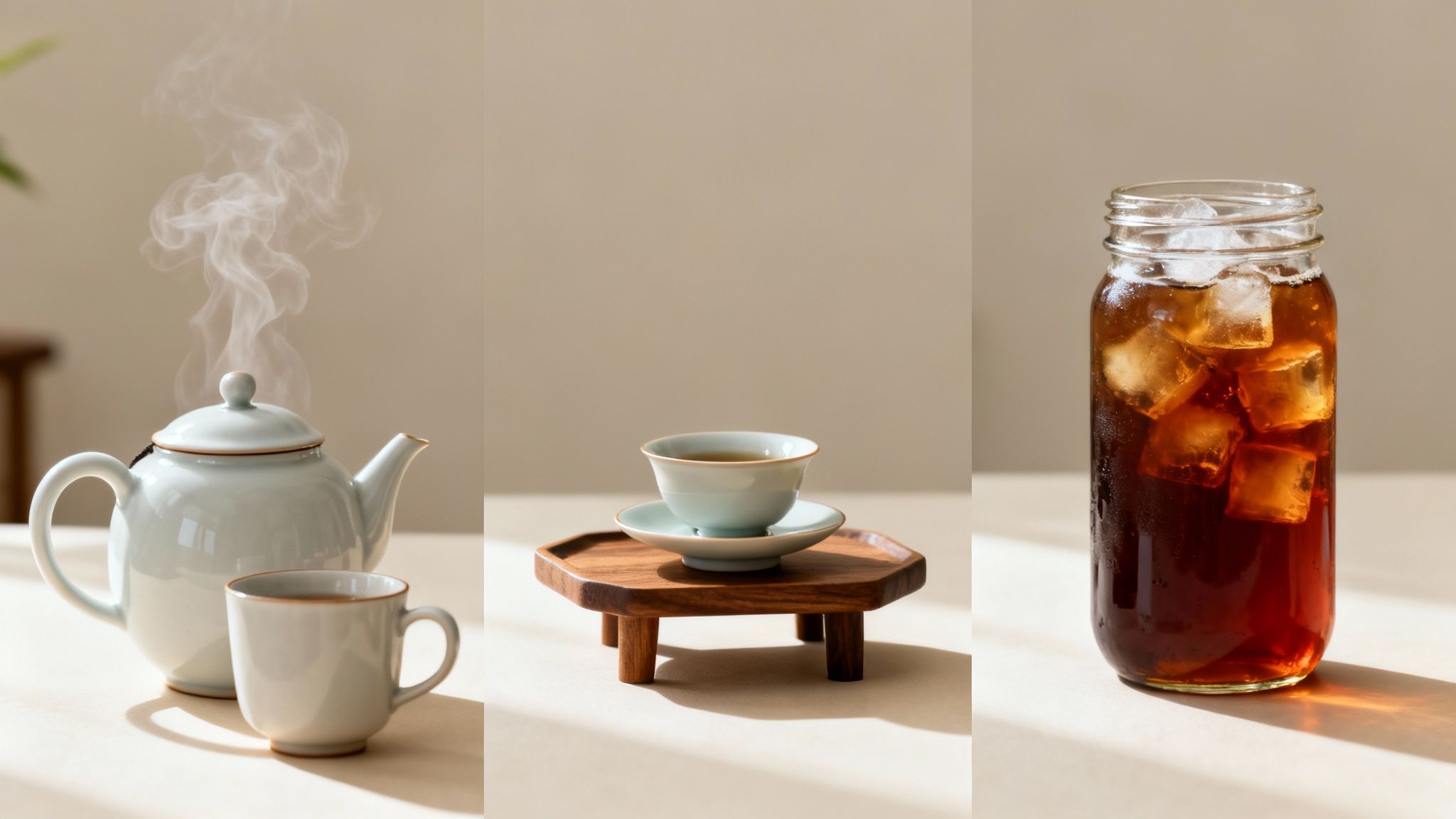
Let's be clear: there’s no single "right" way to brew loose-leaf tea. The best method is whatever fits your mood, your schedule, and the specific leaves in front of you. It's all about finding a ritual that you genuinely enjoy.
We’ll explore three brilliant, but very different, approaches here. Each one offers a unique experience, whether you're after a big, comforting mug, an intricate tasting session, or a crisp summer refreshment. Knowing these gives you the freedom to make the perfect cup, whatever the occasion.
The Classic Western Style Teapot
This is probably what comes to mind when you think of making tea. It’s the cornerstone of a proper British cuppa, designed for brewing a generous amount to share or to pour from throughout the morning. The logic is simple: a small amount of tea, a large volume of water, and a relatively long steep.
This approach is perfect for robust black teas like a malty Assam or a classic English Breakfast, as well as many herbal infusions. It produces a consistent, reliable brew that’s made for a big mug—often with a splash of milk.
Here's how it's done:
- First, warm your teapot by swilling some hot water around inside, then pour it out. This simple step helps keep the brewing temperature stable.
- Add your leaves to the pot. A good rule of thumb is one teaspoon per person, plus one for the pot.
- Pour over water at the right temperature for your chosen tea.
- Let it all steep for the recommended time—usually 3-5 minutes for black teas.
- Pour through a strainer into your favourite cup and settle in.
The Gongfu Cha Method
Translating to "making tea with skill," Gongfu Cha is a traditional Chinese brewing style that flips the Western method on its head. Instead of one large brew, you use a lot of leaf in a tiny vessel—like a gaiwan or a small Yixing clay pot—and steep it for just a few seconds at a time.
The goal isn't to make a big drink; it's to conduct a tasting. You use the same leaves over and over, sometimes for ten infusions or more. Each steep coaxes out a different layer of the tea's character. The first might be light and floral, the next richer and deeper, and later infusions could reveal mineral or fruity notes you’d otherwise miss.
Gongfu Cha turns tea from a simple drink into a mindful exploration of flavour. It’s a fantastic way to truly appreciate the complexity of high-quality oolong, pu-erh, and some delicate white teas.
This method does ask for a bit more of your attention, but the payoff is immense. It creates a much more intimate connection with the tea, letting you watch its flavour profile evolve in real-time. It’s perfect for a quiet afternoon when you can really focus on the nuances in your cup.
The Simplicity of Cold Brewing
For a completely hands-off approach that creates an unbelievably smooth and refreshing iced tea, you can't beat cold brewing. It’s practically foolproof. By using cold water, you gently extract the tea's sweet, delicate compounds without ever drawing out the bitter tannins that can come from over-steeping with hot water.
The process is as simple as it sounds. Just combine your loose tea leaves with cold, filtered water in a jar or pitcher and pop it in the fridge to infuse. No kettle, no timers, no fuss. It works beautifully with a huge range of teas, from fruity greens to floral oolongs and even lighter black teas.
Because the extraction is so gentle, the finished brew is naturally sweet and exceptionally smooth. If you fancy giving it a go, you can find our full guide on how to make cold brew tea here: https://www.jeevesandjericho.com/blogs/news/how-to-make-cold-brew-tea
Here’s a quick look at how the three methods stack up:
| Feature | Western Style | Gongfu Cha | Cold Brew |
|---|---|---|---|
| Vessel | Large Teapot | Small Pot or Gaiwan | Jar or Pitcher |
| Leaf Ratio | Low (e.g., 5g for 500ml) | High (e.g., 6g for 100ml) | Medium (e.g., 10g for 1L) |
| Steep Time | Long (3-5 minutes) | Short (15-60 seconds) | Very Long (8-12 hours) |
| Best For | Daily drinking, sharing | Flavour exploration, tasting | Iced tea, zero bitterness |
| Flavour | Consistent, full-bodied | Evolving, complex | Smooth, sweet, subtle |
Ultimately, how you brew your tea is a personal choice. Don't be afraid to experiment with these different styles—you’ll soon find what works best for you.
Sourcing and Storing Your Tea Leaves
A truly exceptional cup of tea starts long before you even think about boiling the kettle. It begins with high-quality leaves, sourced with care and, just as importantly, stored correctly. You can have the best brewing technique in the world, but if your tea leaves aren’t up to scratch, you’ll never get the flavour you’re after.
The first thing to know is that tea leaves are delicate. They have four main enemies: light, air, moisture, and strong odours. Tea is incredibly absorbent, meaning it will quickly lose its own aroma and soak up the smells of that strong coffee or spice collection in your cupboard.
Protecting your tea is much like knowing how to store coffee beans for maximum flavour—the goal is to create a stable, protected environment to keep everything tasting its best.
Keeping Your Tea Fresh
So, how do you protect the vibrant character of your tea? First things first, get it out of that paper bag it came in. Once opened, it offers almost zero protection.
You need to give your leaves an airtight, light-proof home. Here are a few solid options:
- Metal Tea Tins: The classic choice for a reason. They completely block out light and, provided they have a snug-fitting lid, do a brilliant job of keeping air out.
- Opaque Ceramic Canisters: A stylish option that looks great on the worktop. Most come with a silicone seal, which creates a proper airtight closure.
- Airtight Glass Jars (but only in a dark place): While it's lovely to see your tea leaves, glass is only a good option if you store it in a dark cupboard. Direct sunlight will degrade your tea surprisingly quickly.
Simply transferring your tea into one of these containers the moment you get it home will make a massive difference to its shelf life. For a deeper dive, check out our guide on how to store loose leaf tea.
Finding Quality Tea Leaves
With your storage sorted, it's time to find tea worth protecting. The world of loose leaf can feel a bit overwhelming, but a few key terms will help you choose teas that take your daily brew from ordinary to outstanding.
You’ll see the term ‘single-origin’ pop up a lot. This just means the tea comes from one specific place—a particular region, or even a single tea estate. A bit like with wine or coffee, this lets you taste the unique terroir, which is the distinct flavour profile created by that area's soil, climate, and altitude. It's how you discover the incredible difference between a Darjeeling from India and a Ceylon from Sri Lanka.
Choosing to buy from reputable suppliers who are transparent about their sourcing not only guarantees a better-tasting cup but also supports a more sustainable and ethical industry. It connects you to the journey of the leaf, from the farm to your teapot.
The growing appetite for high-quality loose leaf is making a real impact. If loose leaf currently makes up about 30% of UK tea sales by volume, it could account for over 19 million kilograms consumed annually by 2025. That's a significant shift in consumer habits that could reshape everything from packaging to sustainability in the industry for the better.
Your Top Loose Leaf Tea Questions Answered
When you first dive into the world of loose leaf tea, it’s only natural to have a few questions. It’s a simple change, but one that makes a world of difference to your daily brew. We get asked these all the time, so here are some straightforward answers to help you get started with confidence.
Is Loose Leaf Really Better Than Teabags?
In a word, yes. The difference in flavour and quality is night and day. Most of the teabags you find in the supermarket are filled with ‘fannings’ or ‘dust’ – tiny, broken bits of tea leaves. They brew a strong cup very quickly, but the taste is often flat, bitter, and one-dimensional because all the aromatic essential oils have long since disappeared.
Loose leaf tea, on the other hand, is made from whole or large pieces of leaves. These larger leaves hold onto all their complex oils and compounds, which is where the real depth of character and flavour comes from. They also need room to properly unfurl and expand as they steep, something a cramped paper bag just doesn’t allow.
Think of it like cooking with fresh herbs versus dried flakes from a jar. Both will add some flavour, but the fresh version offers a vibrancy, aroma, and complexity that the other simply can't match. That’s the leap you make when you switch to loose leaf.
While some of the fancier pyramid-style teabags give the leaves a bit more space, you still can’t beat the full, unrestricted infusion you get when the leaves can dance freely in the water.
How Do I Measure Loose Leaf Tea Without a Scale?
A small digital scale is great for pinpoint accuracy, but it’s definitely not essential. The easiest way to measure your tea is with a good old-fashioned teaspoon.
The classic ‘one teaspoon per mug’ rule is a brilliant place to start. For a standard 250ml cup, this usually works out to around 2-3 grams. But you'll quickly realise that teas come in all shapes and sizes, so you need to use your eyes a bit.
Here’s a simple guide to adjusting on the fly:
- For light, fluffy teas like a White Peony or Silver Needle, which take up a lot of space, go for a generous, heaping teaspoon.
- For dense, tightly rolled teas like a Gunpowder green or a rolled oolong, a level or even slightly scant teaspoon will do the trick.
Think of this as a starting point, not a strict rule. If your first brew feels a little weak, just add a bit more tea next time. Too strong? Use a little less. Before you know it, you’ll have a knack for eyeballing the perfect amount for your taste.
Can I Reuse My Loose Leaf Tea Leaves?
Absolutely! In fact, you should. Re-steeping your leaves is one of the best things about drinking high-quality loose leaf tea. It’s not about being stingy; it’s about experiencing how the tea’s flavour profile evolves with each cup.
Many teas, especially oolongs, pu-erhs, and some green and white teas, are meant to be infused multiple times. Each infusion will unlock a new layer of flavour. The first steep might be bright and floral, the second may become richer and creamier, and a third could bring out deeper, earthy notes. It's a journey of discovery in a cup that you just don't get with a teabag.
It’s easy to do. After your first brew, just be sure to drain all the water away from the leaves so they don’t keep stewing. When you’re ready for another round, just add hot water again. A good tip is to increase the steep time by 30-60 seconds for each new infusion to coax out the flavour. Not only is it a more interesting way to drink tea, but it also makes your stash go a lot further.
At Jeeves & Jericho, we believe that a truly exceptional cup of tea should be an experience, not just a drink. Explore our carefully curated collection of single-origin and blended whole leaf teas to discover a world of flavour. Find your new favourite brew at https://www.jeevesandjericho.com.