


At its heart, the difference between loose leaf tea and tea bags boils down to two things: quality and space. Loose leaf tea is all about whole, unbroken leaves that need room to unfurl and release their complex flavours. Tea bags, on the other hand, typically contain smaller, broken particles that brew quickly but often lack the same depth.
It really comes down to what you’re looking for in your cup – a richer, more sensory experience or ultimate convenience.
Understanding the Great Tea Debate
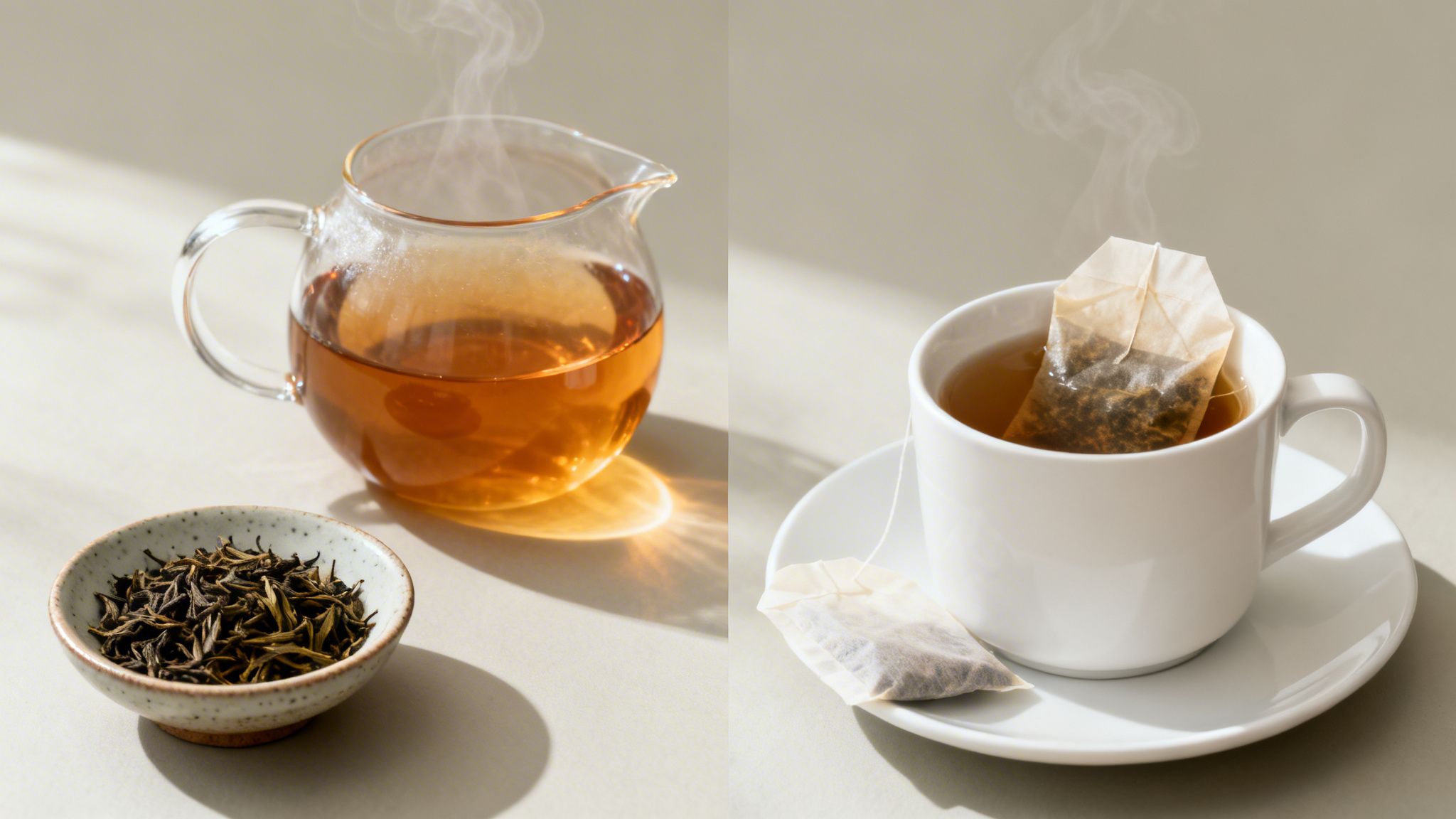
For so many of us, the daily brew is a cherished ritual. But whether you reach for a pre-packaged tea bag or measure out loose leaves can spark quite the passionate discussion amongst tea lovers. This isn't just about personal taste; it’s a choice that shapes everything from the flavour and aroma in your cup to your environmental footprint.
Believe it or not, all tea was once "loose leaf." The tea bag is a relatively new invention, born out of a desire for speed and ease in the early 20th century. While it certainly made tea more accessible to the masses, this convenience often came at the cost of quality. Now, as people become more interested in where their tea comes from and how it tastes, many are rediscovering the simple joy of brewing tea in its more traditional form.
So, let's break it down properly. This guide will take you through a detailed comparison, helping you see beyond the surface to understand what really sets these two formats apart. We'll explore the key differences so you can make a choice that truly suits your taste, lifestyle, and values.
| Feature | Loose Leaf Tea | Standard Tea Bags |
|---|---|---|
| Leaf Quality | Primarily whole or large, high-grade leaves. | Often contains smaller particles ("fannings" or "dust"). |
| Flavour Profile | Complex, nuanced, and multi-layered. | Brisk, strong, but often one-dimensional or bitter. |
| Brewing Space | Leaves have ample room to expand and infuse fully. | Confined space restricts leaf expansion and extraction. |
| Environmental Impact | Minimal waste, often compostable. | Can contain plastics, tags, and excess packaging. |
| Cost Per Cup | Higher initial cost but often cheaper due to re-steeping. | Lower upfront cost but designed for single use. |
Unlocking True Flavour and Aroma
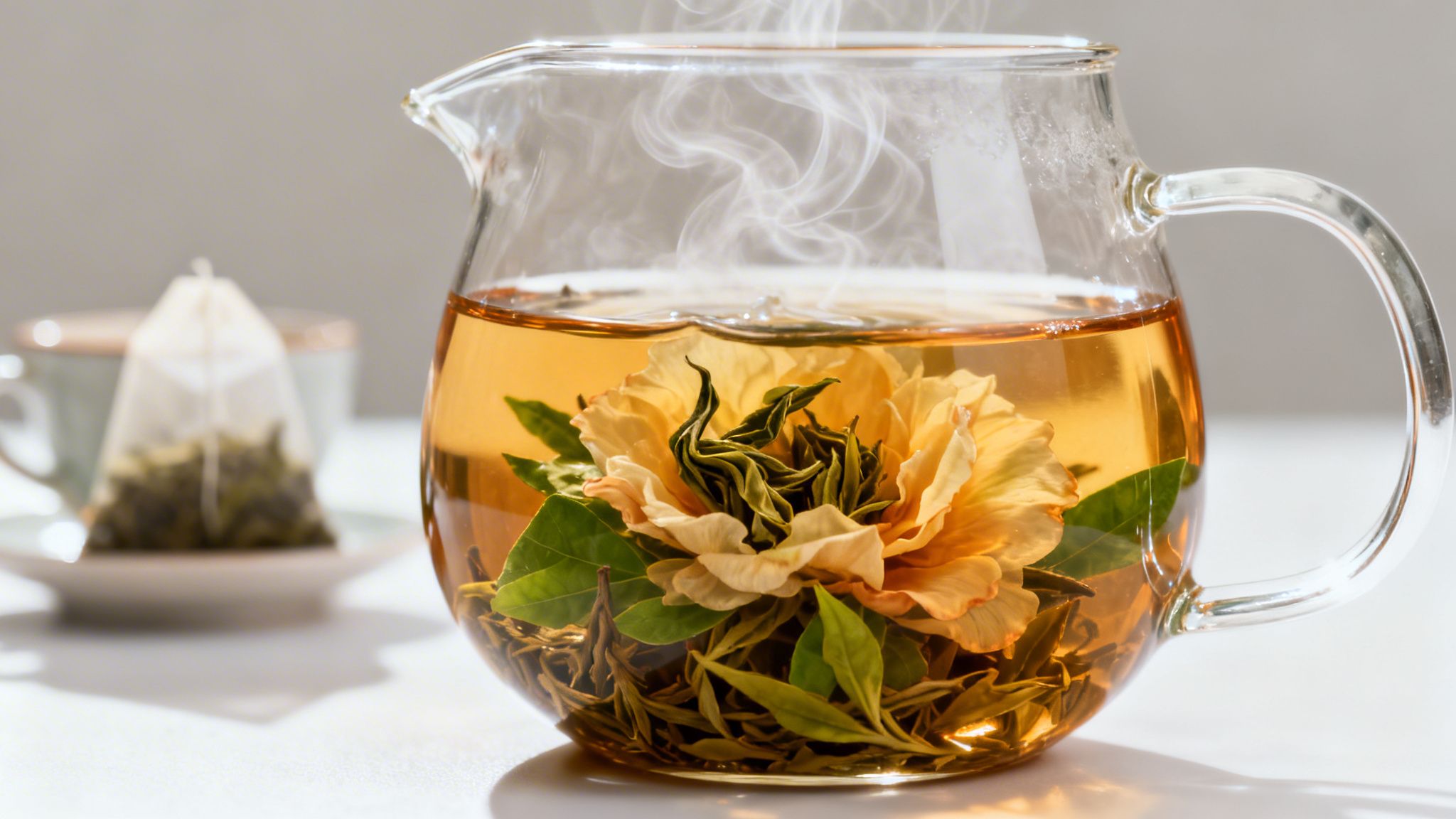
Let's get straight to it. The most convincing reason to choose loose leaf tea over a standard teabag is the sheer difference in flavour and aroma you get in the cup. This isn't just a matter of opinion; it’s a direct result of how the tea infuses.
Loose leaf tea is made up of whole or large, carefully cut tea leaves. When you add hot water, something beautiful happens. The leaves have room to unfurl, rehydrate and gently dance around in the pot.
This freedom of movement is everything. It allows the water to circulate evenly, coaxing out a complex medley of tastes and scents. The essential oils—the very soul of the tea—are released slowly, revealing delicate, nuanced notes that evolve as you sip.
The Science of a Proper Brew
When you brew a quality loose leaf tea, you're not just staining the water. It’s a gentle, controlled extraction. The generous surface area of whole leaves ensures a balanced infusion, sidestepping that rapid release of tannins which often makes tea bitter.
On the other hand, most teabags are filled with what we in the industry call “fannings” or “dust”. These are the tiny, broken bits of leaf left over after the higher-grade teas have been processed.
Because these particles are so fine, they have a massive collective surface area. This means they brew incredibly quickly, giving you a strong colour and a punchy hit of flavour almost instantly. But this speed comes at a cost.
The quick infusion from tea dust often creates a one-dimensional, astringent taste. It’s like hearing a single, loud note instead of a full, rich chord. All the subtlety is lost, and bitterness tends to take over.
This is exactly why many standard black teabags produce a strong but flat brew that really needs milk and sugar to make it enjoyable. The delicate, layered experience of a single-origin Darjeeling or the sweet, grassy notes of a Japanese Sencha are simply impossible to capture with dust. Exploring the many benefits of loose leaf tea really begins with this profound upgrade in taste.
A Tale of Two Teas
Think of it like the difference between freshly squeezed orange juice and a glass made from concentrate. They're both orange, of course, but the sensory experience is worlds apart. The same goes for tea.
- Loose Leaf Experience: A brew of our First Flush Darjeeling, for instance, will reveal notes of muscatel grape, a subtle floral sweetness, and a clean, refreshing finish. The aroma is vibrant and has real depth.
- Tea Bag Experience: A generic black teabag will likely give you a strong, malty, and slightly bitter flavour. The aroma is often quite singular, lacking the intricate top notes of a whole-leaf tea.
Ultimately, the physical form of the tea dictates the quality of the brew. Whole leaves hold onto their essential oils and flavour compounds until they're released gracefully into the hot water. It's a slow, rewarding reveal.
The dust in teabags, having been broken and processed so much, has already lost many of its volatile aromatic compounds to the air. What's left is a potent but much less sophisticated flavour profile. The space a leaf has to breathe and expand is the single biggest factor in unlocking its true potential.
Comparing Leaf Quality and Sourcing
Beyond what you can taste and smell, the real heart of the loose leaf vs. tea bag debate is the physical quality of the tea itself. What you’ll find inside a typical supermarket tea bag is a world away from the carefully grown and handled leaves destined for loose leaf brewing. It’s a difference that begins right there in the gardens.
Loose leaf tea, as the name suggests, is made from whole or large, broken leaves. These are the prized part of the harvest. Tea growers even have a grading system to sort leaves by size and wholeness, with terms like "Orange Pekoe" signalling a high grade of whole black tea leaves. These top-tier leaves are handled gently, so they keep their shape and, crucially, their essential oils.
By contrast, the stuff inside most mass-market tea bags is essentially the leftover bits. They’re filled with tiny particles called fannings and dust—the smallest grades produced during processing. They brew up quickly, sure, but that’s just because of their massive surface area, not because they’re any good.
From Single Estate to Blended Dust
The whole philosophy behind sourcing is different, too. Great loose leaf tea is all about celebrating its origins. You’ll see a "Single Estate Darjeeling" or a "Japanese Gyokuro from Uji," which tells you exactly where that tea was grown and when. That sort of transparency is a hallmark of quality.
At Jeeves & Jericho, we go a step further by building direct relationships with our growers. This ensures our teas, like the wonderfully ethical Assam Breakfast, are sourced with real integrity. This traceability means we can stand behind the exceptional flavour and the responsible farming practices. It’s about respecting the craft and the people behind the tea.
The journey of a tea leaf from the garden to your cup should be a transparent one. Traceable, single-origin loose leaf tea offers a clear story of its provenance, while the contents of a generic tea bag often tell a much more convoluted tale of blended, untraceable particles.
Mass-market tea bags, on the other hand, are usually a blend from countless, often undisclosed, locations. The main aim is to produce a cheap, consistent flavour all year round. That means mixing teas from different countries and harvests. It gets the job done for uniformity, but it completely erases the unique character that makes single-origin teas so exciting.
A Visual Guide to Leaf Integrity
The easiest way to grasp this quality gap is to see it for yourself. Just snip open a standard tea bag and pour its contents out next to a spoonful of loose leaf tea. The difference is stark. One is a pile of dark, uniform dust; the other is a beautiful collection of distinct, recognisable leaves, twists, and colours.
To make this even clearer, here's a simple breakdown of what sets them apart.
Comparison of Loose Leaf Tea vs Standard Tea Bags
| Attribute | Loose Leaf Tea | Standard Tea Bags |
|---|---|---|
| Leaf Form | Consists of whole, unbroken, or large-cut leaves from higher grades. | Typically contains fannings and dust—small, broken particles. |
| Sourcing | Often single-origin or from specific, named estates with high transparency. | Usually blended from multiple, often anonymous, sources for consistency. |
| Processing | Minimally processed to preserve the leaf's natural character and oils. | Heavily processed, leading to the loss of aromatic compounds. |
| Quality Goal | To highlight the unique terroir and nuanced flavour profile of the leaf. | To achieve a consistent, strong, and fast-infusing brew at a low cost. |
Ultimately, the integrity of the leaf is what a premium tea experience is built on. Whole leaves have the space to unfurl and release a complex spectrum of flavours because they are still intact. The fine particles in a tea bag have already lost much of their aromatic punch long before they hit the hot water, giving you a brew that's strong but ultimately one-dimensional.
The Brewing Experience: Ritual vs. Convenience
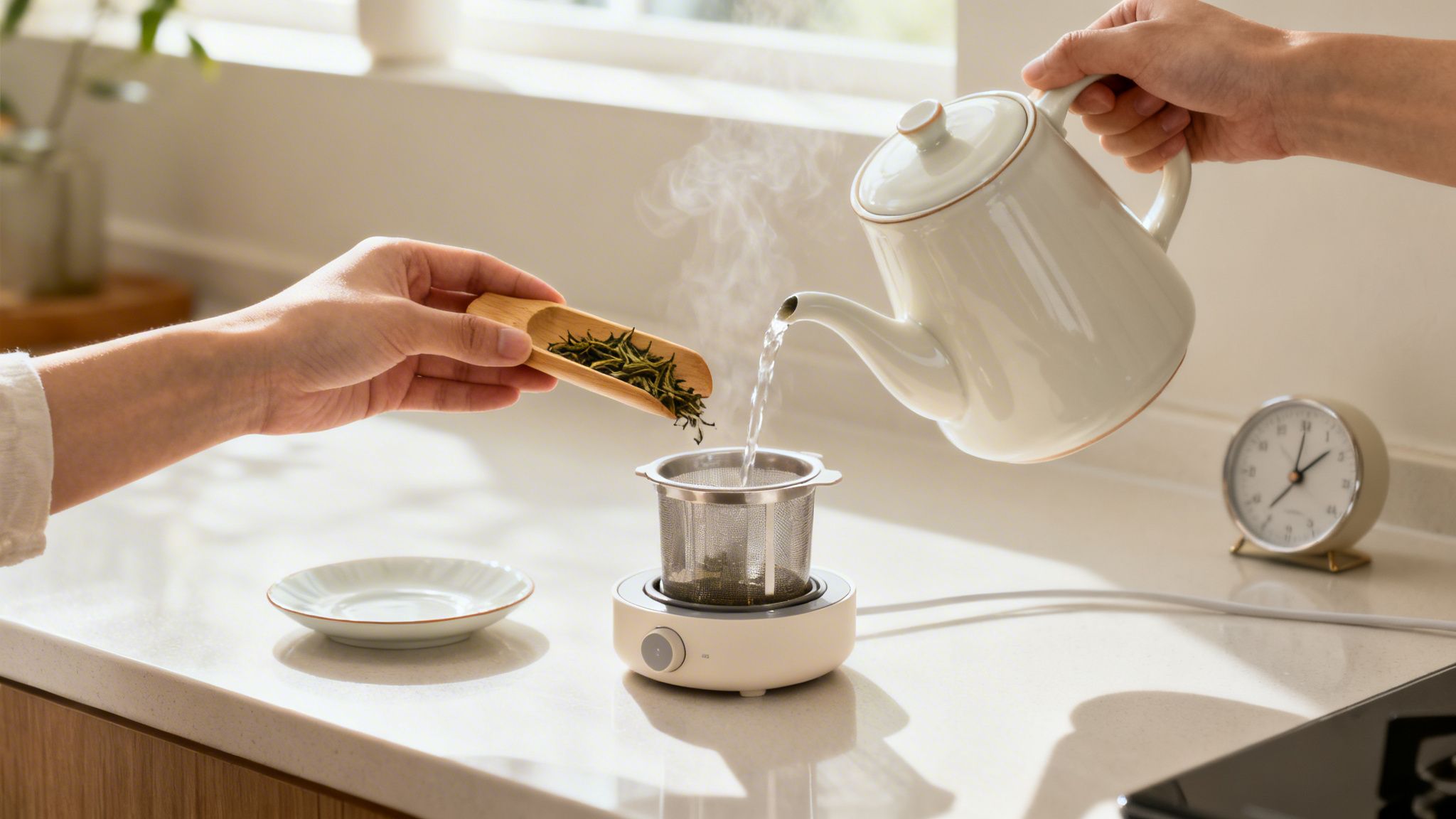
Let's be honest, the conversation around loose leaf tea versus tea bags usually boils down to one thing: convenience. Tea bags are quick. They’re the 'dunk-and-go' solution for a hectic morning, and there’s no denying their appeal. But focusing only on speed misses the point entirely.
Choosing loose leaf is about more than just making a drink; it's about creating a moment. It’s an intentional pause, a small act of self-care that transforms your cup of tea from a rushed habit into a thoughtful ritual. And that extra minute it takes? It’s an investment in a vastly better brew and, more importantly, in your own well-being.
It's Easier Than You Think
The thought of brewing loose leaf can seem a bit daunting, conjuring images of complex equipment and a lot of faff. But the reality is refreshingly simple. Modern tools have made it incredibly easy to get a perfect, clean cup every time.
- Basket Infusers: These are the workhorses of the loose leaf world. They’re essentially small, fine-mesh baskets that sit neatly inside your mug or teapot. Spoon in your leaves, pour over the water, and just lift it out when it’s done. Simple.
- Teapots with Built-in Strainers: A classic for a reason. Many teapots now have a strainer integrated into the spout or a removable infuser, which is brilliant for brewing a larger batch without any leaves escaping into your cup.
- Infuser Tea Mugs: Perfect for a single, flawless serving. These mugs come with their own infuser basket and a lid that cleverly doubles as a little saucer for the infuser once you've finished brewing. We have a whole guide to help you find the perfect one for your needs right here: infuser tea cup for your needs.
For those who really want to embrace the moment, something like an adorable tea infuser mug set can make all the difference. It gives the leaves all the room they need to unfurl and turns brewing from a chore into a genuine pleasure.
A Shift Towards Mindful Brewing
This move towards a more intentional way of drinking tea isn't just a niche trend; it’s a sign that more and more of us are starting to value quality and experience over sheer speed. Once people taste the difference, they rarely look back.
A 2020 survey found that 24% of British tea drinkers actually increased how much loose leaf tea they drank during lockdown, with a third saying it just tastes better. Even more telling, 94% of existing loose leaf drinkers planned to keep up or even increase their consumption.
That's not just a fad; it’s a lasting change in habit. Once you’ve experienced the superior quality, that little bit of extra effort becomes a treasured part of your day.
And the clean-up? It's nowhere near as messy as you might imagine. The used leaves can be tipped straight into your compost or food waste caddy, and the infuser just needs a quick rinse. It’s a simple process that easily busts the myth that loose leaf is a hassle, proving a moment of ritual is well within anyone’s reach.
So, What's the Real Cost Per Cup?
Walk down the supermarket aisle, and it's easy to see why tea bags seem like the obvious choice for your wallet. A box of 40 might be a few quid, while a beautiful tin of loose leaf tea has a more premium price tag. It’s this initial sticker shock that often keeps people from exploring the world of whole leaf tea.
But here’s the thing: that upfront cost is misleading. When you crunch the numbers and look at what you’re actually getting for your money, the story completely flips. The secret? It all comes down to one simple, game-changing advantage of high-quality loose leaf tea: re-steeping.
The Magic of Multiple Infusions
Unlike a standard tea bag, which gives its all in one go, whole leaf teas are made to be brewed multiple times. This isn't just about stretching your tea further; it's about discovering how the flavour evolves with each steep.
Think of it less as a single drink and more as a journey. Many of our teas, especially the complex Oolongs or delicate greens, are crafted to reveal different facets of their character with each infusion.
- First Steep: This is where you get the brightest, most forward notes. It's the tea's bold introduction.
- Second Steep: Things get interesting here. The initial intensity often softens, revealing subtler, more nuanced flavours that were hiding in the background.
- Third Steep (and beyond): You’ll often find a lingering sweetness and a much softer, mellow character coming through.
A single 5-gram serving of our Formosa Jade Oolong, for instance, can easily keep you going with three or four delicious cups throughout the day. Your average tea bag, on the other hand, is completely spent after that first dunk.
Once you realise you can get three cups from one serving of leaves, the initial price is effectively divided by three. This simple maths often makes premium loose leaf tea not just comparable to, but frequently cheaper than, its mass-market counterparts.
Let's Do the Maths
Let's look at a real-world example. Say you pick up a 100g tin of premium loose leaf tea for £15. Using a standard 2.5g serving, you're getting 40 servings from that tin. Now, compare that to a box of 40 decent-quality pyramid tea bags, which might set you back about £10.
At first glance, the tea bags look like the better deal. But remember the re-steeping.
If you brew your loose leaf servings just twice (getting two cups from each), your tin now yields 80 cups of tea. That brings the cost down to roughly 19p per cup. The single-use tea bags? They stay at 25p per cup. That's a serious saving over time, and you're drinking a far superior tea in the process.
This shows that choosing loose leaf isn't just an investment in flavour and aroma; it's genuinely the more economical choice for anyone who drinks tea regularly. The higher upfront cost buys you both better quality and a greater quantity of brews, delivering outstanding value long after you've bought it. It turns out the best tea experience can also be the most sensible one for your wallet.
Health and Environmental Considerations
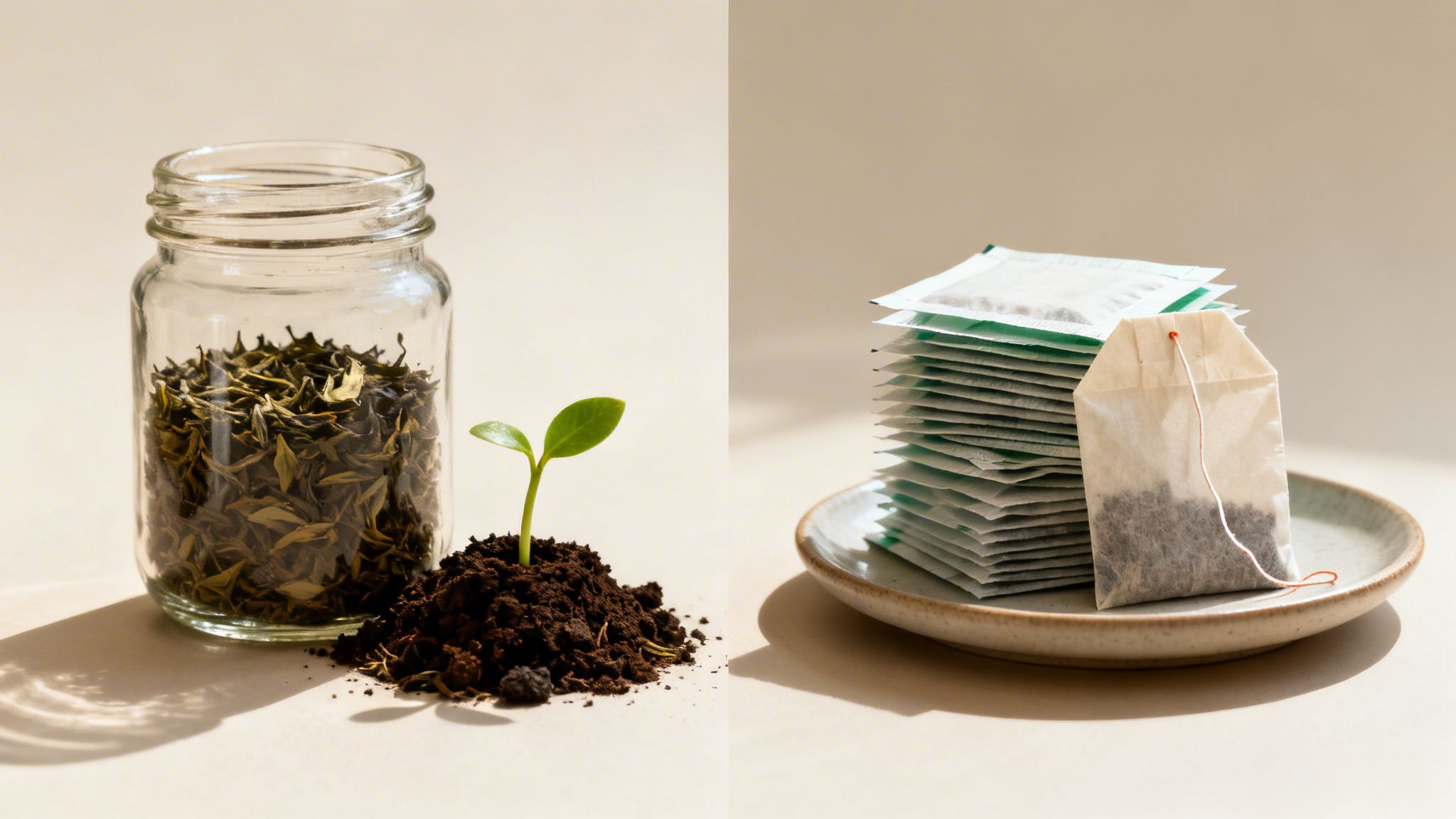
The choice between loose leaf and tea bags goes far beyond what happens in your teapot. It's a decision that touches on personal health and environmental sustainability, connecting your daily cup directly to the well-being of the planet, and your own.
When you look at the entire journey of a brew, from field to cup to compost bin, the differences are stark. It forces you to think about everything from packaging materials to the potential contaminants leaching into your drink, adding a much deeper layer to the whole debate.
This isn't just a niche concern anymore. While the UK Tea & Infusions Association points out that 96% of tea in the UK is still made with tea bags, there’s a real shift happening under the surface. Among 18-29 year olds, 28% now predominantly reach for loose leaf when brewing herbal and green teas. It’s a clear sign of a new generation prioritising products they see as healthier and more authentic. You can discover further insights into UK tea trends to see how habits are evolving.
The Hidden Impact of Tea Bags on the Planet
Here's the unfortunate truth about many conventional tea bags: they're a bit of an environmental headache. To stop them from falling apart in boiling water, a surprising number are sealed with polypropylene, a type of plastic.
That small amount of plastic means they can't fully decompose. They end up contaminating compost heaps and adding to landfill. And it’s not just the bag itself; the problem is compounded by all the extras:
- Strings and Tags: More paper and ink waste.
- Outer Wrappers: Often made from non-recyclable mixed materials.
- Cardboard Boxes: Recyclable, yes, but still another layer of packaging.
Loose leaf tea, on the other hand, is a model of simplicity. The leaves are pure organic matter, perfect for your compost bin where they’ll happily break down and return nutrients to the soil. With minimal packaging—often just a recyclable tin or pouch—it’s the clear zero-waste champion. At Jeeves & Jericho, we make sure our packaging is as sustainable as the tea itself.
Choosing loose leaf tea drastically reduces your daily packaging waste. A single serving of loose leaves creates no waste beyond the leaves themselves, which are fully compostable and beneficial for your garden.
Even those fancy "silken" pyramid bags, which look so premium, are often made from PET or a corn-starch plastic called PLA. While PLA is technically biodegradable, it requires specific industrial composting conditions that your home compost pile simply can’t provide. For anyone who still loves the convenience of a bag, it's vital to seek out options that are explicitly plastic-free and genuinely compostable. We explore this in our guide to the truth about compostable tea bags.
Your Health In Hot Water
Beyond the environmental footprint, serious questions are being asked about what some tea bags might be releasing into our bodies. Research has shown that plastic-based tea bags can shed billions of microplastic and nanoplastic particles into a single cup when steeped in hot water.
The long-term health effects are still being studied, but the idea of drinking plastic along with a supposedly healthy brew is, frankly, unsettling. Loose leaf tea completely sidesteps this problem, giving you a pure, clean infusion without any synthetic materials getting in the way.
Then there’s the quality of the leaf itself. Whole leaves, like those in our loose leaf blends, hold onto a higher concentration of beneficial compounds like antioxidants and L-theanine. The process of chopping leaves into dust for tea bags exposes far more surface area to oxygen, causing these delicate, healthful compounds to degrade much faster. Choosing whole leaves doesn't just taste better; it ensures you’re getting the maximum wellness benefits your tea has to offer.
Your Questions Answered
Diving into the world of loose leaf tea for the first time? It's natural to have a few questions. Making the switch from simply dunking a tea bag to a more hands-on brewing ritual might feel like a big leap, but trust us, it’s far simpler than it looks.
We've pulled together the queries we hear most often to help you get started with confidence. From getting your measurements right to storing your leaves, this is your go-to guide for making loose leaf tea a rewarding part of your day.
How Much Loose Leaf Tea Should I Use Per Cup?
A good rule of thumb is one teaspoon (about 2.5 grams) of dry leaves for every 200ml cup. It’s a reliable starting point for most teas, but the ideal ratio often comes down to the tea itself and, of course, your own preference.
Keep in mind that not all teas are created equal in density. A tightly rolled oolong, for instance, is much heavier than a light, fluffy white tea. You'll probably need a more generous spoonful of the bulkier leaves to get the same depth of flavour. Feel free to experiment—start with the one-teaspoon guide and tweak it until you find the strength that's perfect for you.
Pro Tip: A dedicated tea scoop or a small digital scale is your best friend for consistency. A bit of precision goes a long way in crafting that perfect cup, every single time.
Can I Really Brew Loose Leaf Tea More Than Once?
You certainly can! This is one of the most brilliant aspects of the loose leaf tea vs tea bags debate. High-quality whole leaves are meant to be infused multiple times—a practice often called re-steeping. With each brew, you unlock new, subtle layers of flavour and aroma that you didn't get the first time around.
This works particularly well with certain teas:
- Oolong Teas: These are the undisputed champions of re-steeping. You can often get anywhere from three to five delicious infusions from a single serving.
- Green Teas: Most green teas will happily give you two or three infusions, with each steep revealing a slightly different character.
- Pu-erh Teas: Famous for their stamina, these aged teas can be steeped over and over throughout the day.
On the other hand, most black teas and herbal tisanes tend to give their all in the first or second infusion, as their flavours extract more quickly. Re-steeping isn't just great value for money; it’s a wonderful way to experience the full journey of a tea's complex profile.
At Jeeves & Jericho, we believe every cup should be an experience. Explore our curated collection of ethically sourced, whole leaf teas and discover the incredible difference quality makes. Shop Our Teas Now