


Fancy making a café-quality matcha latte at home? It's a simple ritual that rewards you with a vibrant, flavourful drink every time. The secret lies in just a few key details: using a ceremonial grade matcha, water heated to a precise 80°C, and your favourite milk, all whisked into a smooth, frothy dream. Once you master these fundamentals, a flawless cup is always within reach.
Your Guide to the Perfect Homemade Matcha Latte
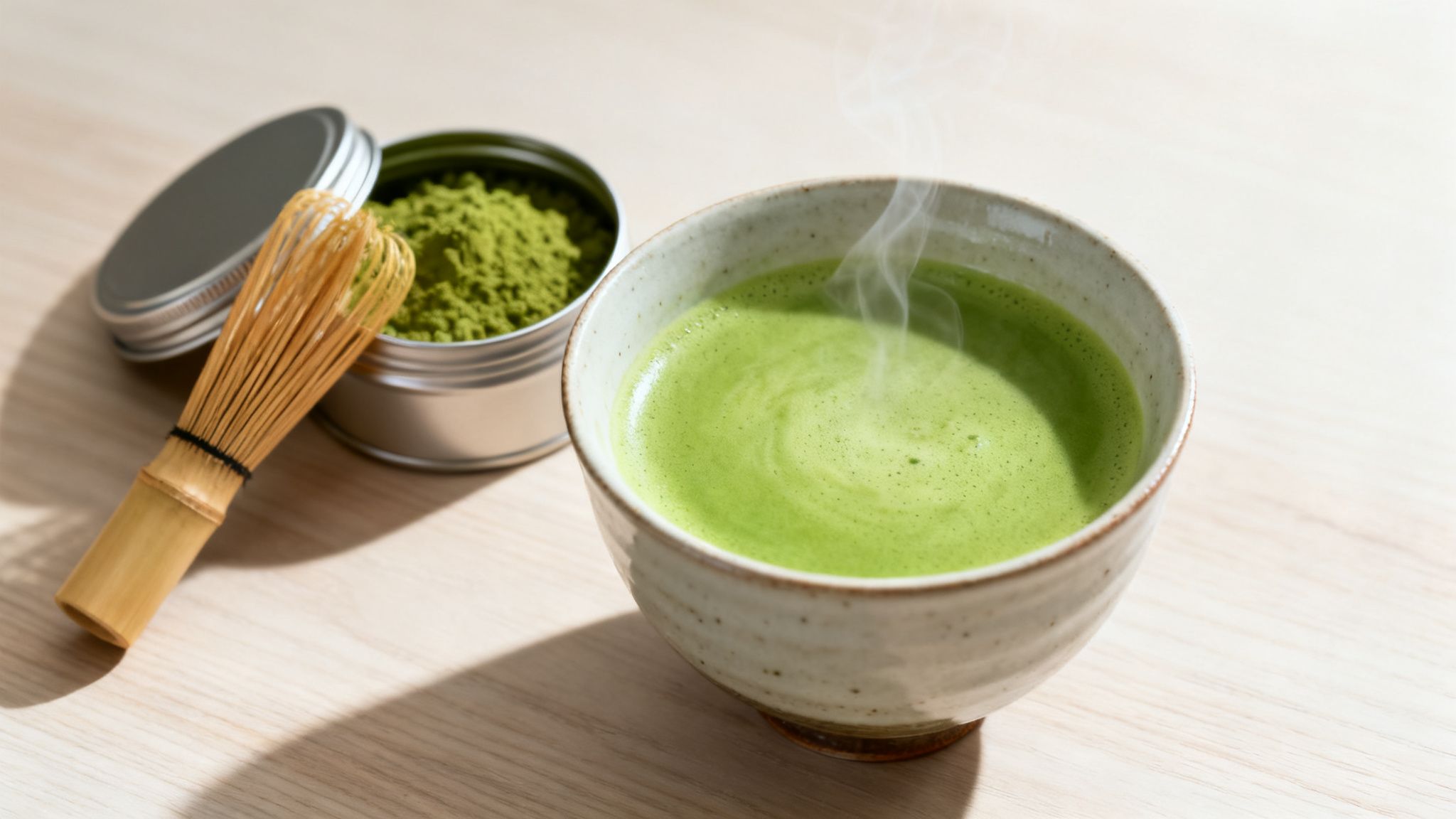
To really unlock the potential of your daily matcha, we need to go beyond generic instructions. It’s the small details—like properly sifting the powder and getting the water temperature just right—that make a world of difference to the final taste and texture. This guide will walk you through those little nuances, turning your homemade latte from good to truly exceptional.
The journey starts with the star of the show: the matcha itself. Using a high-quality, ceremonial grade powder, like Jeeves & Jericho's premium matcha from Uji, Japan, is the single most important decision you can make. Its vivid green colour and smooth, umami-rich flavour create a foundation that lesser-grade powders simply can't match.
What Makes a Great Matcha Latte
A truly great matcha latte isn't just a drink; it's a beautifully balanced experience. It all comes down to achieving that perfect harmony between the earthy, subtly sweet notes of the tea and the creamy richness of the milk.
Here’s what sets a premium latte apart from the rest:
- A Smooth, Clump-Free Texture: This is all in the prep. Sifting the matcha powder and whisking it into a paste before adding any more liquid is non-negotiable for a silky finish.
- A Balanced Flavour Profile: The goal is to sidestep any bitterness. This usually creeps in when the water is too hot or the matcha isn't up to scratch.
- Velvety Microfoam: Properly frothed milk adds a luxurious, creamy mouthfeel that elevates the entire drink from a simple cuppa to a real treat.
There’s no denying the popularity of this wonderful drink. The UK matcha tea market, largely driven by the unstoppable rise of the matcha latte, is set to double in value over the next decade. In fact, projections show the market soaring to £462.32 million by 2035, a clear sign of a big shift in tastes among wellness seekers and tea lovers. You can read more about the UK matcha market on Market Research Future. With this guide, you’ll have everything you need to join this growing trend right from your own kitchen.
Getting Your Matcha Toolkit and Ingredients Ready
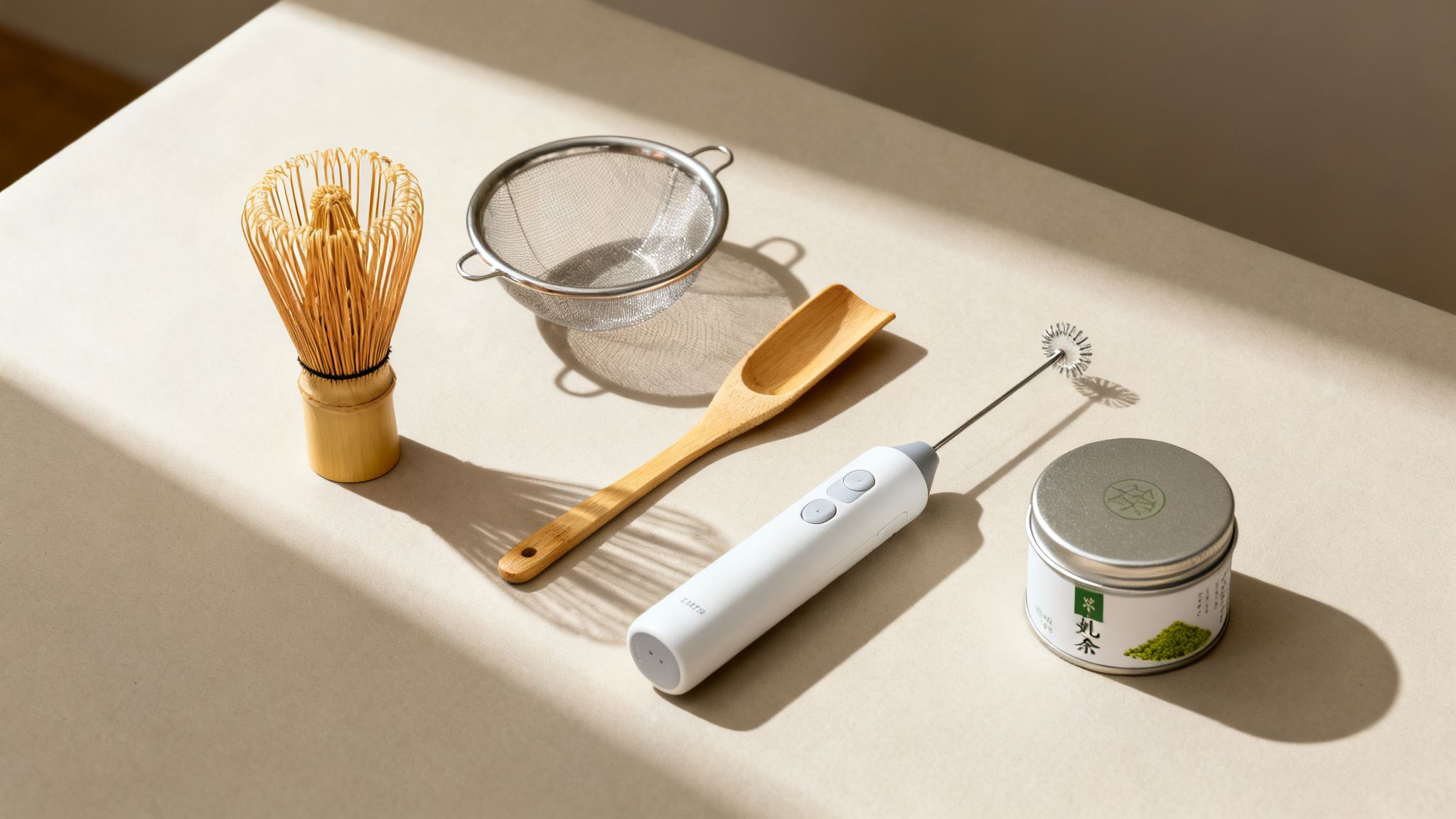
The secret to a truly incredible matcha latte is all in the prep. Before you even think about whisking, getting your tools and ingredients lined up will make the whole process smoother and far more rewarding. Think of it as your pre-flight checklist for the perfect brew.
At the heart of it all is, of course, the matcha. For a drink where the tea is the star of the show, using a high-quality ceremonial grade matcha is a must. You just can't fake that vibrant green colour or the delicate, smooth umami that gives a great latte its character. If you've ever wondered what separates the good stuff from the rest, you can learn all about the different types of matcha tea in our article.
And a quick tip on storage: to keep your matcha powder at its peak, popping it into some high-performance pantry food storage containers makes a real difference. It keeps the light and air out, preserving that fresh, grassy flavour we all love.
Choosing Your Equipment
There's a reason the traditional Japanese tea ceremony has its own set of tools—they’re designed to bring out the very best in the matcha. While you don't need a full ceremonial setup, a couple of key items will seriously elevate your latte game.
We’ve put together a quick guide to help you decide what you need to get started and what you might want to add to your collection later on.
Essential vs Optional Matcha Latte Equipment
| Tool | Purpose | Why It's Recommended | Beginner Alternative |
|---|---|---|---|
| Fine-Mesh Sieve | Removes clumps | The single best way to ensure a silky, smooth, lump-free matcha paste. Non-negotiable! | A small tea strainer will do the job in a pinch. |
| Ceramic Bowl (Chawan) | Whisking & preparing | A wide, flat bottom gives you the space to whisk properly and build a lovely froth. | Any wide, shallow soup or cereal bowl. |
| Bamboo Whisk (Chasen) | Aerates the matcha | Its 80+ fine tines are uniquely designed to break up powder and create a rich, creamy foam. | An electric milk frother is a fantastic modern substitute. |
| Bamboo Scoop (Chashaku) | Measures matcha | Traditionally used to measure the perfect amount of matcha powder for one serving. | A regular ½ teaspoon works just as well. |
| Milk Frother | Creates foamy milk | Heats and froths your milk for that classic café-style latte texture. | Gently heat milk in a saucepan and froth with a handheld whisk. |
At the end of the day, you can make a brilliant matcha latte with just a bowl, a sieve, and something to whisk with. The rest just makes the ritual that bit more special.
If you take away one thing, make it this: always sift your matcha. Even the best powders can get a bit clumpy on their journey to you. Sifting guarantees every last particle dissolves, giving you the smoothest sip imaginable.
Getting the Ingredients Right
With your tools ready, let's talk about the other key players. Getting these details right is what separates a good matcha latte from a great one.
-
Watch Your Water Temperature: This is crucial. Always aim for water around 80°C (176°F). If it's boiling, you'll scorch the delicate tea, leaving you with a bitter, harsh taste. A good rule of thumb is to let the kettle sit for a minute or two after it clicks off.
-
Pick the Perfect Milk: The milk you choose has a huge impact on the final drink. Full-fat dairy milk gives you that classic, creamy latte body. Oat milk is a café favourite for a reason—its natural creaminess is a perfect match for matcha's earthy notes. For something a bit lighter, almond milk brings a lovely nutty flavour to the party.
-
Sweeten to Taste (or Not!): If you like a little sweetness, stick to something that will complement, not overpower, the matcha. A small drizzle of maple syrup, honey, or agave nectar blends in beautifully. Start with less than you think you need; you can always add more.
The Art of the Perfect Hot Matcha Latte
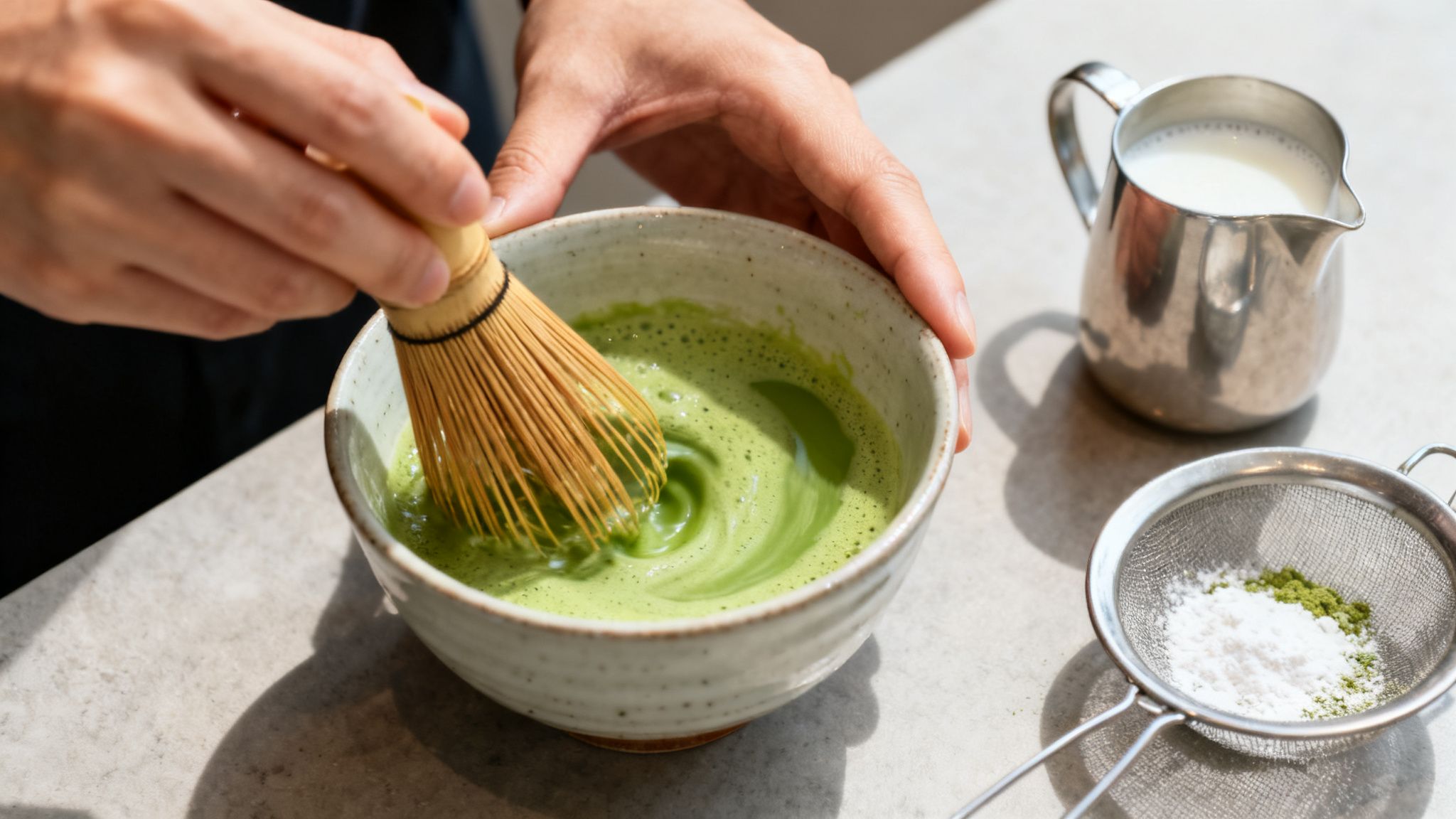
This is where the magic happens. Making a great hot matcha latte is more than just following steps; it's a small ritual that turns a few simple ingredients into something truly special. Get this right, and you'll have a café-quality drink in your own kitchen every single time.
It’s no secret that matcha lattes have taken the UK by storm. In the summer of 2025 alone, we saw our own ‘matcha moment,’ with over 1.6 million matcha drinks sold in just two months. That's a staggering 114.5% jump from the year before, beating out every other espresso-based drink. You can read more about Britain's matcha boom on Squareup. Now, let’s bring that experience home.
Building Your Smooth Matcha Base
The secret to a truly brilliant matcha latte lies in its foundation: a perfectly smooth, clump-free paste. It's the one step people often rush, but taking a moment here makes all the difference to the final texture.
First things first, grab your fine-mesh sieve and hold it over your bowl. Measure out one teaspoon (about 2 grams) of our ceremonial grade matcha and gently sift it through. This is your best weapon against lumps, ensuring every granule of that beautiful, fine powder can dissolve properly. If you're wondering about ratios, we've got a whole guide on how much matcha to use per cup.
Next, pour in around 60ml (2 oz) of hot water. And here's a crucial tip: the temperature should be 80°C (176°F). Boiling water is matcha’s enemy; it will scorch the delicate tea leaves and leave you with a bitter taste that no amount of milk can hide.
The Art of the Whisk
Now for the best part—the whisking. Using your bamboo whisk (the chasen), start making a quick ‘W’ or ‘M’ shape from one side of the bowl to the other. Don't be shy with it; the movement should be energetic, but keep your wrist relaxed.
You’re not just mixing, you’re aerating. Keep this up for about 20-30 seconds. You'll watch the mixture transform into a thick, jade-green liquid with a delicate layer of fine foam on top. That lovely froth is the sign of a job well done.
A perfectly whisked matcha base should look like thin paint, covered in tiny, even bubbles. If you're seeing big, clumsy bubbles, just give it a few more seconds of whisking until the foam looks finer. It’s this microfoam that will blend so beautifully with your steamed milk.
Heating and Frothing Your Milk
With your matcha base ready and waiting, it’s time for the milk. Whether you’re a dairy fan or prefer oat or almond, the aim is the same: a velvety, creamy texture without scalding.
Pour 180-240ml (6-8 oz) of your milk into a small pan or a milk frother. If you’re using the hob, keep it on a medium-low heat. You want to warm it gently until you see steam rising, which is about 65-70°C (150-160°F). Overheat it, and the milk will lose its sweet flavour and won't froth nearly as well.
Once it's hot, froth the milk until you have a luscious microfoam. Think creamy and dense, not stiff and bubbly like a classic cappuccino.
Now for the grand finale. Gently pour your beautifully frothed milk into the bowl with your matcha. If you want to get fancy with a bit of latte art, you can use a spoon to hold back the foam, pour in the steamed milk, and then top it off with the remaining foam. Give it a gentle stir to combine, and your perfect hot matcha latte is ready.
Beyond the Classic: Iced Lattes and Milk Pairings
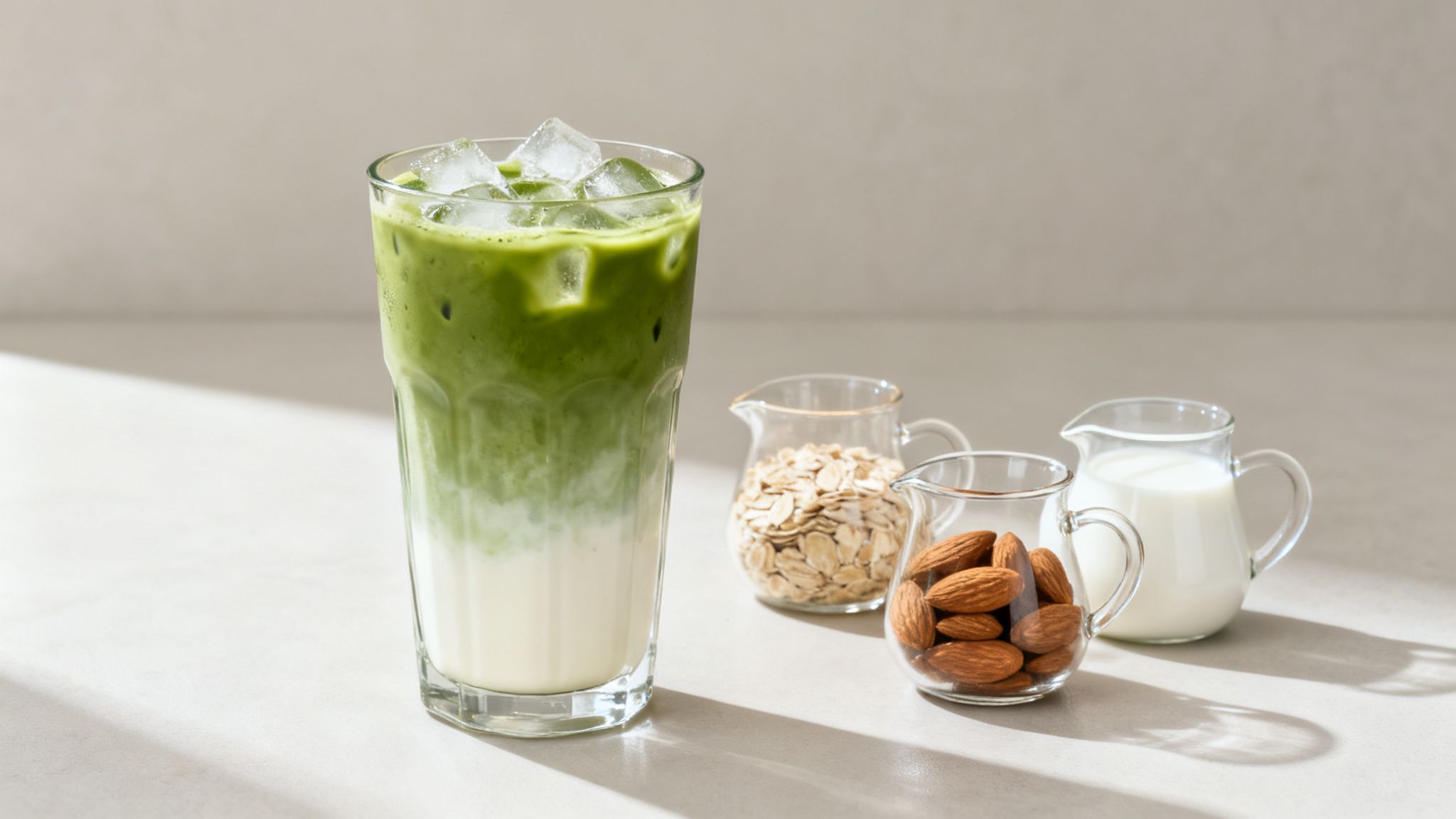
While there's nothing quite like a steaming, comforting matcha latte, an iced version offers a completely different kind of refreshment on a warm day. A truly great recipe is versatile, giving you the freedom to adapt your drink to the weather, your mood, or your dietary needs.
But crafting the perfect iced latte isn't as simple as pouring a hot one over ice – that’s a fast track to a watery, separated mess. The secret lies in creating a concentrated matcha shot that can hold its own against the cold milk and ice, ensuring that vibrant, grassy flavour sings through from the first sip to the last.
How to Make a Flawless Iced Matcha Latte
The process for a brilliant iced matcha latte starts in a familiar way, but with a few crucial tweaks to avoid clumps and dilution. It’s all about that smooth, potent matcha base.
First, sift one teaspoon (2g) of ceremonial grade matcha into your bowl. Here’s the key difference: instead of 60ml of hot water, add just 30ml (1 oz) of 80°C water. Whisk it vigorously in a 'W' motion until you’ve got a thick, glossy paste. This concentrated shot is the heart of your drink.
Next, fill a tall glass right to the top with ice. Pour over 180-240ml (6-8 oz) of your chosen cold milk. Finally, pour your concentrated matcha shot directly over the milk and ice, and watch the beautiful green ribbons swirl through the glass before giving it a good stir.
A quick tip for an even smoother iced latte: reach for a cocktail shaker. Combine the matcha paste, a splash of milk, and a little sweetener (if you fancy) in a shaker with a few ice cubes. Give it a hard shake for 15 seconds, then strain it into your glass of milk and ice. The result is pure, frothy perfection.
If you’re after an even simpler refreshment on a hot day, you can learn how to make a brilliant matcha iced tea in our guide.
Finding the Best Milk for Your Matcha Latte
The milk you choose is just as important as the matcha itself. It can dramatically change the flavour and texture of your drink, and with so many fantastic plant-based options out there, finding your perfect pairing is a delicious experiment.
Milk Pairing Guide for Your Matcha Latte
We've put together this quick guide to help you find your ideal match. Each milk brings something different to the table, from creamy textures to subtle nutty notes.
| Milk Type | Flavour Profile | Frothing Ability | Best For |
|---|---|---|---|
| Oat Milk | Creamy, naturally sweet, and neutral. | Excellent | A perfectly balanced, café-style latte. |
| Almond Milk | Light, nutty, and delicate. | Fair (use a barista blend) | A less rich drink where the matcha is the star. |
| Soy Milk | Robust, creamy, and distinctly beany. | Good | A high-protein latte with a rich body. |
| Coconut Milk | Bold, tropical, and very creamy. | Good | A decadent, dessert-like latte experience. |
Ultimately, the best milk is the one you enjoy most. Don’t be afraid to try a few different options to discover what truly makes your perfect matcha latte.
If you’re keen to explore more inventive and delicious drinks, have a browse through our dedicated non-alcoholic section for some fresh inspiration.
Troubleshooting Your Matcha Latte
Even with the best recipe in hand, sometimes things go a little sideways. Don’t despair—most matcha mishaps are surprisingly easy to fix, often boiling down to a tiny detail in your technique. We can get that frustrating cup tasting flawless in no time.
Once you know what to look for, you'll be able to consistently whip up a brilliant latte that tastes every bit as good as it looks. Let's tackle the most common pitfalls.
Why Is My Matcha Latte Lumpy?
There’s nothing worse than taking a sip of what should be a silky-smooth latte, only to get a mouthful of powdery clumps. This almost always comes down to one simple oversight: not sifting your matcha.
Because the powder is so incredibly fine, it’s prone to static which causes it to form tiny clusters inside the tin. No matter how vigorously you whisk, it's often not enough to break them all down, especially once liquid is involved.
The non-negotiable first step for a smooth latte is to sift your matcha through a fine-mesh sieve directly into your bowl. This breaks up any clumps before you add water, guaranteeing a perfectly dissolved and velvety base every single time.
Why Does My Latte Taste Bitter?
A bitter matcha latte is a frequent complaint, and it’s usually down to one of two things: the water was too hot, or the matcha quality wasn’t quite right. Bitterness is a sure sign the delicate tea leaves have been scorched.
Remember, boiling water is matcha’s greatest enemy. You want your water to be around 80°C (176°F). A simple trick is to just let your kettle click off and then wait a minute or two before you pour.
It’s also worth considering that lower-grade or older matcha can have a naturally more astringent flavour. Using a high-quality ceremonial grade powder, like our Jeeves & Jericho matcha, is your best bet for that smooth, umami-rich taste without any harshness.
How Can I Get a Better Froth?
Struggling to create that lovely, creamy microfoam? The issue often lies with the milk you're using or your frothing technique. When it comes to texture, not all milks are created equal.
For the best results, keep these tips in mind:
- Pick the Right Milk: Full-fat dairy and barista-style oat milk have the perfect balance of fats and proteins needed to create a stable, creamy foam. Some plant-based options, like standard almond milk, are too low in fat and just won't hold their structure.
- Don’t Overheat: If you heat your milk past 70°C (160°F), you can damage the proteins, making it impossible to froth properly. Aim for a temperature where the jug is hot, but you can still comfortably touch it.
- Give It Time: If your foam is looking a bit bubbly and thin, you might just need to froth for a little longer. This helps break down those larger bubbles into a finer, more velvety microfoam.
Your Matcha Latte Questions Answered
Even with the best recipe in hand, a few questions always seem to come up. Nailing these little details is often what separates a good homemade latte from a truly great one. Let's tackle some of the most common queries we get from fellow matcha lovers.
Getting these right will give you the confidence to perfect your own signature latte at home.
What Is the Ideal Matcha to Milk Ratio?
For a beautifully balanced latte, our go-to ratio is one teaspoon (about 2 grams) of matcha powder to 60ml (2 oz) of hot water, finished with 180-240ml (6-8 oz) of milk. This combination really lets the matcha's character sing, without getting lost in the creaminess of the milk.
The trick is to first whisk the matcha and hot water into a smooth, vibrant concentrate. This step is non-negotiable for a clump-free drink. Once that's done, you can pour in your steamed and frothed milk.
Of course, this is just a starting point. Think of it as your baseline. If you prefer a stronger, more robust flavour, add a little more matcha. Fancy something milder and creamier? A splash more milk will do the trick.
Why Is My Matcha Latte Not Bright Green?
The colour of your matcha speaks volumes about its quality. If your latte looks a bit dull, yellowish, or even brownish, the culprit is almost always old or lower-grade matcha.
Proper, ceremonial grade matcha—like the premium powder we source from Uji—is made from the youngest, shade-grown tea leaves. These leaves are packed with chlorophyll, which is what gives the powder its stunning, electric-green colour.
A dull hue usually means the matcha has oxidised from being exposed to air, light, or heat. To keep it at its best, always store your matcha in an airtight container in a cool, dark place like a cupboard.
Can I Make a Matcha Latte Without a Whisk?
Absolutely! While a traditional bamboo whisk (a chasen) is brilliant for dissolving the powder and creating a lovely froth, you can definitely achieve great results with other tools you probably already have in your kitchen.
- Electric Milk Frother: This is a fantastic alternative. Simply use it to blitz the matcha and hot water into a smooth paste before adding any milk.
- Small Kitchen Whisk: A regular little whisk works too. It might just take a bit more elbow grease to chase down every last clump.
- Shaker or Jar: This is my favourite cheat for an iced latte. Just pop the matcha, water, and maybe a drop of sweetener into a cocktail shaker or a tightly sealed jar. Give it a vigorous shake until it's perfectly combined and frothy.
At Jeeves & Jericho, we believe the best lattes start with the best tea. Discover the smooth, vibrant flavour of our ceremonial grade matcha and see the difference it makes. Explore our collection today.