


The real magic of sencha green tea lies in its unique steaming process. This careful step not only locks in a treasure trove of powerful antioxidants but also delivers a gentle, focused lift—making it the perfect choice for anyone wanting wellness without the jitters you often get from coffee.
What Exactly Is Sencha and Why Is Everyone Drinking It?
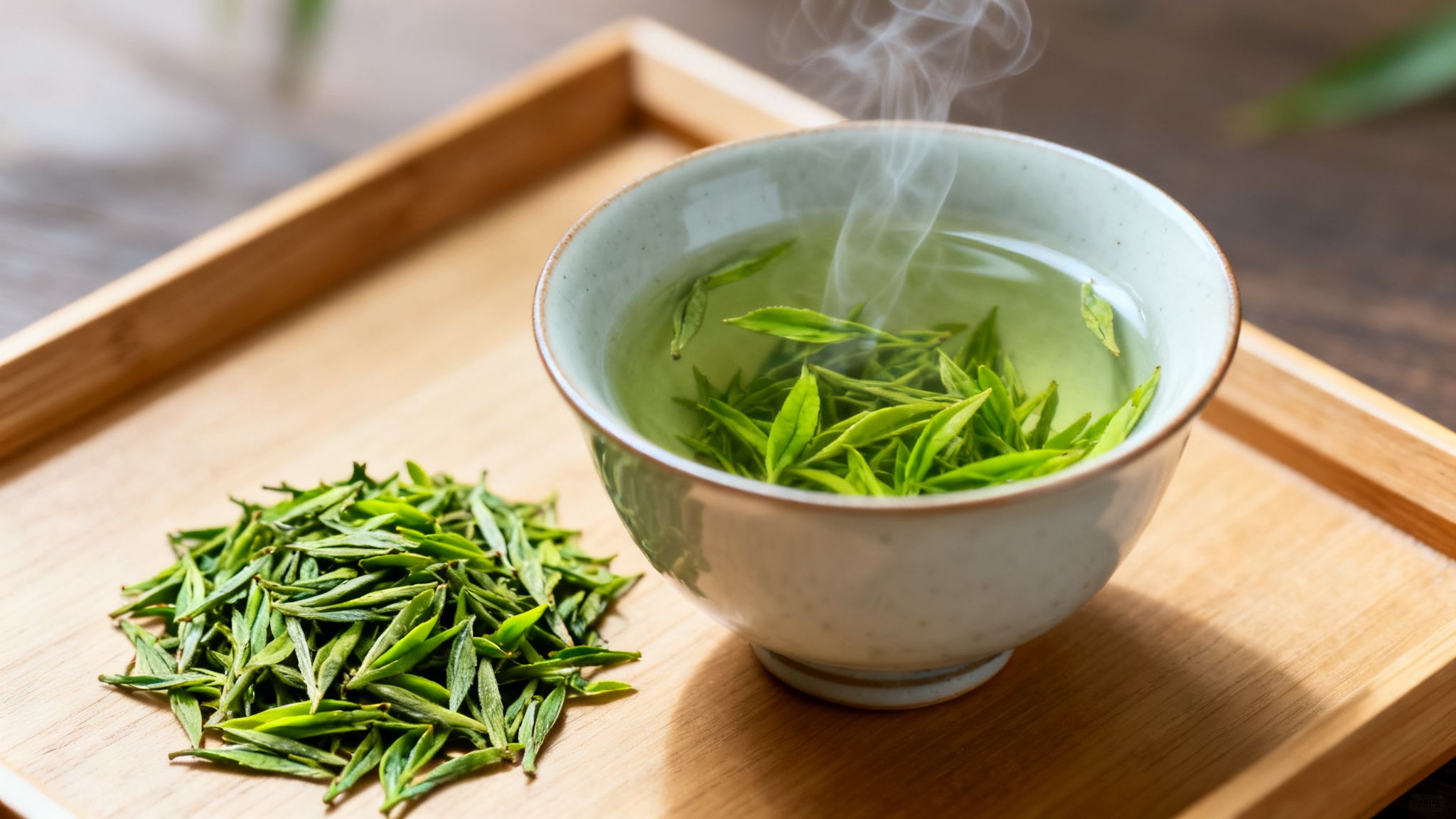
If you've ever dipped a toe into the world of Japanese green tea, you've almost certainly come across sencha. It’s the undisputed champion of teas in Japan, and its reputation is quickly making waves right here in the UK. But what really sets it apart from the crowd?
The secret is all in the preparation. While many green teas are pan-fired to stop them from oxidising, sencha leaves are gently steamed within moments of being picked. It's a crucial difference. This flash of steam locks in their stunning emerald-green colour and preserves that fresh, slightly grassy flavour profile sencha is so famous for.
But this method does more than just protect its taste and looks. It carefully safeguards the very compounds that pack a healthy punch, turning every single cup into a potent source of goodness.
For a quick overview of what makes sencha special, have a look at our summary table below.
Sencha Green Tea at a Glance
| Attribute | Description |
|---|---|
| Origin | Japan (most popular green tea) |
| Processing | Steamed (not pan-fired) to halt oxidation |
| Flavour Profile | Grassy, fresh, slightly sweet with a touch of umami |
| Colour | Vibrant, emerald-green liquor |
| Caffeine | Moderate, providing calm, focused energy |
| Key Benefit | High in antioxidants, especially catechins like EGCG |
This unique combination of flavour and function is why so many people are making sencha their go-to brew.
A Growing Trend in British Tea Culture
There's no denying the shift towards healthier drinks. While a classic black tea will always have its place, a growing number of Brits are reaching for a greener cup. In fact, a recent study found that one in eight (13%) people in the UK now mainly drink green tea, with sencha gaining real traction among younger tea lovers.
This trend isn't just about trying something new; it's about a collective move towards drinks that make us feel good, inside and out. You can dive deeper into the data in the 2025 UK Tea and Infusions Census Study.
Sencha offers a mindful daily ritual—a moment of calm and focus in an otherwise hectic day. It’s more than just a drink; it's an accessible form of self-care.
This is where sencha truly shines. It provides a gentle lift in energy paired with a sense of clear-headed calm, making it a fantastic alternative to coffee's aggressive spike and inevitable crash.
Of course, quality matters. The benefits and the flavour are directly tied to the leaves you choose. To explore your options, have a look at our guide on what is the best green tea. At Jeeves & Jericho, we’re all about sourcing authentic, whole-leaf sencha to ensure every sip delivers the premium experience you deserve.
The Antioxidant Powerhouse Inside Your Teacup
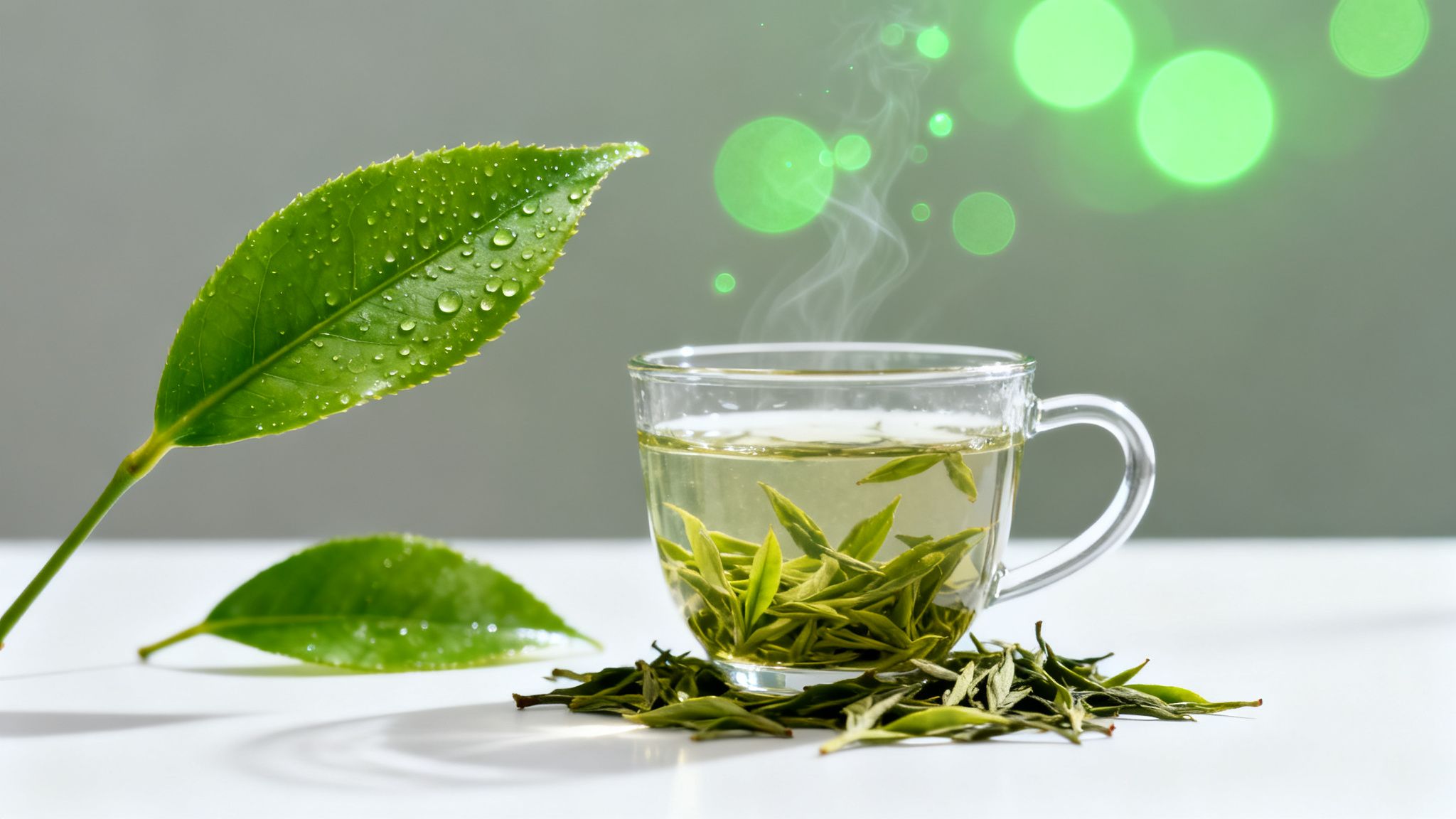
To really get what makes sencha so good for you, we need to zoom in and see what's happening at a microscopic level. Your cup of sencha is absolutely brimming with powerful natural compounds called polyphenols. Within that family, a special group known as catechins are the real heroes of the story.
Imagine your body is like a pristine, beautiful garden. Every day, it’s under attack from little vandals called free radicals—unstable molecules created by everything from pollution to normal metabolic processes. Left to their own devices, they can cause damage to your cells, a process known as oxidative stress.
This is where sencha’s catechins come to the rescue. They act like a team of dedicated gardeners, carefully neutralising these free radicals before they can wreak havoc. By protecting your cells from this daily wear and tear, these antioxidants are a cornerstone of sencha’s many health benefits.
Meet EGCG: The Most Powerful Catechin
Not all catechins are built the same. While sencha has several, one stands out from the crowd for its incredible potency: Epigallocatechin gallate, or EGCG for short. It’s one of the most well-researched antioxidants in the nutritional world, and for very good reason.
EGCG is the main driver behind green tea’s powerful antioxidant punch. The high concentration you find in sencha is all down to its unique cultivation—grown in full sunlight—and the gentle steaming process that locks in these delicate compounds, preventing them from degrading.
When you choose sencha, you’re not just having a lovely brew; you're sipping on a concentrated source of EGCG, one of nature’s most effective cellular protectors.
This single compound has been linked to a huge range of positive effects, turning the simple act of drinking tea into a profound ritual for wellness. If you're curious to learn more about how compounds like these work, there's a great guide on antioxidant supplements that goes into more detail.
From Cellular Health to Everyday Wellness
So, what does all this microscopic protection actually mean for you day-to-day? A diet rich in antioxidants like those found in sencha has far-reaching benefits that contribute to your overall health and vitality.
Here’s how that antioxidant power translates into real-world wellness:
- Supports Heart Health: Antioxidants are brilliant for cardiovascular health. They help protect LDL cholesterol from oxidation, a key step in keeping your arteries healthy and promoting good circulation.
- Boosts Your Immune System: Your immune cells are especially susceptible to oxidative stress. By shielding them, the catechins in sencha help your immune system stay on top form, keeping you resilient.
- Contributes to a Balanced Metabolism: EGCG has shown real promise in supporting a healthy metabolism. While it's no magic wand for weight loss, it can be a fantastic partner to a balanced lifestyle, helping your body process energy more efficiently.
Ultimately, the antioxidant benefits of sencha green tea work together to build a strong foundation for good health. It's about protecting your body from the inside out, helping you feel your very best.
Achieving Calm Focus with L-Theanine and Caffeine
We’ve all been there. You need to focus, so you reach for a coffee, only to be hit with a jarring jolt of energy that soon gives way to jitters and the inevitable afternoon crash. Sencha green tea offers a much smarter, smoother route to mental clarity.
This isn't just a happy accident; it's down to a fascinating partnership between two compounds in the tea leaves: caffeine and an amino acid called L-theanine. You know caffeine as the stimulant, but L-theanine is its perfect counterpart, encouraging a feeling of relaxation without making you feel sleepy.
This dynamic duo is what makes drinking sencha so different. Think of caffeine as the accelerator for your brain, while L-theanine acts as a sophisticated clutch, ensuring a smooth, controlled ride.
The Synergy of Alertness and Relaxation
The real magic happens when L-theanine and caffeine work together. L-theanine has this brilliant ability to increase alpha brainwaves—the same ones associated with that feeling of being relaxed but totally awake and alert. It basically sands down the rough edges of caffeine’s kick.
This synergy creates that sought-after state of 'calm focus'. You get all the concentration and alertness from the caffeine, but it arrives without the nervous energy or restlessness. It's the perfect mindset for getting stuck into deep work, tackling a creative project, or just navigating a hectic day with a clear head.
Instead of the turbulent rush you get from an espresso, sencha provides a gentle, sustained lift. This allows for prolonged periods of productivity and mental endurance, free from the typical spike-and-crash cycle.
Why Sencha Is Different from Other Teas
While you'll find L-theanine in other teas from the Camellia sinensis plant, the way sencha is grown and processed gives it a real edge. Because the leaves are grown in direct sunlight, they build up a robust profile of both catechins and caffeine. The quick steaming process then locks in these compounds, protecting the delicate L-theanine.
This incredible balance makes a premium sencha, like the varieties we source here at Jeeves & Jericho, an exceptional choice. It's more than just a lovely drink; it’s a tool for achieving a steady, focused mindset. If you're curious about how different teas stack up, we've put together a handy breakdown in our article on the caffeine content in teas.
The result is a clean, reliable energy boost that supports your mind rather than overwhelming it, making every cup a step towards a more productive and balanced day.
How to Brew the Perfect Cup of Sencha Every Time
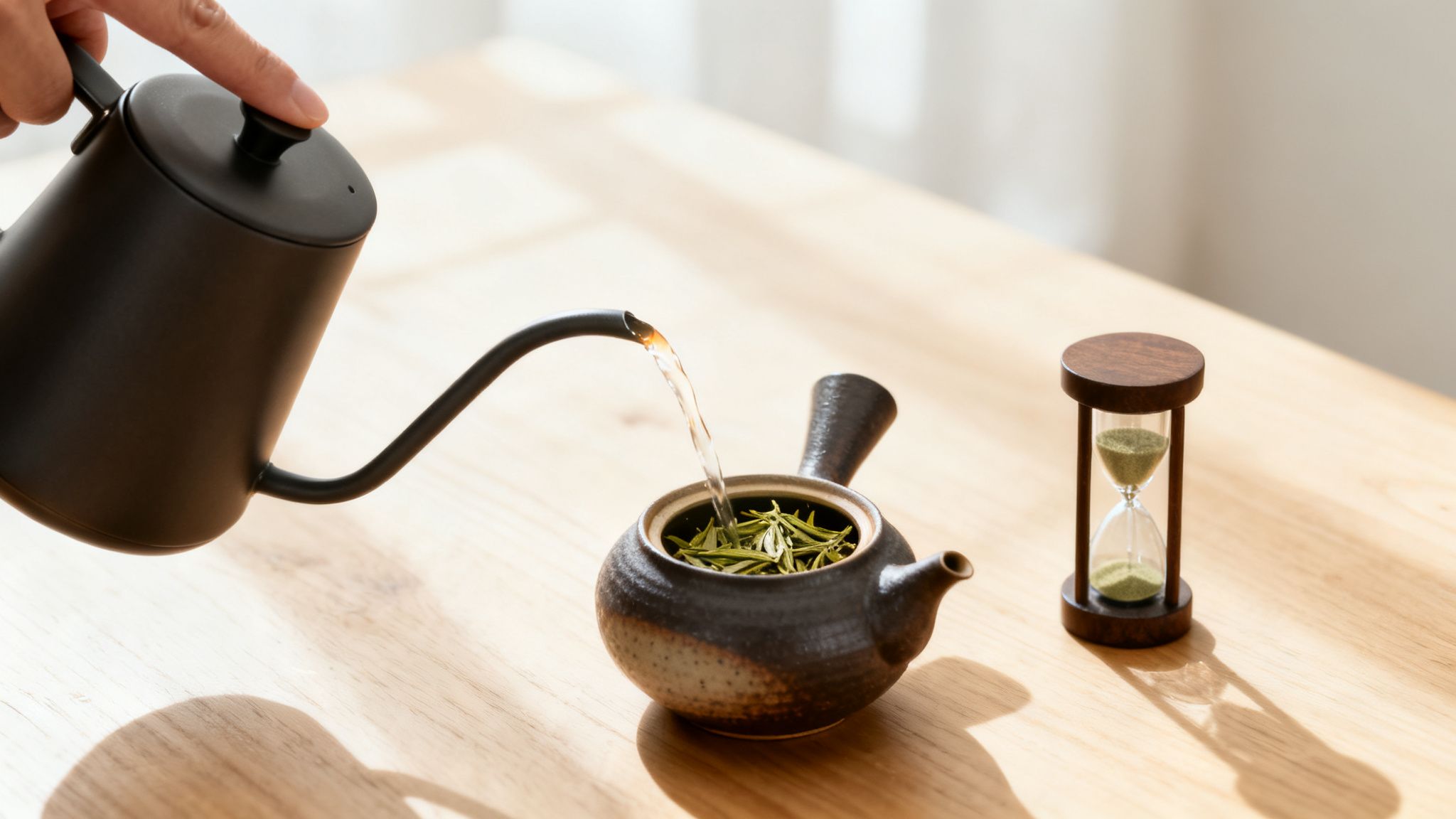
Unlocking the delicate, nuanced flavour of sencha is an art, but it's one you can easily master. Getting the brew right is the key to avoiding the bitter, astringent taste that comes from mistreating its sensitive leaves. Think of it less like boiling a kettle for a builder’s brew and more like gently coaxing the flavour out.
The process is surprisingly quick. While research shows 73% of black tea brews are rushed in under four minutes, sencha's characteristically short steep time is intentional. It’s all about delivering maximum flavour without the long wait. And it seems people are catching on; as health consciousness rises, green tea sales in teabags have jumped by 50%, outpacing traditional black tea.
Get just three simple things right, and every single cup will be smooth, rich, and utterly delicious.
The Three Golden Rules of Sencha Brewing
To consistently nail that perfect cup, you just need to keep an eye on three things: water temperature, steeping time, and the leaf-to-water ratio. This holds true whether you're using beautiful loose leaves or one of our convenient pyramid teabags.
-
Use Cooler Water (70-80°C): This is the big one. Pouring boiling water over sencha is like scalding the delicate leaves; it instantly releases tannins and creates a harsh, bitter brew. No variable-temperature kettle? No problem. Just boil your water and let it sit for two minutes before pouring.
-
Keep the Steep Quick (60-90 Seconds): Sencha doesn’t hang about. It releases its wonderful flavours incredibly fast, and a short infusion of one minute is often perfect for the first brew. You can add a little more time for subsequent infusions of the same leaves, but over-steeping is the fastest way to ruin a good cup.
-
Measure Your Leaves: A brilliant starting point is one teaspoon (around 2-3 grams) of sencha for every cup (about 200ml) of water. This gives you a balanced flavour that isn’t too weak or overwhelmingly strong.
Treat your sencha leaves with a bit of care. A gentle brew with cooler, quicker water respects their delicate structure and rewards you with a cup that is sweet, vibrant, and packed with goodness.
Sencha Brewing Guide: Common Mistakes and Fixes
Even with the best intentions, things can go slightly awry. If your sencha tastes a bit off, it's almost certainly down to one of these common slip-ups. The good news? The fixes are incredibly simple.
| Common Mistake | Resulting Taste | How to Fix It |
|---|---|---|
| Using Boiling Water | Overwhelmingly bitter and astringent | Let your kettle cool for 2-3 minutes after boiling to reach the ideal 70-80°C range. |
| Steeping for Too Long | Harsh, grassy, and unpleasant | Set a timer for 60-90 seconds. A short steep is all high-quality sencha needs. |
| Using Too Many Leaves | Overpowering and thick, lacking subtlety | Stick to one teaspoon of leaves per cup and adjust from there to suit your personal preference. |
Follow these simple guidelines, and you’ll ensure every cup of sencha you brew is a perfect one, allowing you to fully appreciate its complex flavours and reap all the health benefits. For a more detailed walkthrough, check out our guide on how to brew loose leaf tea.
How to Choose High-Quality and Ethical Sencha
Diving into the world of sencha might feel a bit daunting at first, but figuring out if you’ve got a truly exceptional tea in your hands is easier than you think. It's a bit like choosing fresh vegetables at a market – your senses are your best guide.
First, look at the leaves. A high-quality sencha should be a stunning, deep green, almost like a forest floor. The dry leaves themselves are fine and delicate, resembling tiny, dark green needles. If you see dull, yellowish, or brown-tinged leaves, that’s a red flag for older stock or a tea that hasn't been stored properly.
Then, trust your nose. When you open a pack of proper sencha, you should get a wave of fresh, grassy, almost sea-breeze-like fragrance. That’s the smell of quality, a sign that the leaves were expertly steamed right after picking to lock in all that goodness.
Look for Origin and Transparency
Where your sencha is grown makes a huge difference. Famous tea-growing regions in Japan like Uji, Kagoshima, and Shizuoka have the perfect climate and centuries of know-how, which you can really taste in the final cup.
The best way to ensure quality is through transparency. When a company shares details about the tea's origin and harvest, it shows confidence in its product and respect for the craft.
This is where ethical sourcing comes in. Choosing a tea seller who works directly with the farmers isn't just about feeling good; it’s a direct line to quality and sustainability. When you cut out the middlemen, you know the farmers are getting a fair price for their incredible skill and dedication.
That direct connection is at the very heart of what we do at Jeeves & Jericho. We build real, lasting relationships with our growers. This means we can trace our leaves right back to the gardens they came from, ensuring every single batch is up to our standards.
Why Ethical Sourcing Creates Better Tea
Ethical sourcing isn't just a buzzword; it genuinely makes the tea you drink better. When farmers have a stable, direct relationship with the people buying their tea, they can focus on what really matters: sustainable farming and producing the best possible leaves, rather than just chasing volume.
This focus leads to healthier soil, stronger tea plants, and, ultimately, leaves bursting with a more complex and delicious flavour. It creates a brilliant cycle where the farmers can thrive, the land is looked after, and you get to enjoy a truly outstanding cup of tea.
By choosing ethically sourced sencha, you’re investing in a system that puts quality, sustainability, and people first. It’s a simple choice that connects you to the whole story of your tea, from the soil it grew in to the cup you’re sipping.
Integrating Sencha into Your Modern Lifestyle
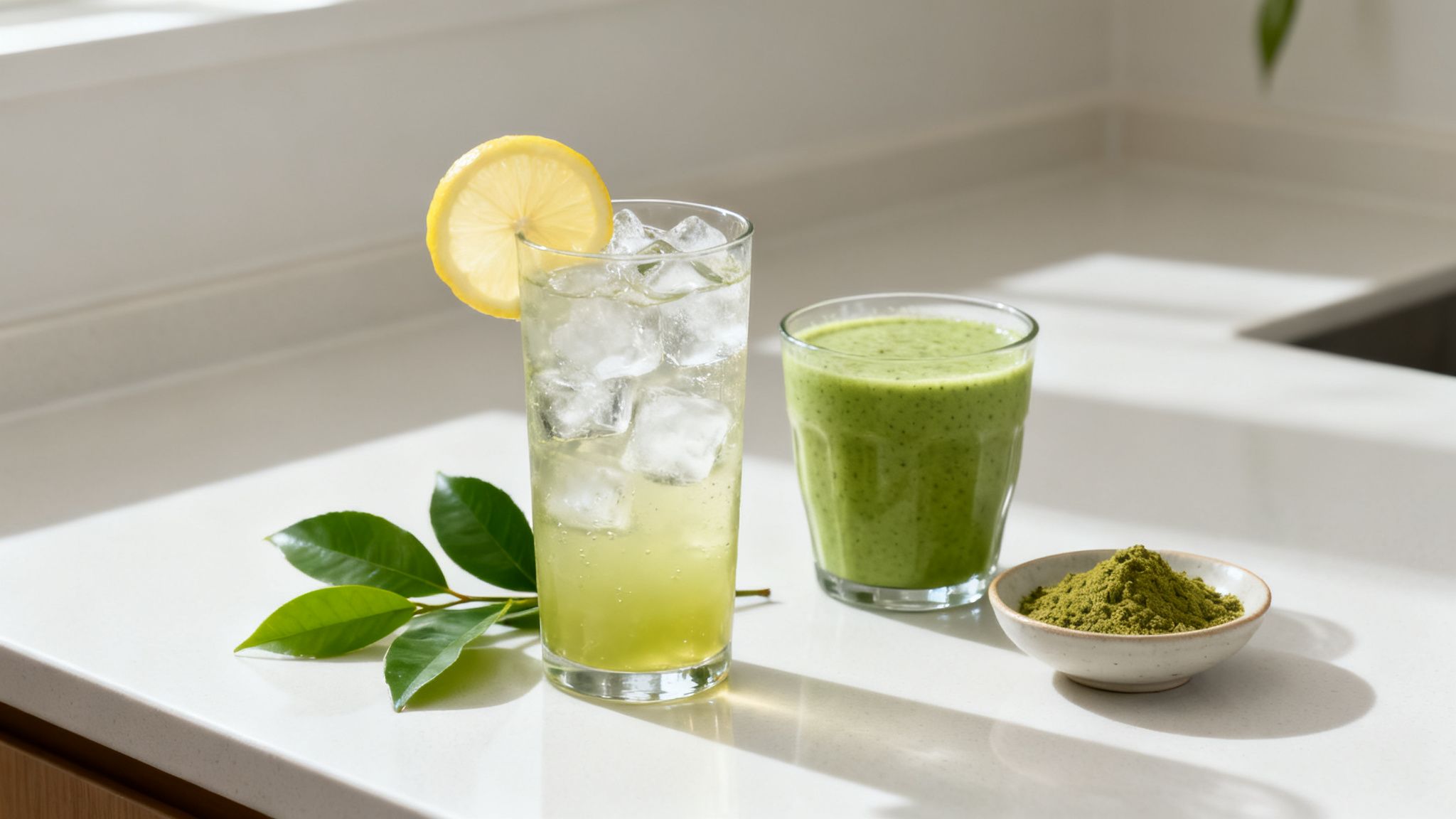
While the ritual of a warm, steaming cup of sencha is hard to beat, its appeal goes far beyond the traditional teapot. The many health benefits of sencha green tea can be woven into your daily routine in some wonderfully creative and delicious ways, turning it from a simple brew into a cornerstone of modern wellness.
Thinking beyond the classic cup opens up a world of culinary possibilities. A beautifully brewed and cooled sencha, for example, makes for an incredibly crisp and refreshing iced tea on a warm afternoon. This simple switch delivers all that antioxidant goodness without the added sugars you find in so many bottled drinks.
As you start to bring sencha into your daily habits, you might even find its subtle, natural sweetness helps to manage other cravings. It’s certainly one of the best teas to stop sugar cravings out there.
Fresh Ways to Enjoy Sencha
Ready to get creative? The clean, grassy flavour of sencha pairs brilliantly with a huge range of ingredients. Whether you’re experimenting at home or a wholesale partner looking to innovate, these ideas show just how adaptable this green tea can be.
- Nutrient-Packed Smoothies: Try blending a shot of cooled sencha into your morning smoothie. Its flavour works wonders with fruits like mango and pineapple, all while adding a powerful antioxidant kick.
- Sparkling Sencha Spritzers: For a sophisticated, non-alcoholic option, mix chilled sencha with sparkling water and a good squeeze of fresh lime. It’s an elegant and healthy alternative to sugary sodas.
- Creative Cocktails: For a unique botanical twist, infuse a quality gin with sencha leaves. This creates a fantastic base for a modern G&T or a particularly refined martini.
By reimagining sencha as a versatile ingredient, you can effortlessly incorporate its health benefits into every part of your day, from a revitalising morning blend to an elegant evening drink.
Your Sencha Questions Answered
Diving into the world of sencha often brings up a few questions. It’s completely natural. Getting a handle on the details helps you really enjoy making this brilliant tea part of your everyday life. Here are some of the queries we hear most often.
Is It Okay to Drink Sencha Green Tea Every Day?
Yes, absolutely. For most of us, enjoying two to three cups of sencha daily is a fantastic, healthy habit. Its balanced mix of moderate caffeine and potent antioxidants is a great contributor to overall wellness, making it a superb choice for a daily brew.
Of course, if you know you’re particularly sensitive to caffeine, or if you have any health conditions, it’s always wise to have a quick chat with your doctor first.
What’s the Difference Between Sencha and Matcha?
This is a great question, and it all comes down to how they’re prepared and what you end up drinking. Sencha is made by steeping whole tea leaves in hot water. You then remove the leaves and drink the beautiful, clear liquid that’s left behind.
Matcha, on the other hand, is made from tea leaves that have been stone-ground into a very fine powder. You whisk this powder directly into water, meaning you consume the entire leaf. This gives matcha a much bolder flavour and a bigger caffeine kick, whereas sencha offers a lighter, more refreshing experience that’s perfect for sipping throughout the day.
Can I Drink Sencha Green Tea Before Bed?
Probably best to give it a miss. Sencha does contain caffeine, which gets the mind buzzing. And while it also has that lovely, calming L-theanine, the caffeine is often enough to interfere with your sleep, especially if you’re sensitive to it.
As a rule of thumb, it’s a good idea to stop drinking any caffeinated drinks – sencha included – at least four to six hours before you plan to head to bed. If you're after a relaxing evening cuppa, a caffeine-free herbal infusion is a much better bet.
Ready to discover the refreshing taste and incredible benefits of a proper Japanese sencha? Explore the premium, ethically sourced collection at Jeeves & Jericho and find your perfect cup. Discover our full range of teas today.