


Forget the overly sweet, bottled stuff. The secret to a truly brilliant glass of iced tea is all about getting your ratios and temperatures right, whether you're after a quick hot brew or a patient cold brew. Making crisp, refreshing iced tea at home is far simpler than you might think and unlocks incredible flavour in just minutes.
Your Guide to Amazing Homemade Iced Tea
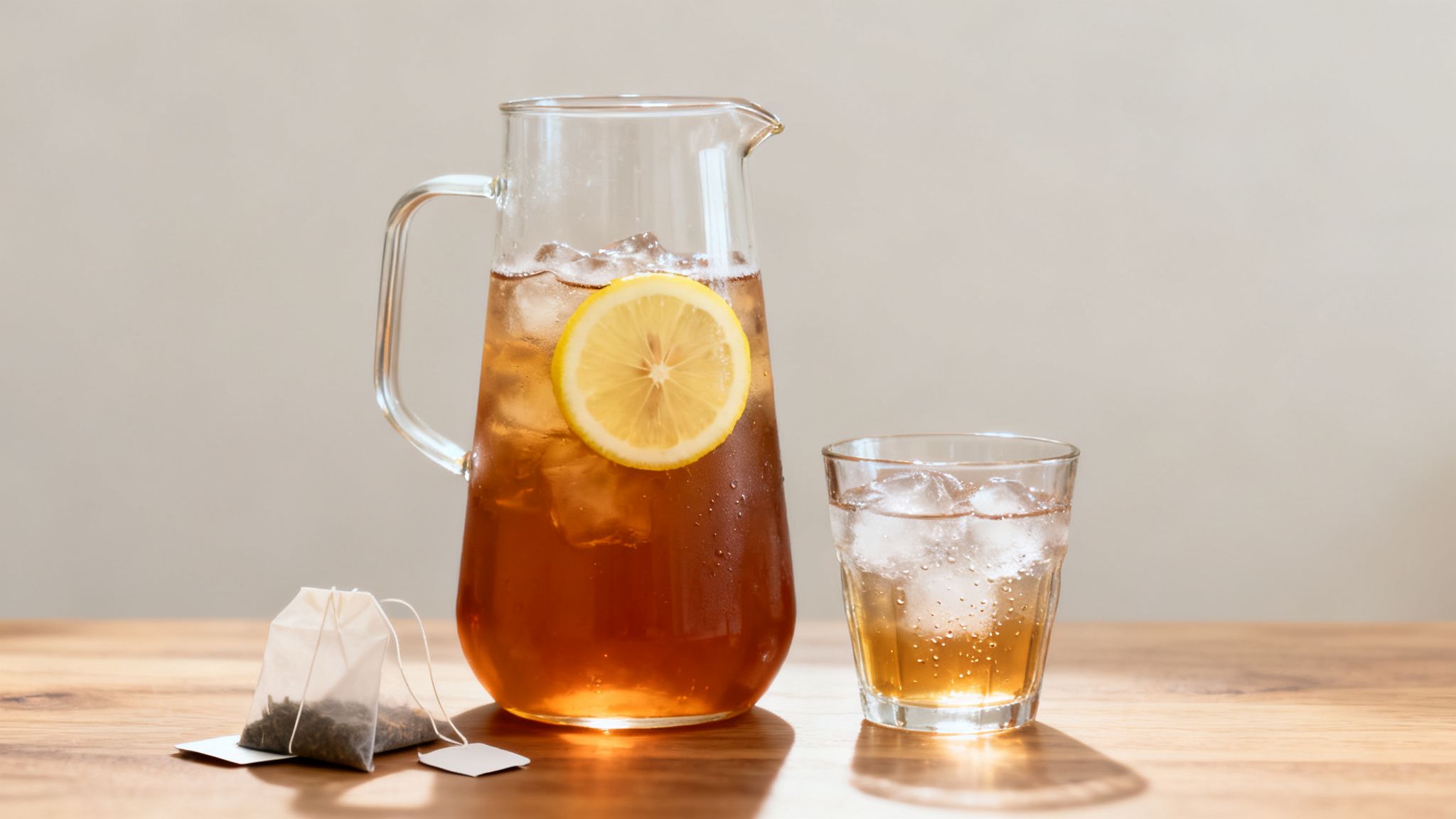
This is your complete guide to getting it right every time. I'll walk you through how to achieve a perfect brew, whether you have five minutes or a few hours to spare. We’ll explore a few different techniques, starting with the classic hot-brew method—a fantastic way to get a rich, vibrant pitcher of iced tea in a flash.
You’ll learn the ideal tea-to-water ratios to create a balanced brew that never tastes weak or watered down. And by mastering steep times and temperatures, you can easily avoid the bitterness that plagues so many homemade attempts. Just smooth, delicious tea in every glass.
Why Bother Brewing Iced Tea at Home?
Making your own iced tea puts you in complete control. You decide the strength, the sweetness, and the specific flavour notes you want to enjoy. Honestly, it's one of those simple pleasures that can elevate an ordinary day.
The love for homemade iced tea is definitely growing, with the UK market showing a steady rise. It seems to be a big hit with younger generations; a recent report found that 22% of Gen Z enjoy iced tea, compared to just 2% of Baby Boomers. This shift points to a real appreciation for refreshing, customisable drinks made with quality ingredients. For anyone interested in the numbers, you can explore the full report on the ice tea market from FactMr.com.
And if you’re really getting into the craft, exploring some unique gifts for tea lovers can make the whole experience even more enjoyable.
A Quick Tip: The quality of your tea bag makes a huge difference. Using whole-leaf pyramid bags allows the leaves to fully expand and infuse, releasing a much richer and more complex flavour than you'll get from standard flat paper bags.
Choosing high-quality, sustainable tea bags is also a brilliant move for both taste and the environment. You can find out more by reading our guide on tea bags without plastic.
Mastering the Classic Hot Brew Method
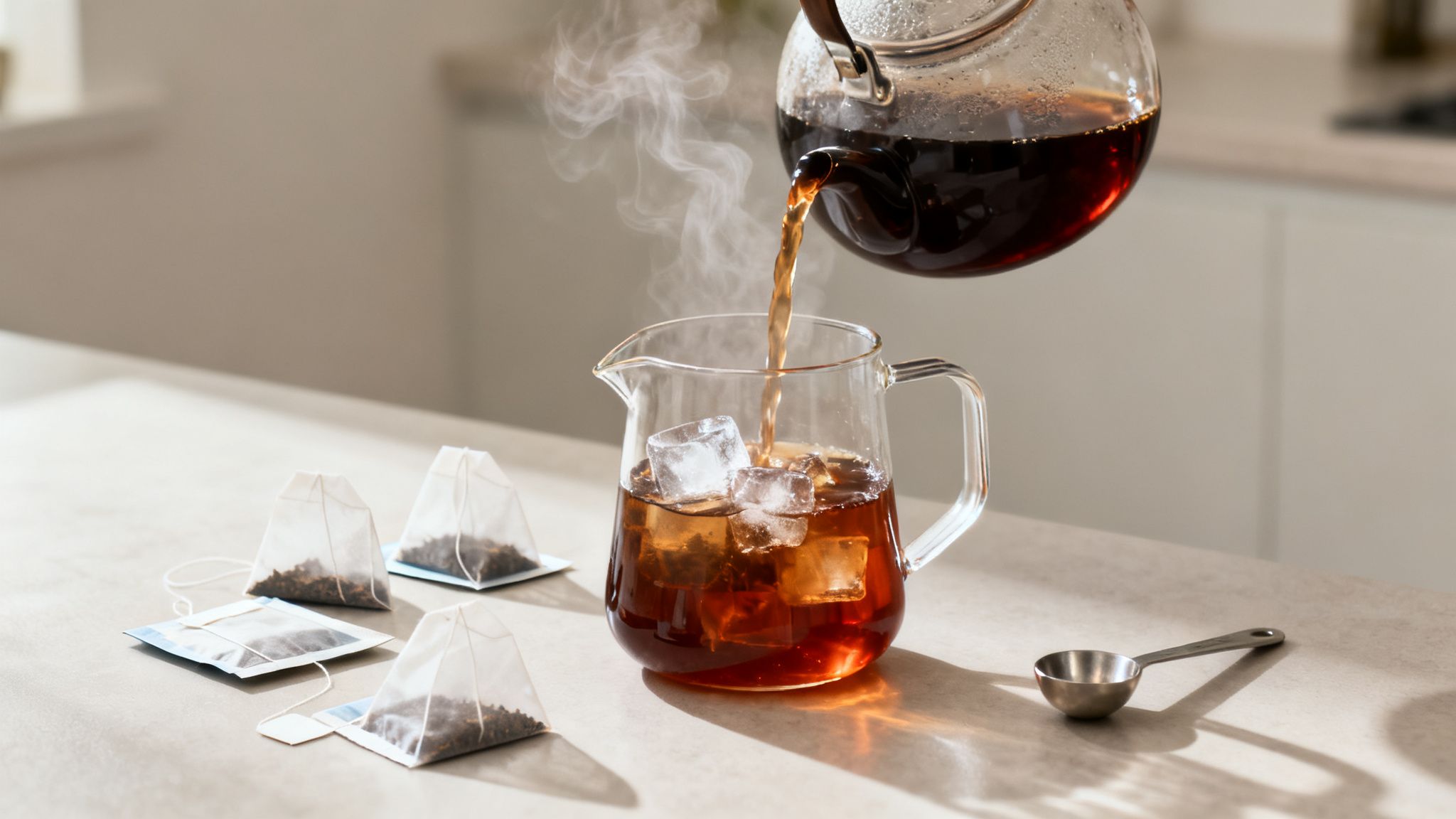
When you need a refreshing pitcher of iced tea, and you need it now, the classic hot brew method is your best friend. It’s hands-down the fastest route from a handful of tea bags to a perfectly chilled glass, delivering that bright, bold flavour we all crave on a warm afternoon.
The technique is simple: you create a strong tea concentrate. Brewing the tea hot quickly coaxes out all those deep, robust notes, which is why it works so well for black teas like a classic English Breakfast or a fragrant Earl Grey. You then pour this concentrate over a mountain of ice, flash-chilling it. This rapid cooling is what locks in the flavour and stops the tea from tasting stewed or old.
The secret lies in brewing the concentrate at double strength. This way, when the ice melts, your tea is beautifully balanced and flavourful, not a weak, watery disappointment.
Getting the Ratios and Temperatures Right
For a standard one-litre pitcher, I find a good starting point is eight standard tea bags. It might seem like a lot, but trust me, you're making a concentrate that needs to stand up to a lot of ice.
Here’s how it usually looks in my kitchen:
- Boil up 500ml (about two cups) of water.
- Pop the eight tea bags into a heatproof jug and pour the hot water over them.
- Let it all steep for the right amount of time.
- Meanwhile, fill your one-litre serving pitcher to the brim with ice.
- Once steeped, fish out the tea bags and pour the hot tea straight over the ice.
That immediate pour is the "flash chill" in action, and it’s what keeps your iced tea tasting fresh and vibrant.
Don't just use boiling water for everything, though. While perfect for a gutsy black tea, that same temperature will scorch more delicate leaves, leaving you with a bitter, astringent brew. Not what you want.
If you’re using green tea bags, aim for water around 80°C. An easy trick I use is to let a boiled kettle sit with the lid open for a couple of minutes before pouring. It’s a tiny change that makes a massive difference to the final taste.
How to Avoid Cloudy Iced Tea
We’ve all been there. You brew a pitcher of beautiful iced tea, only to see it turn cloudy in the fridge. It’s a common side effect of hot-brewing, caused when tannins in the tea clump together as it cools too quickly. It won’t change the flavour, but let’s be honest, a crystal-clear glass just looks better.
To sidestep this, try letting the hot tea concentrate cool on the counter for 10-15 minutes before you pour it over ice. That slightly gentler temperature drop can often be enough to keep it clear. I’ve also had some success adding a tiny splash of hot water to a finished pitcher that’s gone cloudy – it can sometimes persuade those compounds to dissolve again.
Of course, getting the steep time right is just as crucial for both clarity and flavour. If you want to get into the nitty-gritty of timings for different teas, our guide on how long to brew tea is a great place to start. A few simple tweaks, and you'll be making perfect, clear iced tea every time.
The Cold Brew Method for Ultimate Smoothness
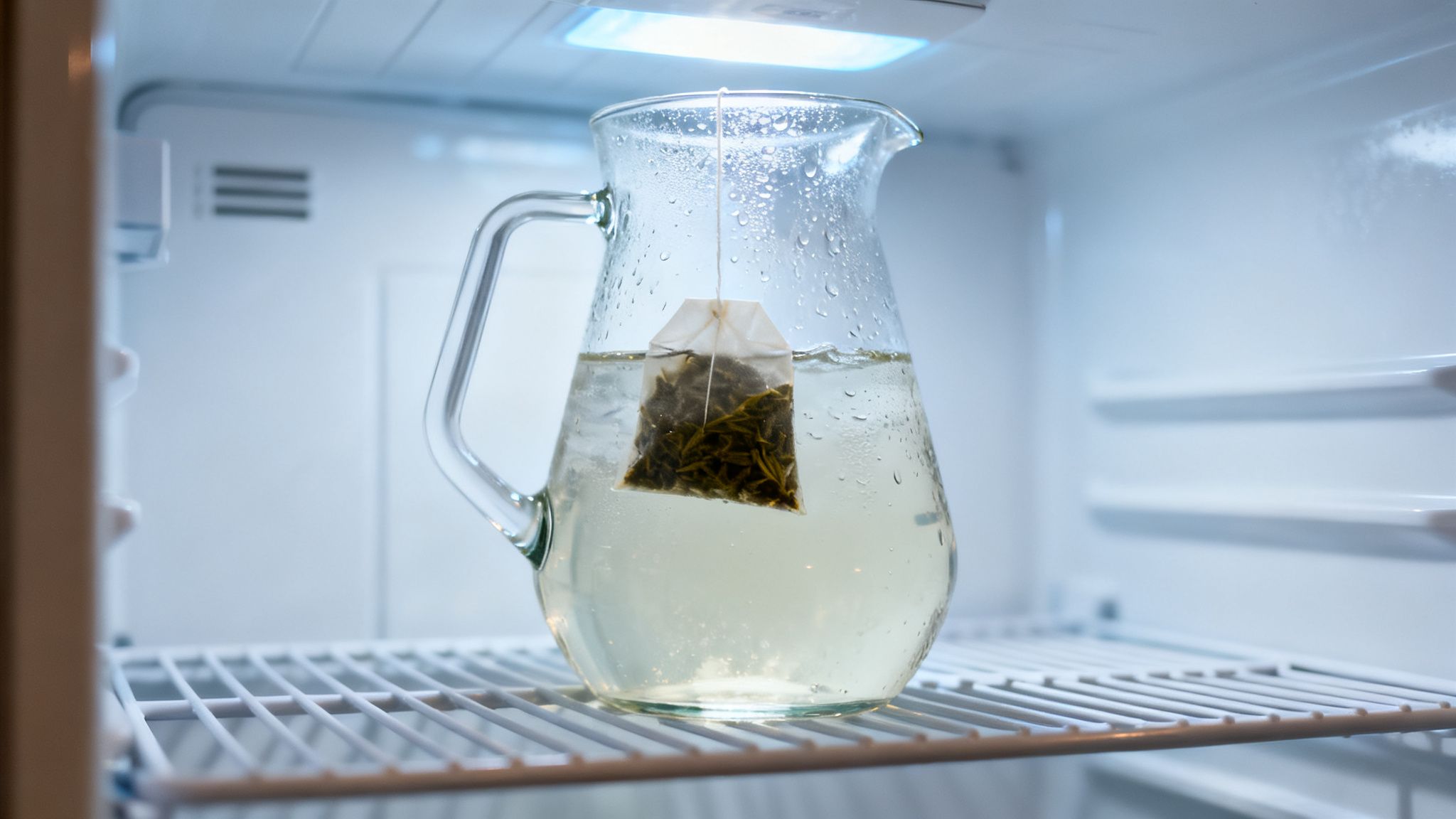
If you're after a naturally sweet, incredibly smooth iced tea with absolutely no bitterness, then cold brewing is the way to go. It's a wonderfully hands-off technique that involves steeping tea bags in cold water over several hours in the fridge. The result? A mellow, nuanced flavour that’s simply impossible to get with hot water.
The science behind it is pretty straightforward. Hot water extracts tannins from tea leaves very quickly, which is what can lead to that sharp, astringent taste if you’re not careful. Cold water, on the other hand, performs a much gentler, slower infusion. It pulls out all the delicate, sweet notes while leaving most of those bitter tannins behind.
This method completely transforms the tea's character, making it perfect for anyone who prefers their iced tea unsweetened or with just a whisper of sweetness.
Getting the Ratio and Time Just Right
Nailing the balance for a cold brew is key to a perfect pitcher. While the process is forgiving, having a solid starting point will save you from a brew that's either watery or far too strong.
We’ve found a reliable formula is one tea bag for every 250ml of cold, filtered water. So for a standard one-litre pitcher, you’ll want to use four tea bags. This creates a brew with a satisfying depth that’s refreshing without ever tasting weak.
As for the timing, the magic really happens between 8 to 12 hours in the refrigerator. This patient, slow steep is what builds that signature smooth taste.
I often get a pitcher ready the night before, and it’s perfectly brewed by morning. It’s the easiest way to make sure there's a delicious, high-quality iced tea waiting for you.
Which Teas Work Best for Cold Brewing?
You can cold brew just about any tea, but some types truly come alive with this gentle method. Their more delicate notes are highlighted in a way that hot brewing can sometimes overwhelm.
- White Teas: These delicate teas release subtle, fruity, and floral notes without any hint of bitterness.
- Green Teas: Cold brewing is fantastic for green teas, giving you a brew that’s sweet and grassy while avoiding the astringency they can develop when brewed too hot.
- Fruit and Herbal Infusions: Vibrant flavours from things like hibiscus, berry, or mint become incredibly bright and clean-tasting.
This approach taps into a growing trend here in the UK, where the iced tea market is set for a compound annual growth rate of 5.9% through 2033. With 40% of 18-34 year olds moving towards iced and ready-to-drink options, artisanal bags like ours offer a much better home-brewing experience. It's also worth noting that 32% of Gen Z daily tea drinkers opt for green tea—an ideal candidate for a smooth cold brew. You can read more about these emerging hot drink trends from FoodManufacture.co.uk.
The best bit of kit for the job is a simple glass pitcher with a lid. This stops the tea from absorbing any stray smells from your fridge and keeps it tasting perfectly fresh. For a deeper dive into perfecting your technique, check out our complete guide on how to make cold brew tea.
How to Customise Flavour and Sweetness
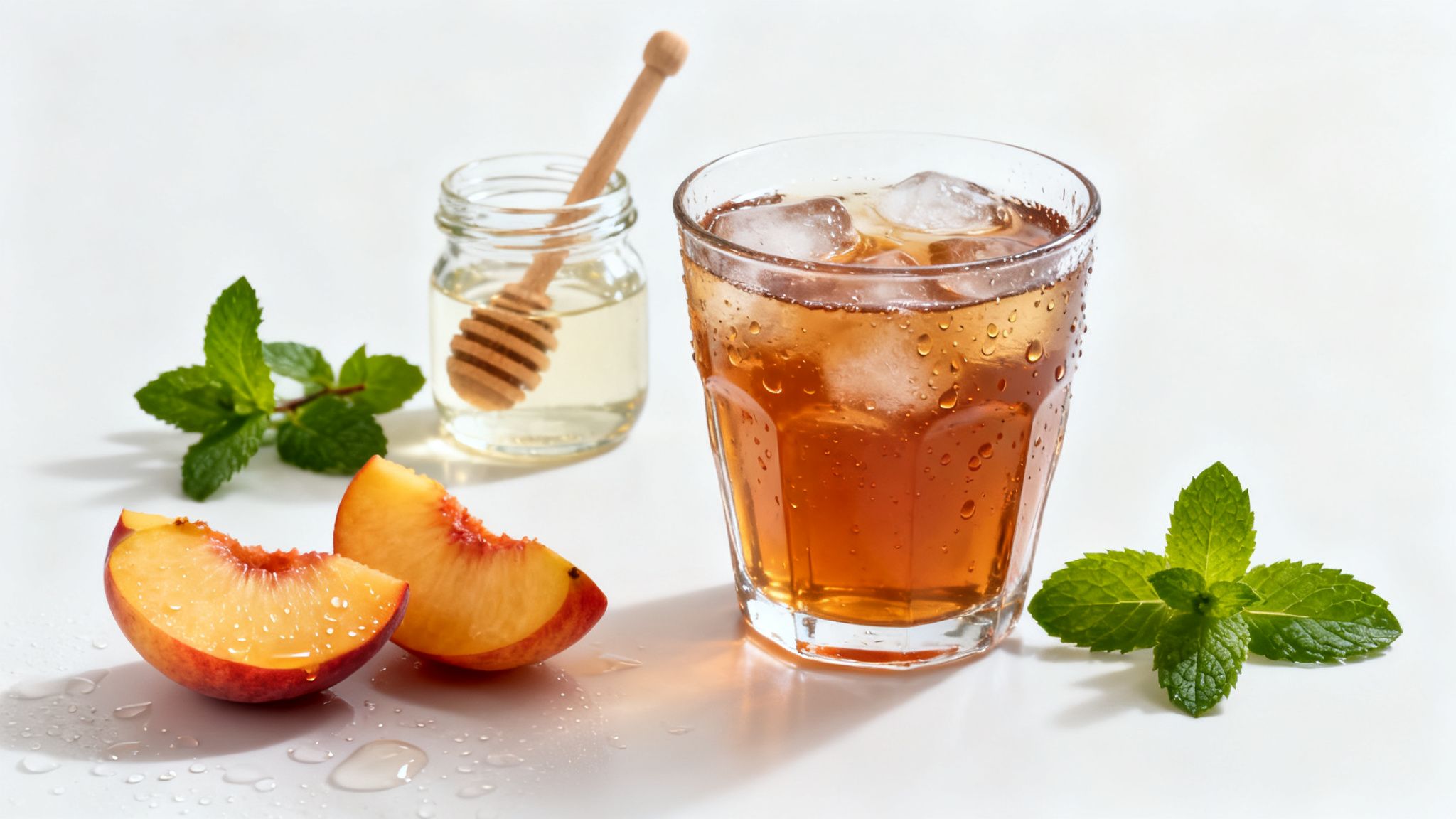
Once you’ve nailed the basics of a good brew, the real fun begins. This is your chance to move beyond a simple glass of iced tea and create something truly special—your own signature drink. For most of us, that starts with getting the sweetness just right.
If you’ve ever tried stirring sugar into a cold drink, you know the struggle. It just sinks to the bottom, leaving you with a gritty, under-sweetened brew. The fix is a game-changer: simple syrup.
Just gently heat equal parts sugar and water on the hob until the sugar dissolves. That’s it. You now have a liquid sweetener that will mix perfectly into your cold tea. I always keep a bottle in the fridge; it lasts for ages and makes sweetening on the fly a breeze.
Elevating Your Sweeteners
A standard simple syrup is a great start, but why stop there? While the syrup is still warm, you can throw in a few slices of fresh ginger, a split vanilla bean, or a cinnamon stick. Let it all infuse for about 30 minutes before straining, and you've got a beautifully flavoured syrup.
Of course, you don't have to stick with sugar. Different sweeteners bring their own unique character to the party.
- Honey: Its floral notes are a beautiful match for delicate white or green teas.
- Agave Nectar: This offers a clean, neutral sweetness that plays well with almost any tea, especially black or herbal infusions.
- Maple Syrup: The rich, earthy flavour of maple syrup adds a surprisingly delicious depth to a robust black iced tea.
The golden rule? Sweeten to taste. Always start with a small amount, stir it in, and have a sip before adding more. It’s far easier to add more sweetness than it is to take it away.
Infusing with Fruits and Herbs
Sweetness is one thing, but adding fresh ingredients is how you create real layers of flavour. This is what elevates a simple drink into a sophisticated refreshment. Try adding slices of ripe peach, a handful of muddled berries, or a twist of lemon peel straight into your pitcher. The tea will soak up all that bright, natural taste.
Herbs are brilliant for adding another layer of aromatic complexity. A few sprigs of fresh mint is a classic for a reason, but don’t be afraid to branch out. Basil leaves can bring out the peppery notes in a strong black tea, while a sprig of rosemary adds a lovely pine-like fragrance to a citrusy green tea.
This kind of customisation is exactly why home brewing is becoming so popular. Iced tea really resonates with 22% of UK Gen Z, a generation fuelling a market where making it yourself often wins out over buying ready-to-drink options. With 52% of consumers looking for reduced-sugar drinks, brewing your own puts you in complete control. You can find out more about Britain's evolving tea habits at YouGov.com. Learning how to brew iced tea with tea bags is your ticket to all this creative freedom.
Flavour Pairings for Your Iced Tea
Not sure where to start with all the fruit and herb combinations? Think of this table as a jumping-off point for your own experiments. There are no hard and fast rules, so feel free to mix and match until you find what you love.
| Tea Type | Recommended Sweetener | Fruit Infusion | Herb Garnish |
|---|---|---|---|
| Black Tea | Maple Syrup or Brown Sugar | Peach, Lemon, or Orange | Mint or Basil |
| Green Tea | Honey or Agave Nectar | Cucumber, Raspberry, or Lime | Mint or Lemongrass |
| White Tea | Agave Nectar | Watermelon, Strawberry, or White Grape | Lavender or Lemon Verbena |
| Herbal Tea (e.g., Hibiscus) | Honey | Mixed Berries or Pomegranate | Mint or Rosemary |
The best part about making iced tea at home is that you are the expert. Start with these ideas, but let your own taste guide you. Happy brewing
Troubleshooting Common Iced Tea Mistakes
We’ve all been there. You follow the steps, dreaming of a perfect, refreshing pitcher of iced tea, only to find it's gone a bit wrong. It might look cloudy, taste bitter, or just not have that crisp, fresh flavour you were hoping for.
The good news? These common problems are almost always fixable. Before you think about pouring it down the drain, let’s get to the bottom of what might have happened and how to get it right next time.
Why Is My Iced Tea Cloudy?
A cloudy pitcher is probably the most common complaint we hear. While it won’t change the flavour much, part of the joy of iced tea is that crystal-clear, jewel-like colour.
This cloudiness is down to tannins and catechins, natural compounds in the tea leaves. When a hot tea concentrate is cooled down too quickly—like pouring it straight over a mountain of ice—these compounds bind together and become visible, making the tea look murky.
There are a couple of ways to avoid this:
- Cool it down slowly: Once your tea has steeped, just let the concentrate sit on the worktop for 10-15 minutes. Giving it this short break before it hits the ice or the fridge helps keep everything dissolved and clear.
- Check your water: Hard water is full of minerals that can react with the tea and cause cloudiness. If you live in a hard water area, try using filtered water. You’ll be surprised at the difference it makes.
If you’re currently staring at a cloudy pitcher, don’t despair. Try adding just a splash of boiling water and giving it a stir. This can often be enough to dissolve those pesky compounds and bring back the clarity.
How to Fix Bitter Iced Tea
Nothing is more disappointing than taking a sip of iced tea and being hit with an overwhelming bitterness. That harsh, astringent taste is a tell-tale sign of over-extraction—basically, you’ve pulled too many of the bitter tannins out of the leaves.
It usually boils down to one of these culprits:
1. You’ve steeped it for too long This is the number one reason for bitterness. For black teas, you really don't want to go beyond 3-5 minutes. Any longer and you’re just inviting those harsh notes to the party. We always recommend setting a timer!
2. The water was too hot While a robust black tea can handle boiling water, more delicate leaves can't. If you’re brewing a green or white iced tea, using water straight from the boil will scald them. Let your kettle sit for a minute or two to cool to around 80°C before you pour.
3. You squeezed the tea bags It’s so tempting to wring out every last drop, but that final squeeze forces out concentrated, bitter compounds. Just lift the bags out and let them drain naturally.
Keeping Your Iced Tea Fresh
Once you’ve brewed the perfect batch, you’ll want to keep it that way. Iced tea is at its absolute best when it's fresh, so we’d suggest drinking it within three to four days. Any longer and it starts to lose its bright flavour and can even begin to ferment slightly.
Always store your tea in the fridge in an airtight container. A glass pitcher with a good lid is perfect because glass won’t hang onto any other fridge smells. This little step makes sure your last glass tastes just as delicious as your first.
Iced Tea Questions, Answered
Once you get the hang of the basics, you'll find your own rhythm for brewing iced tea. But a few common questions always seem to crop up, so we've put together some quick answers to help you along the way.
How Many Tea Bags for a Pitcher?
This is the big one, isn't it? As a solid starting point, we always recommend two tea bags for every 500ml of water. That means for a typical two-litre pitcher, you're looking at about eight tea bags.
Of course, this isn't set in stone. If you're brewing a really punchy black tea, you might find seven bags do the job just fine. On the other hand, for a very light and delicate white tea, you may want to pop in nine to make sure its subtle flavour shines through.
Our best advice? Start with the standard ratio, see what you think, and then tweak your next batch.
Can I Use Herbal Tea Bags?
You certainly can! Herbal infusions like mint, hibiscus, and chamomile make for some of the most refreshing iced teas out there. They're also naturally caffeine-free, making them a fantastic option for a warm evening or for anyone cutting back on caffeine.
The brewing methods are exactly the same. Just keep an eye on the steep times suggested on the box, as some herbals can get surprisingly powerful if left for too long. A hibiscus tea cold-brewed overnight, for example, will be fantastically tart and a brilliant ruby red.
It's worth remembering that herbal infusions don't contain any actual tea leaves from the Camellia sinensis plant. This means they're much less likely to turn bitter, even if you forget about them for a bit. They’re very forgiving!
Hot Water or Cold Water: Which is Better?
Honestly, neither is "better" – they just give you very different results. It all comes down to what you're in the mood for.
- Hot Brew: This is your fast track to a classic, bold iced tea. It pulls out a lot of strong flavour quickly, which is perfect for traditional black teas. The only catch is that you run a slightly higher risk of bitterness or a cloudy finish if you're not careful.
- Cold Brew: This is the low-and-slow approach. It takes patience, but your reward is an incredibly smooth, naturally sweeter tea with almost zero bitterness. We find it works wonders for bringing out the more delicate notes in green, white, or fruity teas.
If you've got the time, we really do think a cold brew is worth trying. The flavour is so smooth and clean that you often don't need to add any sugar at all.
Ready to get brewing? Have a look at our exceptional collection of whole-leaf pyramid tea bags at Jeeves & Jericho and see for yourself how much difference quality ingredients make. https://www.jeevesandjericho.com