


If you're looking for the best tea to support your gut, the top contenders are Peppermint, Ginger, Chamomile, Green Tea, and Fennel. For centuries, these botanicals have been go-to remedies for soothing bloating, easing indigestion, and helping to bring the whole digestive system back into balance. They're simple, natural allies for your daily well-being.
Your Quick Guide to The Best Teas for Gut Health
Picture your digestive system as a delicate internal garden. Like any garden, it sometimes faces challenges – perhaps bloating feels like unwelcome weeds, discomfort is a bit of a dry spell, or an imbalance throws the whole ecosystem off. The right cup of tea can act like a skilled, gentle gardener, nurturing everything back to health.
This guide gets straight to the point, introducing you to the botanicals that really work to soothe, calm, and rebalance your gut. It's a movement we're seeing across the UK, as more and more people turn to herbal and green teas for their health benefits. If you're curious about the bigger picture, the recent UK census on tea consumption habits sheds more light on this trend.
We'll start with a quick overview to help you find the right tea for your needs, then dive a little deeper into how these powerful plants work their magic.
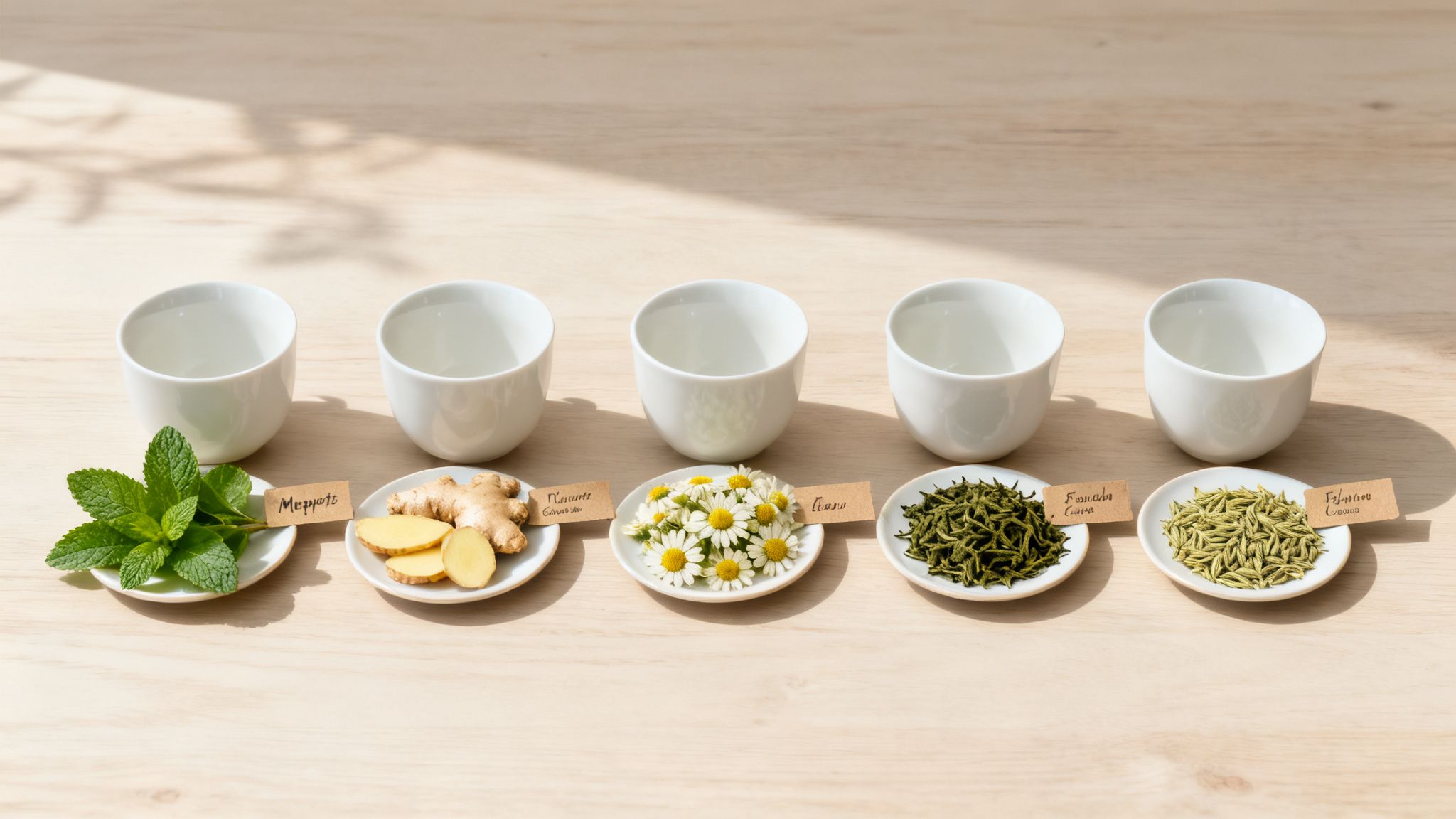
Five Gut-Friendly Champions
Each of these teas brings something unique to the table. Some are masters at calming an angry, inflamed gut, while others are brilliant at relieving that trapped, bubbly feeling of gas and bloating. Knowing their individual strengths helps you build a personal tea toolkit for your digestive wellness.
Here are our key players:
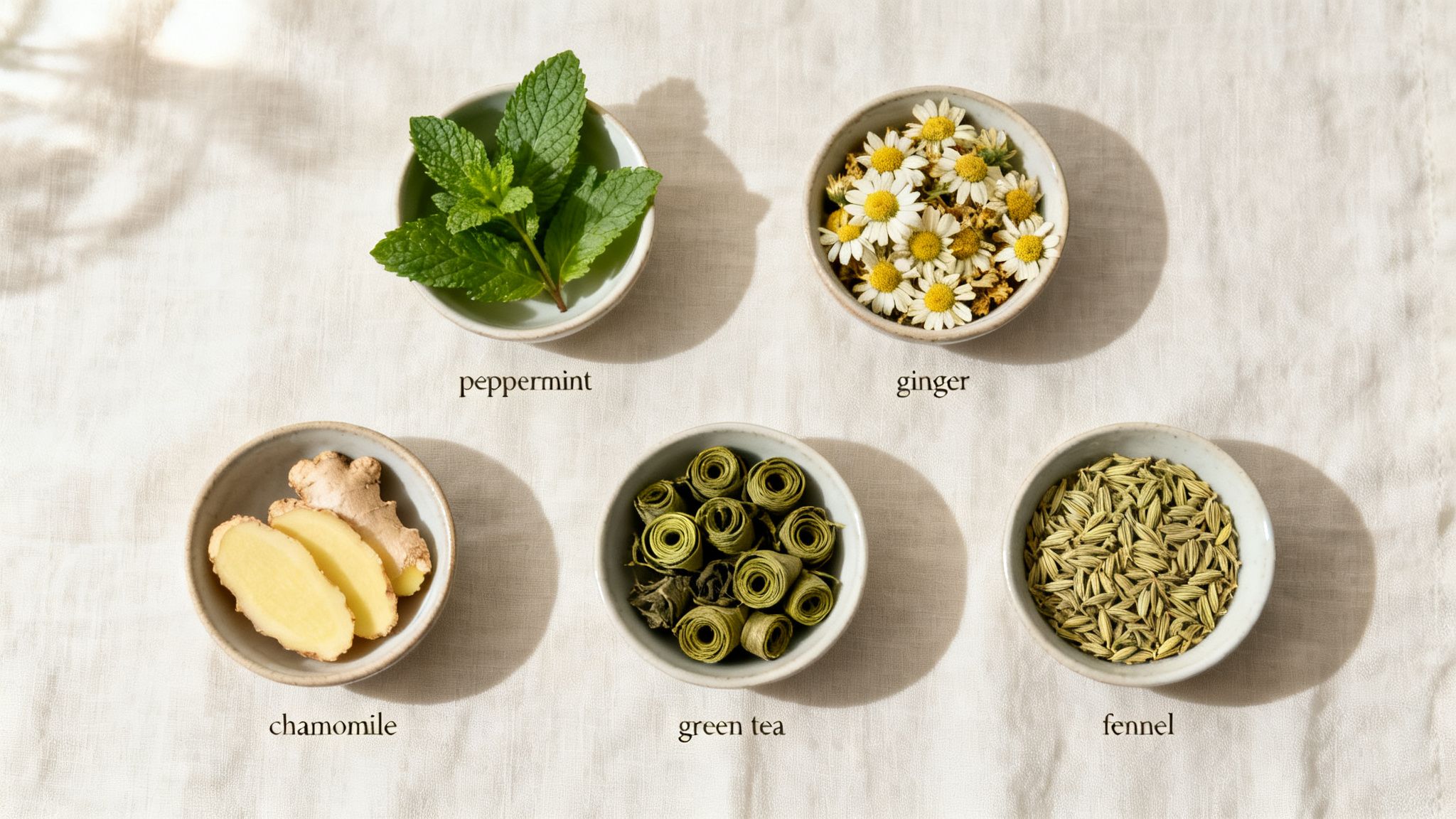
- Peppermint Tea: A classic digestive aid for a reason. Peppermint contains menthol, which helps relax the muscles in your digestive tract. It’s particularly good at easing indigestion and bloating.
- Ginger Tea: Revered for centuries, ginger is a true anti-inflammatory powerhouse. It’s fantastic for settling an upset stomach, curbing nausea, and giving your digestion a gentle nudge by helping the stomach empty a bit faster.
- Chamomile Tea: This gentle, calming flower is perfect for soothing an irritated gut. Its anti-inflammatory and antispasmodic properties can help ease cramping and encourage relaxation – a state that’s closely linked to better digestion.
- Green Tea: Packed with antioxidants and compounds called polyphenols, green tea helps support the good bacteria in your gut. Think of it as a prebiotic, feeding the beneficial microbes that are essential for a healthy, balanced microbiome.
- Fennel Tea: A traditional remedy for gas and bloating, fennel has what's known as carminative properties, which simply means it helps expel gas from the intestinal tract. A cup after a heavy meal can work wonders.
Key Takeaway: The best tea for your gut often comes down to your specific symptoms. Peppermint and fennel are brilliant for bloating, ginger targets nausea, chamomile soothes irritation, and green tea helps nurture your overall gut microbiome from the ground up.
To make things even simpler, we've put together a quick summary table. It's a handy, at-a-glance guide to our top five teas, their main benefits, and when you might want to enjoy them for the best results.
Top 5 Teas for Gut Health at a Glance
| Tea | Primary Gut Benefit | Best Time to Drink |
|---|---|---|
| Peppermint | Relieves bloating and indigestion | After meals or during discomfort |
| Ginger | Soothes nausea and inflammation | Morning, or whenever stomach feels upset |
| Chamomile | Calms irritation and cramping | Evening, or to de-stress |
| Green Tea | Supports a healthy microbiome | Morning or early afternoon |
| Fennel | Reduces gas and bloating | After meals |
This table should give you a great starting point for choosing a brew that fits what your body is asking for. Now, let's get into the specifics of how each one works its magic.
How Tea Nurtures Your Inner Ecosystem
To really get to grips with how tea can support your gut, it helps to imagine it as a bustling, vibrant city. This internal metropolis is home to trillions of microorganisms, all working together in what we call the gut microbiome. These tiny residents aren't just passing through; they're the essential workers keeping your city running smoothly.
A healthy gut is a city in harmony, where beneficial bacteria flourish and keep any disruptive microbes in check. But when things like stress, a poor diet, or illness throw that balance off, the city can fall into disarray, leading to bloating, discomfort, and inflammation. This is where a simple, comforting cup of tea comes in—not as a quick fix, but as a gentle, supportive force for this delicate inner world.

The Power of Plant Compounds
Tea is so much more than just flavoured water. It's packed with potent plant compounds that directly interact with your gut's environment, and two of the most important groups are polyphenols and antioxidants.
Think of polyphenols as the peacekeepers of your gut city. These are naturally occurring compounds found in plants, and teas like green tea are particularly rich in them. Research shows that these polyphenols have anti-inflammatory properties, helping to calm the irritation and molecular "noise" that can throw your digestive system out of sorts.
But they don't just reduce inflammation. They also act selectively, creating an environment where beneficial bacteria can thrive while discouraging the less desirable ones. It’s this dual action that helps restore order and bring balance back to your gut.
Feeding Your Microbial Allies
Some of the most powerful compounds in tea also act as prebiotics. In simple terms, a prebiotic is food for the good bacteria already living in your gut. Just as you’d give your city’s essential workers the best fuel, these compounds nourish the microbes that support your health.
By providing a food source for beneficial bacteria, certain teas can help increase their numbers and activity. This fosters a more diverse and resilient microbiome—a real cornerstone of robust digestive health and overall wellbeing.
When your good bacteria feast on these prebiotic compounds, they produce some brilliant byproducts, like short-chain fatty acids (SCFAs). These SCFAs are absolute superstars for gut health; they strengthen the gut barrier, reduce inflammation, and even provide energy for the cells lining your colon. Understanding the vital roles of prebiotics and probiotics in maintaining gut health is key to nurturing this inner ecosystem, and tea is a perfect partner in that process.
How Different Teas Offer Unique Support
While many teas offer general benefits, different brews bring their own unique properties to the table. This is why having a selection on hand can be so effective.
- Soothing Muscle Spasms: Teas like peppermint contain compounds such as menthol, which have antispasmodic effects. They act like a gentle masseuse for your digestive tract, relaxing the intestinal muscles to ease cramping and the discomfort of bloating and gas.
- Aiding Digestion: Ginger tea is famous for its ability to kickstart digestion. It helps speed up gastric emptying—the rate at which food moves out of the stomach. This can bring real relief from that heavy, sluggish feeling after a big meal.
- Calming Inflammation: Chamomile and turmeric teas are celebrated for their potent anti-inflammatory effects. They work to soothe the lining of the gut, which is especially helpful for anyone dealing with irritation or inflammatory digestive conditions.
Ultimately, choosing the right tea for your gut is about understanding this inner ecosystem. By selecting teas that calm, nourish, and support your microbiome, you’re actively taking part in the health of your internal city, making sure it remains a peaceful and productive place.
Exploring The Top 5 Gut-Soothing Teas
So, we've covered the science behind how a good cuppa can support your internal ecosystem. Now, let’s get to the good stuff and meet the top players. Each of these five teas brings something unique to the table, acting as a specialist tool for tackling different aspects of your digestive wellbeing.
Whether it’s calming muscle spasms or giving your microbiome a bit of a boost, there’s a brew for just about every gut feeling. We'll explore how Peppermint, Ginger, Chamomile, Green Tea, and Fennel work their magic. By getting to know their individual strengths, you can pick the perfect cup to bring your gut back into harmony.
1 Peppermint Tea: The Bloating Buster
Peppermint is probably the first thing that springs to mind when you think of digestive teas, and for very good reason. That wonderfully refreshing flavour and cooling sensation are backed by a powerful ability to soothe an uncomfortable stomach. It's been a go-to remedy for centuries, especially for that dreaded post-meal bloat.
The real hero in peppermint is a compound called menthol. Think of it as a natural muscle relaxant for your digestive system. That tight, cramping feeling is often caused by tension in the smooth muscles of your gut. Menthol has an antispasmodic effect, helping those muscles to chill out and release trapped gas, which brings that much-needed relief.
This is exactly why a cup of high-quality peppermint tea, like our pure and vibrant Peppermint Leaves, feels so good after a heavy meal. It just helps everything calm down, easing that over-full feeling.
2 Ginger Tea: The Nausea Tamer
Ginger is a proper powerhouse, celebrated in traditional medicine for its warming, settling qualities. You can taste its potency in its spicy, pungent flavour, which comes from bioactive compounds like gingerols—the source of most of its medicinal clout.
It’s particularly brilliant at tackling nausea. Ginger works by helping to speed up gastric emptying, which is a fancy way of saying it encourages your stomach to pass its contents along more quickly. This can be a huge relief when you're feeling queasy or sluggish.
What’s more, ginger is a potent anti-inflammatory. Low-grade, chronic inflammation in the gut can be behind a whole host of digestive woes. Sipping on ginger tea regularly can help calm things down, creating a more peaceful environment for your entire system. It’s a fantastic choice for a morning brew to start the day on a settled note.
Expert Tip: For an extra digestive kick, try adding a slice of fresh lemon to your ginger tea. The combination tastes incredible and adds a dose of vitamin C, giving your digestion another helping hand.
3 Chamomile Tea: The Gentle Calmer
If your gut troubles seem to flare up when you're stressed or anxious, chamomile is about to become your best friend. This delicate, apple-scented flower is famous for its calming effects on both the mind and the body, and that connection is vital for gut health. The gut-brain axis is a real thing; when your head is spinning, your gut feels it too.
Chamomile contains compounds like apigenin, an antioxidant that binds to certain receptors in your brain, helping to dial down anxiety and pave the way for a good night's sleep. This wave of relaxation extends to your digestive system, easing tension and reducing stress-induced cramps.
But its benefits don't stop there. Chamomile also has gentle anti-inflammatory properties that can soothe an irritated stomach lining. It’s the perfect, gentle brew for winding down in the evening, allowing your whole system to relax and reset overnight. For anyone steering clear of caffeine, you can discover more gentle blends in our guide to the best non-caffeinated teas.
4 Green Tea: The Microbiome Nurturer
While the other teas are fantastic for managing immediate symptoms, green tea gets to work on a much deeper level. It’s one of the best teas for gut health because it directly supports the long-term health of your microbiome—that bustling city of bacteria we talked about earlier.
Green tea is absolutely packed with powerful antioxidants called catechins, particularly the famous Epigallocatechin gallate (EGCG). These compounds act as prebiotics, which is basically food for the good bacteria in your gut. By feeding these "good bugs," you help them flourish, creating a more diverse and resilient gut community.
A healthier microbiome brings a whole host of benefits:
- A Stronger Gut Barrier: A balanced microbiome helps keep your intestinal lining strong, preventing unwanted stuff from leaking into your bloodstream.
- Less Inflammation: Healthy gut bacteria produce beneficial compounds that have powerful anti-inflammatory effects throughout the body.
- Better Digestion: A well-fed microbiome is simply more efficient at breaking down food and absorbing nutrients.
Adding a high-quality green tea to your routine is a bit like hiring a team of expert gardeners for your inner ecosystem, making sure everything stays healthy and in working order.
5 Fennel Tea: The Gas Reducer
With its subtle, liquorice-like flavour, fennel is a classic herbal remedy for gas and bloating. Those tiny seeds are full of potent essential oils, especially anethole, which is responsible for its distinctive taste and therapeutic punch.
Fennel is what’s known as a carminative—a substance that helps prevent gas from forming or helps you expel it. It works by relaxing the smooth muscles in your intestines, allowing trapped gas to pass through more easily and relieving that uncomfortable, pressurised feeling.
This makes fennel tea an absolutely brilliant choice to sip after a meal, particularly a rich one. It’s a gentle digestive aid that helps stop discomfort before it even starts, leaving you feeling comfortable and settled.
Brewing Your Tea for Maximum Gut Benefits
So, you’ve picked out the perfect tea to give your gut a bit of TLC. Brilliant. But did you know that how you brew it can make all the difference to its health benefits? It’s not just a matter of chucking some leaves in a cup and adding hot water; there’s a gentle art to it. The right approach coaxes out all those delicate, gut-soothing compounds and delivers them straight to your mug.
Think of it like cooking vegetables. If you boil them into oblivion, you’re left with a sad, mushy pile that’s lost most of its nutrients, not to mention its vibrant colour and texture. It's much the same with tea. A bit of care and precision preserves the very properties you’re after, turning a simple brew into something genuinely therapeutic.
Start with High-Quality Leaves
Before the kettle even clicks on, let’s talk leaves. The quality of your tea is the foundation for everything else. Your standard teabag is often filled with ‘fannings’ or ‘dust’ – tiny, broken bits of leaf that have lost their essential oils and many of their potent plant compounds. They’re convenient, sure, but they just can’t offer the full spectrum of benefits.
This is where choosing whole-leaf teas, like ours at Jeeves & Jericho, completely changes the game. Whole leaves keep their natural integrity, which means they’re still packed with all the good stuff:
- A higher concentration of polyphenols: These are the anti-inflammatory and prebiotic powerhouses that feed your good gut bacteria.
- Richer essential oils: For teas like peppermint and chamomile, these oils are what deliver those muscle-relaxing and calming effects.
- Superior flavour and aroma: Let's be honest, a tea that tastes incredible is one you’ll actually look forward to drinking every day.
Starting with better ingredients simply sets you up for a better result. You’re giving yourself the best possible tools for the job.
Master Water Temperature and Steeping Time
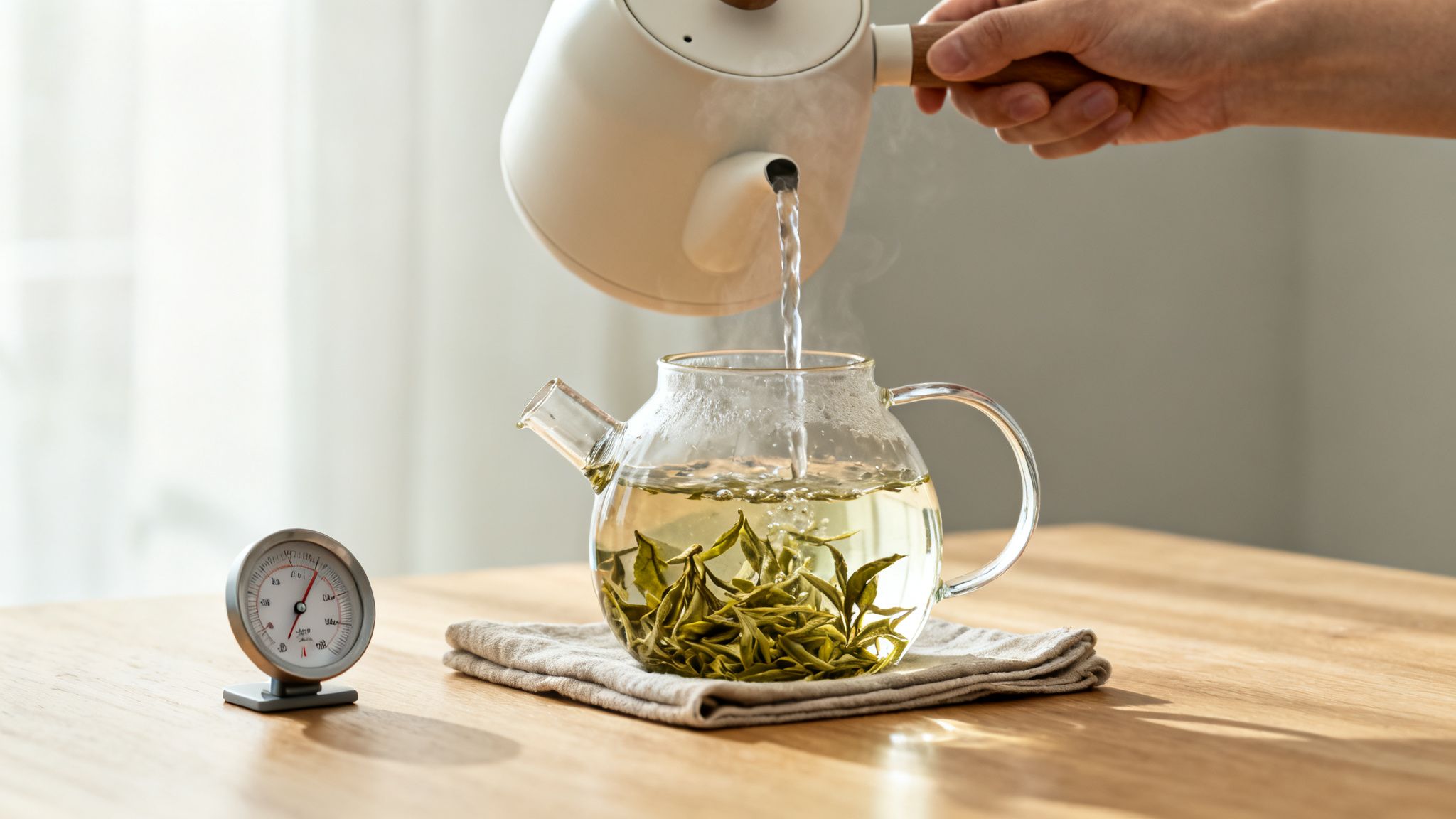
This is arguably the most crucial step. Getting the water temperature and steeping time right is the key to unlocking the best your tea has to offer for your gut. Just whacking it with boiling water isn't a one-size-fits-all solution; for some delicate teas, it’s actively counterproductive.
Key Insight: Over-steeping or using water that's far too hot can scorch the leaves. This releases a flood of tannins, making the tea taste bitter and astringent. Worse, it can sometimes cause the very stomach discomfort you're trying to soothe.
Gentler teas need cooler water to draw out their beneficial compounds without damaging them. If you want to dive deeper into the science of the perfect brew, our guide on how long to brew tea has all the details.
To get you started, here's a handy cheat sheet to make sure every cup is as delicious as it is beneficial for your digestion.
Optimal Brewing Guide for Gut Health Teas
Getting your brew just right doesn't have to be complicated. Following these simple temperature and time guides will help you extract the maximum flavour and gut-friendly compounds from your favourite teas.
| Tea Type | Water Temperature (°C) | Steeping Time (Minutes) | Key Tip |
|---|---|---|---|
| Green Tea | 75-80°C | 1-3 | Using boiling water will burn the leaves, resulting in a bitter taste and destroying delicate catechins. |
| Peppermint | 100°C | 3-5 | A longer steep helps to fully extract the menthol, the key compound for relaxing digestive muscles. |
| Ginger | 100°C | 5-10 | As a tough root, ginger needs boiling water and a longer infusion time to release its potent gingerols. |
| Chamomile | 90-95°C | 3-5 | Avoid boiling to preserve its delicate floral notes and calming essential oils. |
| Fennel | 100°C | 5-7 | Gently crush the seeds before steeping to help release the anethole, which aids in reducing gas. |
By keeping these simple tips in mind, you can turn your daily tea into a mindful ritual. This careful approach ensures every cup you make is optimised for both its soothing properties and its fantastic flavour, making it a truly effective way to nurture your gut.
Making Gut-Friendly Teas a Daily Ritual
Knowing which teas are good for your gut is a great start, but the real benefit comes from weaving them into your daily life. Turning these soothing brews into a consistent habit is where the magic happens, offering gentle, steady support from morning to night. Creating a daily ritual doesn't need to be a grand gesture; it's all about finding those small, enjoyable moments to pause and sip.
Think of it as simply punctuating your day with a bit of self-care. A delicate green tea could ease you into the morning instead of coffee, a post-lunch peppermint can help sidestep any afternoon bloating, and a cup of calming chamomile can be the perfect signal to your body that it’s time to unwind. When you start associating specific teas with certain times of the day, you build a routine that feels both intentional and completely natural.
It’s this consistency that really allows the beneficial compounds in the tea to get to work, supporting your gut's complex inner world over the long term. It's a simple, yet powerful, way to invest in your digestive wellbeing every single day.
Simple Ways to Weave Tea into Your Day
A new habit is always easier to stick with when it fits neatly into the life you already have. Rather than a complete overhaul, just look for those little pockets of time where a lovely cup of tea would feel like a natural addition.
Here are a few ideas to get you started:
- Morning Kick-start: Start your day with a cup of high-quality green tea. Its gentle caffeine provides a calm, focused energy lift, while its prebiotic properties begin nurturing your gut microbiome right from the off.
- Post-Meal Soother: Get into the habit of brewing a cup of peppermint or ginger tea about 30 minutes after your main meals. This simple act can make a real difference to your digestion, helping to ease bloating and that sluggish feeling.
- Evening Wind-Down: About an hour before you head to bed, make yourself a warm cup of chamomile. This caffeine-free brew helps to quiet your nervous system—which is closely linked to your gut—preparing your whole body for a restful night's sleep.
Of course, a truly gut-friendly lifestyle goes beyond just tea. Pairing these daily rituals with thoughtful healthy meal planning for families creates a wonderfully holistic approach to looking after your digestive wellness.
Inspiring Gut-Friendly Tea Recipes
Why not turn your tea break into a truly special moment? All it takes is a few extra ingredients. These simple recipes use our Jeeves & Jericho teas as a base to create delicious elixirs that are as flavourful as they are fantastic for your gut.
Ginger Lemon Gut Elixir This zesty, warming tonic is perfect for kick-starting your digestion or soothing a temperamental stomach. You get the anti-inflammatory power of ginger combined with the alkalising touch of lemon—a true digestive powerhouse.
- Brew one pyramid bag of Jeeves & Jericho Ginger Tea in hot water for 5-7 minutes.
- Squeeze in the juice of half a fresh lemon.
- Add a teaspoon of raw honey (optional, but lovely for its prebiotic qualities).
- Stir well and enjoy this vibrant, warming cup.
It’s little touches like this that elevate a simple brew into an active, gut-supporting elixir.
Soothing Chamomile & Mint Cooler Just the ticket for a warm afternoon or a calming evening drink, this cooler combines the gentle properties of two digestive heroes. It's incredibly refreshing and wonderfully soothing for an irritated gut.
- Brew one pyramid bag of Jeeves & Jericho Chamomile Flowers and one of Peppermint Leaves together in a mug with hot water for 5 minutes.
- Let the infusion cool down completely.
- Pour it over a glass filled with ice.
- Garnish with a few fresh mint leaves and a slice of cucumber for an extra-fresh finish.
By making these simple rituals and recipes a part of your daily rhythm, the simple act of drinking tea becomes a consistent, powerful tool for nurturing your gut health.
A Few Common Questions, Answered
As you start your journey with gut-friendly teas, it’s only natural to have a few questions. We want this new ritual to feel simple and empowering, so we’ve put together some clear, practical answers to the queries we hear most often.
Think of this as your quick-start guide to brewing with confidence. We’ll cover everything from how often to sip, to which teas are best for that dreaded bloating. Let’s get you sorted.
Can I Drink These Teas Every Day?
Yes, absolutely. For most of us, enjoying one to three cups a day is a brilliant and safe habit to get into. It’s the consistency that really makes a difference in keeping your gut happy and balanced. The most important thing is to listen to your body – if anything feels off, just ease back for a day or so.
With caffeinated teas like green tea, it's always wise to keep an eye on your total daily intake, particularly if you know you’re sensitive. A great trick is to rotate different teas throughout your week. Not only does this keep things interesting for your tastebuds, but it also gives your gut a wider variety of beneficial plant compounds to work with.
Which Tea Is Best for Bloating?
When it comes to bloating, peppermint and fennel teas are the undisputed champions. They’re our go-to brews for that tight, uncomfortable feeling, and they work in slightly different but equally brilliant ways.
Here’s a quick look at how they help:
- Peppermint Tea: The menthol in peppermint is a natural muscle relaxant for your digestive system. It helps to calm spasms and allows trapped gas to pass through more easily. Simple, but so effective.
- Fennel Tea: Fennel is famous for its carminative properties. In simple terms, this means it helps stop gas from forming in the first place. It’s wonderfully gentle and soothing.
A warm cup of either of these after a meal can work wonders, helping to fend off that post-dinner bloat before it even starts.
Are There Any Side Effects I Should Know About?
While these teas are generally very safe, it’s good to be aware of a couple of things. Peppermint tea, for instance, can sometimes relax the muscle between the oesophagus and the stomach. For anyone prone to acid reflux, this might occasionally make symptoms a bit worse. We dive into this in much more detail in our guide to peppermint tea for acid reflux.
Also, very large quantities of ginger might cause a touch of mild heartburn for some people.
A Quick Word of Advice: If you are pregnant, nursing, have a pre-existing health condition, or are on medication, it’s always sensible to have a chat with your doctor before making any new herbal tea a regular part of your routine.
Does the Quality of The Tea Really Matter?
Oh, absolutely. It makes all the difference. The quality of your tea leaves has a direct impact on both the flavour in your cup and the benefits you get from it. High-quality, whole-leaf teas hold onto far more of their essential oils and active compounds than the fine 'dust' you often find in standard teabags.
Here’s why we’re so passionate about quality:
- Potency: Whole leaves simply have a higher concentration of the good stuff, like polyphenols and antioxidants.
- Flavour: When the leaf is whole, its delicate, complex flavours are preserved, which makes for a much richer, more enjoyable brew.
- Purity: Sourcing from trusted suppliers means you know your tea is free from unwanted additives or contaminants.
For the best possible results for your gut health, investing in premium loose-leaf tea is a choice you won’t regret. It guarantees that every single cup is brimming with flavour and goodness.
At Jeeves & Jericho, we travel the world to source the finest whole-leaf teas. Explore our curated collection and discover the perfect brew to support your gut health journey. https://www.jeevesandjericho.com